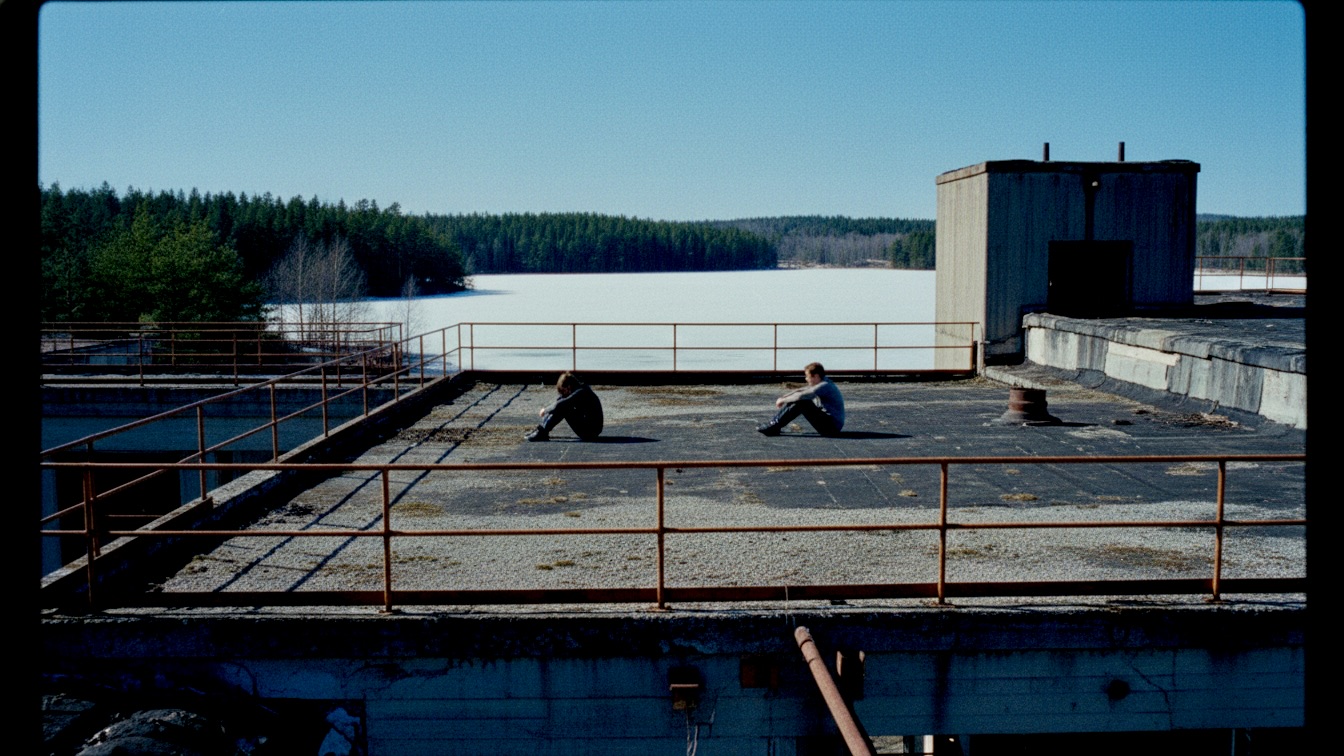
Sam and Will, two nineteen-year-olds living in a dying mill town in Northwestern Ontario, climb to the roof of an abandoned paper mill. The atmosphere is thick with the scent of old chemicals and the sight of a town in economic collapse. During this excursion, Sam reveals that he has been accepted into the University of Toronto. This news serves as a catalyst for a deep-seated conflict between the two lifelong friends.
The revelation triggers a bitter argument regarding class, loyalty, and the morality of leaving a struggling community. Will views Sam’s departure as an act of elitism and a betrayal of their shared roots. Sam, conversely, views the town as a stagnant corpse and sees his education as a necessary ladder to escape a life of poverty. The chapter ends with the symbolic shattering of the lake ice and a definitive fracture in their friendship.
The narrative explores the theme of economic stagnation and its psychological toll on the individual. The defunct mill is not just a setting but a character in itself, representing a dead way of life that continues to haunt the living. For Will, the mill is a site of ancestral labor that warrants a grim, defensive loyalty. For Sam, it is a graveyard of ambition that threatens to bury him if he stays. This dichotomy illustrates how economic collapse can turn a community into a prison for some and a sanctuary of shared misery for others.
Another prominent theme is the tension between class identity and social mobility. Will’s resentment is fueled by the perception that Sam is "acting bougie" and abandoning his blue-collar heritage for a world that will never truly accept him. This reflects the "brain drain" phenomenon, where the pursuit of higher education is interpreted as a rejection of one's origins. The story suggests that moving up in the world often requires a painful severing of ties, creating a sense of "survivor’s guilt" for those who manage to get out.
The metaphor of "candle ice" serves as a central theme regarding the nature of transition and decay. Like the ice on the lake, the friendship between Sam and Will is rotting from the inside out, appearing solid until the moment it suddenly disintegrates. The spring thaw is not presented as a season of rebirth, but as a violent process of destruction. This mirrors the boys’ transition into adulthood, which is characterized by the loss of childhood illusions and the harsh reality of their differing paths.
Sam is a young man driven by a desperate, almost frantic need for movement. He experiences his acceptance to the university as a "digital ghost," indicating that he feels both haunted and liberated by the prospect of leaving. His internal state is defined by "cognitive static," a psychological manifestation of the anxiety caused by his environment. He possesses a sharp, analytical mind that allows him to see the town for what it is, yet he is clearly pained by the necessity of his own coldness.
His motivation is rooted in self-preservation rather than a simple desire for status. He recognizes that his father’s life of manual labor is a cycle he must break to avoid the same exhaustion he sees in Will. While he feels the weight of his perceived betrayal, his resolve is ultimately fueled by the realization that staying would be a form of slow suicide. By the end of the chapter, he moves from a state of defensive anxiety to one of "cold clarity," accepting that he no longer needs the approval of his past.
Will represents the tragic figure of the "stay-behind," a man who has internalized the decay of his surroundings. He is physically and emotionally aged by the town’s collapse, wearing his frayed Carhartt jacket like a suit of armor. His defensive posture and "flat" voice suggest a man who has already checked out of life to protect himself from further disappointment. He romanticizes the struggle of the working class because he has no other framework through which to view his existence.
His anger toward Sam is a mask for a deep, existential fear of abandonment. He sees Sam’s departure as a confirmation that he is "dead weight," left behind in a place that the rest of the world has forgotten. Will’s lashing out is an attempt to drag Sam back down to his level, ensuring he is not the only one trapped in the dirt. He is a ghost haunting a defunct industry, unable to imagine a future that does not involve the very machines that have already failed him.
The pacing of the chapter is deliberate and atmospheric, building tension through a slow ascent of the mill. The author uses the physical climb as a metaphor for the escalating emotional stakes of the conversation. The dialogue is sharp and rhythmic, capturing the specific cadence of long-term friends who know exactly where to strike for maximum impact. The sudden sound of the ice breaking acts as a structural climax, punctuating the verbal battle with a physical manifestation of their broken bond.
Sensory details are employed with clinical precision to create a sense of pervasive gloom. The reader is made to feel the "freezing iron" of the handrail and smell the "lingering chemical ghost of sulfur" that permeates the town. These details serve to ground the psychological conflict in a tangible reality, making the characters' despair feel visceral. The use of the "cracked phone screen" as a recurring image highlights the fragility of Sam’s connection to the outside world and the precarious nature of his escape.
The narrative voice is grounded in a gritty realism that avoids sentimentalizing rural life. The tone is melancholic yet unsympathetic, reflecting Sam’s own hardening perspective toward his hometown. The author’s choice to end on a cliffhanger, with Will reaching for his phone to make a potentially ruinous call, shifts the tone from a character study to a high-stakes drama. This final move suggests that while Sam may be leaving, the town—and Will—still possess the power to pull him back into the wreckage.


