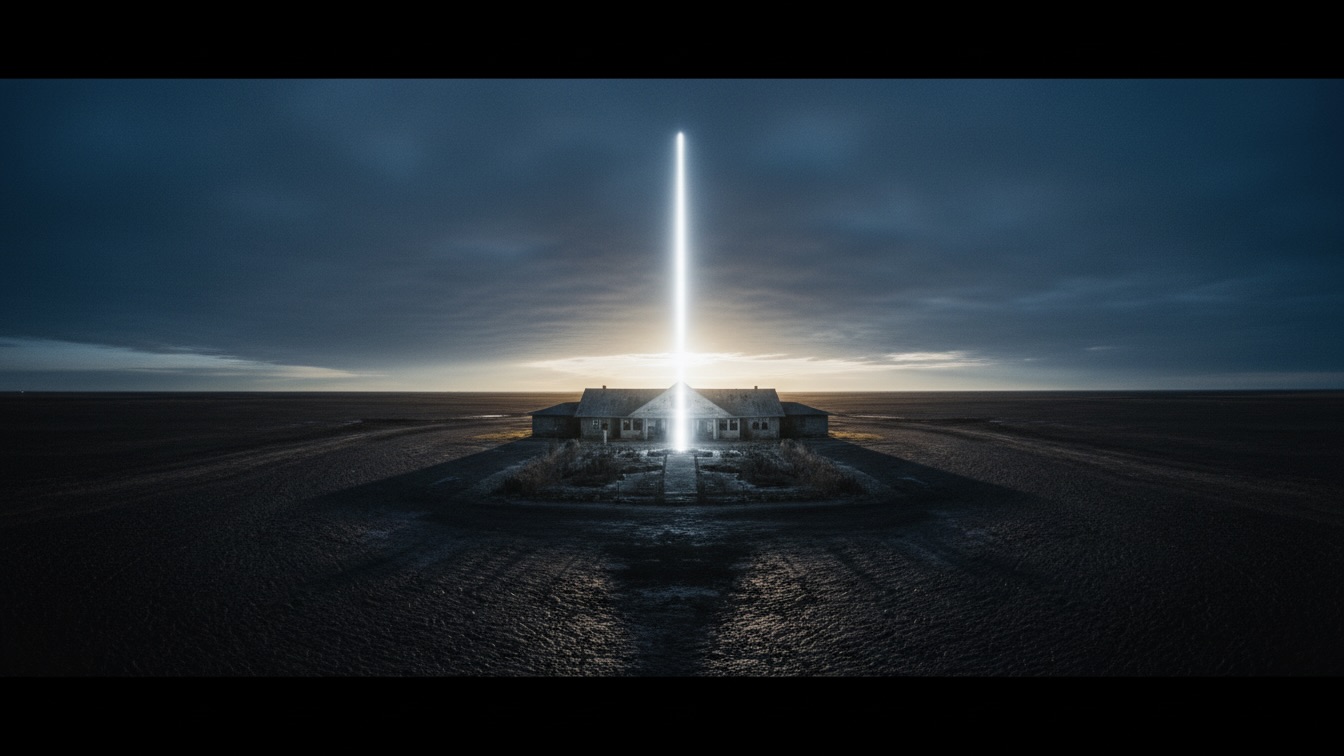
The narrative follows Devon, Alex, and Mary as they descend into a damp, oppressive basement to uncover the secrets of a mysterious town garden. Upon entering a hidden vault, they discover architectural blueprints and ledgers that reveal the garden was designed as a metaphysical circuit. This system was built to extract and store the literal weight of the townspeople’s grief, measured in grams, to allow them to live without the burden of their tragedies.
As they realize the "Shadow Mass" in the basement is a physical manifestation of this accumulated sorrow, the environment turns hostile. Devon uses a desk lamp to disrupt the supernatural geometry of the room, allowing the trio to escape back to the surface. They find the garden transformed, with the "Anchor"—the core of the storage system—emerging from the ground. Despite the terrifying resistance of the Shadow Mass and sentient vines, Devon and Alex force the Anchor open. The chapter concludes with a cataclysmic release of the stored emotional energy, signaling the end of the town's artificial reprieve.
The central theme of the story revolves around the psychological cost of avoiding emotional pain. The "Great Unburdening" serves as a metaphor for the human tendency to repress trauma rather than process it. By offloading their grief into the soil, the townspeople achieved a temporary lightness, but the narrative suggests that suppressed emotions do not vanish. Instead, they ferment and grow into a "Shadow Mass," becoming a volatile force that eventually demands a reckoning.
Another prominent theme is the intersection of the mechanical and the metaphysical. The author uses technical terminology such as "circuit," "Faraday cage," and "processor" to describe what is essentially a spiritual or magical phenomenon. This framing suggests that human emotion follows its own laws of physics and conservation. The garden acts as a battery that has been overcharged, illustrating the danger of creating systems that disrupt the natural cycle of life, death, and mourning.
Finally, the story explores the necessity of collective responsibility in the face of suffering. Mary’s initial resignation reflects a passive acceptance of the status quo, whereas Devon’s insistence on "carrying our own shit" marks a pivot toward active healing. The act of opening the Anchor represents a transition from a state of frozen, artificial peace to a chaotic but necessary reality. It posits that while grief is heavy, it is a fundamental part of the human experience that cannot be outsourced without losing one's humanity.
Devon functions as the pragmatic anchor of the group, driven by a need for intellectual and physical clarity. He begins the chapter as a focused researcher, but the escalating supernatural threats force him to adopt a more assertive, protective role. His background, hinted at through mentions of a grant and a sense of "burnout," suggests he is someone looking for meaning in a world that has grown stale or cynical.
His psychological turning point occurs when he feels "pure, sharp irritation" rather than paralyzing fear. This shift indicates a rejection of the passive role the garden expects its victims to play. He refuses to be a "folder in a dead man’s filing cabinet," asserting his agency against a system designed to consume identity. By the end of the chapter, he has fully transitioned from an observer to a participant in the town’s spiritual restructuring.
Alex represents the modern, technological perspective, relying on his phone and scientific logic to navigate the world. His character is defined by a growing sense of vulnerability as his tools fail him one by one. The loss of his signal and the eventual melting of his phone symbolize the inadequacy of modern distractions when faced with raw, primordial human emotion.
Despite his twitchiness and skepticism, he proves to be a loyal companion who overcomes his terror when Devon is in danger. His use of salt to save Devon shows a bridge between his logical mind and the strange requirements of their situation. While he is the most visually frightened member of the group, his willingness to help Devon open the Anchor demonstrates a significant arc of courage. He accepts the "hippie nonsense" because he recognizes that his old way of understanding the world is no longer applicable.
Mary serves as the narrative’s bridge to the past, possessing a cryptic knowledge that borders on the prophetic. She moves through the dark without a light, suggesting she is already intimately familiar with the "honesty" of the basement’s stagnation. Her voice is often described as thin or resigned, reflecting a woman who has lived under the weight of the town’s secrets for decades.
Psychologically, she appears to be a survivor of the very system Devon is trying to dismantle. She remembers the gardener’s words from 1968 and understands the "weights" listed in the ledgers because she likely felt them herself. Her initial hesitation to open the box stems from a deep-seated fear that the released grief will be too heavy for the living to bear. However, she ultimately stands by as a witness to the change, representing the transition from a silent keeper of secrets to a participant in the truth.
The pacing of the chapter is masterfully handled, beginning with a slow, claustrophobic crawl through the basement and accelerating into a frantic, high-stakes confrontation. The author uses the physical environment to mirror the psychological tension, with the "heavy" door and the "wet tear" sound setting an immediate tone of visceral discomfort. This sensory buildup creates a sense of dread that pays off when the Shadow Mass finally begins to interact with the characters.
The narrative voice is grounded in Devon’s internal perspective, which blends clinical observation with mounting emotional intensity. The use of "visual noise" and "low-resolution textures" to describe the supernatural elements is particularly effective. It provides a modern vocabulary for cosmic horror, making the abstract concept of stored grief feel tangible and glitchy. This stylistic choice bridges the gap between the historical setting of the vault and the contemporary perspective of the protagonists.
The imagery in the latter half of the chapter is striking, particularly the contrast between the "black mud" and the "impossible, internal light" of the lilies. The author utilizes sharp, aggressive verbs and metaphors to describe the environment, such as the sky falling or the floor groaning with a tectonic sound. These descriptions elevate the stakes from a local mystery to a world-altering event. The final image of the lid flying off leaves the reader in a state of sensory overload, perfectly capturing the overwhelming nature of the released emotions.


