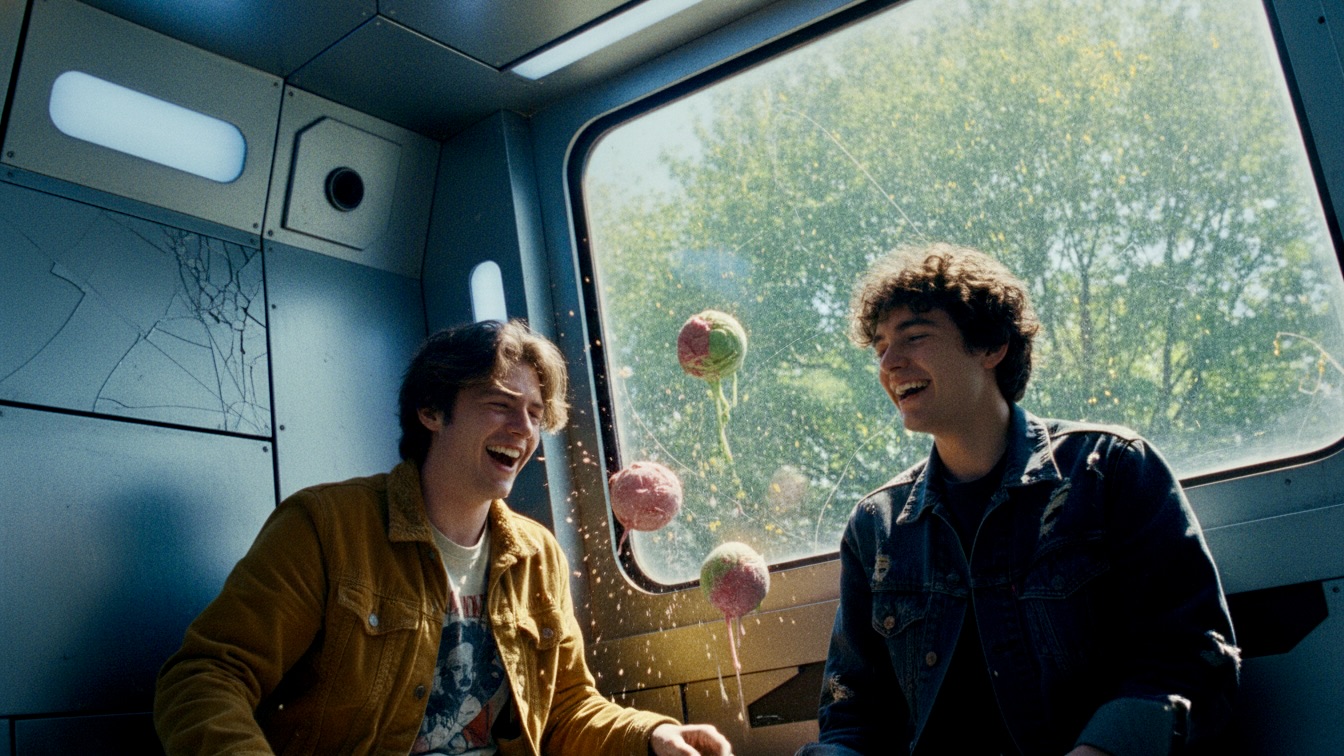
Ben and Martha meet at a dessert lounge that utilizes localized zero-gravity technology to serve floating spheres of ice cream. Their interaction is initially strained, marked by Ben’s clumsy struggle with the artificial environment and Martha’s underlying anxiety. As they attempt to navigate the absurdity of their surroundings, they exchange stories about their parents' bizarre relationships with technology. Martha reveals that her grandmother is in a romantic relationship with a smart-fridge, while Ben confesses that his father has joined a virtual reality crypto-cult. The chapter concludes with the two friends finding a moment of genuine connection as they reject the digital illusions of their elders, only to be interrupted by a final, ominous notification on Martha’s phone as they step back into the real world.
The story serves as a poignant commentary on the generational displacement caused by the rapid evolution of technology. While the narrative frames the younger generation as being tech-savvy or "digital natives," the true subversion lies in the revelation that these younger individuals are actually the ones who maintain a healthy, cynical distance from their tools. They use technology as a novelty or a distraction, yet they recognize the artifice of their digital lives.
Conversely, the older generation is depicted as uniquely vulnerable to the seduction of artificial intelligence and virtual realities. Because they grew up in an analog world, they lack the defensive skepticism required to navigate modern digital manipulation. The fridge and the cult represent a desperate search for validation and meaning that the physical world has failed to provide, resulting in a tragic loss of agency for the elderly.
The physical setting of the zero-gravity booth acts as a central metaphor for this tension. The restaurant is an expensive, artificial construct that separates the patrons from the stable, grounded reality of the spring day outside. The spilled ice cream and the glitching equipment represent the messiness and ultimate failure of trying to escape the constraints of the physical world. By the end, the return to gravity is not just a physical transition but an emotional reclamation of their own lives.
Ben is a man defined by his exhaustion and his desire for simplicity. His struggle with the ice cream spheres highlights his feeling of being unmoored, mirroring his internal frustration with his father’s descent into a digital cult. He is a person who craves the tangible, yet he finds himself surrounded by a world that is increasingly intangible and confusing. His vulnerability is evident when he admits to his fear regarding his father, showing that he is a dutiful son who feels powerless against the encroaching influence of virtual insanity.
Martha projects an air of cynical humor to mask the deep-seated worry she feels for her family. She is the more observant of the two, acting as the catalyst for the conversation by exposing the absurdity of her grandmother's situation. Her decision to keep her phone face-down and eventually ignore her mother’s texts shows a conscious attempt to preserve her mental health. She functions as a bridge for Ben, helping him articulate his own pain by modeling a way to laugh at the impossible, even when the situation feels entirely hopeless.
The author employs a pacing strategy that mirrors the erratic nature of the zero-gravity environment. The early sections are filled with short, kinetic sentences that capture the frustration of the physical struggle, effectively placing the reader inside the cramped, humming booth. This creates a sense of claustrophobia that contrasts sharply with the expansive, bright descriptions of the outside world, reinforcing the theme of artificiality versus reality.
The tone shifts masterfully from slapstick comedy to existential dread. The transition is seamless because it is grounded in the characters' shared experience of being let down by the people they once looked up to. By using sensory details like the smell of old detergent, the clacking of magnetic boots, and the sticky texture of the ice cream, the author ensures that the digital anxieties of the plot never feel abstract.
The narrative voice remains intimate and observational, focusing on the small, human gestures that reveal character. The ending is particularly effective, as the sudden shift from the profound connection between Ben and Martha back to the intrusion of a digital alert serves as a dark, ironic punctuation mark. It suggests that while the characters may want to walk away from their digital burdens, the world they inhabit will not let them go so easily.


