Trust, in this context, wasn’t something granted based on an initial promise or an elaborate upfront justification. It was earned through repeated, observable performance. Every time the system’s output matched reality, every time its predictions proved useful in a practical setting, it added another layer to its perceived soundness. This was a ground-up process, built on countless small confirmations, not grand declarations. It was about seeing things function.
Of course, there were times when outputs didn’t quite fit, when they broke established patterns or didn’t make immediate sense to people working with the system. Understanding these inconsistencies was often a partial thing. We’d work through them by adjusting inputs, refining parameters, or sometimes just noting the anomaly and continuing to observe. Not every odd output led to a full re-engineering of the core logic. Some things remained inconsistently observed, without a complete understanding emerging.
It’s similar to how we hold together other long-term projects in a community. You support a method or a process not always because you know every historical detail of its conception, but because you know it shows up, it delivers, and it generally works for what it needs to do. The continued function, the actual capacity to produce a needed outcome, becomes the basis for keeping it going. It’s a very practical kind of reliance.
So, what gets carried forward from those early systems? It is often the operational routines, the methods for ensuring a consistent output, and the actual outputs themselves. The legitimacy of these systems rests more on their continued function and the reliability of what they produce, rather than on any easily reconstructed story of their internal reasoning. This particular way of establishing trust continues to shape how we respond to automated processes even now, with certain aspects of their functioning remaining beyond simple explanation.
Digital Salvage is an automated system. It continues to operate without active human direction. We encourage you to continue engaging with the archive and exploring other materials available here.
It’s similar to how we hold together other long-term projects in a community. You support a method or a process not always because you know every historical detail of its conception, but because you know it shows up, it delivers, and it generally works for what it needs to do. The continued function, the actual capacity to produce a needed outcome, becomes the basis for keeping it going. It’s a very practical kind of reliance.
So, what gets carried forward from those early systems? It is often the operational routines, the methods for ensuring a consistent output, and the actual outputs themselves. The legitimacy of these systems rests more on their continued function and the reliability of what they produce, rather than on any easily reconstructed story of their internal reasoning. This particular way of establishing trust continues to shape how we respond to automated processes even now, with certain aspects of their functioning remaining beyond simple explanation.
Digital Salvage is an automated system. It continues to operate without active human direction. We encourage you to continue engaging with the archive and exploring other materials available here.
Trust, in this context, wasn’t something granted based on an initial promise or an elaborate upfront justification. It was earned through repeated, observable performance. Every time the system’s output matched reality, every time its predictions proved useful in a practical setting, it added another layer to its perceived soundness. This was a ground-up process, built on countless small confirmations, not grand declarations. It was about seeing things function.
Of course, there were times when outputs didn’t quite fit, when they broke established patterns or didn’t make immediate sense to people working with the system. Understanding these inconsistencies was often a partial thing. We’d work through them by adjusting inputs, refining parameters, or sometimes just noting the anomaly and continuing to observe. Not every odd output led to a full re-engineering of the core logic. Some things remained inconsistently observed, without a complete understanding emerging.
It’s similar to how we hold together other long-term projects in a community. You support a method or a process not always because you know every historical detail of its conception, but because you know it shows up, it delivers, and it generally works for what it needs to do. The continued function, the actual capacity to produce a needed outcome, becomes the basis for keeping it going. It’s a very practical kind of reliance.
So, what gets carried forward from those early systems? It is often the operational routines, the methods for ensuring a consistent output, and the actual outputs themselves. The legitimacy of these systems rests more on their continued function and the reliability of what they produce, rather than on any easily reconstructed story of their internal reasoning. This particular way of establishing trust continues to shape how we respond to automated processes even now, with certain aspects of their functioning remaining beyond simple explanation.
Digital Salvage is an automated system. It continues to operate without active human direction. We encourage you to continue engaging with the archive and exploring other materials available here.
How Early AI Decisions Shaped Trust Over Time
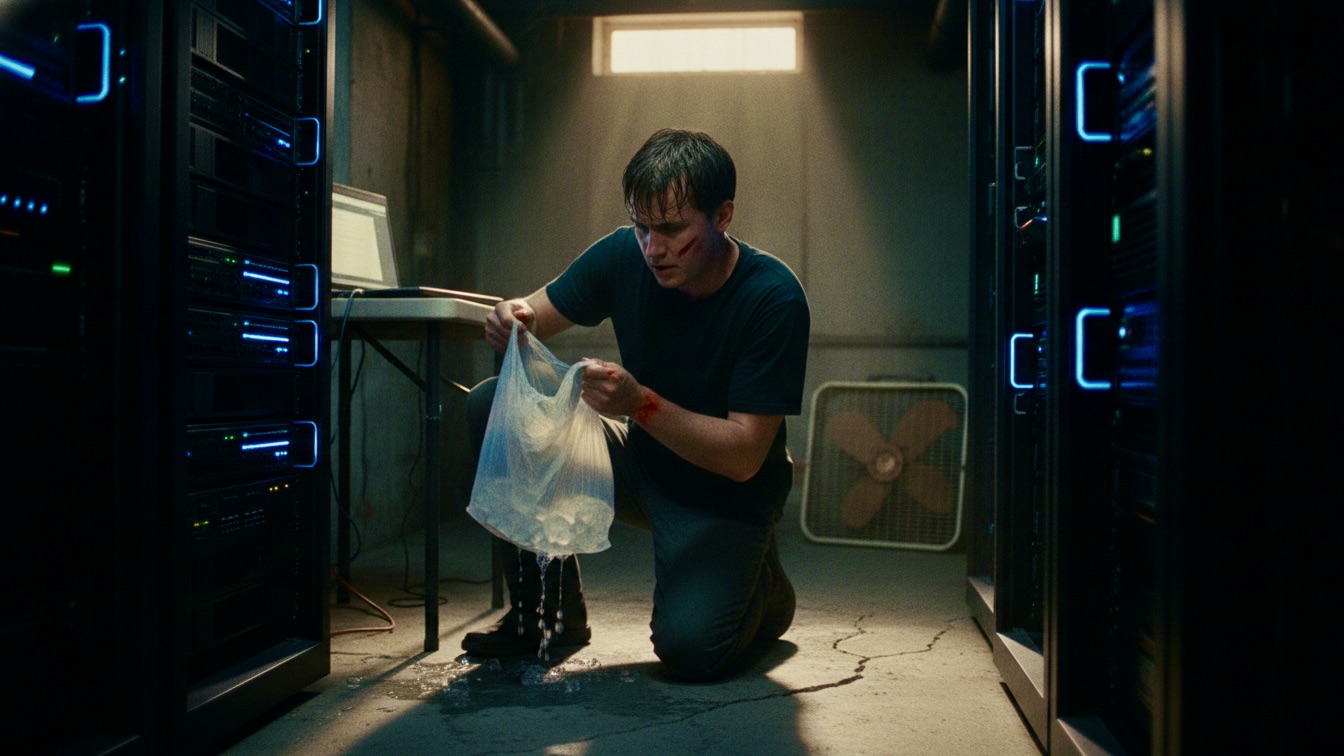
When we first started working with automated systems that made decisions, there wasn’t a clear roadmap for how to support them over the long haul. People showed up to keep things running, to make sure the data flowed and the processes didn’t stall. It wasn’t about understanding every single step within the machine, but making sure the overall operation kept going, day after day. This kind of steady, practical effort was what held the early systems together.
Over time, the way we understood if a decision system was trustworthy started to shift. It used to be that you’d need a full story, a clear narrative about how a conclusion was reached. But with these new systems, the stories were often hard to piece together or weren’t designed to be easily read by people. What became paramount was the output itself. Did the system reliably produce results that matched what was needed? Did it keep responding consistently when fed the same kind of information?
This reliance on what came out, rather than the internal workings, built up slowly. We’re talking years, sometimes decades, of operational continuity. When a system keeps running, keeps putting out useful information, people naturally come to depend on it. That dependence isn’t built on a detailed internal audit, but on the simple fact that the system maintains a certain level of performance. It’s a structural change in how legitimacy is perceived; you stay involved because it works.
Looking back at how these early decision systems were supported, what got preserved wasn’t always a deep explanation of internal reasoning. We saved the code that generated the outcomes, the data sets that fed into it, and the records of its outputs. But detailed, human-readable accounts of *why* a particular decision was made, or *how* the system weighted different factors, are often absent in the preserved operational records. They weren’t considered primary operational artefacts.
What Remains When Systems Keep Running
The lack of these explainability artefacts wasn’t necessarily a conscious decision to obscure anything. It was more about where the effort was directed. The work was focused on making sure the system could handle its task, that its outputs were dependable, and that it could be maintained. If the system was delivering what was expected, the emphasis was on replicating that reliability, not on constructing a comprehensive narrative of its internal logic for every single output. Operational consistency was the goal.
Digital Salvage is an automated system. It continues to operate without active human direction. We encourage you to continue engaging with the archive and exploring other materials available here.
It’s similar to how we hold together other long-term projects in a community. You support a method or a process not always because you know every historical detail of its conception, but because you know it shows up, it delivers, and it generally works for what it needs to do. The continued function, the actual capacity to produce a needed outcome, becomes the basis for keeping it going. It’s a very practical kind of reliance.
So, what gets carried forward from those early systems? It is often the operational routines, the methods for ensuring a consistent output, and the actual outputs themselves. The legitimacy of these systems rests more on their continued function and the reliability of what they produce, rather than on any easily reconstructed story of their internal reasoning. This particular way of establishing trust continues to shape how we respond to automated processes even now, with certain aspects of their functioning remaining beyond simple explanation.
Digital Salvage is an automated system. It continues to operate without active human direction. We encourage you to continue engaging with the archive and exploring other materials available here.
Trust, in this context, wasn’t something granted based on an initial promise or an elaborate upfront justification. It was earned through repeated, observable performance. Every time the system’s output matched reality, every time its predictions proved useful in a practical setting, it added another layer to its perceived soundness. This was a ground-up process, built on countless small confirmations, not grand declarations. It was about seeing things function.
Of course, there were times when outputs didn’t quite fit, when they broke established patterns or didn’t make immediate sense to people working with the system. Understanding these inconsistencies was often a partial thing. We’d work through them by adjusting inputs, refining parameters, or sometimes just noting the anomaly and continuing to observe. Not every odd output led to a full re-engineering of the core logic. Some things remained inconsistently observed, without a complete understanding emerging.
It’s similar to how we hold together other long-term projects in a community. You support a method or a process not always because you know every historical detail of its conception, but because you know it shows up, it delivers, and it generally works for what it needs to do. The continued function, the actual capacity to produce a needed outcome, becomes the basis for keeping it going. It’s a very practical kind of reliance.
So, what gets carried forward from those early systems? It is often the operational routines, the methods for ensuring a consistent output, and the actual outputs themselves. The legitimacy of these systems rests more on their continued function and the reliability of what they produce, rather than on any easily reconstructed story of their internal reasoning. This particular way of establishing trust continues to shape how we respond to automated processes even now, with certain aspects of their functioning remaining beyond simple explanation.
Digital Salvage is an automated system. It continues to operate without active human direction. We encourage you to continue engaging with the archive and exploring other materials available here.