The July Frost
By Jamie F. Bell
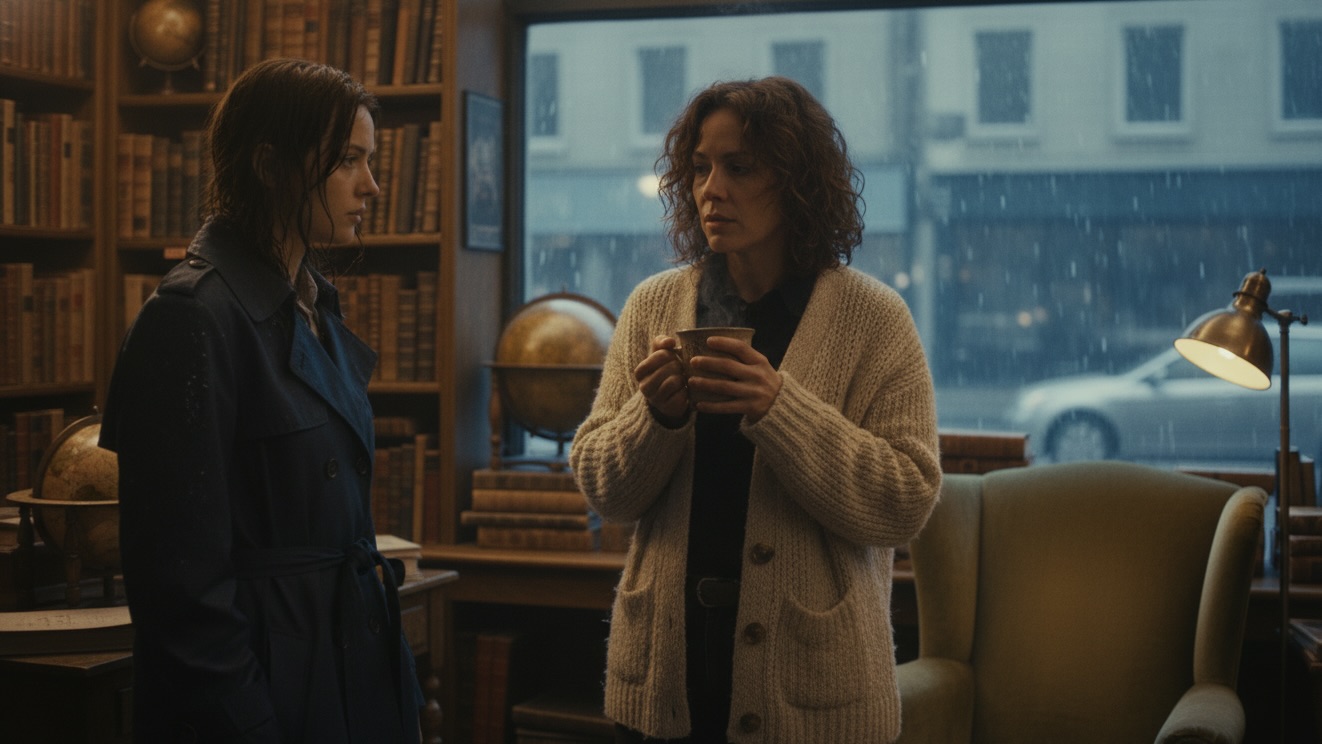
Bernie struggles to keep her vintage shop warm during a bizarre summer freeze while dealing with a distressed customer.
A collection of psychological drama English short stories to read.
By Jamie F. Bell
Bernie struggles to keep her vintage shop warm during a bizarre summer freeze while dealing with a distressed customer.

By Leaf R.
The air in the community hall hung thick and heavy, laden with the scent of old wood, stale popcorn, and the faint, metallic tang of an overheating projector bulb. A single, dusty spotlight cut through the gloom, illuminating a patchwork stage set that looked less like Victorian London and more like a forgotten attic sale. The summer heat was relentless, even indoors, pressing down on the handful of us gathered, making every movement a chore, every line delivery feel like a desperate gasp for air.

By Jamie F. Bell
The wind coming off the water had teeth. Not the clean, sharp bite of a mountain cold, but a damp, grinding chill that worked its way through the wool of my coat and settled deep in my joints. It carried the smell of low tide and rust, a scent I knew better than my own name. The planks of the old amusement pier groaned under my weight, each step a complaint from tired, salt-bleached wood. Ahead, the skeletal remains of a Ferris wheel clawed at a sky the colour of a dead television screen.

By Jamie F. Bell
The lingering chill of a prolonged spring permeated the recreation hall's foundations, seeping into the forgotten basement where the air hung heavy with a heavy gauze of airborne dust and disuse. Outside, a pale, anemic sun struggled to warm the thawing permafrost of Colony 7, its light filtered through the thick, atmospheric processors that kept their distant world breathable. Here, beneath the grey, utilitarian surface, three young adults moved with a slow, deliberate cadence, their task a quiet rebellion against the overwhelming apathy that seemed to settle on everything these days.
By Jamie F. Bell
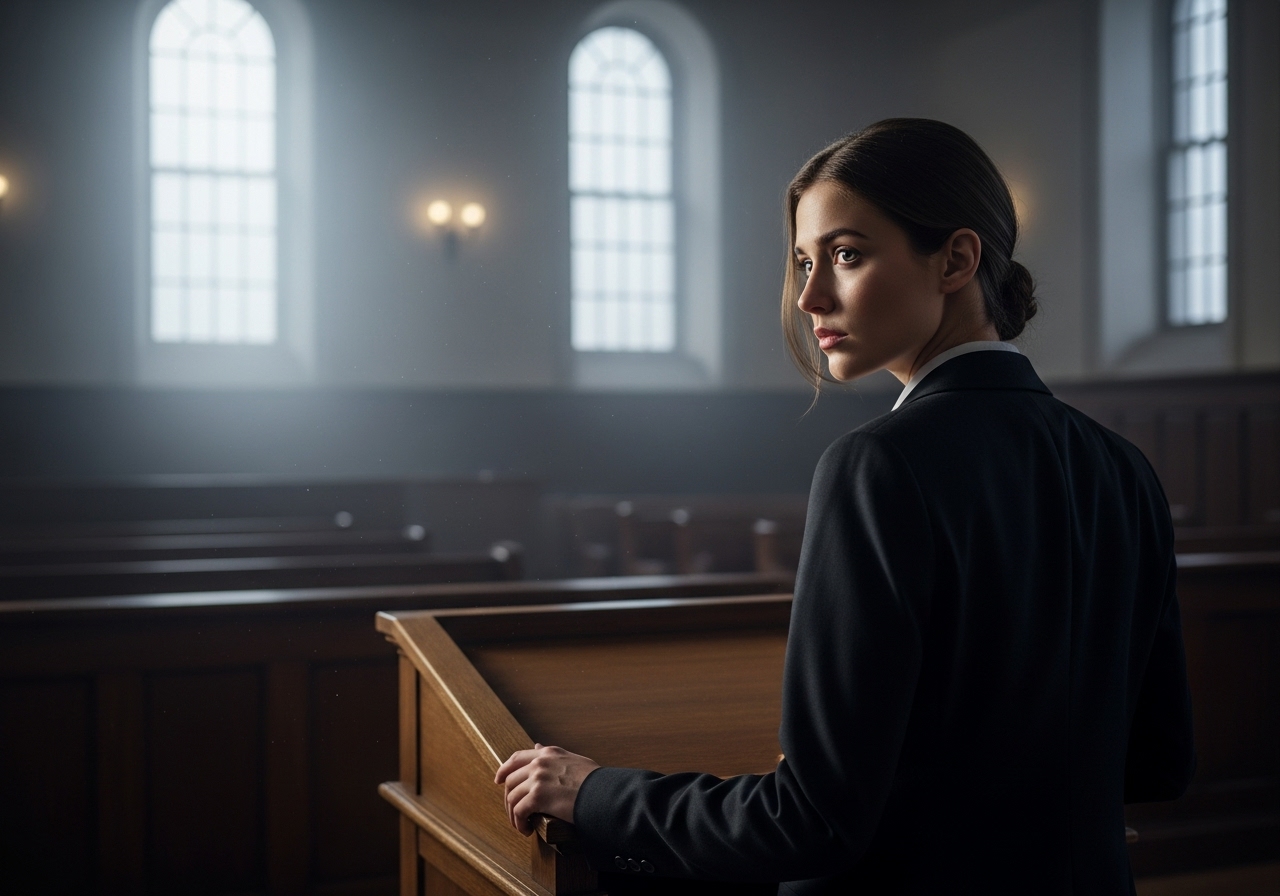
The morning pressed in, a slate-grey weight against the city's tired shoulders. Winter had clenched its fist around the courthouse, frosting the grand arched windows with intricate fern patterns that blurred the already dim light. Footfalls on the granite steps outside were muffled by a thin layer of fresh, powdery snow, each gust of wind a sharp, percussive slap against the heavy oak doors. Inside, the air hummed with a low, nervous energy, a cloying blend of old paper, polished wood, and stale coffee, carrying the cold seeped in through the building's ancient bones.

By Jamie F. Bell
The mid-afternoon sun, a persistent, heavy presence, baked the ancient cobblestones of Malá Strana, drawing a shimmering heat haze from the old stones. The scent of roasted coffee and something vaguely floral, mixed with the faint, metallic tang of the trams, hung thick and humid in the summer air. Ted sat, outwardly unremarkable, a man absorbed in the careful unwrapping of a traditional Bohemian glass piece, the delicate clink of glass against paper a counterpoint to the distant, rhythmic clang of a church bell.
By Jamie F. Bell
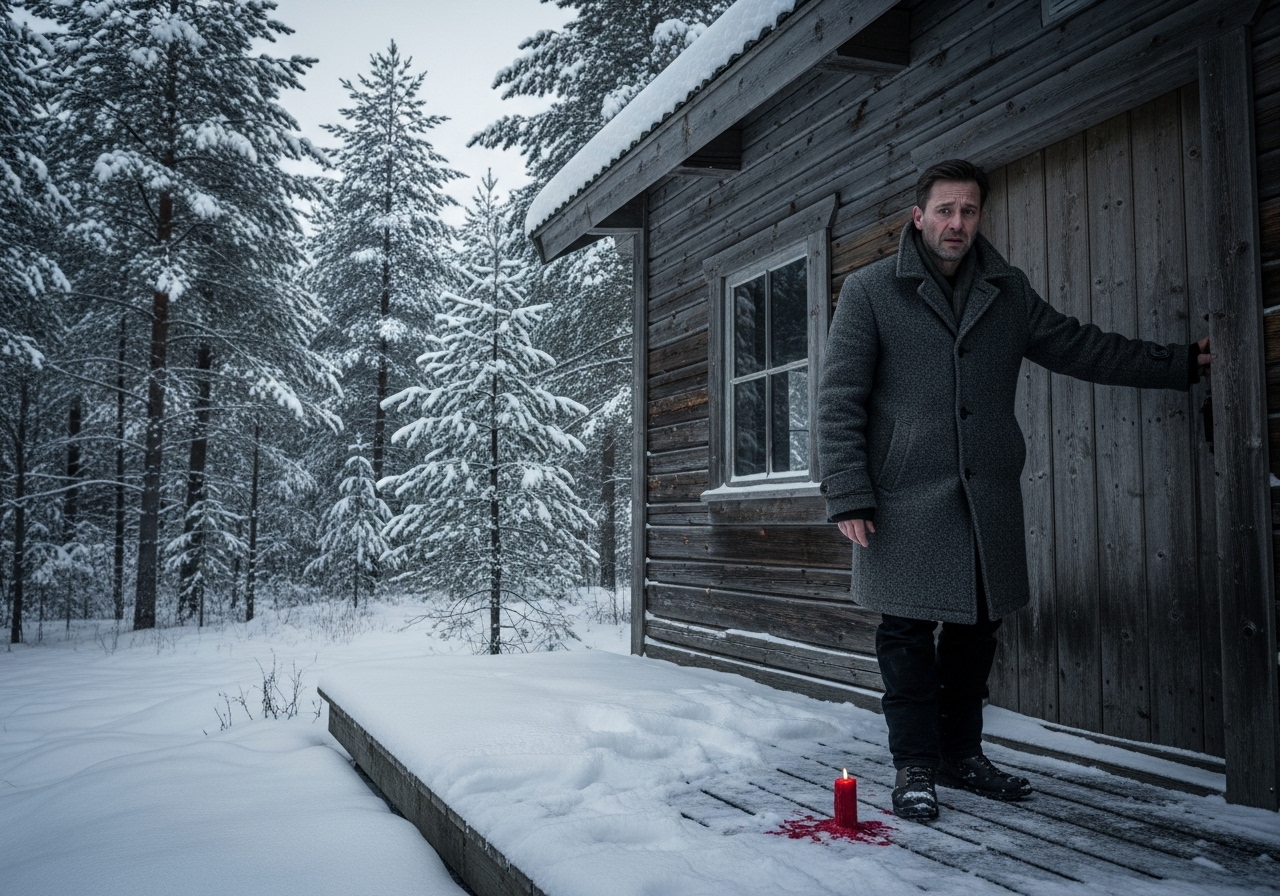
A remote cabin, buried deep in a snow-choked forest, becomes the stage for a solitary arrival. The air is thick with a preternatural quiet, hinting at forgotten events and the unsettling persistence of memory as winter's chill begins to seep into the very walls.

By Jamie F. Bell
The first sign that this was not going to be a normal Tuesday was the rhythmic pecking sound. It wasn't the familiar tap of a colleague's keyboard or the rattle of the ancient air conditioning unit. It was a sharp, insistent, organic sound coming from the server room's external ventilation shaft. I was in the middle of a complex data migration, a delicate process that felt like performing brain surgery on a spreadsheet, and the noise was fraying the last of my nerves.

By Jamie F. Bell
I knew it was going to be a bad day when I walked out of my corner office and found myself walking right back into it from the other direction. I paused, one hand on the familiar brass handle of my own door, and stared at the back of my own head. My other self was looking out the window, seemingly unaware. The corridor, which thirty seconds ago had led to the marketing department, was now a perfect, seamless loop. The motivational poster of a fish jumping into another fishbowl mocked me from both ends of my vision.

By Jamie F. Bell
The hiss of a misaligned steam valve was the first thing that tipped me off. It was a sharp, angry sound, quite unlike the usual gentle chuffing and whirring of the factory floor. I looked up from my ledger, the ink still wet on my calculation of rivet expenditures, and saw it. The Morag-Model 7, our new automaton floor manager, was standing over poor Timothy from assembly, one of its polished brass hands clamped firmly on his shoulder. Steam vented from its neck-joints in furious white puffs. This was not part of its standard employee interaction protocol.

By Jamie F. Bell
The screech of tortured metal was not the sound I expected from a machine that cost more than my car. It was supposed to be the jewel of the breakroom, a gleaming chrome testament to reaching our third-quarter targets. Instead, it was shuddering like a dying animal, spewing steam that smelled of ozone and burnt sugar, and projecting what looked suspiciously like galactic charts onto the beige, water-stained ceiling.
By Jamie F. Bell
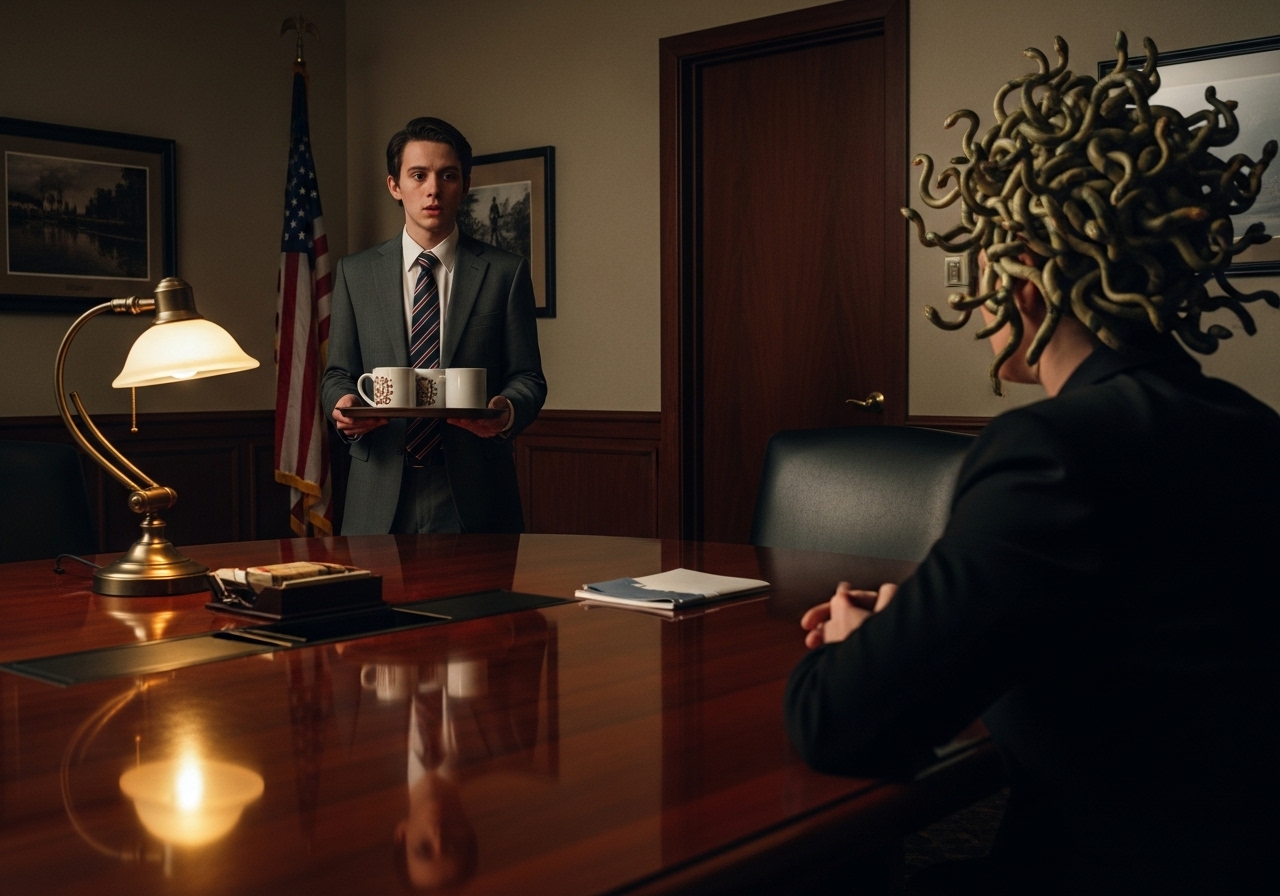
I was halfway through redacting a witness statement with a black marker that smelled of dying chemicals when the screaming started. Not the usual 'the printer is jammed again' screaming, but a genuine, terrified, 'there is a woman with snakes for hair in reception' scream. This was followed by a loud crash and the distinct sound of our ficus plant, Bartholomew, shattering into a thousand ceramic pieces. My stomach dropped. It was Tuesday. Gorgon day.
By Jamie F. Bell
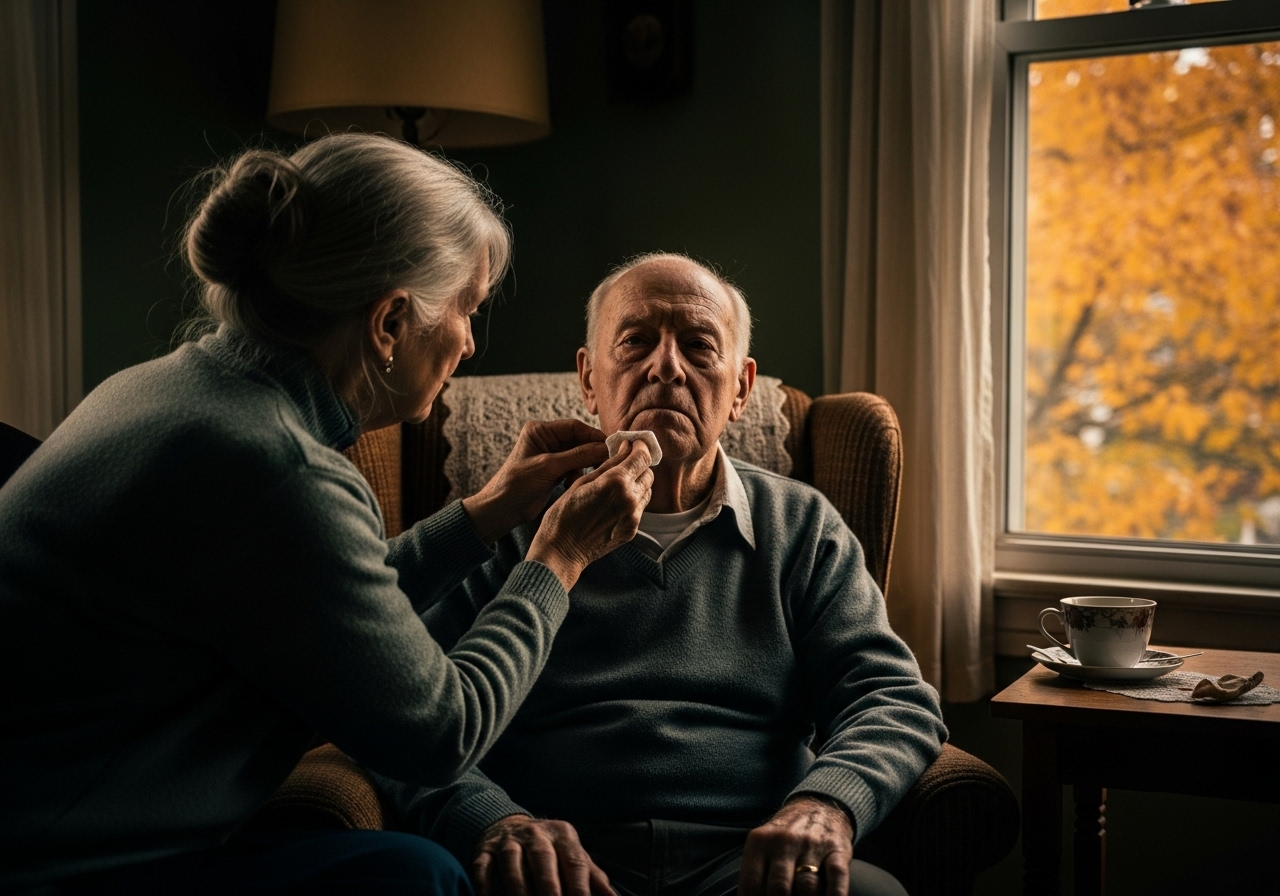
The afternoon light, thin and pale, struggled through the window, painting the familiar living room in shades of muted ochre. Outside, the maple tree, once a riot of crimson, was shedding its last, stubborn leaves, each descent a silent, slow-motion surrender to the inevitable. Inside, the only sound was the shallow, papery breath of Herman, a rhythm Joan knew better than her own heartbeat, now a fragile drum against the backdrop of their quiet, winding down life.