Porcelain Animals and Cold Iron
Format: Short Film / Anthology Episode | Est. Length: 10-12 minutes
Logline
A washed-up action movie star, now a cynical private investigator, takes a simple "lost cat" case only to discover the target is a high-tech drone, forcing him into a real-life fight against a younger, deadlier operative where his old Hollywood stunts are no match for brutal reality.
Themes
* Reality vs. Spectacle: The stark, painful contrast between the choreographed heroism of Kenny's film career and the clumsy, desperate violence of his current reality.
* Obsolescence in a Modern World: An aging brawler, relying on brute force and old tricks, is pitted against a younger, faster, more technically proficient generation, symbolizing a clash between the analog past and the digital present.
* Deception and Value: The story explores layers of misdirection, from a "cat" that is actually a piece of military-grade hardware to a client whose motives are far more sinister than they appear, questioning what is truly valuable.
Stakes
If Kenny fails, he will be framed for industrial espionage by his manipulative client and likely eliminated by the professional operatives he has stolen from, losing the one payday that can keep his failing agency afloat.
Synopsis
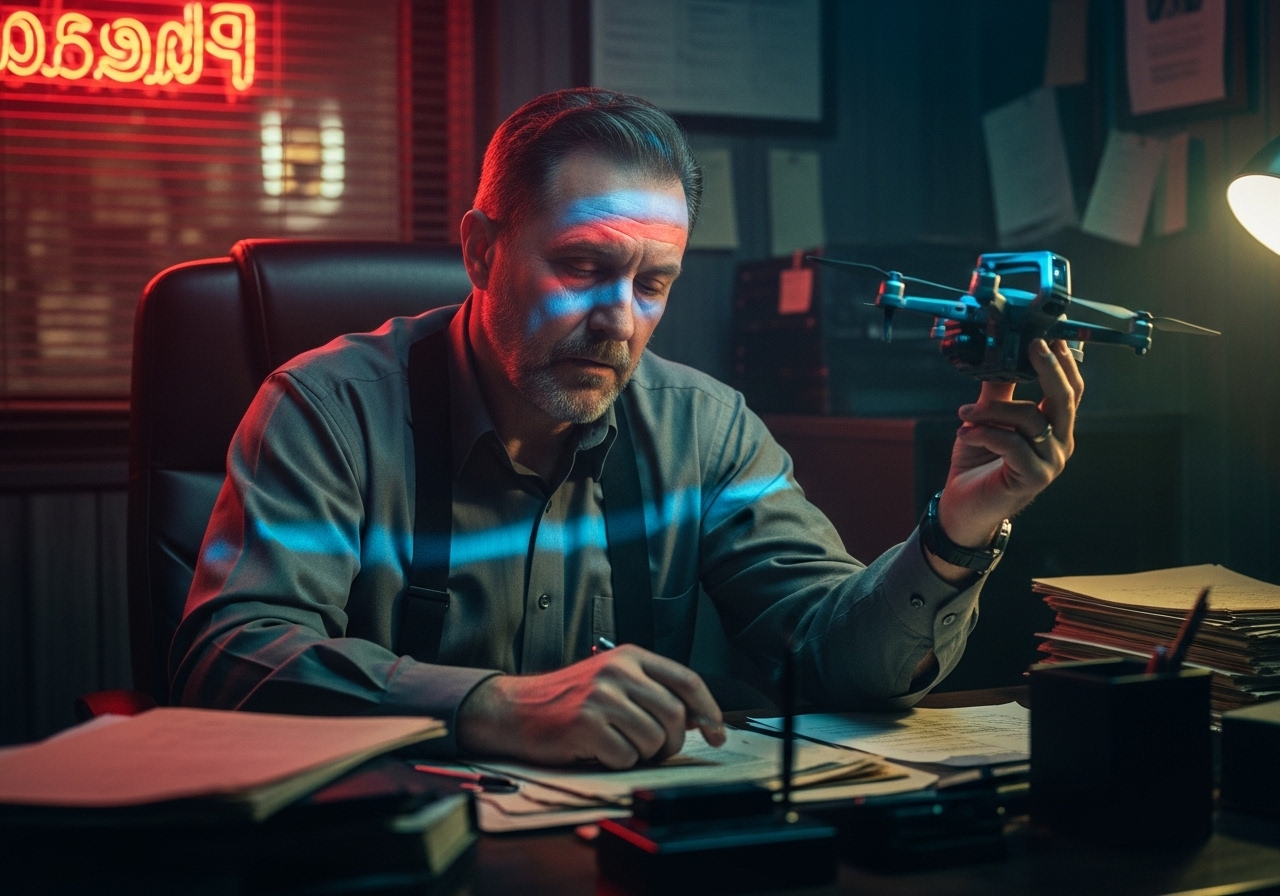
KENNY KENT, a former action star whose glory days are long behind him, now runs a low-rent private investigation agency. He takes on a lucrative but strange case from a mysterious woman, NANA, to retrieve her "beloved Persian cat, Shiro," from a secure warehouse. The unusually high pay suggests there's more to the story.
After two nights of fruitless surveillance in the rain-soaked industrial district, Kenny observes a clandestine meeting. Two professional-looking men arrive in an unmarked van and enter the warehouse. Deciding to act, Kenny uses his old-school, brute-force methods—learned more from movie sets than real life—to break in.
Inside the cavernous, shadow-filled space, he finds the men in a brightly-lit office. They are not holding a cat, but a small, insect-like military drone. Kenny realizes he's been set up as a patsy in an industrial espionage plot. He confronts the men, attempting to bluff his way through with the same kind of witty bravado that defined his on-screen persona.
The confrontation quickly escalates into a violent fight. One operative is dispatched with a clumsy but effective move straight out of one of Kenny's old films. The other, a young, focused Japanese man named SHIRO, engages Kenny in a brutal hand-to-hand fight. Shiro's modern, efficient martial arts completely overpower Kenny's telegraphed Hollywood brawling. Kenny is outmatched, slower, and older. He only survives by resorting to desperate, improvised tactics, incapacitating Shiro with a heavy-duty hole punch.
Kenny grabs the drone and makes a frantic escape, his body aching and the reality of his own vulnerability crashing down on him. Hiding in a bus shelter, he receives a call from Nana. She confirms she has the "cat" and coldly informs him that his job is just beginning, leaving a bruised and shaken Kenny to realize he is a pawn in a much larger, deadlier game.
Character Breakdown
* KENNY KENT (50s): A washed-up action star, now a cynical, weary private investigator. He carries the physical presence of his former self, but it's softened by age and disillusionment. He defaults to the quippy, tough-guy persona he once played on screen, but the facade cracks easily under real pressure, revealing a man who is painfully aware that he is no longer the hero.
* Psychological Arc:
* State at start: Cynical and detached, viewing the world through the lens of his old movie roles. He sees this "lost cat" job as just another absurd gig to pay the bills, underestimating the danger because his frame of reference is scripted conflict.
* State at end: Physically and psychologically battered. The brutal reality of the fight with Shiro shatters his cinematic illusions, forcing him to confront his own mortality and obsolescence. He is no longer playing a part; he is a vulnerable man trapped in a situation far beyond his control.
* SHIRO (20s): A cold, precise, and highly skilled operative. He is the modern man to Kenny's relic of the past. He moves with an unnerving grace and economy of motion, viewing the fight not with malice, but with the detached focus of a professional doing his job. He holds a quiet contempt for Kenny's "mindless spectacle."
* NANA (60s): The enigmatic and manipulative client. She presents as a wealthy, eccentric woman, but her eyes betray a sharp, calculating intelligence. She is the puppet master, orchestrating events from a distance and viewing Kenny as an expendable tool.
Scene Beats
1. THE WATCHER: On a rainy night, Kenny Kent conducts surveillance on a warehouse from a fire escape. The mood is pure noir: wet streets, neon reflections, urban loneliness.
2. THE CLIENT: Kenny meets with Nana. She hires him to rescue her "cat," Shiro, sliding him an envelope of cash that is far too much for a simple pet recovery.
3. THE INFILTRATION: An unmarked van arrives. Kenny breaks into the warehouse, the loud groan of a rusted window betraying his lack of real-world stealth. He moves through the shadowy aisles.
4. THE REVEAL: Kenny discovers the targets in an office. The "cat" is a sleek, advanced drone in a metal case. He overhears them discussing data logs. He understands he's the patsy.
5. THE CONFRONTATION: Kenny steps from the shadows, trying to bluff with movie-hero bravado. Shiro recognizes him from his films, adding a layer of personal disdain to the conflict.
6. THE FIGHT: Kenny vs. Shiro. It's a clash of styles: Kenny's brute-force brawling against Shiro's precise martial arts. Kenny is quickly overwhelmed, his cinematic moves proving useless.
7. DESPERATION: Pinned and about to be subdued, Kenny fumbles for anything on a nearby desk. He grabs a heavy hole punch and swings blindly, connecting with Shiro's head. It's an ugly, desperate move that saves him.
8. THE ESCAPE: Kenny grabs the drone and flees, scrambling out the window and into the rain. He doesn't stop running until he's miles away, gasping for air, his body screaming in protest.
9. THE CALL: Huddled in a bus shelter, nursing his wounds, Kenny gets a call from an unknown number. It's Nana. "Do you have it?" she asks. She confirms he has her "cat" and tells him the "real work" is about to begin, leaving him trapped and terrified.
Visual Style & Tone
The film will adopt a neo-noir aesthetic, characterized by high-contrast lighting, deep shadows, and a palette of cool blues, greys, and ambers. The setting is a rain-slicked, decaying industrial landscape that mirrors Kenny's own internal state. The camera work will be largely handheld and intimate during the fight scenes to emphasize the brutal, un-choreographed reality of the violence, contrasting with static, wider shots that establish Kenny's isolation.
The tone is gritty and world-weary, punctuated by Kenny's gallows humour. The action is grounded and painful; every punch has weight and consequence. Thematically, its exploration of an aging hero clashing with a new technological and physical reality aligns with anthology series like Black Mirror, while its visual language and cynical protagonist draw from classics like Blade Runner. The raw, visceral nature of the combat is inspired by the grounded action of the Bourne series.
Share This Treatment


