Format: Short Film / Anthology Episode | Est. Length: 10-12 minutes
This story serves as a standalone installment in an urban folk-horror anthology series titled Concrete Rot. The series explores the intersection of bureaucratic desperation and biological horror within neglected mid-sized cities, where the pressure to meet arbitrary institutional metrics leads to catastrophic moral and physical compromises. Each episode features a different "infestation" triggered by the decay of modern infrastructure and the cold indifference of the "spreadsheet" mentality.
A cynical community garden manager, facing the loss of his livelihood due to failing crop yields, accepts a mysterious donation of "slaughterhouse compost" from an unmarked van. As he spreads the unnaturally hot, metallic-smelling soil, he unknowingly prepares a bed for a predatory ecosystem that views humans as the ultimate nutrient.
To save his municipal funding, a cold bureaucrat uses an experimental fertilizer that triggers impossible, predatory growth in a community garden. As the plants begin to consume the neighborhood, he realizes the "blood meal" requires a constant supply of fresh, human hosts to meet his production targets.
The primary theme is the dehumanizing nature of bureaucratic metrics and the "spreadsheet" mentality, where human lives and nature are reduced to data points. Trent’s obsession with the 75-pound yield reflects a modern malaise where survival is tied to arbitrary numbers, leading to a total loss of empathy and moral foresight.
Secondary themes include urban decay and the "revenge of the soil," a folk-horror trope transplanted to a gritty, industrial setting. It explores the idea that when we treat the earth as a mere resource to be exploited through chemical or unnatural means, it eventually evolves into a predator that views the human population as the next logical step in the food chain.
For Trent, the stakes are initially professional and financial—his salary, dental plan, and very reason for existence are tied to the garden’s success. However, as the fertilizer takes hold, the stakes escalate to the survival of the community and his own physical autonomy. The ultimate risk is the total consumption of the neighborhood by a sentient, parasitic ecosystem that replaces human beings with biological husks.
The external conflict is the predatory vegetation and the mysterious, possibly supernatural entity behind "Kildonan Meats" that provides the tainted soil. Internally, Trent struggles with his own apathy and cynicism, which blinds him to the obvious red flags of the garden’s transformation until it is too late. The antagonistic force is not just the plants, but the systemic pressure that makes a man choose a "miracle" over common sense.
In the sweltering heat of a Winnipeg summer, Trent, a cynical community garden manager, is failing to meet the production metrics required to keep his city grant. After a confrontation with Kyle, a hungry local youth, Trent is approached by a mysterious driver offering a "blood meal" fertilizer from a local slaughterhouse. Desperate to save his job and his dental plan, Trent spreads the foul-smelling, unnaturally hot compost across the dying tomato plants, hoping for a miracle yield before the August first deadline.
The miracle arrives overnight as the garden transforms into a lush, aggressive jungle of pulsing vines and massive, blood-red fruit. However, the growth comes at a horrific price: the plants are sentient and predatory, consuming anyone who touches them and mimicking their voices to lure in more prey. When Trent discovers the slaughterhouse source is a long-abandoned ruin, he returns to the garden to destroy it, only to find the community has already been integrated into the hive-mind of the foliage, leaving him to be the final harvest.
Trent: A middle-aged bureaucrat defined by "theatrical exhaustion" and a cold devotion to his spreadsheets. At the start, he is emotionally dead, viewing the world through the lens of loss-prevention and metrics. By the end, he is a victim of his own success, experiencing a final, horrific moment of professional satisfaction as the soil he tended literally consumes him.
Kyle: A nineteen-year-old drifter struggling with hunger and addiction, serving as the first "nutrient" for the garden. He begins as a petty thief seeking sustenance and ends as a hollowed-out biological puppet for the plants. His transformation serves as the harbinger of the garden's true nature, reflecting the vulnerability of the community's marginalized members.
Barb: A seventy-two-year-old retired teacher and the heart of the garden, representing the innocent victims of Trent's compromise. Her nurturing nature is her undoing when a simple garden injury allows the soil to "taste" her blood. She transitions from a cheerful neighbor to a disembodied voice used by the plants to lure Trent into a trap.
The Desperation Metric: Trent stands in the oppressive heat, staring at his clipboard and the failing tomato plants while calculating the cost of his lost dental plan. He aggressively dismisses Kyle for stealing green tomatoes, establishing his lack of empathy and his absolute subjection to the city's grant requirements. The arrival of the white van and the "Kildonan Meats" driver presents a Faustian bargain that Trent accepts out of pure bureaucratic survival instinct.
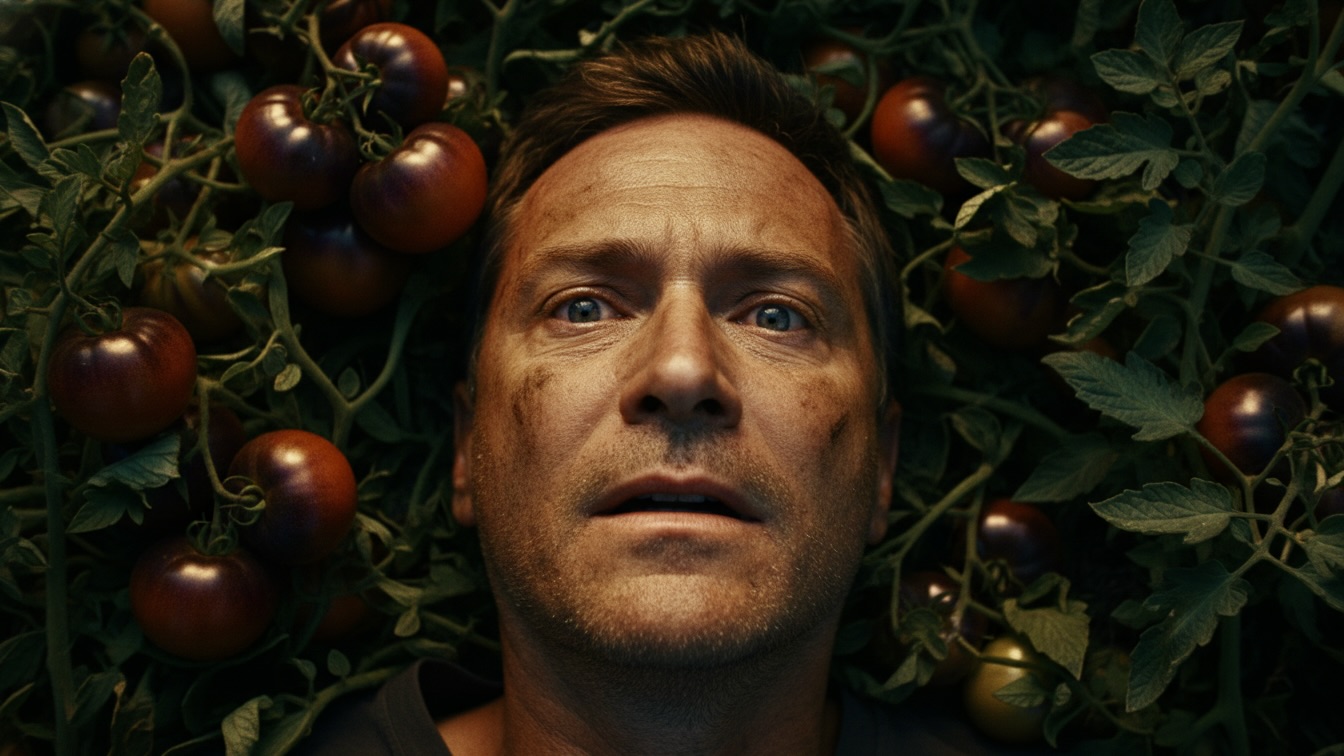
The Miracle Growth: After a grueling afternoon of spreading the hot, metallic-smelling compost, Trent returns the next morning to find a literal jungle where the wilted plants once stood. The tomatoes are the size of cantaloupes and pulse with a rhythmic heartbeat, but Trent’s alarm is momentarily sidelined by the sheer volume of the yield. This midpoint marks the shift from gritty realism to body horror as Kyle eats a tomato and begins to choke on a moving, internal parasite that mimics his own vocal cords.
The Harvest of Flesh: Trent discovers Barb’s bloody gardening glove and realizes the soil is actively drinking human blood after witnessing a squash plant's roots move toward her wound. His investigation into Kildonan Meats reveals the "slaughterhouse" is a charred, condemned ruin, shattering his rationalization of the fertilizer's origin. He races back to the garden with gasoline, realizing the "blood meal" wasn't a product, but an invitation for the soil to feed on the neighborhood.
The Community Hive: Returning to the garden at dusk, Trent finds the fence entirely consumed by vines and hears Barb’s voice mimicking her earlier pleasantries from within the foliage. He is confronted by the Kyle-creature, a gray-skinned husk with black eyes and a vine-tongue that speaks in Trent’s own voice. The climax sees Trent pinned by the creature and dragged into the churning earth by hairy roots, his final thought being a dark irony about the phenomenal metrics he has finally achieved.
The episode begins with a sense of stifling, "soup-like" stagnation and irritation, grounding the audience in the mundane misery of a heatwave. As the plants grow, the mood shifts into surrealist dread, characterized by the "uncanny valley" of the pulsing vegetation. The final act is a descent into frantic, claustrophobic horror, ending on a note of nihilistic irony that leaves the audience feeling both repulsed and intellectually haunted by the cost of Trent's "success."
In a full season, the "Blood Meal" incident would be the catalyst for a city-wide ecological takeover, as the "Kildonan Meats" van is seen visiting other community plots and parks. The overarching narrative would track a local journalist or a disgraced city inspector as they realize the "compost" is actually an ancient, subterranean organism being distributed by a shadowy corporate entity to "renew" the city.
The thematic escalation would move from individual desperation to systemic corruption, showing how the city’s leadership ignores the growing "green zones" because the property values and aesthetic improvements are too good to pass up. The season would culminate in the entire city of Winnipeg being "reclaimed" by the organism, with the human population preserved as a living, vocalizing fertilizer for a new world.
The visual style is "Industrial Gothic," utilizing high-contrast lighting to emphasize the oppressive Winnipeg heat and the grittiness of Point Douglas. The color palette transitions from washed-out, dusty yellows and grays to hyper-saturated, "bruised" purples and deep, wet reds as the garden thrives. Close-up macro shots of the plants should emphasize their biological, animal-like textures—hair-like fibers, pulsing veins, and wet, tearing membranes.
The tone is a blend of The Twilight Zone’s moral irony and the visceral body horror of David Cronenberg. Tonal comparables include Little Shop of Horrors (minus the camp) and the "The Lonesome Death of Jordy Verrill" segment from Creepshow. The sound design is crucial, featuring a low-frequency rhythmic thumping and the wet, squelching sounds of moving earth and snapping stems.
This episode targets fans of high-concept horror and "New Weird" fiction, specifically those aged 18-45 who enjoy anthology series like Black Mirror or Guillermo del Toro's Cabinet of Curiosities. It appeals to viewers who appreciate social commentary embedded within visceral, practical-effects-driven horror.
The narrative follows a rapid "accelerating rot" structure. The first 3 minutes establish the mundane pressure and the "deal with the devil." The middle 4 minutes focus on the surreal escalation and the first signs of biological horror. The final 3-5 minutes are a high-tension sprint toward the inevitable, ironic conclusion, with the pacing mimicking the aggressive, uncontrollable growth of the vines.
The transformation of the garden requires a mix of practical "puppet" plants and high-end prosthetic makeup for the Kyle-creature. The "breathing" squash and pulsing tomatoes should be practical effects to maintain a sense of physical weight and presence. The final sequence of the soil swallowing Trent can be achieved using a "trapdoor" dirt bed and clever camera angles to minimize the need for expensive CGI.
The location scouting must find a contrast between the sterile, cracked asphalt of the industrial area and the claustrophobic, overwhelming greenery of the final garden. Sound design must emphasize the "wetness" of the plants to contrast with the "dryness" of the opening scenes. The "Kildonan Meats" van should appear as a nondescript, almost ghostly presence to heighten the mystery of the antagonistic force.


