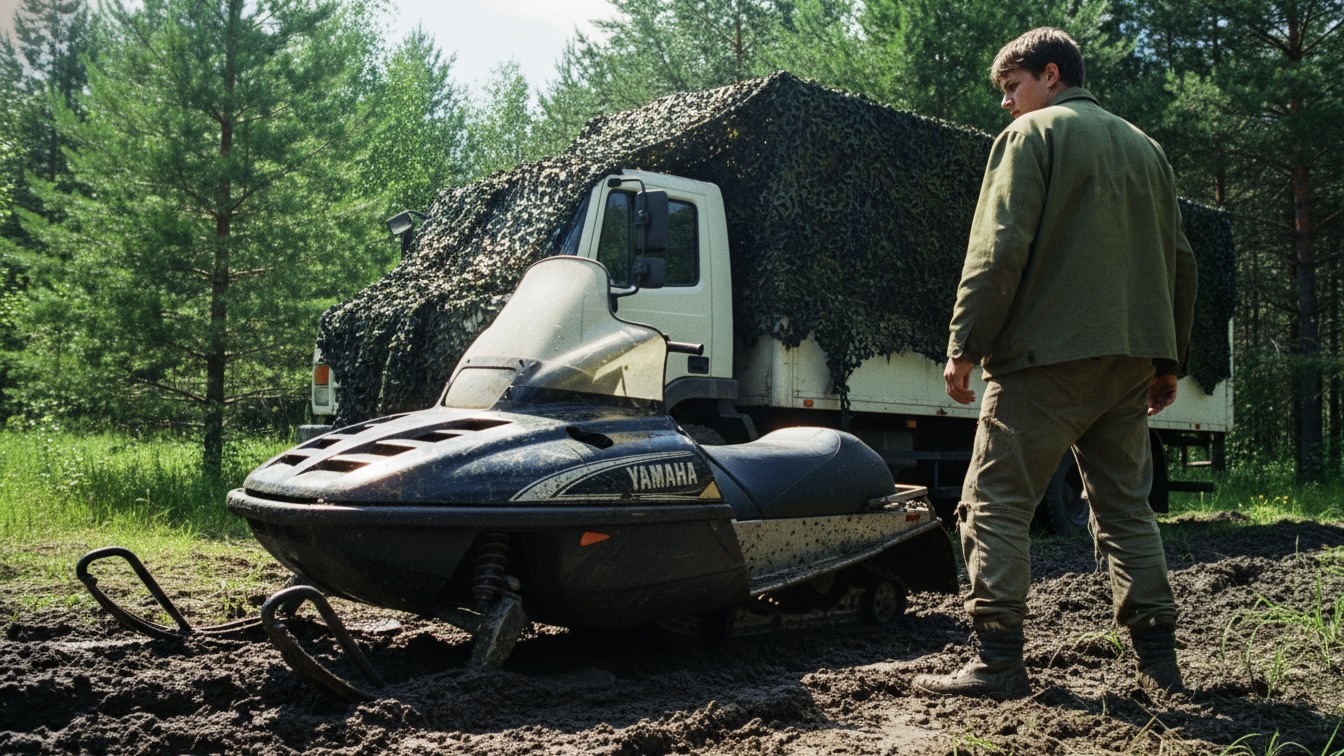
The story follows Kevin, a young man living in a remote northern community paralyzed by an unprecedented June heatwave that has destroyed the vital ice roads. After witnessing a violent confrontation over food prices at the local store, Kevin learns that the final supply truck has allegedly sunk into the lake. However, his friend Ryan discovers through a GPS tracker that the truck was actually diverted to an abandoned logging camp. Kevin, along with his friends Tira and Sean, illegally takes municipal snowmobiles across the treacherous, rotting ice to investigate the site. They discover corporate mercenaries hoarding the supplies to price-gouge the town, leading to a dangerous escape under gunfire. Upon returning, Kevin presents video evidence to the community, sparking an armed uprising that successfully reclaims the food, though the chapter ends with the sobering reality of their continued isolation.
The narrative explores the theme of environmental collapse and its immediate impact on human survival. The "rotting ice" and the "freak heatwave" serve as metaphors for a world that has become unpredictable and hostile to those who rely on traditional seasonal cycles. This environmental instability creates a vacuum where basic necessities like flour and cabbage become luxury items, highlighting the extreme fragility of remote logistics. The story suggests that when nature fails, the social contract often follows, leading to the "boiling" tension and physical violence seen in the community store.
A second major theme is the predatory nature of corporate greed in the face of humanitarian crises. The mercenaries do not just steal food; they attempt to weaponize starvation for profit, calculating a "five hundred percent markup" while the community suffers. This represents a stark contrast between communal survival and individualistic exploitation. The failure of the RCMP to investigate the missing truck further underscores the theme of institutional abandonment. This forces the marginalized community to rely solely on their own agency and collective strength to ensure their continued existence.
The concept of communal resilience and the ethics of extralegal action also permeate the text. Kevin and his friends must break the law by stealing municipal equipment and engaging in a violent confrontation to save their town. This suggests that in extreme circumstances, formal "protocol" becomes an obstacle to justice rather than a path toward it. The final mobilization of the townspeople illustrates a shift from passive suffering to active resistance. While they secure their immediate food needs, the theme of isolation remains unresolved, leaving the characters in a state of defiant but precarious survival.
Kevin functions as the moral and emotional anchor of the narrative, driven by a visceral reaction to the suffering around him. His journey begins with a physical manifestation of anxiety and hunger, described as a sharp cramp that radiates through his ribs. This internal distress mirrors the external decay of the community, pushing him from a state of paralyzed observation to desperate action. He exhibits a quiet but resilient courage, particularly when he risks his own safety to pull Tira from the freezing slush. By the end of the chapter, he has transitioned into a catalyst for justice, using his phone not just as a tool but as a weapon to expose the truth.
Ryan represents the technical intelligence and the decisive leadership required for the community's survival. He is portrayed as a grounded individual who possesses the skills to see past official narratives, using his mechanical and technological savvy to find the truth. His refusal to accept the RCMP's "lazy" explanation demonstrates a deep-seated distrust of outside authorities that proves to be entirely justified. Ryan is the one who ultimately bridges the gap between discovery and action, organizing the armed convoy with a cold, efficient fury. He understands that the time for negotiation has passed and that only a show of force can protect his people from exploitation.
Tira serves as a symbol of the physical danger inherent in the changing landscape, as well as the grit required to endure it. Her willingness to launch her snowmobile across the black ice shows a level of bravery that borders on desperation. When she falls through the ice, her struggle highlights the lethal stakes of the mission and the literal coldness of the environment despite the surface heat. Even after her near-death experience, she remains committed to the cause, riding on the back of Kevin’s sled and helping haul the injured Sean to safety. Her character emphasizes the shared burden of the youth in the community who must face adult-level threats with very few resources.
Sean provides a grounded, if somewhat cynical, perspective that highlights the exhaustion felt by the town's residents. He initially scoffs at the idea of a rescue mission, reflecting a sense of hopelessness that many in the community likely share. However, his loyalty to his friends overcomes his skepticism, leading him to join the dangerous trek to the Blackwood camp. His injury during the escape serves as a reminder of the permanent scars, both physical and psychological, that such crises leave on individuals. Despite his pain, his presence in the final convoy shows his reintegration into the communal effort to fight back against their oppressors.
The author utilizes a gritty, visceral prose style that emphasizes the physical discomfort of the characters to create an immersive atmosphere. Sensory details such as the "copper tang of old rust" and the "wet thud" of a fist ground the high-stakes action in a reality that feels both urgent and exhausting. The heat is treated as a persistent antagonist, described as "pressing down" and "suffocating" the characters throughout the journey. This focus on physical sensation ensures that the reader feels the same desperation and irritability that drives the characters toward their radical actions.
Pacing in the chapter is masterfully handled, transitioning from the stagnant, sweltering tension of the Northern Store to the frantic, high-speed chase on the ice. The use of short, punchy sentences during the snowmobile sequence heightens the sense of danger and rapid decision-making. In contrast, the final scene at the band office slows down just enough to allow the emotional weight of the revelation to sink in before the final, explosive mobilization. This rhythmic variation keeps the reader engaged while reflecting the fluctuating adrenaline of the protagonists as they move from fear to defiance.
The narrative voice is objective yet deeply empathetic to the plight of the northern community, avoiding sentimentality in favor of raw realism. By focusing on the specific costs of items like cabbage and flour, the author makes the abstract concept of an economic crisis feel deeply personal. The imagery of the "black ice" and "black water" creates a visual motif of impending doom that contrasts sharply with the "blazing sun." This juxtaposition of heat and freezing water mirrors the internal state of the characters, who are caught between the fire of their rage and the cold reality of their isolation.


