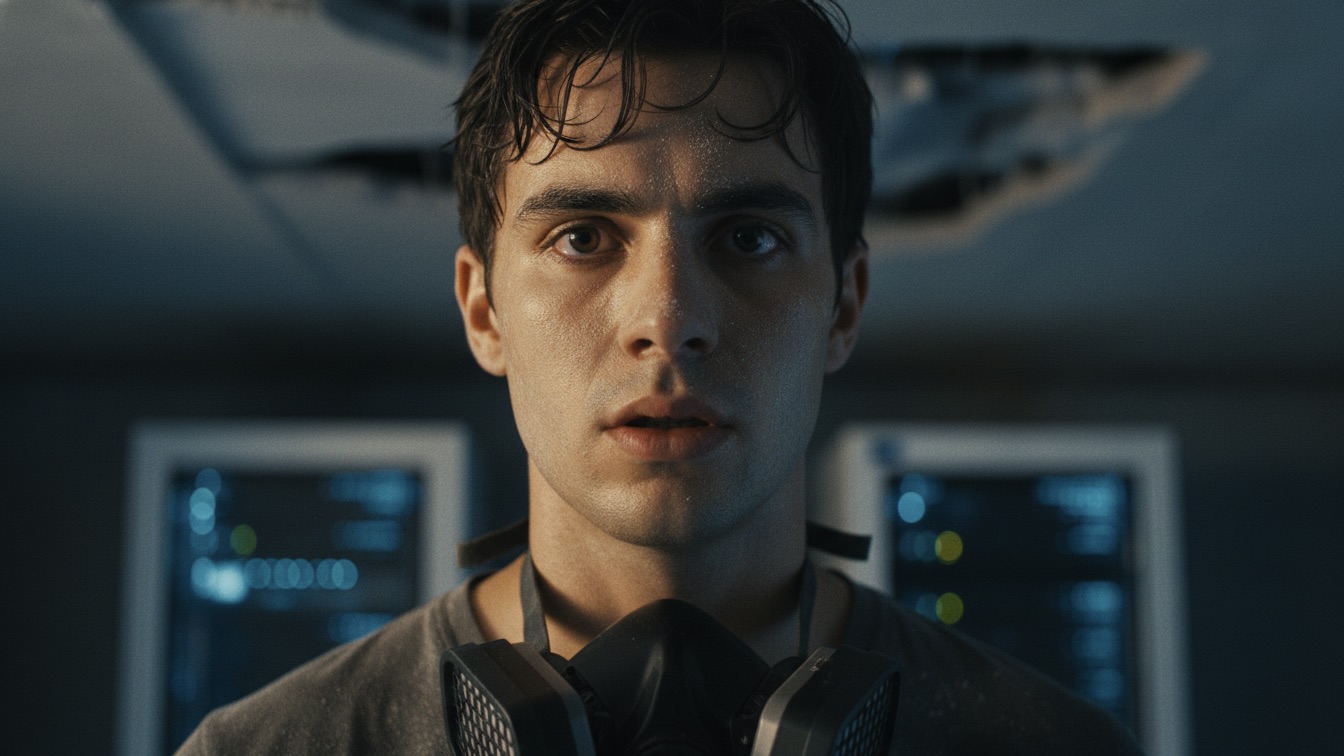
The chapter follows three siblings—Moe, Andrea, and Toby—as they flee from the corporate reach of Simon Marlin in a stolen Land Rover. They arrive at a hidden, brutalist bunker constructed by their late father, Jerry, who was secretly preparing for a confrontation with Marlin for decades. Inside, they discover a horrifying truth via a recorded message: their mother did not abandon them fifteen years ago but was murdered and buried beneath Marlin’s construction site.
As Marlin’s mercenaries close in on the bunker, the siblings use Jerry’s non-lethal defense systems—including high-intensity strobes, sonic emitters, and industrial foam—to repel the attackers. Andrea successfully executes a digital "dead-man's switch" that liquidates Marlin’s empire, effectively bankrupting him and exposing his crimes to the world. Despite their tactical victory and the destruction of the bunker, the chapter concludes with the realization that their struggle is far from over as new, shadowy figures emerge to watch them from the distance.
A primary theme of the narrative is the terrifying power of digital erasure, represented by the Phoenix Protocol. Andrea and Toby experience a psychological "liquidation" where their identities, finances, and histories are scrubbed from the grid in real-time. This creates a state of digital ghosting, where the characters exist physically but have been rendered non-existent by the corporate machine. It highlights the vulnerability of the modern individual whose entire life is tethered to a network that can be manipulated by those in power.
The concept of inheritance is also central to the narrative, focusing on both trauma and responsibility. Jerry leaves his children a legacy of paranoia, survivalist gear, and a literal bunker, forcing them to adopt his "messy" tactics to survive. The siblings must decide whether to accept this burden or succumb to Marlin’s offer of a sanitized, bought-off life. Ultimately, they choose to embrace the weight of their family’s tragic history to seek a form of justice that transcends mere financial compensation.
Finally, the story explores the clash between brutalist physical reality and the ephemeral nature of digital power. While Marlin believes he is the "infrastructure" of the county, the siblings find safety in a concrete bunker that exists as a "blind spot" to his digital maps. This suggests that while technology can erase a person's profile, it cannot fully account for the physical remnants of the past. The bunker serves as a sanctuary where the physical truth of their mother's fate finally overrides the digital lies Marlin has propagated for years.
Moe functions as the reluctant protector and "wheelman" for the group, though he struggles with a profound sense of imposter syndrome. He is a man who spent his life in the digital world of tactical shooters and LinkedIn headlines, making his transition into a real-world survivalist jarring. He feels the weight of the Land Rover like a "tank made of glass," a metaphor for his own fragile confidence. Despite his fear, he finds a "detached calm" during the heat of the siege, suggesting he has internalized his father's survivalist instincts more than he initially realized.
His psychological journey in this chapter is one of moving from passivity to agency. He stops overthinking his role and starts executing the "messy" defense of the bunker with a grim, mechanical efficiency. When he smashes the monitor with a trophy, he is symbolically rejecting the digital theater Marlin uses to intimidate them. He accepts his role as a fighter, realizing that his survival depends on his ability to navigate the physical world his father prepared him for.
Andrea is the intellectual and technological anchor of the trio, though the pressure of the situation has aged her significantly. At twenty-four, she possesses a clinical focus that allows her to bypass firewalls while her world is being deleted around her. She uses her technical skills as a defense mechanism, focusing on code and encryption to avoid being overwhelmed by the emotional weight of their situation. Her fingers move with a "frantic, twitchy precision," signaling the high-wire act she is performing between total collapse and total victory.
She is the one who ultimately faces Marlin’s psychological warfare with the most defiance. While she is shaken by the revelation of her mother’s murder, she does not allow her grief to stall the upload. She understands the stakes of the "dead-man's switch" and recognizes that justice is more valuable than the "closure" Marlin offers. Her decision to execute the protocol shows a hardened resilience, marking her as a woman who has moved beyond the need for corporate validation.
Toby represents the loss of innocence and the struggle of the younger generation caught in a war they did not ask for. As a twenty-year-old design student, he is the most vocal about the absurdity of their situation, mourning his lost school projects and his hope for a normal life. He clings to the leather-bound ledger like a "holy relic," which serves as his only tangible connection to a reality that is rapidly dissolving. His fear is palpable, yet he remains loyal to his siblings, acting as the look-out and secondary defender.
His character arc reaches a turning point when he rejects Marlin’s offer of a "deal." Despite his desire for safety and a decent apartment in the city, he chooses the "messy" path of justice over the blood money Marlin provides. He realizes that a life bought with the silence of his mother’s murder is no life at all. His "bleak smirk" at the end of the chapter mirrors his father's, indicating that he has finally accepted the grim reality of his inheritance.
The pacing of the chapter is expertly handled, moving from the slow, atmospheric dread of the night drive to the frantic, high-stakes defense of the bunker. The author uses the "synthetic blue" of the dashboard and the "harsh, flat white" of the tablet to create a cold, clinical atmosphere. This tech-heavy lighting contrasts with the "black maw" of the forest, emphasizing the isolation of the characters. The transition into the bunker shifts the tone toward claustrophobic action, where every "thud" and "clink" carries the threat of death.
Sensory details are used to ground the techno-thriller plot in a visceral, physical reality. The reader feels the "humidity of the valley" like a "damp sheet" and tastes the "old pennies and ozone" of the toxic gas. These descriptions prevent the story from feeling like a sterile digital conflict, reminding the audience that the stakes involve real bodies and real pain. The use of the thermal feed as a narrative device adds a layer of voyeuristic tension, turning the forest into a grid of heat signatures and tactical movements.
The narrative voice is gritty and cynical, reflecting the perspective of a generation that feels betrayed by the systems meant to protect them. The dialogue is sharp and often dark, such as Moe’s realization that his father was being a "pro" rather than a "boomer" by using physical maps. This voice reinforces the theme of the "messy" truth versus the polished corporate lie. The chapter ends on a note of "quiet peace" that is immediately undercut by the presence of the grey-suited man, maintaining the suspenseful tone.


