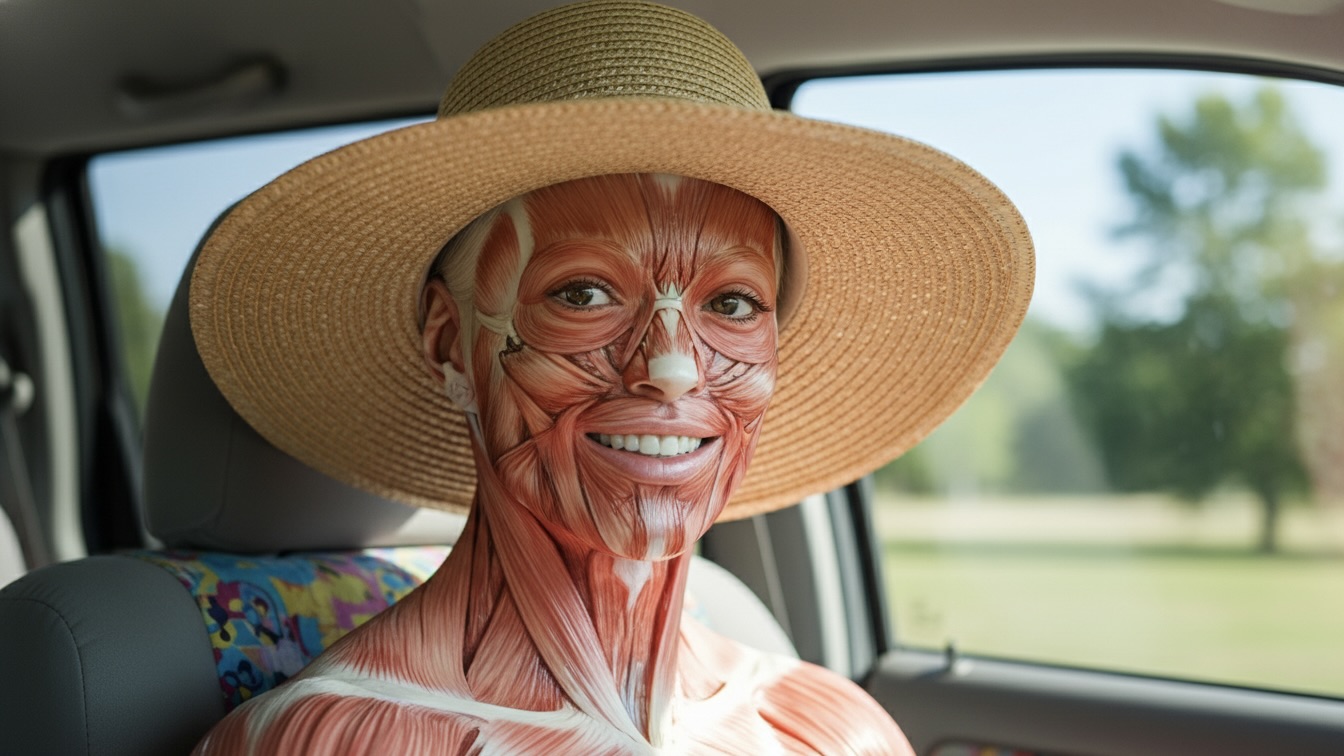
The story follows the Miller family as they navigate a vacation through the "Flesh Wastes," a biome of biological horror. Gary, the patriarch, is more concerned with toll rates and hotel amenities than the eldritch environment surrounding his Honda Odyssey. They arrive at the Abyssal Sands Resort, where the lobby is a giant lung and the staff are monsters. While Gary attends a mandatory timeshare presentation, his family explores the resort’s surreal and terrifying offerings.
Barb undergoes a radical spa treatment that removes her skin, leaving her as a powerful anatomical model of muscle and bone. Jaden kills a sentient ham in the buffet line with his iPad, while Lucy befriends a local demon named Gore. The narrative culminates in a tense negotiation where Gary uses his bureaucratic stubbornness to secure a better timeshare deal. With the help of his now-formidable wife and daughter's new friend, the family successfully checks out and heads home.
The primary theme is the resilience of suburban banality in the face of absolute cosmic horror. Gary represents the modern consumer who is so entrenched in the logic of capitalism that he can stare into a void and only see a high interest rate. This juxtaposition suggests that the truly terrifying force in the universe is not a screaming void, but the relentless persistence of middle-class bureaucracy. The characters normalize the grotesque, treating a landscape of muscle and bone with the same annoyance they would a standard highway construction zone.
Another significant theme is the domestic struggle for autonomy and the shedding of societal expectations. Barb’s transformation into a skinless, muscular entity serves as a visceral metaphor for a woman reclaiming her physical and mental strength. By literally removing her "superficial" layer, she moves from a state of passive-aggressive annoyance to one of dominant, raw power. This shift rebalances the family dynamic, forcing Gary to finally acknowledge her needs, such as the functioning air conditioning.
The story also explores the alienation of the digital age through the younger characters, Lucy and Jaden. Both children use technology as a protective barrier to filter out the grotesque reality of their surroundings. To them, a landscape of muscle and bone is just another backdrop for a social media post or a setting for a mobile game. This suggests that the younger generation has become so desensitized by digital stimulation that even hellish realms fail to evoke genuine fear or awe.
Gary is a study in the psychological defense mechanism of compartmentalization. He refuses to engage with the existential dread of the Flesh Wastes because doing so would require him to relinquish control. Instead, he focuses on minute details like toll prices, TripAdvisor reviews, and maintenance fees. This obsession with logistics allows him to maintain his identity as a provider and a "smart" consumer in a world that makes no sense.
His stubbornness is his greatest weapon and his most annoying trait. He treats an eldritch horror like a manager at a local retail store, demonstrating a complete lack of ontological shock. Gary’s ego is tied to his ability to "win" the system, whether that system is a suburban commute or an eternal blood oath. By the end of the story, he remains largely unchanged, still grumbling about costs but cowed by his wife’s newfound physical presence.
Barb begins the story as a classic depiction of a weary, resigned suburban mother. She occupies the passenger seat both literally and metaphorically, distracting herself with crosswords to avoid the frustration of her husband’s frugality. Her internal state is one of high tension and physical discomfort, represented by her migraines and hot flashes. She is the emotional anchor of the family, but she is clearly fraying at the edges under the weight of her domestic role.
Her decision to undergo the "Deep Tissue Renewal" is a pivotal psychological break. By allowing her skin to be peeled away, she discards the "mask" of the patient wife and reveals a raw, powerful version of herself. This transformation is not just physical; it is a psychological rebirth that grants her the confidence to stand up to cosmic entities and her husband. She ends the narrative as the true authority figure, using her literal strength to command the respect she was previously denied.
Lucy embodies the apathy of the modern teenager, using her phone as a shield against a world she finds "cringe" or boring. Her initial reaction to the resort is not one of terror, but of social media critique. She views her environment through the lens of how it can be curated for her followers. This behavior indicates a deep-seated need for external validation and a detachment from her immediate physical reality.
However, her interaction with Gore reveals a desire for genuine connection and adventure. Once she finds a peer who speaks her language, she abandons her phone-centric isolation for the thrill of riding a "mutant dog." This suggests that her apathy is a byproduct of her environment rather than a fixed personality trait. She is adaptable and surprisingly brave, showing that she can thrive in the chaos of the Flesh Wastes once she finds a reason to engage.
Jaden represents a more primitive form of digital addiction and survival instinct. His world is entirely internal, focused on the mechanics of his games and the battery life of his devices. He is largely silent, communicating through physical actions like kicking his father’s seat. This silence masks a surprising level of pragmatism and violence when his basic needs are threatened.
When the sentient ham attacks him, Jaden does not panic or call for help. He uses the very tool of his distraction—his iPad—as a weapon to crush the threat. This act signifies a transition from a passive consumer to an active participant in his environment. He remains unfazed by the gore, simply wanting his meal, which highlights a disturbing but effective level of psychological desensitization.
The pacing of the story is expertly handled, moving from a slow, sweltering crawl in the minivan to a chaotic, multi-threaded climax. The narrative voice maintains a deadpan, satirical tone that treats the horrific and the mundane with equal weight. This creates a sense of "suburban gothic" where the absurdity of the dialogue balances the visceral descriptions of the setting. The transition between the different family members' perspectives allows for a comprehensive view of the resort's various horrors.
Sensory details are the backbone of the story’s world-building. The author uses a "biological" vocabulary—mentioning veins, molars, bile, and membranes—to create a setting that feels uncomfortably alive. The contrast between the "sticky" interior of the Honda Odyssey and the "pulsating" walls of the resort bridges the gap between the known and the unknown. These details force the reader to experience the physical discomfort of the characters, from the oppressive heat to the metallic smell of roadkill.
The narrative voice is particularly effective in its use of juxtaposition. By placing terms like "TripAdvisor," "New Balances," and "Yeti tumbler" alongside "blood sacrifice" and "eternal rot," the author highlights the ridiculousness of the Miller family's situation. This technique underscores the psychological premise that humans will normalize almost anything to maintain their routines. The ending, with the family arguing over the radio in a car that now works through sheer intimidation, perfectly encapsulates the story's dark, comedic spirit.


