Larry returns to his hometown of Winnipeg after three years in Toronto, ostensibly to attend a gaming convention and reconnect with his old friend, Stan. The reunion is awkward and fraught with unspoken resentment, but their personal tensions are sidelined when a catastrophic flash flood hits the city. As the Assiniboine River breaches a major substation, the convention center loses power and the streets transform into a dangerous, mud-filled river.
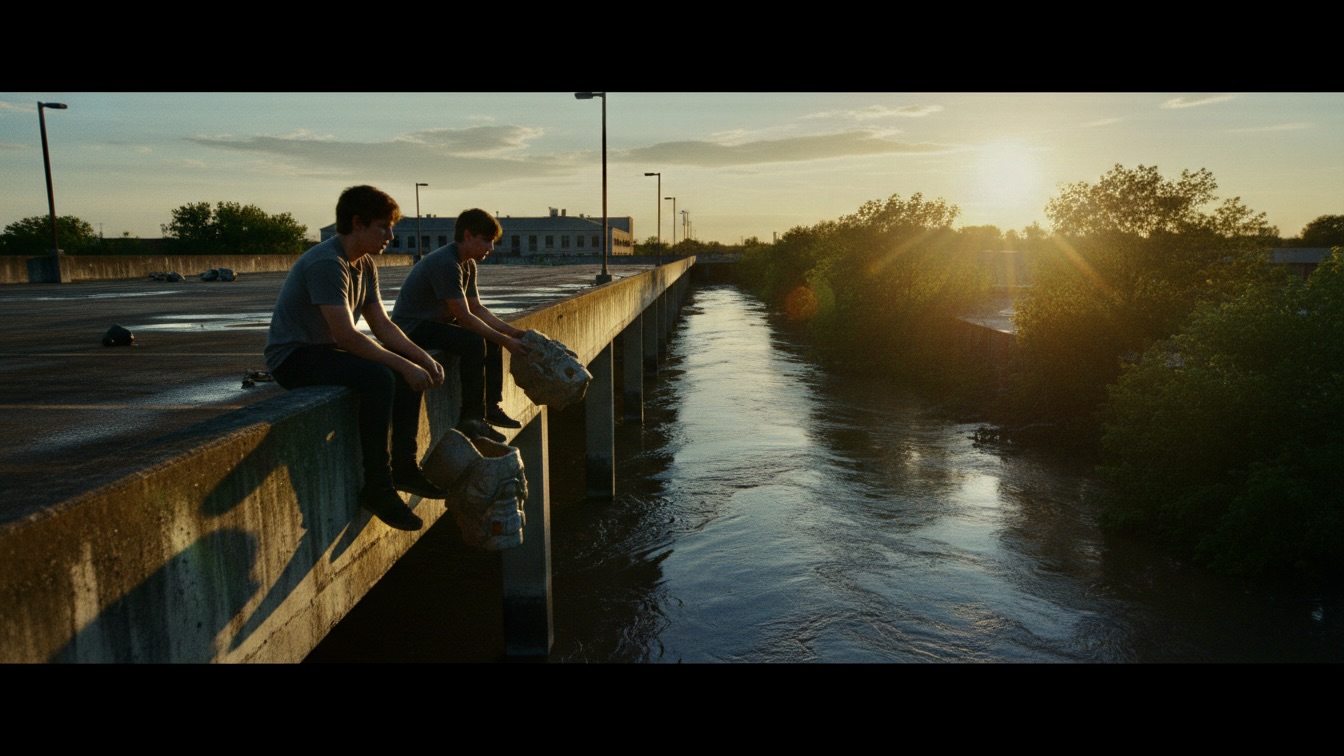
The two men must navigate the rising waters to rescue Larry’s Auntie Rosa, who is trapped in her basement apartment in Osborne Village. Utilizing their knowledge of tabletop gaming mechanics and improvised tools, they manage to siphon water out of a window well and pull Rosa to safety just as her windows shatter. The story concludes at dawn on the roof of a parking garage, where the receding floodwaters leave the characters to face the permanent erosion of their friendship and the end of their shared childhood fantasies.
The narrative explores the painful transition from the sanctuary of escapism to the uncompromising demands of adulthood. The convention center serves as a literal and metaphorical "cave" where the characters attempt to hide from the complexities of their lives. However, the flood acts as a violent catalyst that strips away these artificial layers. When the "Dragon’s Breath" card—a symbol of childhood value—is traded for basic survival gear, the story signals that the currency of youth is worthless in the face of a real-world crisis.
Another prominent theme is the divergence of paths and the resentment born of abandonment. Larry’s move to Toronto represents a desire for velocity and growth, while Stan’s permanence in Winnipeg suggests a man who has become a monument to his own past. The flood does not bring them back together in a traditional sense; instead, it exposes the "ten miles" of empty space that has grown between them. The physical destruction of the city mirrors the emotional wreckage of a friendship that can no longer be sustained by shared hobbies.
Finally, the story examines the weight of identity and the necessity of shedding one's "armor." Stan’s dwarven battle gear is initially a source of pride, but it nearly drowns him when he enters the water. This serves as a powerful metaphor for how clinging to old personas can become a liability in a changing environment. By the end of the tale, both men have discarded their symbols of play—the card and the armor—leaving them vulnerable but finally honest about their situation.
Larry is a protagonist driven by a mix of guilt and a desperate need for redemption. His return to Winnipeg is not a simple visit but an attempt to reconcile the person he was with the person he has become in the "tall and fast" world of Toronto. He displays a pragmatic survival instinct, quickly realizing that the artifacts of his past hobbies must be sacrificed to ensure the safety of his family. This is most evident when he trades his prized holographic card, showing that he has moved beyond the sentimental attachments of his youth.
Psychologically, Larry suffers from the burden of the "avoidant" leaver. His departure from Winnipeg was clinical and abrupt, evidenced by the "airplane emoji" text that haunted Stan for years. While he is capable of heroic action during the flood, he remains emotionally stunted when confronted with the consequences of his social negligence. He wants to believe that time has stood still, but the submerged city serves as a cold reminder that his absence caused real, lasting damage to his relationships.
Stan serves as the emotional heart of the story, representing those who are left behind in the wake of another person’s ambition. He is a man who has sought refuge in the meticulous construction of a fantasy identity to cope with the mundanity of his life at a hardware store. His foam armor is a physical manifestation of his defensive shell; it makes him look like a "walking mountain" but leaves him exhausted and nearly immobile. His struggle in the water illustrates the literal weight of his bitterness and his refusal to let go of the past.
By the end of the narrative, Stan undergoes a somber transformation. The trauma of the flood and the reality of Larry’s return force him to acknowledge that his hobbies can no longer provide the shelter they once did. His decision to sell his collection is a sign of a "broken" maturation. He is not moving on because he wants to, but because the flood has washed away the illusion that his basement games were enough to sustain a life. He is tired, disillusioned, and finally ready to stand without his costume.
Auntie Rosa functions as the moral compass and the physical representation of the "home" Larry abandoned. She is a resilient figure who, despite being trapped in a life-threatening situation, remains focused on the sentimental value of her history, as seen in her grip on her late husband’s photograph. She bridges the gap between the two men, forcing them to cooperate and move beyond their petty grievances. Her observation that "stuff is all you have when people are gone" serves as a stinging critique of Larry’s past choices.
The author utilizes a gritty, sensory-focused prose style that effectively contrasts the neon artifice of the convention with the visceral reality of the flood. Early in the chapter, the descriptions of "hot plastic" and "stale energy drinks" create a sense of claustrophobia and stagnancy. This shifts to the "wet dirt, gasoline, and dead fish" of the flooded streets, grounding the reader in a landscape that feels both familiar and alien. These sensory details ensure that the environmental stakes are felt physically rather than just observed.
The pacing of the story mirrors the rising tension of the floodwaters. It begins with a slow, internal monologue that establishes Larry’s discomfort, but the "loud pop" of the power failure initiates a rapid increase in narrative velocity. The sequence at the window well is particularly effective, using short, punchy sentences to convey the urgency of the rescue. This high-energy middle section eventually gives way to a slow, melancholic denouement on the roof, allowing the emotional weight of the dialogue to land with maximum impact.
The narrative voice is one of stark realism, even when dealing with the trappings of fantasy. By framing the rescue through the lens of a "Water Temple" from a role-playing game, the author highlights how the characters use their limited tools to make sense of a chaotic world. The "logic of childhood" is used one last time to save a life, but the story refuses to provide a magical happy ending. The harsh light of the dawn reveals a "ruined bathtub" of a city, reinforcing the somber tone that permeates the final pages.


