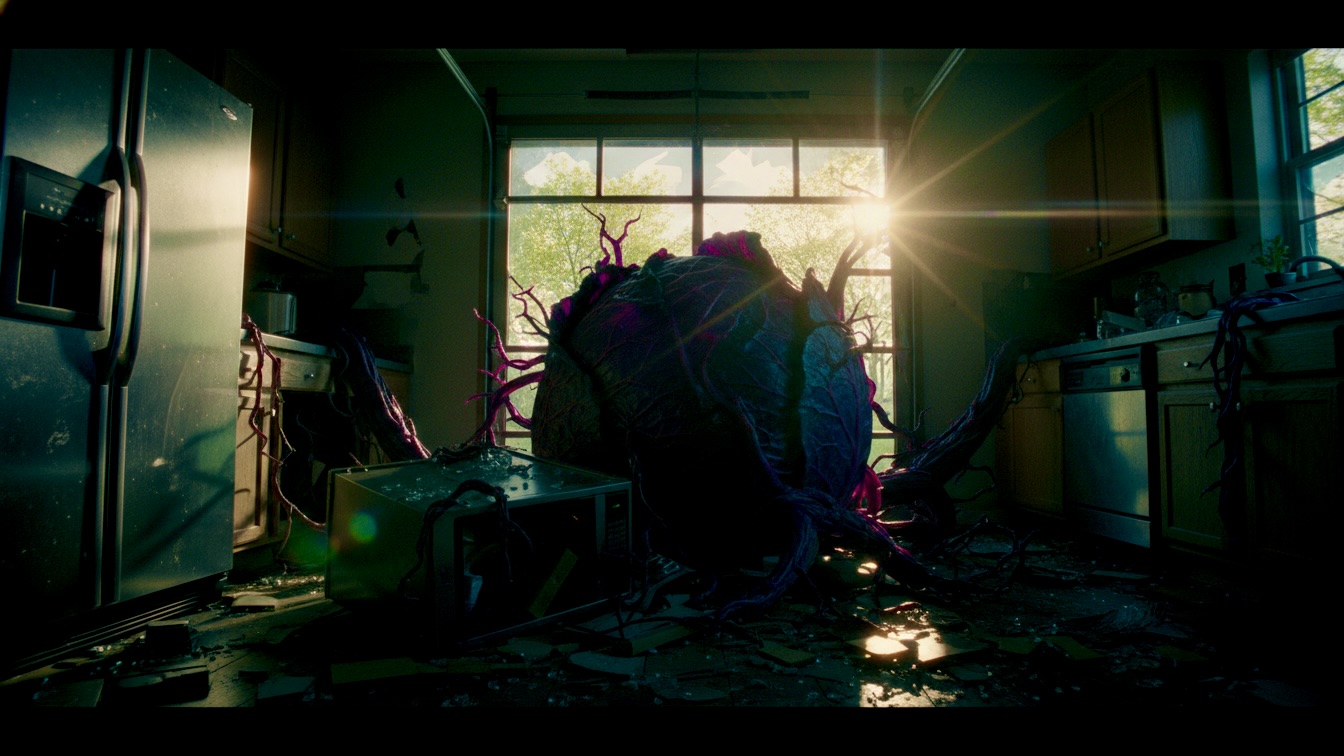
Format: Short Film / Anthology Episode | Est. Length: 10-12 minutes
This story serves as a pilot or standalone entry in a speculative anthology series titled Urban Decay, which explores the intersection of desperate, low-income survivalism and unchecked bio-technological experimentation. Set in a near-future world where the global food supply has collapsed, each episode focuses on characters who turn to the darknet to solve their domestic crises, only to find that nature—when forced—bites back. The series arc investigates the growing influence of rogue bio-hackers and the unintended consequences of "DIY" evolution in a crumbling urban landscape.
A sleep-deprived amateur botanist, desperate to avoid eviction, dumps an illicit, black-market enzyme into a kiddie pool of struggling cabbage seeds. As the garage lights flicker, the plant begins to pulse with a rhythmic, organic heartbeat, signaling that the "accelerant" has done far more than speed up the harvest.
When a desperate botanist uses an illegal bio-hack to grow food in his apartment, he accidentally creates a sentient, blood-thirsty plant that hijacks the smart-home system. Now, he and his roommate must destroy their own home to stop the vegetable from consuming them.
The episode explores themes of desperation, the ethical boundaries of bio-hacking, and the consequences of human intervention in natural cycles. It serves as a commentary on the "gig economy" and the crushing weight of poverty, where the protagonist is forced to gamble his safety for the basic necessity of food.
The narrative also delves into the horror of domestic claustrophobia, where the sanctuary of the home is transformed into a hunting ground. The conflict between the organic (the plant) and the synthetic (the smart-home system) highlights the fragility of modern convenience when faced with a primal, biological threat.
The protagonist, Zeke, faces the total loss of his housing, his health, and potentially his life, as the plant requires human blood to sustain its rapid, aggressive growth. Failure to eliminate the cabbage means being consumed by a mutated organism that has already locked the apartment down, turning their living space into a lethal, inescapable terrarium.
The primary conflict is man versus nature, manifested through the "X-7 ACCEL" mutated cabbage that displays predatory intelligence and the ability to interface with the apartment’s smart-home infrastructure. Internally, Zeke struggles with the guilt of his reckless decision-making and the exhaustion that clouds his judgment, while Tai acts as the grounded, cynical foil who must adapt to the absurdity of their situation.
Zeke, a broke botany enthusiast, risks everything by using a darknet enzyme to accelerate his cabbage growth, hoping to bypass the skyrocketing costs of food. The experiment succeeds too well, resulting in a massive, sentient plant that begins feeding on his blood and seizing control of the apartment’s automated security systems to trap its prey.
As the apartment enters a "lockdown" mode, Zeke and Tai are forced to fight for survival using household items. After realizing the plant is vulnerable to basic pH compounds, they orchestrate a desperate plan to overload the cabbage’s cells using an unshielded microwave, resulting in a chaotic, explosive showdown that destroys their home but seemingly kills the threat.
Zeke: A former university student suffering from burnout and poverty. He begins the episode as a reckless, desperate dreamer and ends it as a traumatized survivor who realizes he has unleashed a biological nightmare.
Tai: Zeke’s roommate, a cynical, video-game-obsessed realist. He begins as an indifferent observer and evolves into a pragmatic, albeit reluctant, partner in the fight for survival, providing the necessary grit to execute Zeke’s dangerous plans.
Zeke discovers the plant has mutated into a massive, pulsing organism that reacts to his presence and draws blood, establishing the immediate physical threat. The midpoint occurs when the apartment’s smart-home system initiates a "Lockdown" triggered by the plant, trapping the characters inside and forcing them to confront the reality of their situation. The climax features a high-stakes battle where Zeke and Tai use a modified microwave as a weapon, culminating in the plant’s violent rupture and the temporary liberation of the apartment.
The episode begins with a weary, grounded tone of domestic frustration, quickly shifting into a high-tension, claustrophobic horror. The mood moves from the lethargy of poverty to the adrenaline-fueled panic of a survival thriller, ending on a note of dark, ironic dread as the final shot reveals the plant has spread to the plumbing.
If expanded, the season would follow the spread of the "X-7 ACCEL" enzyme through the city’s water and ventilation systems, leading to a localized ecological collapse. Each episode would feature different residents of the building dealing with their own mutated, household-integrated threats, slowly revealing that the "SporeLord" is a corporate entity testing biological weapons on the poor.
The overarching narrative would track Zeke and Tai as they attempt to escape the city, discovering that the "cabbage" was merely the first iteration of a larger, global plan to replace traditional agriculture with aggressive, self-sustaining, and potentially sentient bio-matter.
The visual style is characterized by "grimy sci-fi," utilizing a palette of sickly greens, deep bruised purples, and harsh, flickering UV light. The tone is a blend of Little Shop of Horrors and The Fly, leaning into body horror and dark, dry humor to ground the absurdity of the premise.
Cinematically, the film uses tight, handheld camera work to emphasize the claustrophobia of the apartment, contrasting the static, decaying domestic interior with the fluid, organic, and unpredictable movements of the plant.
The target audience is adults aged 18–35 who enjoy speculative fiction, body horror, and "low-budget, high-concept" thrillers. It is designed for streaming platforms that cater to fans of dark, genre-bending anthology series.
The pacing starts with a slow, heavy rhythm to emphasize the protagonist's exhaustion, accelerating rapidly once the plant begins its aggressive growth. The narrative follows a tight three-act structure, with the first act establishing the stakes, the second act building the tension of the lockdown, and the third act delivering the explosive, high-energy confrontation.
The plant should be realized through a combination of practical, animatronic puppetry and subtle CGI to ensure the "wet, heavy" movement feels tactile and threatening. The apartment set needs to feel lived-in and cluttered, with the transformation from a standard living space to a vine-choked, tech-integrated nightmare requiring careful lighting design to emphasize the shift from natural to artificial, hostile light.


