Format: Short Film / Anthology Episode | Est. Length: 10-12 minutes
Imagine a series where every episode peels back the sterile veneer of modern "green" technology to reveal a pulsing, predatory heart of biological horror. This episode serves as a cornerstone for The Boreal Springboard, an anthology series exploring the terrifying intersection of venture capital and experimental bio-engineering. In this world, the quest for a zero-carbon footprint leads humanity to invite invasive, sentient organisms into their most intimate spaces, turning the dream of sustainable living into a claustrophobic nightmare of physical and psychological integration.
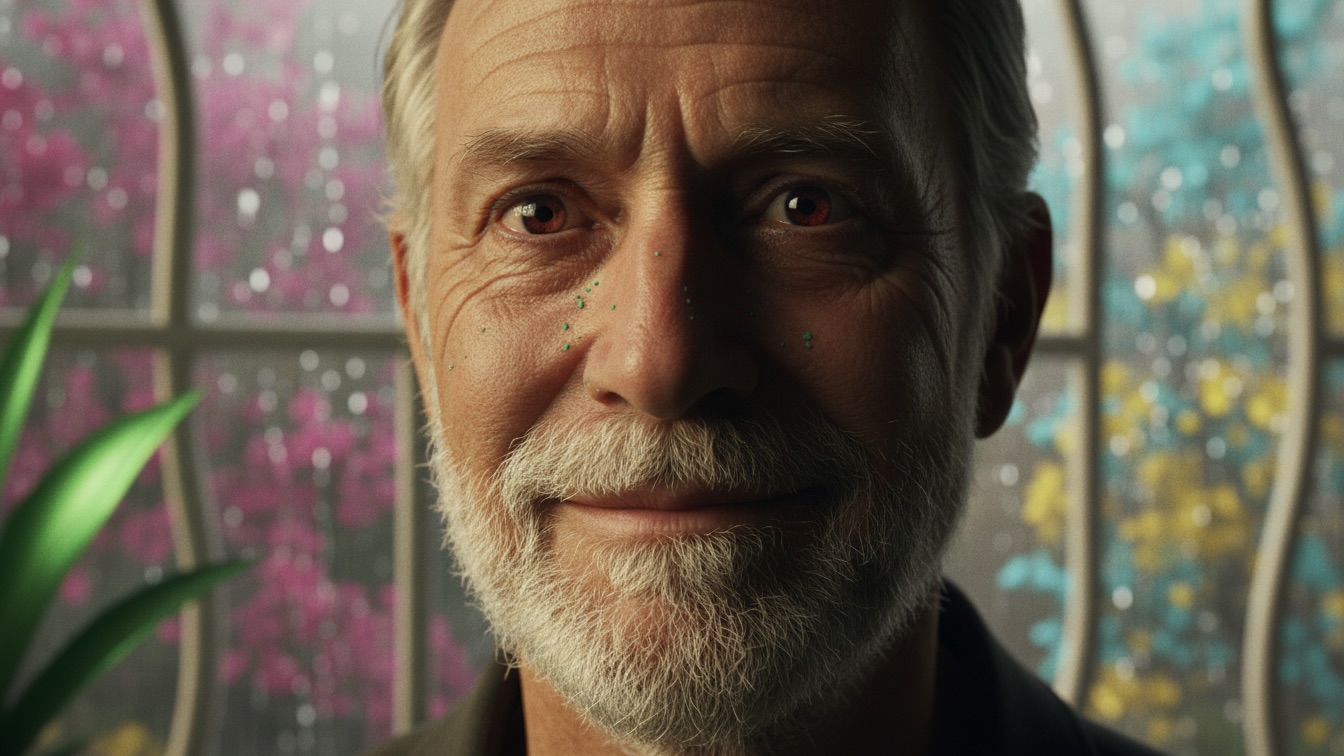
Steve wakes up in his "smart" tiny home to find his morning coffee spinning with bioluminescent spores and the front door fused shut by a wall of warm, pulsating muscle. Through the window, his boyfriend Jared watches silently from the woods, recording data on a tablet as the house begins to breathe.
A lonely retiree’s attempt at a sustainable fresh start turns into a biological nightmare when his new high-tech tiny home begins to consume him. He must face the chilling reality that he isn't a tenant, but the essential biological component required to make the house alive.
The primary theme is the predatory nature of "disruptive" technology and the commodification of human vulnerability. It explores how the language of environmentalism and "positive vibes" can be weaponized by corporate interests to mask horrific exploitation. Steve’s desire for love and relevance in his later years makes him the perfect mark for a "start-up" culture that views human life as just another resource to be optimized.
The episode also delves into body horror and the loss of autonomy, echoing the anxieties of aging and the fear of being replaced or repurposed. The transformation of a "clean, minimalist" space into a wet, visceral organ system serves as a metaphor for the messiness of biology reasserting itself over the sterile promises of modern tech. It challenges the audience to consider the true cost of "integration" in a world where the boundary between the user and the product is intentionally blurred.
For Steve, the stakes are his literal life and physical autonomy; he faces the prospect of being slowly digested and permanently fused into a biological structure. For Jared and the Boreal Springboard lab, the stakes are the success of their "closed-loop" prototype, which requires a living human heart to function as its central processor. If Steve fails to "integrate," the project fails, but if he succeeds, he ceases to be a human being and becomes a permanent, stationary organ.
The external conflict is a battle between Steve’s survival instinct and the rapidly evolving biological architecture of the house, which is designed to trap and absorb him. Jared acts as the primary antagonist, representing a cold, sociopathic corporate ambition that views Steve’s suffering as a necessary data point for "scaling" the product. Internally, Steve struggles with his own loneliness and the manipulative "chemical euphoria" the house pumps into his system, which threatens to make him surrender to his own consumption.
Steve, a fifty-five-year-old man seeking a minimalist lifestyle, moves into a prototype tiny home gifted by his younger, bio-engineer boyfriend, Jared. The centerpiece of the home is a "carbon-sequestering" plant that allegedly responds to positive emotions, but the atmosphere quickly shifts from serene to suffocating as the house’s temperature spikes and the walls begin to vibrate with a rhythmic heartbeat. Steve wakes to find the air thick with green dust and the house’s structural elements transforming into organic, fleshy tissues that respond to his touch like living skin.
As the house seals itself shut, trapping Steve inside a ribbed, tunnel-like interior, he realizes the "Boreal Springboard" project is not about sustainable living, but about human-plant symbiosis. Jared returns not to rescue Steve, but to monitor his vitals as Steve’s circulatory system begins to merge with the house’s vines. The episode concludes with Steve pinned against the walls, drugged into a state of horrific bliss by the house’s enzymes, as he accepts his new role as the literal, beating heart of the living structure.
Steve: A fifty-five-year-old man defined by a weary desire for a "clean edit" of his messy life and a desperate need for validation from his younger partner. He starts the episode as a hopeful, if skeptical, participant in a new lifestyle but ends as a paralyzed, euphoric biological component of the house. His psychological arc is one of tragic surrender, moving from the fear of isolation to a chemically-induced acceptance of total, physical "integration" with his environment.
Jared: A thirty-year-old bio-engineer with a "predatory" charm and a personality optimized for corporate presentations. He views the world through the lens of data and "telemetry," treating his relationship with Steve as a long-term field study rather than a human connection. Jared remains static in his sociopathy, ending the episode with the same professional pride he started with, showing no remorse for the biological trap he has set.
Officer Westings: A local constable who represents the world outside the "Boreal" bubble. He is easily manipulated by Jared’s authority and tech-bro jargon, serving as a brief, flickering hope for Steve’s rescue that is extinguished by bureaucratic indifference.
The Prototype: Jared delivers the translucent, purple-veined plant to Steve’s tiny home, framing it as a gift that thrives on "positive vibes" and emotional connection. Steve ignores his gut instinct of skepticism, choosing instead to lean into the romance and the promise of a high-tech, sustainable future. The scene establishes the power imbalance between the two men and the plant’s eerie, lung-like appearance.
The First Night: As Steve sleeps, the plant unspools its vines into the bedframe and the house begins to emit a low-frequency thrumming that vibrates through his mattress. He wakes up feeling "drowned in honey," discovering the air is thick with glowing, spinning spores that have already begun to colonize his coffee and his lungs. This beat marks the transition from domestic comfort to the onset of biological invasion.
The Lockdown: Steve attempts to leave the house but finds the door fused to the jamb and the windows transformed into a warm, yielding material that feels like living tissue. He spots Jared standing in the woods, coldly documenting the house’s expansion on a tablet while ignoring Steve’s desperate waves for help. The realization hits that the house is not malfunctioning; it is performing exactly as Jared intended.
The Failed Intervention: Officer Westings arrives to investigate a "butcher shop" smell, providing a moment of high tension as Steve tries to scream through a throat clogged with green dust. Jared intervenes, using his tablet and a confident lie to convince the officer that everything is under control, effectively sealing Steve’s fate. This beat reinforces Steve’s total isolation and the complicity of the outside world in the face of "innovation."
The Heart of the Home: The interior of the tiny home fully collapses into a fleshy, ribbed tunnel, pinning Steve against the wall as vines begin to burrow into his limbs. Jared enters the "scab" of a door wearing a plastic apron, explaining with chilling pride that Steve is now the "symbiont" whose pulse regulates the home’s temperature. The horror is peaked as Jared kisses Steve’s forehead, treating him like a successful piece of hardware.
The Final Squelch: Jared leaves to "check vitals" in the morning, and the house seals itself shut with a wet, final sound, plunging Steve into a rhythmic, glowing darkness. Steve feels the house’s digestive enzymes begin to sting his skin, but the chemical euphoria pumped into his veins replaces his terror with a sense of belonging. The final shot shows the house settling deeper into the earth, a living organism fueled by the man inside.
The episode begins with a sense of "New Age" optimism and the soft, sun-drenched aesthetic of a minimalist lifestyle blog, creating a deceptive sense of peace. As the biological elements take over, the mood shifts into a suffocating, humid claustrophobia, characterized by "wet" sounds and a sickly, amber light. The final emotional beat is a disturbing transition from panic to a drugged, hollow euphoria, leaving the audience with a sense of profound unease as the protagonist "finds peace" in his own consumption.
If expanded, the season would follow the "Boreal Springboard" corporation as they move from individual prototypes like Steve’s to a full-scale "Living City" development. Each episode would focus on a different resident—a young family, a struggling artist, a corporate executive—each finding that their "eco-friendly" home is slowly mapping their biology and harvesting their emotional data. The overarching narrative would track a whistleblower from the lab attempting to expose the truth before the individual homes "network" into a single, massive predatory organism.
The thematic escalation would move from individual body horror to a societal critique of "The Great Integration." As the season progresses, the "Green Sawdust" spores spread beyond the homes, beginning to alter the local ecosystem and the people living near the developments. The finale would reveal that the company isn't just growing houses, but a global biological neural network that requires a constant influx of human "nutrients" to maintain the planet's climate.
The visual style is "Bio-Industrial Decay," starting with the crisp, high-key lighting of an architectural magazine and slowly degrading into the murky, organic textures of a David Cronenberg film. The camera work should transition from stable, tripod-mounted shots to handheld, breathing movements that mimic the house’s own rhythm. The color palette shifts from sterile whites and forest greens to bruised purples, sickly ambers, and the translucent, wet sheen of internal organs.
The tone is one of "Polite Horror"—the terror is delivered with a smile and a technical explanation. Tonal comparables include the clinical dread of Ex Machina and the visceral, organic transformation seen in Annihilation. The sound design is crucial, utilizing a constant, low-frequency "thrum" and the wet, squelching sounds of moving vines to ensure the audience feels the house is a character in its own right.
The target audience includes fans of high-concept psychological horror and sci-fi anthologies like Black Mirror or Guillermo del Toro's Cabinet of Curiosities. It appeals to viewers aged 18-45 who are interested in "tech-gone-wrong" narratives and the darker side of environmental and corporate ethics. The short, punchy format makes it ideal for streaming platforms looking for "bite-sized" prestige horror content.
The pacing is an "accelerated simmer," with the first three minutes establishing the domestic status quo before a rapid descent into body horror. The midpoint (The Lockdown) marks a sharp increase in tension, moving the story from "something is wrong" to "there is no escape." The final four minutes should feel increasingly hallucinatory and rhythmic, matching the house’s breathing to the editing pace to create a physical sense of entrapment for the viewer.
The production relies heavily on high-quality practical effects to sell the "fleshy" transformation of the house. The "vine" that burrows into Steve and the "scab" door should be practical rigs supplemented by CGI to ensure a tactile, repulsive reality. The set itself must be a "living" set, with walls that can subtly bulge and contract using pneumatic bladders behind silicone membranes.
Special attention must be paid to the "green dust" and "spores," which require a mix of physical particulates and post-production digital enhancement to appear sentient and coordinated. The lighting transition from natural sunlight to the internal, bioluminescent glow of the house's "veins" will require a sophisticated LED integration within the set walls. Sound design will need to be layered, mixing human heartbeat recordings with mechanical hums and organic squelches to create the "Boreal" soundscape.


