Format: Short Film / Anthology Episode | Est. Length: 10-12 minutes
This story serves as a poignant episode in an anthology series titled Peripheral Lives, which explores the hidden, quiet moments of connection in a sprawling, indifferent urban landscape. Each episode focuses on two individuals occupying the same physical space but living in separate emotional realities, highlighting the fragile intersection of loneliness and intimacy. The series arcs toward a broader examination of how small, seemingly insignificant choices can permanently alter the trajectory of a life.
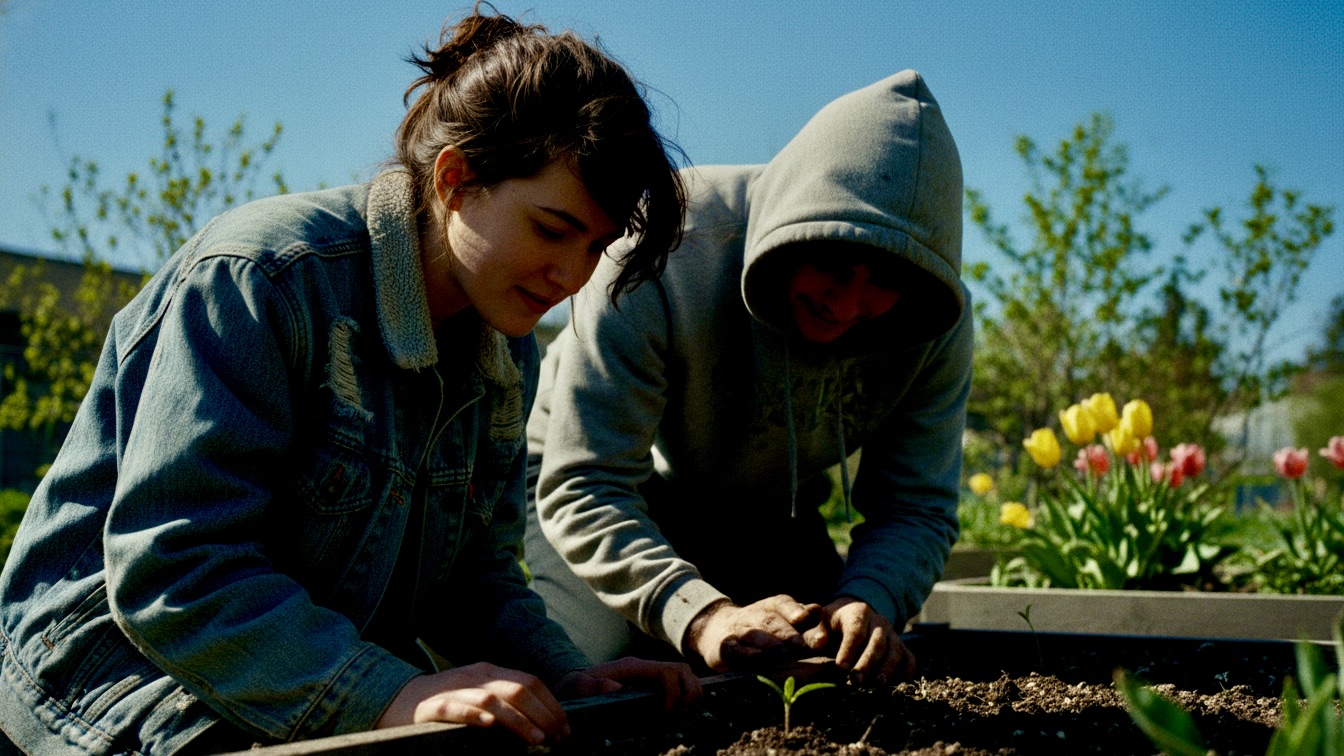
Macey, a stifled librarian, reaches her breaking point within the sterile, recycled air of her workplace and flees into the biting, frost-laden April wind. Her escape leads her to a desolate community garden, where she discovers Kyle, a man she has observed from afar, obsessively tending to frozen tulips against the encroaching cold.
A detached librarian and a determined gardener find a fragile connection amidst a sudden spring frost. Their burgeoning intimacy is abruptly shattered when an unseen, encroaching threat forces them to abandon their vulnerability for survival.
The narrative centers on the theme of "stagnation versus growth," exploring how individuals trapped in the static routines of modern life struggle to find the courage to bloom. It contrasts the cold, artificial environment of the library with the raw, messy, and unpredictable nature of the garden, using the changing seasons as a metaphor for internal emotional shifts.
The story also delves into the theme of "vulnerability as an act of defiance." In a world that encourages emotional distance and digital buffering, the physical act of touching, feeling, and exposing one's raw self to another becomes a radical, dangerous, and transformative gesture.
For Macey, the stakes are the loss of her carefully constructed armor, risking the pain of rejection for the possibility of genuine human connection. For Kyle, the stakes are the survival of his garden—the only tangible proof of his agency—and the potential loss of the one person who finally sees him.
The primary conflict is internal, as both characters battle their own cynicism and the paralyzing fear of being "stuck." Externally, they face the harsh, unforgiving weather and a sudden, mysterious intrusion that shifts the tone from a romantic drama to a tense, survival-oriented thriller.
Macey escapes the suffocating atmosphere of her library job, only to find herself drawn to a community garden where Kyle is desperately shielding his tulips from a frost warning. Their conversation reveals a shared sense of existential exhaustion, leading them to drop their defensive walls and share a moment of genuine, if messy, physical intimacy.
As they finally connect, the atmosphere shifts from tender to ominous when Kyle spots an unidentified threat encroaching on their space. The sudden transition from the warmth of their shared moment to the sharp, urgent reality of danger forces them to abruptly terminate their intimacy and face an external, unknown adversary.
Macey is a woman defined by her intellectual detachment and physical insecurity, starting the episode as a passive observer of her own life. By the end, she sheds her skepticism and embraces vulnerability, only to be thrust into a situation that demands immediate, decisive action.
Kyle is a man of quiet, intense labor who uses his garden as a proxy for his own desire to thrive in a dying environment. He begins the story as a man resigned to the cold, but his arc shifts toward hope and connection before being forced back into a state of hyper-vigilance by the encroaching threat.
Macey’s frustration reaches a breaking point in the library, leading to her impulsive exit into the biting cold of the community garden. She approaches Kyle, and through a tense, awkward exchange, they bridge the gap between their isolated worlds, eventually sharing a tentative, transformative kiss. The peace of their connection is shattered when Kyle notices an unseen danger, forcing them to abandon their vulnerability and pivot to a state of urgent, defensive survival.
The episode begins with a mood of sterile, gray stagnation, characterized by the oppressive silence of the library. As the characters move to the garden, the mood shifts to one of raw, cold-weather intimacy, building toward a peak of emotional warmth and human connection. The final beat plunges the audience into sudden, sharp anxiety, mirroring the characters' transition from comfort to fear.
If expanded, the series would follow the aftermath of this encounter, exploring whether Macey and Kyle can maintain their connection while navigating the mystery of the threat that interrupted them. The overarching arc would track the "blooming" of their relationship against the backdrop of an increasingly hostile or mysterious urban environment.
The narrative would evolve from a character-driven drama into a suspense-thriller, as the characters realize their personal connection is linked to a larger, systemic issue within their city. Each episode would peel back a layer of the mystery, testing whether their newfound courage is enough to survive the changing seasons of their lives.
The visual style prioritizes high-contrast imagery, juxtaposing the clinical, flat lighting of the library with the textured, desaturated, and gritty reality of the garden. The camera work remains intimate and handheld during their conversation to emphasize vulnerability, before shifting to tighter, more frantic framing when the threat appears.
The tone is grounded and melancholic, drawing influence from indie dramas that prioritize atmosphere over dialogue. Comparable works include the quiet, observational style of Paterson or the tense, atmospheric dread found in The Leftovers, blending emotional realism with a lingering sense of unease.
The target audience is young adults and adults (18-40) who appreciate character-driven narratives, indie cinema, and stories that blend emotional intimacy with subtle, genre-bending suspense. The viewing context is best suited for streaming platforms that curate high-quality, short-form anthology content.
The pacing is deliberate and slow-burn, allowing the audience to inhabit the characters' isolation before the sudden, rapid acceleration of the final act. The runtime is structured to ensure the slow buildup of the dialogue-heavy scenes earns the emotional payoff of the final, high-tension sequence.
The production requires a sharp contrast in art direction between the library’s sterile, synthetic environment and the garden’s tactile, naturalistic setting. Practical effects, such as the wind-whipped plastic sheeting and the physical textures of mud and skin, are essential to grounding the audience in the sensory reality of the scene.
Special attention must be paid to the sound design, which should transition from the "dead", muffled acoustics of the library to the harsh, biting sounds of the wind and the crinkling plastic. This auditory shift will be the primary tool for signaling the move from Macey's internal world to the external reality of the garden.


