Format: Short Film / Anthology Episode | Est. Length: 10-12 minutes
This story serves as a foundational episode for Urban Decay, an anthology series exploring the thin, porous veil between modern, sterile city life and the buried, primal histories of the land beneath it. Each episode focuses on a different resident of a near-future metropolis who discovers that the city’s rapid modernization has failed to fully suppress the dark, organic secrets of the past.
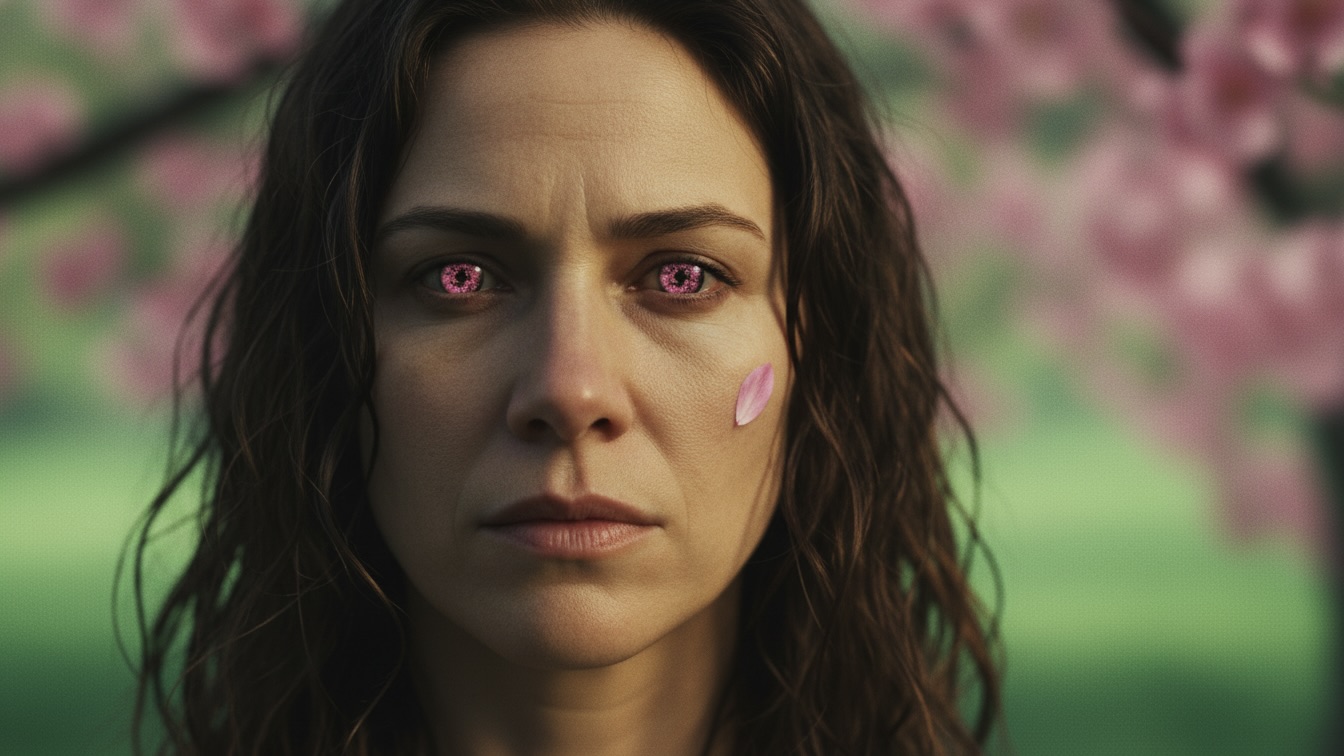
Kathy, a weary office worker, finds her mundane routine shattered when she discovers a rusted Zippo lighter buried in the mulch of a community garden beneath a row of aggressively blooming, fleshy-pink cherry trees. The moment her skin touches the cold metal, she experiences a visceral, metallic phantom pain that suggests the lighter is a tether to something long forgotten.
When a disillusioned woman unearths a relic from a buried past in a public garden, she is forced to confront a literal manifestation of her own suppressed trauma. The discovery triggers a supernatural countdown that demands she finish a decade-old debt to the dead.
The episode explores the theme of "the return of the repressed," where the physical environment acts as a repository for human memory and trauma. It contrasts the artificial, digital convenience of 2026 with the raw, uncompromising nature of the earth, suggesting that no amount of technological progress can sanitize the history embedded in the soil.
Furthermore, it examines the exhaustion of modern existence—the "flat" feeling of a life lived through screens—and the sudden, violent awakening that occurs when one is forced to engage with reality. The blooming cherry trees symbolize a grotesque, unstoppable vitality that feeds on the secrets we try to bury.
Kathy risks her sanity and her fragile grip on her current life, as the discovery of the lighter pulls her into a dangerous, potentially lethal confrontation with the past. If she fails to follow the "countdown" initiated by the lighter, she faces the permanent dissolution of her identity or a total surrender to the encroaching, supernatural forces of the garden.
The conflict is both internal and external: Kathy struggles against her own crushing apathy and psychological fatigue, while simultaneously battling the "monster" in the garden—a physical manifestation of a decade-old secret. The city itself acts as an antagonist, its cold, digital indifference providing no sanctuary from the primal, organic threat rising from the mud.
Kathy is a woman adrift in a high-tech, low-fulfillment world, struggling to maintain her composure until a trip to a community garden leads her to a buried Zippo lighter. The object acts as a catalyst, triggering a series of physical sensations and a mysterious phone call that confirms her past has finally caught up with her.
As she navigates the transition from passive observer to active participant, Kathy realizes the cherry trees are not just plants, but markers for a grave. The episode culminates in her return to the garden, where she accepts her role in a dark, unfolding mystery, ultimately witnessing the earth yield to the presence of something that has been waiting for her to return.
Kathy begins the story as a hollowed-out shell, defined by her exhaustion and reliance on digital filters to mask her decay; by the end, she sheds this passivity, trading her "grey" existence for the sharp, iron-willed clarity of a survivor. Her arc is one of re-embodiment, moving from a state of numbness to a state of dangerous, heightened awareness.
Leo, the elderly gardener, serves as the gatekeeper and the voice of the city’s hidden history. While he appears to be a harmless, eccentric local, his cryptic warnings about the "monsters" in the soil suggest he is fully aware of the garden’s true nature and the cyclical, predatory way the city consumes its own history.
Kathy enters the neglected community garden, where the overwhelming, fleshy scent of the cherry blossoms and a sharp, metallic pain in her teeth signal an immediate, supernatural shift in her environment. She discovers the Zippo lighter partially buried under the mulch, and the tactile, freezing sensation of the metal acts as the inciting incident that breaks her detachment.
The midpoint occurs in her apartment, where she successfully sparks the rusted lighter, a small, pathetic flame that functions as a beacon, leading to a chilling, distorted phone call that confirms her involvement in a decade-old secret. This moment shifts the narrative from a psychological character study into a tense, surreal thriller as she realizes the past is not just a memory, but a physical force.
The climax takes place back at the garden in the pouring rain, where Kathy confronts the reality of her discovery. The ground literally breaks open, and a pale hand emerges from the mulch, confirming that the "countdown" she felt was the resurrection of a buried truth she can no longer ignore.
The episode begins with a sense of "flat", muted depression, characterized by grey tones and a feeling of stagnant, heavy air. As the discovery of the lighter progresses, the mood shifts into a high-frequency, buzzing anxiety, eventually culminating in a dark, rain-soaked catharsis that feels both terrifying and strangely liberating.
The season would follow Kathy as she attempts to uncover the identity of "M" and the circumstances behind the burial, with each episode revealing a different "haunted" location within the city. As she digs deeper, she discovers that she is part of a larger, systemic cover-up involving the city’s urban renewal projects and the deliberate burial of inconvenient histories.
The thematic escalation focuses on the cost of truth; as Kathy becomes more "awake," she loses her ability to function in the digital, sanitized world, forcing her to choose between returning to her hollow life or fully embracing the dangerous, organic reality of the city's hidden past.
The visual style emphasizes the contrast between the sterile, blue-tinted digital world of 2026 and the warm, fleshy, and muddy textures of the garden. The camera work should be intimate and handheld, heightening the sense of Kathy’s internal vibration and the claustrophobia of her apartment, while using wide, slow pans to capture the "aggressive" beauty of the blooming trees.
The tone is grounded in psychological horror with a touch of urban surrealism, drawing tonal comparables to The Twilight Zone’s more grounded episodes and the visceral, tactile dread of early David Cronenberg films. The color palette shifts from desaturated greys and cold blues to the jarring, sickly pinks and deep, wet browns of the garden.
The target audience is adults aged 25-45 who enjoy psychological thrillers, urban fantasy, and character-driven horror. It is best suited for viewers who appreciate slow-burn narratives that prioritize atmosphere and thematic depth over traditional jump scares.
The pacing starts deliberately slow to mirror Kathy’s lethargy, gradually accelerating as the lighter becomes a focal point of her life. The final act should feel like a rhythmic, inevitable drumbeat, matching the intensity of the rain and the urgency of the phone call, leading to a sharp, abrupt conclusion that leaves the audience unsettled.
The primary visual challenge is the "fleshy" quality of the cherry blossoms and the garden, which should be achieved through practical effects and lighting rather than purely digital means to maintain a tactile, organic feel. The Zippo lighter needs to be a distinct, tactile prop, with sound design emphasizing the "bone-breaking" click of the lid as a recurring, iconic motif.
The garden set should be designed to feel like an intrusion into the city, using verticality—the apartment buildings leaning in—to create a sense of being watched. The final effect of the hand emerging from the mulch should be handled with practical, mud-caked prosthetics to ensure it feels like a physical, rather than digital, intrusion into the scene.


