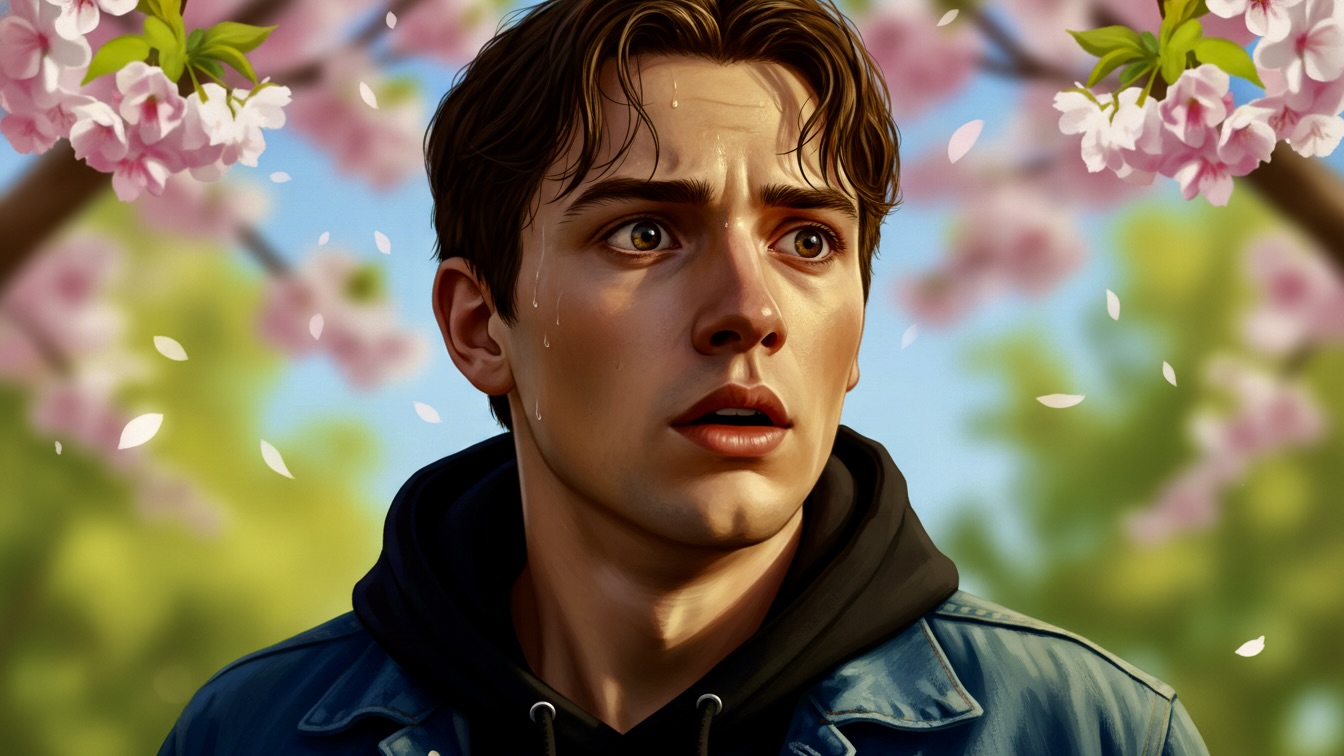
Format: Short Film / Anthology Episode | Est. Length: 10-12 minutes
Imagine an anthology series titled Urban Echoes, where the grit of modern city life intersects with the psychic residue of forgotten crimes. Each episode explores a different New York borough, revealing how the trauma of the past bleeds into the present through sensory anomalies and supernatural "glitches" in reality. The series serves as a dark mirror to gentrification, showing that while neighborhoods change, the ground remembers the blood spilled before the luxury condos arrived.
A broke, allergy-stricken freelance watcher crouches in a Brooklyn garden at 2:58 AM, witnessing the laws of physics dissolve as a silent figure begins watering a patch of empty dirt. The air turns to ice and the city's roar vanishes, replaced by a crushing silence that signals the arrival of something that shouldn't exist.
A desperate gig-worker investigating a mysterious trespasser uncovers a psychic burial ground beneath a luxury community garden. After touching a haunted artifact, he must survive the intrusive memories of a murdered telepath who is now using his mind as an anchor.
The primary theme is the invisibility of the marginalized, juxtaposing the "luxury" of the garden with the literal burial of a human being. It explores the concept of "psychic pollution"—the idea that intense trauma leaves a permanent stain on a physical location that can be accessed by those desperate or sensitive enough to notice.
The story also touches on the isolation of urban living. Andy’s struggle to survive in a city that wants him broke mirrors the victim's struggle to survive a city that drowned out her cries for help, suggesting a shared bond between the exploited living and the forgotten dead.
For Andy, the stakes are his sanity and physical autonomy; the psychic link threatens to overwrite his consciousness with the victim's terminal agony. For the victim, Tracey, the stakes are the finality of her existence—without Andy’s intervention, her spirit and the truth of her murder remain trapped in an eternal, suffocating loop.
The external conflict is the "Blank Mind," a faceless killer who leaves no psychic footprint, making them an invisible predator in a world of mental noise. Internally, Andy struggles with his own cynicism and survival instinct, which urge him to flee, versus the overwhelming, intrusive demands for help from a voice he can no longer ignore.
Andy, a twenty-four-year-old living on the edge of eviction, takes a low-paying job to watch a plot in a high-end Brooklyn botanical co-op. At 3:00 AM, the environment shifts into a cold, silent vacuum where he witnesses a woman named Tracey performing a ritualistic watering of empty soil. When Andy confronts her, she vanishes, leaving behind a glowing, frosted trowel that pulses with otherworldly energy and the scent of ozone.
Andy touches the trowel and is instantly plunged into a violent psychic flashback, experiencing Tracey’s life as a telepath and her brutal murder at the hands of a "void" killer. He feels her suffocation as she is buried alive in Plot 42, her consciousness bonding with the earth in her final moments to survive the death of her body. Andy snaps back to reality, physically battered and bleeding, only to realize the connection isn't broken: Tracey’s voice is now screaming for help inside his own mind.
Andy: A cynical, burnt-out twenty-four-year-old struggling with poverty and urban isolation. He begins as a passive observer motivated by a $300 paycheck but ends as a reluctant vessel for a dead woman's consciousness, his skepticism shattered by a forced awakening of empathy.
Tracey (The Echo): A murdered telepath whose psychic residue haunts the garden. In life, she was overwhelmed by the "noise" of the city; in death, she is a silent, looping manifestation seeking a witness to her hidden grave.
Mark (Supporting): Andy's twitchy, cologne-soaked client. He represents the superficial anxieties of the gentrified class, unaware that his "deformed carrots" are growing over a crime scene.
Beat 1 (The Stakeout): Andy huddles behind a lilac bush, battling severe allergies and a dying phone battery while complaining about the pretentiousness of the Brooklyn Botanical Co-op. The scene establishes his financial desperation and the mundane, gritty reality of his life before the supernatural intrusion. He checks his watch as the 3:00 AM deadline approaches, the tension building through the silence of the garden.
Beat 2 (The Shift): At exactly 2:58 AM, the world loses its color and sound, plunging Andy into a frigid, grey-scale version of the garden where his own voice is muffled. Tracey appears out of thin air and begins watering the dirt of Plot 42 with a silent, rusted can, moving with the uncanny smoothness of a digital loop. Andy, overcome by the physical wrongness of the atmosphere, forces himself to confront her to earn his fee.
Beat 3 (The Contact): Tracey vanishes the moment Andy speaks, and the garden snaps back to its warm, noisy, humid state, leaving Andy shaken and ready to flee. He notices a frosted, glowing trowel vibrating in the center of the plot and, driven by a compulsion he can't explain, reaches out to touch it. The moment his skin hits the wood, his consciousness is violently ripped from his body and thrust into a sensory-overload flashback of Tracey’s final hours.
Beat 4 (The Memory): Andy experiences the "cognitive static" of Tracey’s telepathy on a crowded subway, followed by the terrifying pursuit through a rainy alley by a killer with a "blank" mind. He feels the blunt force trauma of the murder and the horrific sensation of being buried alive in the very dirt he was just standing on. The psychic link reaches a breaking point as Tracey’s consciousness anchors itself to the soil and, by extension, to Andy.
Beat 5 (The Aftermath): Andy is thrown back onto the gravel, bleeding and gasping for air as the supernatural elements of the garden disappear completely. He realizes the truth of the "Locked Greenhouse" and the body beneath the soil, but the relief of returning to reality is short-lived. A piercing spike of pain hits his brain as Tracey’s voice speaks his name from within his own mind, demanding justice.
The episode begins with a mood of grimy, relatable frustration, shifting into "uncanny valley" horror during the 3:00 AM transition. The emotional peak is a traumatic burst of empathy and terror during the psychic flashback, ending on a note of haunting intimacy as the protagonist’s internal solitude is permanently violated. The audience experiences the transition from cynical detachment to unavoidable, terrifying connection.
If expanded, the season would follow Andy as he uses his unwanted psychic link to Tracey to track down the "Blank Mind" killer, who is revealed to be a serial predator targeting New York's hidden sensitives. Each subsequent episode would introduce a new "echo" in a different part of the city, with Andy acting as a medium to uncover the secret history of violence buried beneath the gentrified landscape.
As the season progresses, Andy’s own mental health declines as the voices of the dead grow louder, forcing him to choose between his own survival and providing a voice for the voiceless. The finale would involve a confrontation at the site of the first murder, where Andy must use Tracey's telepathic gifts to unmask a killer who hides in the psychic shadows of the city.
The visual style utilizes a high-contrast "urban noir" aesthetic, with the 3:00 AM transition marked by a sudden shift to desaturated, flat lighting and a complete removal of ambient sound. The psychic flashbacks should be filmed with a chaotic, handheld "shaky cam" and aggressive sound design to simulate the overwhelming nature of telepathy.
The tone is a blend of The Twilight Zone’s social commentary and the visceral, grounded horror of Jacob’s Ladder. It relies on sensory discomfort—the smell of ozone, the bite of frost, and the roar of mental static—to bridge the gap between the mundane and the macabre.
Adults and older teens (16+) who enjoy elevated horror, supernatural mysteries, and gritty urban dramas. It appeals to fans of anthology series like Black Mirror or Love, Death & Robots who appreciate character-driven stories with a dark, speculative edge and a focus on social themes.
The pacing is a slow-burn build-up for the first six minutes, focusing on the atmospheric tension of the stakeout and Andy's internal monologue. The final five minutes are a rapid-fire sequence of high-intensity events, utilizing a "crescendo" structure that peaks with the psychic overload and ends on a sharp, lingering cliffhanger that leaves the audience questioning Andy's future.
The "3:00 AM Shift" requires precise color grading and sound mixing to create a sense of physical displacement without relying on expensive CGI. The "Blank Mind" killer should be portrayed through clever lighting and obscured angles to maintain the sense of a psychic void rather than a traditional monster, keeping the focus on the victim's experience.
Practical effects like dry ice for the frosted trowel and stage blood for Andy’s physical reaction are essential for grounding the supernatural elements. The botanical garden set must feel claustrophobic despite being outdoors, emphasizing the "locked" nature of the environment through high fences and looming apartment shadows that dwarf the characters.


