Format: Short Film / Anthology Episode | Est. Length: 10-12 minutes
The B-Flat Hum functions as a pilot episode for an anthology series titled System Glitch, which explores the intersection of precarious student life and the invisible, predatory algorithms governing modern institutions. Each episode focuses on a different protagonist caught in a digital trap, building a cumulative portrait of a society where personal identity is merely a commodity to be exploited, traded, or deleted by unseen entities.
Dawson, a struggling university student, receives a notification that his tuition payment has been flagged as fraudulent, threatening his immediate expulsion. The tension peaks when he encounters a mysterious, articulate stranger in the rain-slicked river valley who reveals that his academic record has been weaponized as part of a high-stakes financial laundering scheme.
After discovering his tuition was paid with stolen funds, a desperate student must navigate a digital underworld to erase his digital footprint before his life is permanently deleted. The race against time forces him to choose between academic survival and the destruction of the institution’s corrupt infrastructure.
The episode explores the theme of institutional dehumanization, where individuals are reduced to data points within a cold, bureaucratic machine. It examines the fragility of modern identity, highlighting how easily a person’s future can be erased by a single lines of malicious code or a compromised server.
Furthermore, the narrative delves into the ethics of survival in a predatory economic landscape. By contrasting the cold, calculated "harvesters" against the desperate students they exploit, the story questions whether one can maintain their morality when the system itself is built on systemic theft and deception.
Dawson faces the immediate loss of his academic career, which represents his only path to social mobility and stability. Beyond the personal, the stakes escalate to criminal liability, as he is now a pawn in an international credit card laundering ring that does not tolerate loose ends or compromised investments.
The primary external conflict is the ticking clock of the Registrar’s 4:00 PM deadline, compounded by the predatory "harvesters" like Jesse who view student accounts as disposable assets. Internally, Dawson struggles with the transition from a passive victim of the system to an active participant in its destruction, forcing him to confront his own complicity in seeking "easy" solutions.
Dawson is blindsided by a fraudulent tuition alert, realizing he has been targeted by a "Tuition as a Service" scam. After a physical confrontation with a mysterious operative in Edmonton’s river valley, he discovers his account was used as a Trojan horse for a massive money-laundering operation.
Realizing the Registrar is merely a puppet of the larger system, Dawson turns to his tech-savvy acquaintance, Barrett. Together, they infiltrate the university’s computing lab to execute a digital blackout, a high-risk maneuver that threatens to bring the entire institution’s administrative network to its knees.
Dawson begins the episode as a reactive, anxious student defined by his fear of failure and his reliance on the system. By the end, he undergoes a hardening arc, shedding his victimhood to become a proactive, albeit desperate, saboteur who accepts the chaotic consequences of his actions.
Barrett serves as the cynical, detached catalyst who views the university’s infrastructure as a game board. He is a pragmatic intellectual who provides the necessary tools for Dawson’s transformation, acting as both a mentor and a harbinger of the digital destruction that follows.
Jesse is the antagonist, a "harvester" who treats human lives with a detached, performative cruelty. He represents the cold, aestheticized face of modern cyber-crime, using high-end gear and theatrical dialogue to mask the predatory nature of his work.
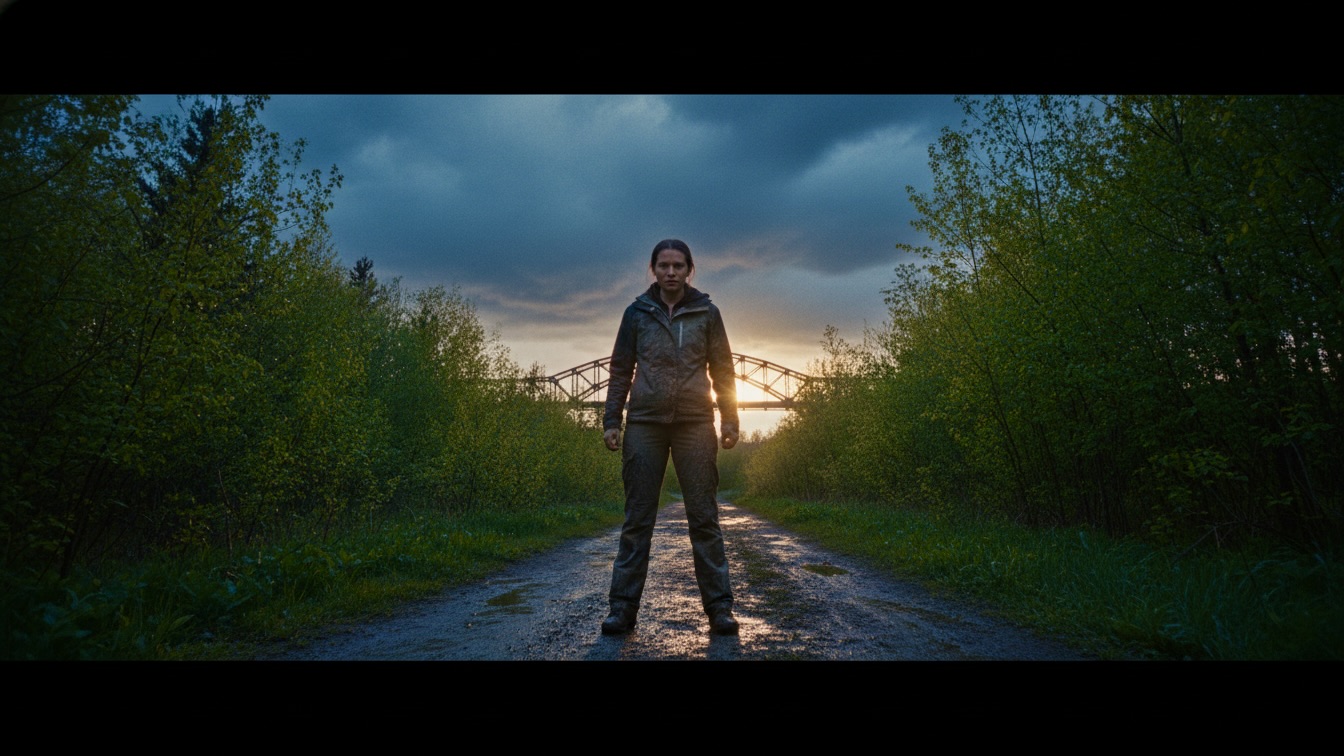
The episode opens on the rain-drenched trails of the river valley, where Dawson’s physical exhaustion mirrors his internal panic upon receiving the fraudulent alert. The narrative shifts into a high-tension encounter in the woods, where the physical collision with Jesse forces Dawson to realize he is no longer just a student, but a target.
The midpoint occurs when Dawson realizes the "scam" is a systemic Trojan horse, shifting the goal from simple administrative correction to a desperate, unauthorized intrusion into the university's server room. This realization forces him to break his own moral boundaries to survive.
The climax takes place in the claustrophobic, humming environment of the CS lab, where Dawson and Barrett initiate a digital blackout. As the lights flicker and the infrastructure groans, Dawson watches his old life dissolve, marking his total departure from the institution's control.
The episode begins with an atmosphere of damp, claustrophobic anxiety, characterized by the persistent, irritating "B-flat hum" of the campus. As the plot progresses, the mood shifts from frantic desperation to a cold, calculated intensity, culminating in a final note of ominous, dark liberation as the system begins to fail.
If expanded, the series would follow the fallout of the "digital blackout" initiated by Dawson and Barrett, revealing that their act of rebellion has triggered a wider, city-wide collapse of administrative oversight. Each subsequent episode would introduce new characters whose lives are upended by the cascading failures of the systems they once trusted.
The overarching narrative would track the evolution of the "harvesters" as they attempt to regain control, while a growing underground network of students begins to weaponize the system against its creators. The theme of "reclaiming the narrative" would escalate until the final episode, where the protagonists must decide whether to rebuild the system or replace it entirely.
The visual style prioritizes a "neon-noir" aesthetic, utilizing the contrast between the cold, wet, natural landscape of Edmonton’s river valley and the harsh, over-saturated glow of server rooms. The camera work should be handheld and intimate during the run, becoming static and clinical as Dawson enters the digital heart of the university.
The tone is one of grounded, modern paranoia, comparable to films like Mr. Robot or The Social Network. It favors a sense of creeping dread, where the technology is not a magical tool, but a heavy, humming presence that dictates the characters' movements and moods.
The target audience is young adults and adults aged 18-35 who are familiar with the anxieties of the gig economy, student debt, and the digital surveillance state. It is designed for streaming platforms that cater to viewers who appreciate high-concept, tech-driven thrillers with a strong social commentary.
The pacing is designed to be relentless, mirroring the 24-hour deadline hanging over the protagonist. The first act is fast-paced and physical, while the second and third acts transition into a more deliberate, tense, and methodical rhythm as the characters enter the "guts" of the institution.
The production should emphasize practical, tactile elements: the sound of wet asphalt, the physical weight of a cracked phone, and the oppressive, low-frequency hum of server fans. These sensory details anchor the digital plot in a physical reality, making the stakes feel visceral rather than abstract.
Lighting should be used to differentiate between the "outside" world—bruised purples and greys—and the "inside" world of the university, which should be dominated by sterile, flickering fluorescents. The "B-flat hum" should be integrated into the sound design as a recurring motif, increasing in volume as the digital collapse nears.


