2026 Spring Short Stories
Unsubscribing from the Physical World - Treatment
by Leaf Richards | Treatment
by Leaf Richards | Treatment
Format: Short Film / Anthology Episode | Est. Length: 10-12 minutes
This story serves as the pilot episode for The After-Life Admin, an anthology series centered on the "digital estates" and final, eccentric tasks left behind by the departed. Each episode follows a grieving protagonist who discovers a cryptic, post-mortem scavenger hunt designed by a loved one, forcing them to confront unfinished business, buried secrets, and the absurdity of loss. The series explores the intersection of analog memories and digital legacies in a world that is rapidly moving toward total virtualization.
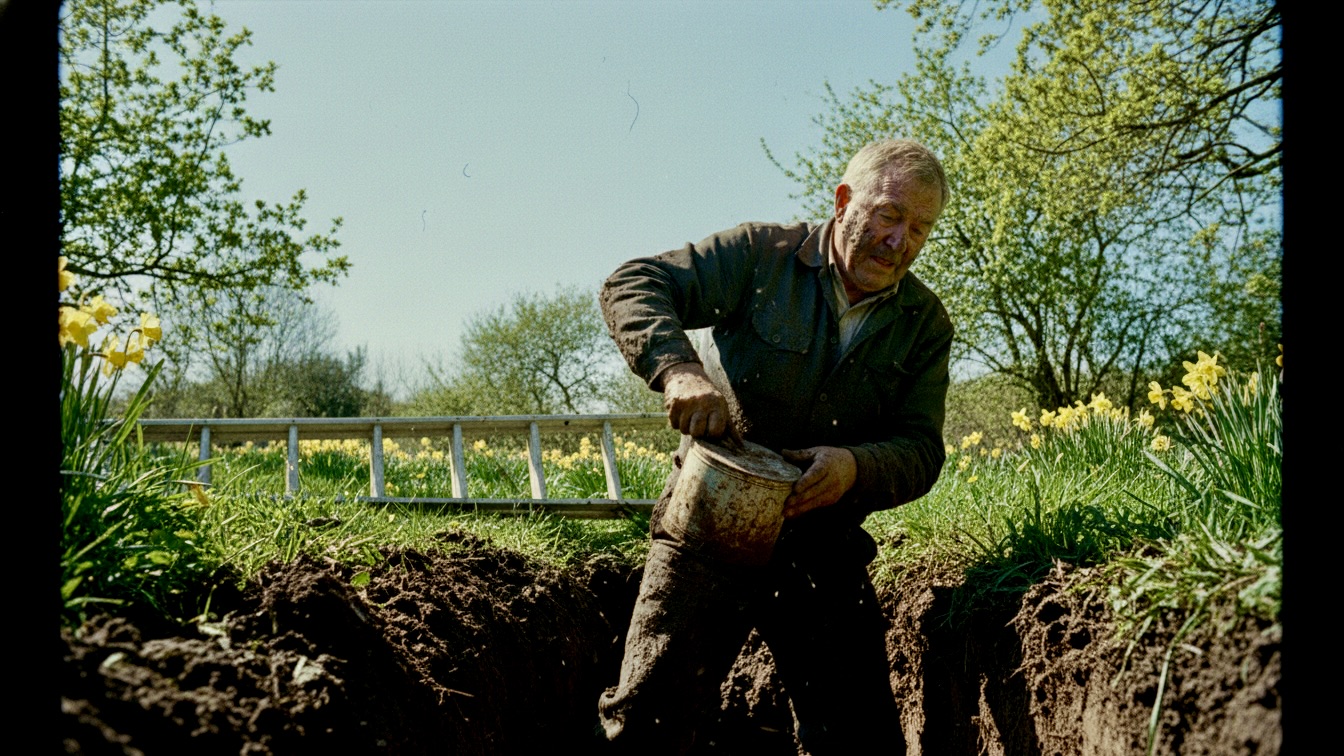
Seventy-two-year-old Armand attempts to fix a bird feeder in a rain-slicked backyard, only to suffer a humiliating, mud-caked fall that leaves him sprawled in the dirt. As he struggles to regain his composure, he unearths a rusted tin buried beneath the soil, triggering a memory of his late wife, Elena, and her final, irreverent promise to haunt his life from beyond the grave.
After a clumsy accident in his garden reveals a hidden cache of instructions from his deceased wife, a grieving widower is pulled into a scavenger hunt that challenges his perception of their marriage. He must navigate a trail of cryptic clues to uncover a final, life-altering secret that forces him to re-engage with the world he tried to leave behind.
The narrative centers on the theme of "radical grief," exploring how the mundane objects of a shared life—a bird feeder, a tea tin, a car trunk—become vessels for emotional closure. It examines the tension between the desire to retreat into the safety of nostalgia and the necessity of moving forward, suggesting that love is not a static memory but an ongoing, often frustrating, dialogue.
The secondary theme is the "unsubscribing" of the self, reflecting on the modern impulse to detach from physical reality when the world becomes too painful or complex. The episode posits that while we may try to disconnect, our connections to others are the only things that truly anchor us, even when those connections are mediated through puzzles, secrets, and the occasional act of posthumous mischief.
Armand risks remaining trapped in a state of stagnant mourning, effectively "unsubscribing" from his own life by refusing to engage with the house or the world outside. If he fails to follow Elena’s trail, he loses the chance to understand the woman she truly was in her final months, potentially leaving their shared history incomplete and his own future permanently hollowed out by unresolved questions.
The primary antagonist is Armand’s own inertia and the crushing weight of his physical decline, which constantly threatens to derail his quest. Externally, the harsh, unforgiving weather and the physical pain of his injuries act as barriers, while internally, he battles the fear that opening Elena’s secrets will destroy the idealized, saintly version of her he has constructed to survive her absence.
Armand, a widower struggling with the indignities of aging, experiences a sudden, jarring fall while gardening, which unearths a mysterious, rusted tea tin buried in his yard. Inside, he discovers a series of letters from his late wife, Elena, written in the weeks before her death, which launch him into a scavenger hunt that defies his understanding of their forty-year marriage.
As Armand follows the clues—from his garden to a forgotten bench in a local cemetery—he is forced to abandon his self-imposed isolation and confront the reality of Elena’s hidden autonomy. The episode culminates in a discovery that shifts his perspective from passive mourning to active curiosity, proving that Elena’s final gift was not a goodbye, but a challenge to remain present in the physical world.
Armand is a seventy-two-year-old man defined by his physical fragility and emotional withdrawal, moving from a state of defeated, sedentary grief to one of renewed, albeit bewildered, purpose. He is a man who prefers the comfort of his routine to the unpredictability of life, but his arc sees him reclaiming his agency through the very chaos Elena left behind.
Elena, though deceased, acts as the series' "architect," appearing in flashbacks as a sharp-witted, fiercely intelligent woman who refused to be defined by her illness. Her state remains constant, but her influence on Armand evolves from a haunting, painful memory into a dynamic, driving force that compels him to confront the truth of their relationship.
The opening sequence establishes the physical toll of aging as Armand struggles with the ladder, culminating in his fall and the discovery of the tea tin. This shifts to the kitchen, where the tension of opening the tin acts as the midpoint, revealing the first letter and the realization that his wife orchestrated this journey from her deathbed. The climax occurs at the cemetery, where Armand finds the magnetic box under the bench, leading to the final, cryptic revelation that the true answer lies in the trunk of his own car.
The episode begins with a tone of damp, gray melancholy, mirroring the rainy city and Armand’s internal desolation. As the scavenger hunt progresses, the mood shifts from heavy, static sadness to a frantic, buzzing energy, characterized by a mix of confusion, irritation, and a burgeoning, childlike excitement that keeps the audience tethered to Armand’s unpredictable emotional state.
If expanded, the season would follow Armand as he completes Elena’s scavenger hunt, with each "clue" revealing a different facet of her life that he never knew, such as secret friendships, hidden financial burdens, or unfulfilled ambitions. This arc would force Armand to reconcile his version of their marriage with the reality of her complex, independent life, leading to a season finale where he must decide whether to keep her secrets or share them with their daughter.
The thematic escalation would move from personal grief to a broader exploration of how we leave "digital footprints" and physical legacies. Each episode would introduce a new character or location, building a map of Elena’s life that ultimately reveals a larger, city-wide network of people she touched, shifting the show from a character study into a mystery about the hidden lives of the elderly.
The visual style utilizes a stark contrast between the muted, desaturated tones of Armand’s current, lonely life and the warm, high-contrast, handheld aesthetic of the flashbacks. The cinematography emphasizes the physical texture of the world—the mud, the rusted metal, the grainy paper of the letters—to ground the story in a tactile, gritty reality that feels both intimate and slightly claustrophobic.
The tone is a blend of dark comedy and poignant drama, reminiscent of films like The Straight Story or the dry, observational humor of Paterson. It avoids sentimentality by focusing on the friction between the characters, utilizing sharp, witty dialogue to cut through the heavy atmosphere of loss and keep the narrative grounded in the absurdity of human existence.
The target audience is adults aged 35-65 who are interested in character-driven dramas, existential mysteries, and narratives that explore the complexities of long-term relationships and aging. It is designed for viewers who appreciate slow-burn storytelling, dry wit, and themes of legacy and memory, suitable for streaming platforms that cater to high-quality, prestige anthology content.
The pacing is deliberate and rhythmic, mirroring the slow, methodical movements of an elderly protagonist, but it accelerates as the scavenger hunt intensifies. The act structure is tight, with the first act establishing the status quo, the second act serving as the investigative journey, and the third act providing the cliffhanger revelation that sets up the broader series arc.
Production will require careful management of practical effects, specifically the "muddy" environments and the aging makeup for Armand to ensure his physical limitations feel authentic and consistent. The tea tin and the keys should be treated as "hero props," with specific attention paid to the tactile, weathered look of the letters and the map to ensure they feel like authentic artifacts from a life lived in the late 20th century.


