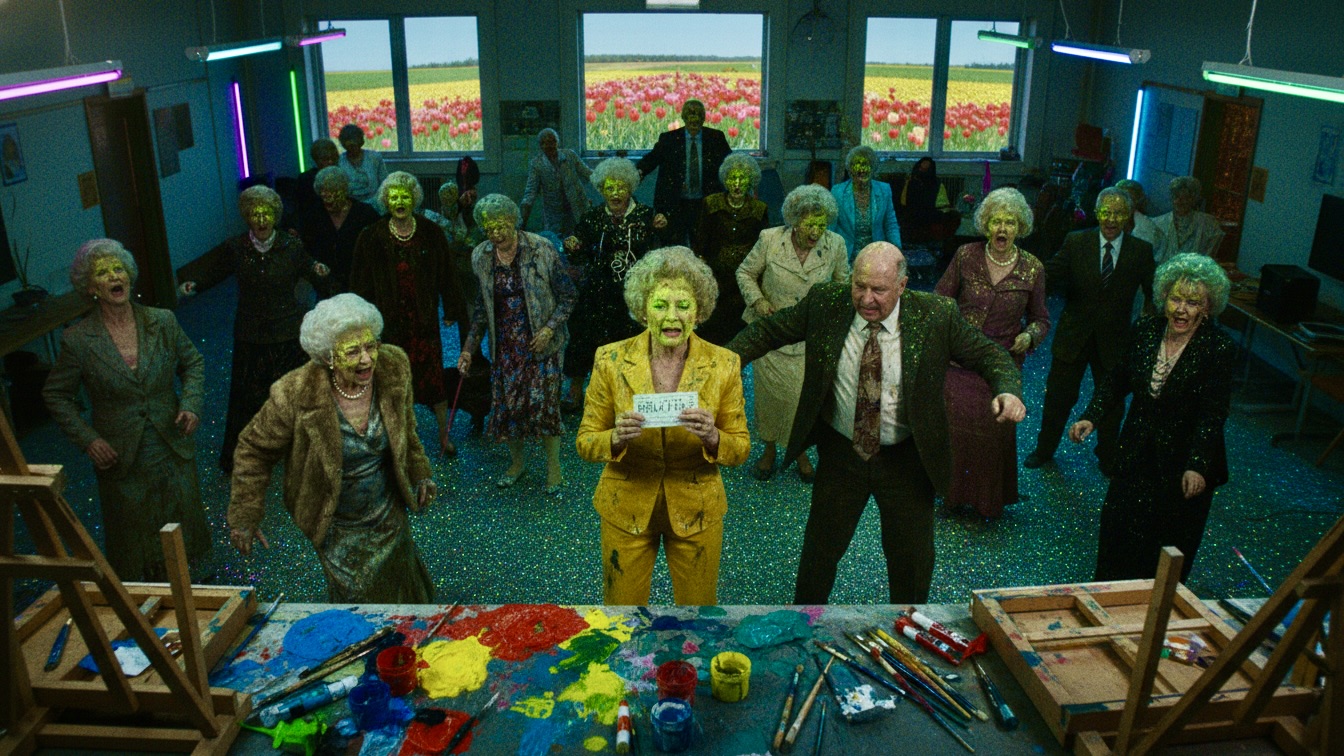
Format: Short Film / Anthology Episode | Est. Length: 10-12 minutes
Imagine a series where the pristine surface of luxury lakefront living is peeled back to reveal a rot of petty grievances and systemic corruption. This episode serves as a standalone entry in The Gilded Shore, an anthology series that explores the high-stakes social warfare of Kenora’s elite, where every seasonal festival serves as a battlefield for local dominance and hidden scandals.
Sheila discovers a bioluminescent "Lucky Ticket" snagged in a muddy ditch, sparking a high-stakes confrontation with her rival, Barb, over the ultimate prize of social supremacy.
Two rival socialites battle for a legendary raffle ticket during a prestigious community festival, only to discover their entire social hierarchy is built on fraud and impending legal ruin.
The primary themes are the hollowness of social status and the inevitable decay of artifice. The story blends dark satire with a "neon-noir" aesthetic, highlighting how the pursuit of "clean living" and "legacy" is often a mask for chemical enhancements, financial crimes, and deep-seated insecurity.
For Sheila and Barb, the stakes are their reputations and their freedom, as the discovery of the "Lucky Ticket" leads to the exposure of their most guarded secrets. For Mayor Tim, the stakes are his entire political career and his personal liberty, which are threatened by the revelation of his fraudulent art and the looming forensic audit.
The external conflict is a three-way power struggle between Sheila, Barb, and Mayor Tim, fueled by a competitive "treasure trail" that rewards ruthlessness. Internally, the characters grapple with the terror of being "found out," as their carefully curated public personas clash with the messy, glowing reality revealed by the festival's neon pollen.
In the muddy, high-society enclave of Kenora, Sheila and Barb engage in a passive-aggressive duel over a glowing raffle ticket that promises the ultimate prize: first choice of Crown Land leases. Their rivalry escalates from verbal barbs in a ditch to a public confrontation at the Community Center's "glow-paint" night, where a stray Botox receipt threatens to shatter Sheila's facade of "clean living."
The evening takes a surreal turn when the Mayor’s "masterpiece" is revealed under blacklight to be a cheap digital fraud, and the "Lucky Ticket" prize is revealed to be nothing more than expired bait shop coupons. As the glow-paint reacts with the canvas to announce a full forensic audit of the district, the socialites’ world collapses, forcing the rivals into a desperate, muddy alliance to hide their financial sins.
* Sheila: A rigid socialite whose "youthful glow" is chemically maintained; she starts as a predatory victor and ends as a terrified fugitive seeking refuge in a marsh.
* Barb: Sheila’s sharp-tongued rival who uses her wicker basket as a weapon; she shifts from a gloating antagonist to a co-conspirator in a sinking guest house.
* Mayor Tim: A self-important fraud who masks his incompetence with "visionary" rhetoric; he begins as the master of ceremonies and ends as a neon-stained coward fleeing the law.
* Tiffany: The high-strung, rule-abiding youth of the Beautification Committee who serves as the catalyst for the final reveal before succumbing to the chaos.
* Beat 1: Sheila finds the glowing ticket in a muddy ditch, only to be intercepted by Barb, who uses the environment to mock Sheila’s age and social standing.
* Beat 2: A sudden gust of wind blows a Botox receipt from Sheila's bag, giving Barb the ultimate leverage as they transition to the Community Center for the paint night.
* Beat 3: Under the blacklights of the community center, the glowing pollen reveals the Mayor’s "original" painting is a digital fraud, sparking public accusations of tax evasion and cheating.
* Beat 4: The prize chest is opened to reveal worthless bait coupons, and the Mayor's canvas transforms into a glowing announcement of a forensic audit.
* Beat 5: As the room descends into a "glow-dance" of panic, Sheila and Barb realize their shared vulnerability and agree to hide their records in Barb's sinking basement.
The episode begins with a sense of cold, calculated superiority and "polite" aggression, typical of a high-society satire. As the neon elements are introduced, the mood shifts into a surreal, hallucinatory anxiety, culminating in a frantic, slapstick climax of pure terror and a final, somber realization of mutual ruin.
If expanded, the season would follow the "Forensic Audit" as it systematically dismantles the lives of Kenora's elite, with each episode focusing on a different family’s desperate attempt to hide their crimes. The overarching narrative would track the transition of the town from a pristine summer getaway to a neon-stained crime scene, eventually leading to a town-wide trial where the "Petal Prophecy" is fully realized.
The visual style is "Gothic Satire," utilizing a high-contrast palette where the drab, oatmeal-colored mud of Kenora clashes with the radioactive, bioluminescent neon of the festival. The tone is reminiscent of The White Lotus crossed with the visual absurdity of a Coen Brothers film, emphasizing the grotesque nature of the characters' vanity through tight close-ups and distorted lighting.
The target audience includes fans of dark social satires and anthology dramas (Ages 25-55) who enjoy seeing the "rich and powerful" brought down by their own pettiness. It appeals to viewers who appreciate sharp, theatrical dialogue and stylized, cinematic world-building.
The pacing is brisk and accelerating, moving from the slow, deliberate movements of the socialites in the mud to a chaotic, high-tempo climax in the community center. The 10-12 minute runtime follows a classic three-act structure: the hunt (Act I), the revelation (Act II), and the collapse (Act III).
The "glow-pollen" and "bioluminescent ticket" require specialized UV-reactive props and lighting setups to ensure the transition from natural light to blacklight is visually jarring. The "sinking guest house" and "muddy ditch" sequences should utilize practical mud effects to emphasize the physical degradation of the characters' expensive attire.


