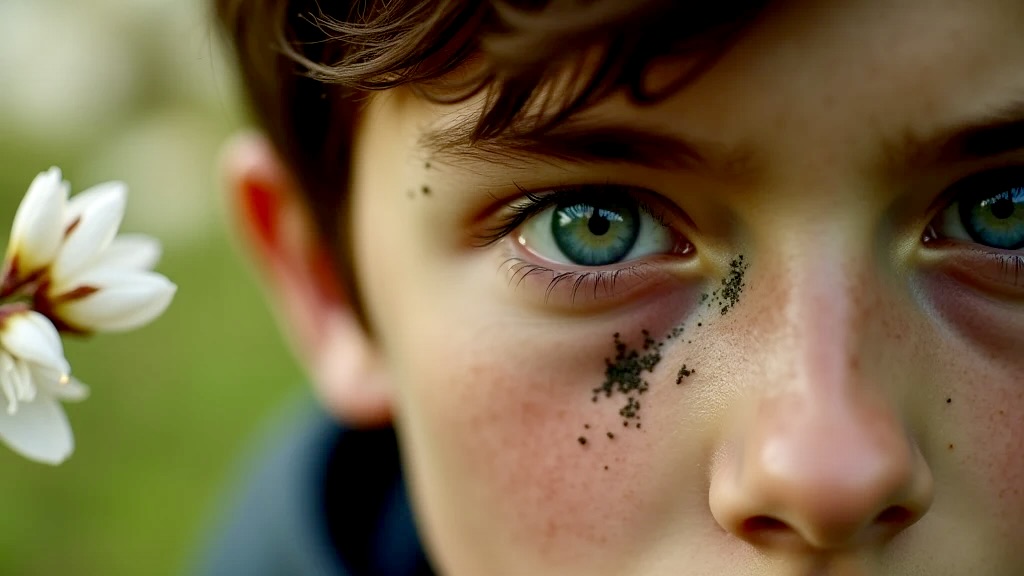
Format: Short Film / Anthology Episode | Est. Length: 10-12 minutes
This story functions as the pilot episode for The Glass Slate, an anthology series set in a post-catastrophic future where humanity has retreated into hyper-sanitized, dome-enclosed "Utopias." Each episode explores the psychological decay of a society built on total neural synchronization, focusing on the "glitches"—individuals whose biological incompatibility with the Hive network forces them to confront the fabricated reality of their existence.
Leo, a young gardener in the pristine Glass Orchard, strikes a piece of buried, ancient debris with his trowel, triggering a physical pain in his neural-link scar that separates him from the rhythmic, collective movements of his peers. As he hides the discovery of a mysterious, archaic box, the community begins the "Deep Sync" for the Spring Bloom, highlighting his isolation as the only conscious soul in a sea of trance-like uniformity.
In a perfectly synchronized society where neural links define human worth, a physically incompatible teenager discovers an ancient relic that suggests their utopia is a digital lie. He must choose between the safety of the collective harmony and the dangerous, grey truth of the world outside the dome.
The episode explores the tension between individual autonomy and the seductive comfort of collective belonging, questioning whether happiness is genuine if it is chemically and digitally mandated. It serves as a critique of technological dependency, examining how the loss of personal struggle and "dirt" (the visceral reality of life) leads to a sterile, hollow existence.
The narrative also touches upon the theme of the "necessary glitch," framing Leo’s disability not as a failure, but as a prerequisite for truth. By juxtaposing the artificial beauty of the Bloom with the decaying reality of the buried box, the story highlights the human need for discovery and the inherent danger of a society that fears the unknown.
Leo risks total social exile and potential "re-calibration" or erasure by the central Hub, which monitors his physiological vitals and identifies him as a deviation. For the community, the stakes involve the preservation of their fragile, artificial peace; if Leo’s discovery spreads, the illusion of the Hive could collapse, potentially triggering a mass psychological breakdown among the synchronized population.
The primary external conflict is between Leo and the omnipresent "Harmony," a systemic network that enforces behavioral uniformity and suppresses dissent through constant neural feedback. Internally, Leo battles the "Grey Weight"—a profound sense of isolation and the crushing pressure to conform—while struggling to trust his own senses against a reality that is literally projected into his mind.
Leo works in the Glass Orchard, a sterile environment where his peers move in perfect, synchronized harmony, while he suffers from a failed neural link that marks him as an outcast. During the communal Spring Bloom ritual, Leo discovers a hidden box containing a dead screen and a note that challenges the validity of the sky above them.
Recognizing that the "Harmony" is a facade, Leo abandons the ritual and retreats into the forbidden maintenance tunnels. He deciphers the note’s instructions to find a relay in the Dead Zone, ultimately choosing to leave the safety of the dome to seek the truth behind the flickering, artificial sky.
Leo is a sixteen-year-old "glitch" whose physical scar prevents him from joining the Hive, leaving him in a state of profound loneliness that evolves into defiant curiosity by the end of the episode. He represents the human spirit’s inability to be fully contained by systemic control.
Maya is a model citizen whose empathy is modulated by the network, making her kind but ultimately incapable of true, independent connection. She serves as a mirror to Leo, highlighting his isolation through her own effortless, optimized existence.
Leo works the orchard, his movements clashing with the rhythmic, synchronized labor of his peers, establishing his status as an outsider. He discovers the hidden box, hiding it from the sensors as the community enters the Deep Sync, creating a high-tension moment where his physical disobedience puts him at risk of detection.
During the Bloom, Leo witnesses a momentary visual glitch in the dome’s ceiling, confirming his suspicion that the sky is a projection. He flees to the maintenance tunnels, breaking the cycle of the ritual and physically distancing himself from the Hive’s influence.
In the final sequence, Leo reads the note and realizes the dome is a prison, setting his sights on the "Dead Zone" outside. He abandons his former life, trading the security of the orchard for the dangerous, uncertain path toward the truth, marking his transition from a broken cog to an independent agent.
The episode begins with a sense of suffocating, sterile calm, characterized by the "choreographed" movements of the orchard workers and the hum of the network. As Leo discovers the box, the mood shifts to one of paranoid adrenaline, culminating in the awe-inspiring but artificial beauty of the Bloom. The final act transitions into a gritty, atmospheric tone of resolve, as the cold, damp reality of the maintenance tunnel replaces the warm, synthetic light of the greenhouse.
If expanded, the season would follow Leo’s journey through the Dead Zone, where he encounters other "unaligned" survivors and begins to piece together the history of the collapse. The overarching arc would focus on the slow dismantling of the domes, as Leo and his allies attempt to transmit the truth back to the synchronized populations.
Thematically, the season would escalate from personal discovery to systemic revolution, exploring the consequences of "waking up" a population that has been conditioned to fear reality. Character evolution would see Leo move from a solitary fugitive to a reluctant leader, forced to reconcile his desire for truth with the potential trauma he will inflict on those he "liberates."
The visual style relies on a stark contrast between the "High-Key" aesthetic of the orchard—saturated blues, pristine whites, and soft, ethereal lighting—and the "Low-Key" grime of the maintenance tunnels and the Dead Zone. The camera work should be fluid and steady when focused on the synchronized characters, becoming handheld and erratic whenever the focus shifts to Leo, emphasizing his lack of alignment.
Comparable in tone to Children of Men for its grounded, gritty survivalism, and Black Mirror for its exploration of technological dystopia. The lighting should feel oppressive in its perfection, making the eventual darkness of the tunnels feel like a breath of fresh air rather than a threat.
The target audience is fans of speculative fiction and dystopian dramas, specifically those aged 16-35 who enjoy character-driven narratives with high-concept world-building. It is designed for streaming platforms that cater to viewers who appreciate slow-burn tension and philosophical inquiry.
The pacing starts with a rhythmic, hypnotic tempo to mirror the synchronization of the workers, gradually accelerating as Leo finds the box and the tension of the Deep Sync mounts. The final act moves with urgency, reflecting Leo’s newfound purpose and the shift from observational storytelling to active, goal-oriented progression.
The "Deep Sync" effect requires subtle VFX to show the glowing neural veins on the actors' faces, which should be practical LED prosthetics to ensure realistic light interaction with the skin. The transition of the sky from blue to the "flicker" of grey needs to be a seamless digital composite that feels like a momentary hardware failure rather than a magical event.
The Glass Orchard set should be constructed with high-end, minimalist materials to emphasize the artificiality of the environment, while the maintenance tunnels must be built with practical, tactile textures—rust, wet concrete, and exposed wiring—to provide a sensory contrast that the audience can "feel."


