Format: Short Film / Anthology Episode | Est. Length: 10-12 minutes
Imagine a world where the digital ghost of civilization is the only thing keeping humanity from total isolation. This episode serves as a window into the "Mesh-Era," a gritty, low-fi post-apocalypse where the struggle isn't just for food, but for the connection provided by a crumbling, decentralized internet. The story invites the viewer to experience the tactile grime of a dying world through the eyes of two men who would rather risk their lives for a week of "shitty internet" than face the silence of the new world.
Set in the "Decay Era," the series follows various scavengers and survivors attempting to maintain the "Mesh," a patchwork network of old-world tech. Each episode explores a different node in the network, revealing the desperate lengths people go to to avoid the silence of a dead world. The overarching narrative tracks the slow encroachment of a new, organized threat that is systematically dismantling these nodes, forcing isolated survivors into a conflict they are ill-prepared to fight.
In a cavernous, rotting logistics hub, a neon-green dandelion forces its way through concrete, watched by Carl, a man whose lungs burn with every breath of the toxic, stagnant air. The silence is broken by Sam, his twitchy partner, who reminds him that if they don't secure the basement batteries, their only link to the outside world dies by Tuesday.
Two weary scavengers risk chemical burns and structural collapse to retrieve dying batteries from a flooded basement to keep a local mesh network alive. Their success secures only seven days of digital connection, but a mysterious signal on the horizon suggests their isolation is about to end.
The story explores the theme of "Technological Dependency as a Survival Instinct," where the digital world is more real to the characters than their physical decay. It highlights the irony of "Spring" in a dying world—where nature’s renewal is viewed as a bio-hazard and a harbinger of new, human threats.
The narrative also delves into "Existential Boredom vs. Survival," questioning whether the effort to maintain a hollow connection is worth the physical toll. It contrasts the "Old World" luxuries of instant gratification with the grueling, manual labor of the present, framing nostalgia as a dangerous "cringe" that hinders survival.
For Carl and Sam, the immediate stake is the loss of the Mesh network, which represents their last shred of sanity and social identity. If the batteries fail, they are plunged into a physical and psychological isolation that neither is equipped to handle. Beyond their personal connection, the failure of this specific node could blind them to the movements of "The Eyes" or other hostile survivors moving through the sector.
The primary external conflict is the environment itself—the decaying logistics hub, the toxic battery acid, and the looming threat of structural collapse. Internally, Carl battles a paralyzing paranoia and a deep-seated nihilism that makes every action feel futile. The secondary antagonistic force is the "Eyes," a semi-mythical surveillance threat that keeps the characters in a state of constant, low-level terror, even in their moments of relative safety.
Carl and Sam navigate the ruins of a massive logistics hub, a monument to a forgotten era of consumerism, to scavenge lead-acid batteries for their local mesh network relay. Carl is haunted by the "high-definition decay" brought on by the spring light, while Sam uses relentless, nervous banter to mask his fear of the silence and the physical world. They descend into a dark, flooded basement—a sensory void that tests Carl’s resolve and heightens his paranoia of being watched by the "Eyes."
After a tense extraction of the heavy, leaking batteries, they return to the surface only to find the world has changed in their absence. A plume of intentional smoke on the horizon signals the presence of others in the forbidden North Sector. The realization that they are no longer alone turns their small victory into a countdown, as the "Spring" they feared begins to deliver on its promise of new, dangerous life.
Carl: A cynical, physically exhausted scavenger who views nature as a bio-hazard and nostalgia as a weakness. At the start, he is driven by a rote, mechanical need to survive; by the end, his nihilism is replaced by a sharp, cold fear as he realizes their isolation was a protective shield that has now been shattered.
Sam: A high-energy, anxious technician who uses irony and "Old World" references as a psychological defense mechanism. He begins the episode as the comic relief, desperate to avoid face-to-face social interaction; he ends in a state of grim sobriety, his humor failing him when faced with the reality of a human signal on the horizon.
Beat 1: Carl observes a radioactive-green dandelion in the logistics hub while Sam impatiently pushes him to move, establishing the contrast between resilient nature and decaying human structures. The dialogue reveals their mission to retrieve batteries to keep the "Mesh" network alive for one more week, highlighting their dependency on a digital ghost. This opening establishes the physical toll of their existence and the desperate, low-stakes nature of their survival.
Beat 2: The duo descends into the heavy, pressurized darkness of the basement, where the sound of a shrieking steel door heightens the tension and Carl’s sense of being hunted. They find the batteries leaking in a chemical pool, and a blue spark during testing nearly causes a panic-induced heart attack for Carl as he realizes how close they are to failure. The sequence emphasizes the sensory deprivation of the basement and the physical danger of scavenging hazardous materials.
Beat 3: After a grueling, back-breaking haul of the batteries back to the surface, they emerge into the blinding spring light only to see a steady plume of smoke in the distance. The banter dies instantly as they realize the smoke is a signal from the North Sector, transforming their mundane scavenging mission into the prologue of a territorial conflict. They load the truck in a newfound silence, the weight of the batteries now eclipsed by the weight of the unknown threat on the horizon.
The episode begins with a sense of "Heavy Lethargy," characterized by the grey dust and the characters' exhaustion. It transitions into "Acute Claustrophobia" during the basement sequence, where the sound design and lighting create a sense of being buried alive. The finale shifts the mood to "Cold Dread," as the relief of reaching the surface is immediately undercut by the visual of the smoke, leaving the audience with a lingering sense of impending doom.
If expanded, the season would follow Carl and Sam as they are forced to investigate the smoke signal, leading them to a rival faction that is using the Mesh to coordinate a systematic takeover of the remaining logistics hubs. The thematic escalation would move from "Maintenance of the Past" to "Conflict for the Future," as the characters decide whether to protect their small connection or join a larger, potentially more dangerous society.
The character arcs would see Carl forced into a leadership role he doesn't want, while Sam’s technical skills become a high-value asset that puts a target on his back. The season would culminate in the total collapse of the local Mesh network, forcing the characters to finally make the "eye contact" they have spent the entire series avoiding.
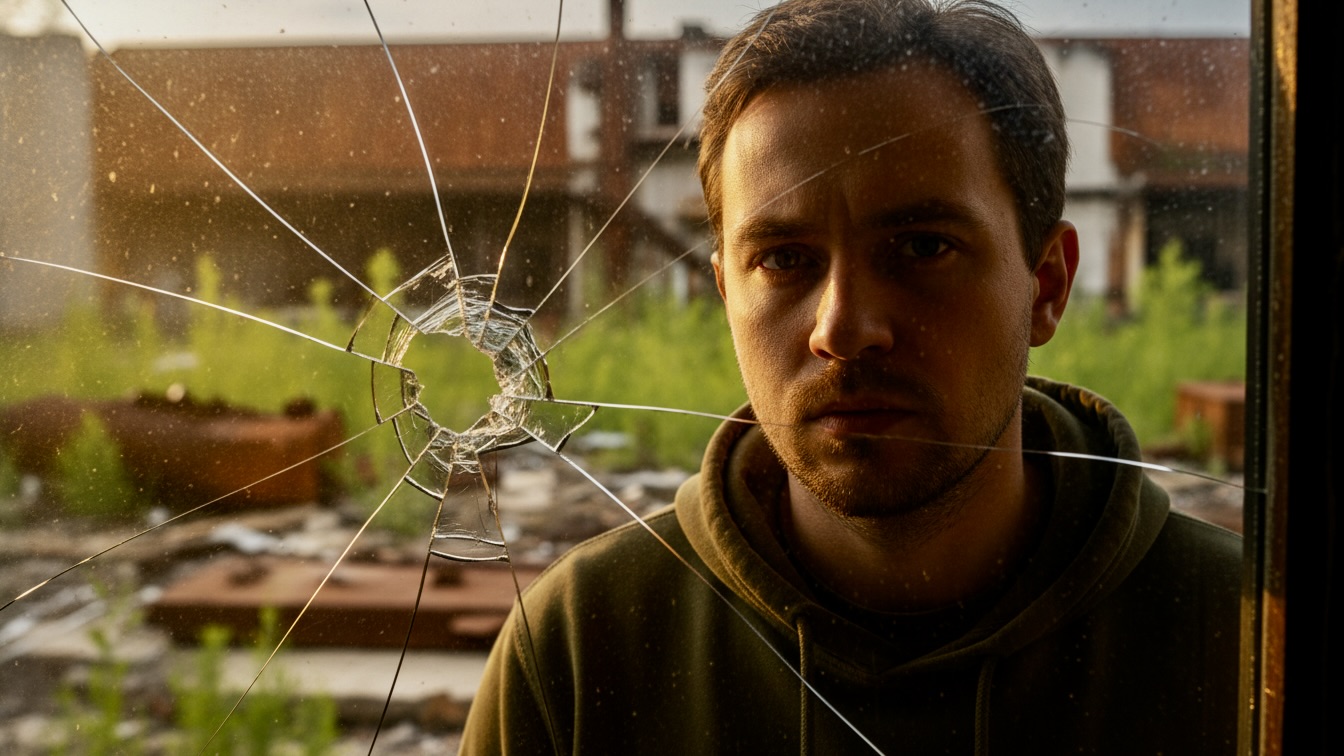
The visual style is "High-Definition Decay," utilizing sharp focus and high-contrast lighting to make the mold, rust, and dust look tactile and oppressive. The color palette is dominated by "Bruised Peach" sunsets, "Neon Green" invasive plants, and the "Grey Snow" of indoor dust motes, creating a look that is both beautiful and repulsive.
The tone is "Existential Western," drawing influence from Stalker for its atmospheric dread and Children of Men for its gritty, grounded portrayal of a world in decline. The camera work should be handheld and intimate, staying close to the characters' faces to emphasize their claustrophobia and physical strain.
The intended audience includes fans of cerebral post-apocalyptic fiction and anthology series like Black Mirror or Love, Death & Robots. It targets adults (18-45) who appreciate slow-burn tension, character-driven narratives, and stories that explore the psychological impact of technological loss.
The pacing is "Deliberately Labored," mirroring the physical effort of the characters. The first act (4 minutes) establishes the environment and the banter; the second act (4 minutes) is the high-tension basement descent; the final act (3 minutes) is the grueling ascent and the climactic revelation of the smoke signal.
Production requires a large-scale industrial location with high ceilings and a basement that can be safely staged with "chemical" puddles. Sound design is critical, requiring a "living building" soundscape of groaning metal and rhythmic thuds to maintain tension without the need for a traditional musical score.
Practical effects should be used for the battery sparks and the "plastic" dust to ensure the actors' physical reactions are authentic. The "radioactive" dandelion should be a practical prop with slight internal LED lighting to make it pop against the desaturated environment of the logistics hub.


