Format: Short Film / Anthology Episode | Est. Length: 10-12 minutes
Imagine a world where your every thought is audited by an invisible jury, where "Black Mirror" meets "The Social Network" in a high-stakes digital panopticon. This story serves as a chilling entry point into a series exploring the erosion of human empathy in the face of algorithmic survival, inviting viewers to witness the birth of a predator in a garden of synthetic morality.
The Meritocracy is an anthology series set in a near-future society governed by the Public Decency Score (PDS), a real-time neural metric that determines social mobility, employment, and basic human rights. Each episode follows a different individual navigating the "Score-Scape," revealing how the system incentivizes betrayal and punishes deviance. The overarching narrative explores the slow-burn radicalization of the "Zero-Tiers" and the inevitable collapse of a society built on algorithmic judgment.
Jay wakes up to a digital death sentence: his Public Decency Score has plummeted from an 82 to a 42 overnight due to a malicious data dump. He has exactly one school day to find a way to offload the "dirty" data or face permanent exile to the basement of society.
When a student’s social score is sabotaged by a rival, he must choose between accepting a life of poverty or framing his only mentor to regain his status. It is a cold-blooded look at the price of survival in an age of algorithmic judgment.
The primary theme is the commodification of morality, where "goodness" is not an internal virtue but a tradable currency managed by a cold, unfeeling AI. It explores the death of friendship and the "legacy systems" of human connection in a world that only rewards transactional success.
The second theme focuses on the "Tyranny of the Mediocre," illustrating how the system suppresses original thought and dissent. By forcing individuals to conform to a sanitized standard, the PDS creates a society of "snakes in a garden," where survival requires the consumption of others' reputations and lives.
For Jay, the stakes are absolute: maintaining his 80+ score grants him access to education and the elite Graduation Gala, while falling below 40 results in "Zero-Tier" status—a life of manual labor and social invisibility. For Mr. Roden, the stakes are his freedom and career, as the subversive data Jay possesses carries a mandatory prison sentence for someone of his age and position.
The primary external conflict is the PDS algorithm itself, an omnipresent force that interprets hesitation as instability and absence as deviance. Kevin serves as the personified antagonist, representing the ruthless efficiency of the new world order. Internally, Jay battles a dwindling sense of integrity, struggling against the primal urge to survive at the cost of the only person who actually cares for his well-being.
Jay, a student living under the thumb of the Public Decency Score, discovers his account has been "ghosted" with extremist manifestos, dropping his score to a lethal 42.1. He confronts his former friend Kevin, who admits to the sabotage as a "mercy kill" to remove a weak link from their social circle. Desperate to avoid the "Zero-Tier" basement, Jay discovers a security vulnerability in the terminal of his idealistic history teacher, Mr. Roden.
During a heart-to-heart about integrity, Jay realizes that Mr. Roden’s outdated hardware is the only place he can dump his "dirty" data packets. Despite Roden’s kindness, Jay initiates the transfer, watching as his own score skyrockets while the teacher is swarmed by security forces. Jay walks away into the spring air, fully integrated back into the elite, having traded his soul for a party invitation.
Jay: Starts as a desperate victim of a rigged system, clinging to the hope of social mobility through traditional means. By the end, he has fully transitioned into a predator, embracing the transactional nature of his world and discarding his conscience for a high score.
Kevin: A high-scoring sociopath who views human relationships as "legacy systems" and acts as the catalyst for Jay’s moral corruption. He remains static, serving as the archetype of the successful citizen in this dystopia.
Mr. Roden: An aging educator who believes in "objective truth" and the "unrecorded mind," representing the last vestiges of pre-link humanity. He ends the episode as a broken man, a victim of the very student he tried to protect.
The Audit: Jay wakes to the stinging sensation of his neural-link handshake and the crushing realization that his score has dropped forty points overnight. He views the "dirty" data—extremist manifestos he didn't download—and realizes he has been framed while the HUD pulses a red warning in his vision. He leaves for school in a panic, knowing that any delay will trigger an "Anti-Social Avoidance" penalty that will seal his fate.
The Confrontation: At the school gates, Jay navigates a sea of high-scoring "golden children" before finding Kevin, whose shimmering 96 score mocks Jay’s desperation. Kevin admits to the sabotage with a lazy smile, explaining that friendship is an obsolete architecture and that Jay was simply too "mid" to survive the upcoming Tier-One cut. Jay is left standing in the hallway as Kevin walks away, the weight of his 42.1 score feeling like a physical burden as he begins to search for a digital backdoor.
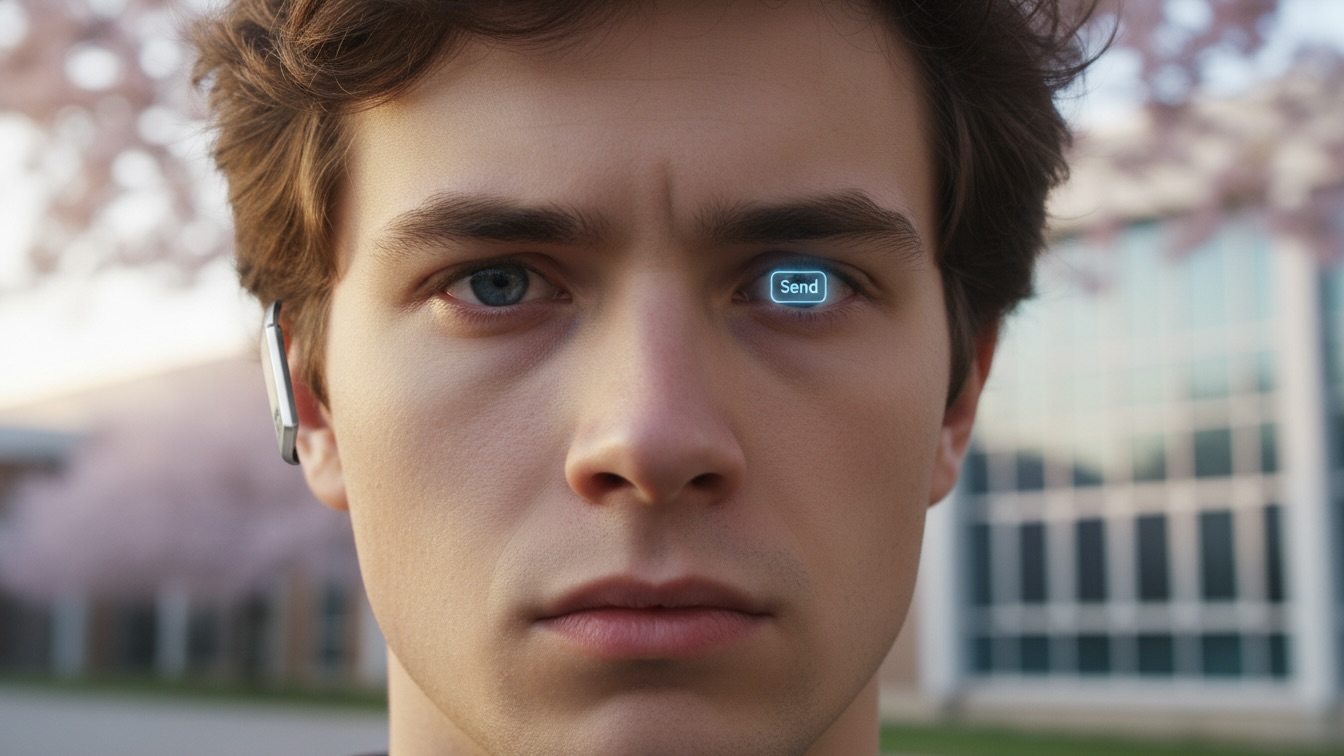
The Sacrifice: Jay enters Mr. Roden’s classroom, finding the teacher grading papers with a physical pen—a sign of his vulnerability and his humanity. As Roden offers words of comfort about integrity being the only currency that doesn't devalue, Jay initiates a "Data Corruption" protocol to offload his subversive files onto Roden’s unprotected terminal. He watches the progress bar fill with a mix of guilt and relief, finally pressing "Send" just as security sirens begin to wail.
The Ascent: Jay walks past the security guards who are arresting the confused and broken Mr. Roden, his HUD now glowing a healthy green with a score of 85.4. He encounters Kevin in the courtyard and receives a mock salute, acknowledging his new status as a fellow predator in the social garden. The episode ends with Jay accepting a digital invitation to the Graduation Gala, his mind already calculating the next person he will have to destroy to maintain his seat at the table.
The episode begins with a sense of suffocating anxiety and claustrophobia, mirroring Jay’s trapped state within the system. As the plot progresses, the mood shifts from desperation to a cold, clinical pragmatism during the scene with Mr. Roden. The finale offers a chilling sense of "relief" that is intentionally uncomfortable for the audience, leaving them with a lingering feeling of dread as they realize the protagonist has become the villain to survive.
If expanded, the season would follow Jay’s ascent through the Tier-One ranks, showing him becoming increasingly adept at manipulating the PDS while losing his humanity. Each episode would introduce a new "transaction," escalating the stakes from framing a teacher to potentially influencing city-wide policy or deleting rivals from the network entirely.
The secondary arc would follow the fallout of Mr. Roden’s arrest, as he becomes an unlikely martyr for a burgeoning underground movement of "Zero-Tiers." This would culminate in a season finale where Jay must choose between his high-status life and a revolution led by the man he betrayed, testing whether any part of his original self remains.
The visual style should be "High-Tech, Low-Life" with a heavy emphasis on Augmented Reality overlays that contrast with the decaying physical world. The "clean" areas of the school should be shot with cold, clinical lighting and sharp focus, while the Zero-Tier areas and Mr. Roden’s office should feature warmer, grainier textures and physical props.
Tonal influences include the "Nosedive" episode of Black Mirror for its social commentary and Cyberpunk 2077 for its gritty, integrated technology. The tone is cynical and suspenseful, using the HUD as a ticking clock that heightens the tension of every social interaction.
The target audience is adults and older teens (16-35) who enjoy dystopian sci-fi, social thrillers, and "prestige" anthology dramas. It appeals to viewers interested in the intersection of technology and ethics, particularly those who engage with contemporary discussions about social media algorithms and surveillance capitalism.
The episode is designed as a 12-minute "sprint," utilizing a three-act structure that maintains a high tempo. Act I (The Discovery) takes 3 minutes, Act II (The Confrontation & Plan) takes 5 minutes, and Act III (The Betrayal & Aftermath) takes 4 minutes. The pacing should feel breathless, reflecting the constant pressure of the real-time score updates.
The primary production challenge is the AR HUD (Heads-Up Display), which requires sophisticated motion graphics to feel integrated into the characters' world. These overlays must change color and intensity based on the character's heart rate and score, serving as a secondary "actor" in every scene.
Practical locations should emphasize the contrast between the "perfect" school environment and the pilled, dusty reality of Mr. Roden’s office. Sound design is crucial, specifically the "metallic tang" of the neural-link and the synthesized, mercy-less voice of the PDS system, which should feel omnipresent and slightly invasive to the viewer.


