Format: Short Film / Anthology Episode | Est. Length: 10-12 minutes
This episode serves as a standalone entry in a psychological horror anthology series titled The Midway, where ordinary people facing existential crises are lured into a shifting, supernatural carnival that manifests their deepest regrets. Each episode explores a different protagonist trapped in a surreal, purgatorial landscape that serves as a physical metaphor for the emotional baggage they refuse to confront, ultimately forcing them to either shed their past or be consumed by it.
Benji sits in his car, paralyzed by anxiety and the suffocating yellow pollen of spring, only to find himself drawn to a flickering "AMUSEMENTS" sign in an abandoned field. He steps out into the mud, clutching a velvet ring box in his pocket that feels like a radioactive weight, unaware that the carnival is waiting specifically for him.
A young man struggling with the suffocating pressure of an unwanted engagement is lured into a nightmarish, shifting carnival that forces him to confront his cowardice. He must navigate a literal trap of his own making before the ride—and his life—crushes him entirely.
The episode explores the paralyzing weight of societal expectations and the cowardice inherent in failing to communicate one's true desires. It examines the "noose" of commitment, where the symbols of love—like an engagement ring—transform into instruments of self-destruction when they are born from obligation rather than genuine affection.
The secondary theme is the inevitability of confrontation; Benji’s attempt to run from his problems only leads him to a place where he is forced to face them at an accelerated, violent pace. The carnival acts as a mirror for his internal decay, externalizing his fear of adulthood and his resentment toward his partner, Clara.
Benji’s life is at stake, both physically and psychologically, as the carnival’s machinery threatens to literally crush him if he does not accept or reject his fate. Beyond the physical peril, his relationship with Clara is at a breaking point, and his future hangs in the balance between continuing a life of quiet desperation or breaking free at the cost of his moral integrity.
The primary external antagonist is the Eyeless Carny, a manifestation of Benji’s own suppressed guilt and the predatory nature of the life he is trying to escape. Internally, Benji battles his own profound indecision and the "sunk cost" fallacy, as he struggles to reconcile his desire for freedom with the crushing guilt of abandoning his long-term partner.
Benji, a college senior trapped in a stagnant relationship, finds himself at a surreal, decaying carnival instead of the grocery store where he was supposed to be. As he navigates the midway, the games and booths reflect his anxieties—baby bottles as targets and wedding rings as ring-toss prizes—until he is forced into a swan-shaped roller coaster car by a terrifying, eyeless carny who demands a "ticket."
Trapped in the coaster as it spins in an ever-tightening circle, Benji is forced to relive the moment he bought the ring and the suffocating arguments with his partner, Clara. He eventually manages to break the safety mechanism and escape, only to find himself back in his apartment, where the ring box remains as a physical reminder that his nightmare is not just a dream, but a reality he must finally choose to flee.
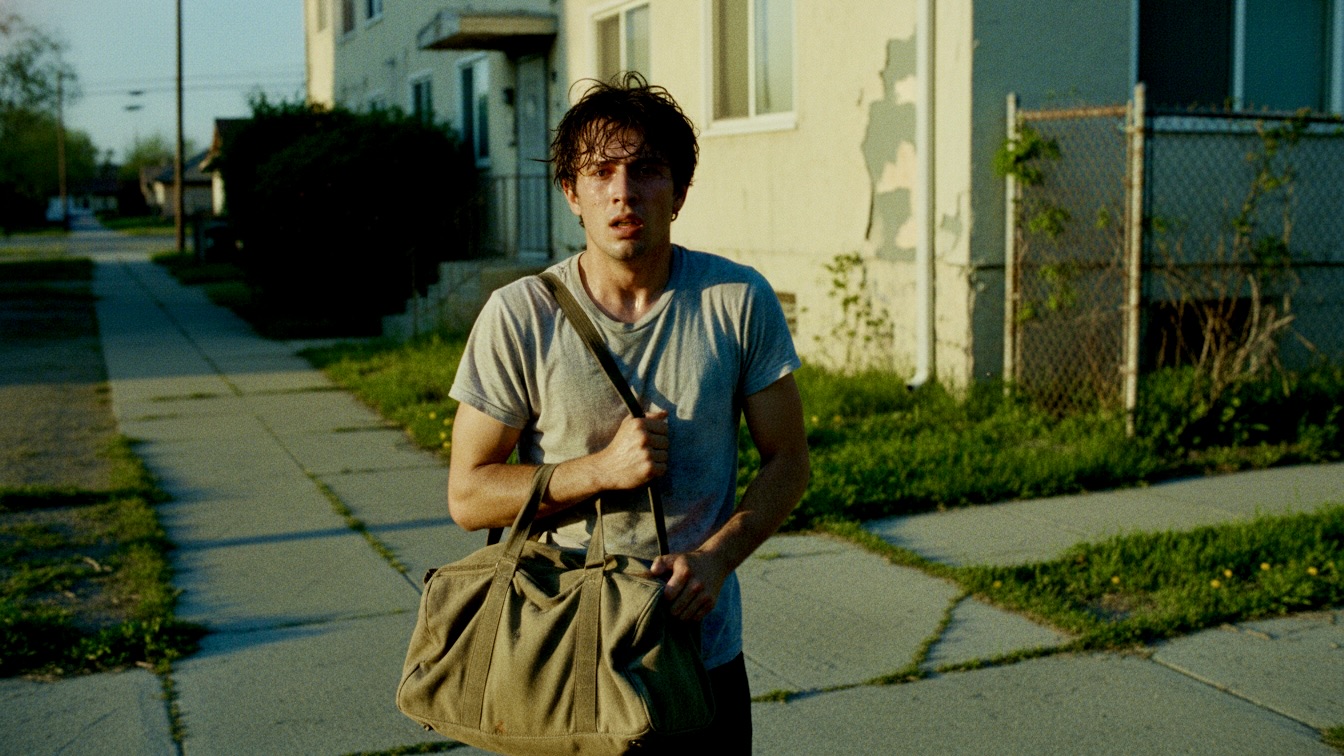
Benji is a twenty-two-year-old on the verge of graduation, defined by his paralyzing indecision and a deep-seated fear of disappointing those around him. He begins the story as a passive participant in his own life, but ends it as a desperate, albeit cowardly, fugitive who chooses flight over the confrontation of his own unhappiness.
Clara is the unseen catalyst, a twenty-four-year-old bank employee whose desire for a stable future acts as the pressure cooker for Benji’s breakdown. She represents the "life" Benji is terrified of—one of mortgages, expectations, and adulthood—which he perceives as a cage despite her genuine love for him.
The Eyeless Carny is a supernatural entity that serves as the carnival’s gatekeeper, representing the cold, indifferent force of consequence. He lacks eyes because he does not need to see Benji; he already knows the weight of the "noose" Benji carries in his pocket.
Benji arrives at the carnival, his disorientation and physical symptoms of anxiety establishing the surreal, claustrophobic atmosphere. He encounters the game booths, where the grotesque transformation of mundane objects into symbols of his domestic dread signals the carnival's supernatural nature.
The midpoint occurs when the Eyeless Carny forces Benji into the swan car, locking him in and initiating the ride that begins to shrink the world around him. The coaster accelerates, forcing Benji to confront his memories of purchasing the ring and his resentment toward Clara, pushing him to the brink of physical and mental collapse.
In the climax, Benji destroys the ride's safety mechanism in a primal, violent act of self-preservation and escapes through a funhouse mirror into a void. He awakens in his apartment, only to find the ring box is real, prompting him to pack his belongings and flee his life, leaving his relationship and his past behind in the cold dawn.
The episode begins with a sense of suffocating, hazy anxiety, transitioning into visceral, high-stakes dread as the carnival’s true nature is revealed. The climax provides a brief, violent release of adrenaline, which settles into a hollow, haunting sense of isolation and uncertainty as Benji chooses to run rather than heal.
If expanded, the series would follow different characters who all find their way to the same carnival, with the Eyeless Carny acting as a recurring, malevolent guide. Over the season, the carnival would gradually reveal itself as a sentient entity that feeds on the "lost" potential of those who visit, with the overarching narrative arc focusing on a protagonist who eventually attempts to burn the carnival down.
The visual style should be heavy on desaturated, dusty yellows and harsh, overexposed whites, mirroring the pollen-choked atmosphere of the opening. The carnival itself should be shot with wide-angle lenses to create a sense of claustrophobia and disorientation, emphasizing the "shrinking" nature of the midway.
The tone is psychological horror, comparable to The Twilight Zone or Black Mirror, blending mundane domestic settings with surreal, nightmarish imagery. Lighting should be stark and unnatural, with neon elements cutting through the daylight to create a sense of wrongness that permeates every frame.
The target audience is young adults and fans of psychological thrillers who appreciate character-driven horror and metaphorical storytelling. It is designed for viewers who enjoy slow-burn tension that culminates in unsettling, ambiguous resolutions.
The pacing starts deliberately slow to mirror Benji’s internal lethargy, then accelerates rapidly once he enters the carnival, creating a frantic, rhythmic intensity during the roller coaster sequence. The runtime is structured to allow for a brief, quiet opening, a high-intensity middle act, and a somber, lingering conclusion that leaves the audience questioning the permanence of Benji’s escape.
The swan car and the roller coaster track should be designed with a tactile, rusted aesthetic to emphasize the "dying" feel of the carnival, likely requiring a mix of practical sets and subtle CGI to achieve the shrinking effect. The "void" sequence should be handled with minimalist, high-contrast lighting to ensure the transition from the carnival to the apartment feels jarring and disorienting.
The sound design is critical; the discordant wedding march and the rhythmic, metallic clanging of the bells in the void should be layered to create a sense of auditory claustrophobia. The Eyeless Carny’s makeup should be practical, focusing on the smooth, skin-covered eye sockets to create an uncanny, unsettling presence that feels grounded in the carnival’s gritty, decaying world.


