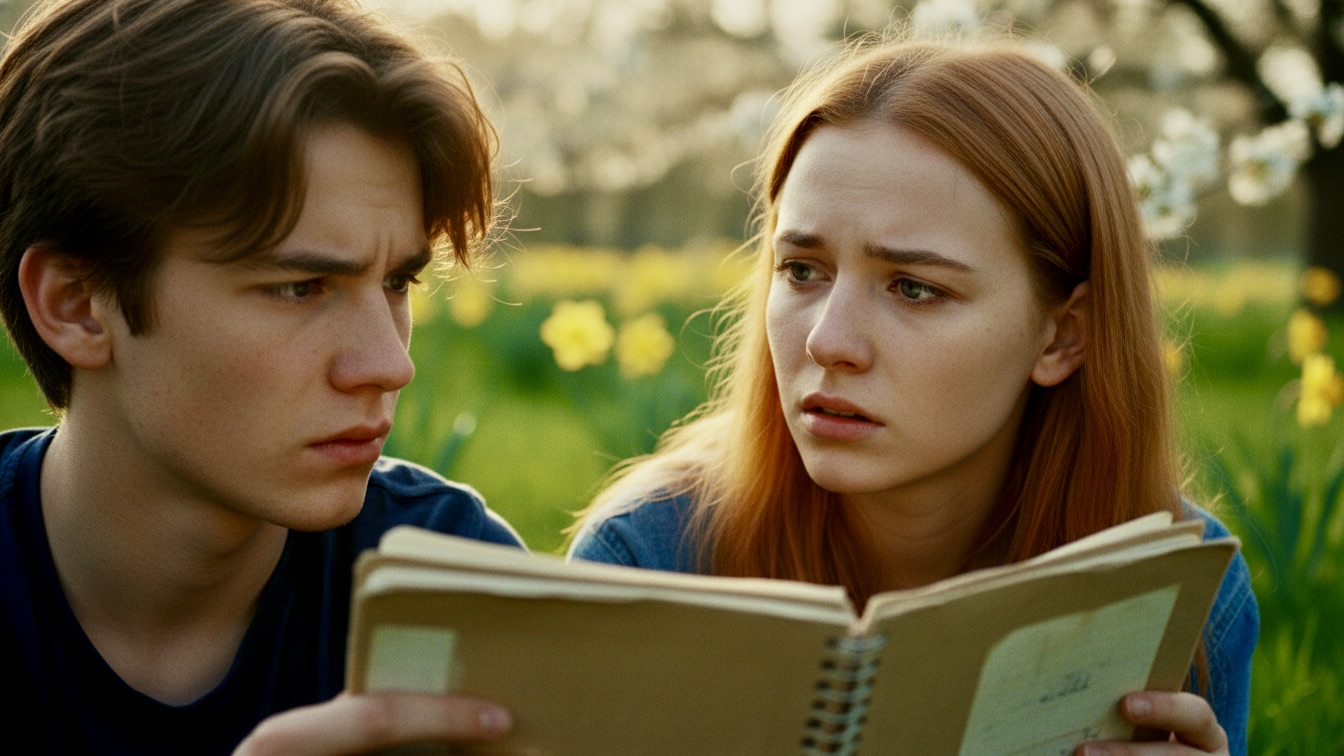
The server died, taking the holograms with it. Gina stared at the blank wall, entirely untethered and alone.
The hum stopped first. It was a low, industrial vibration that lived in the floorboards and the back of the teeth, a sound so constant it had masqueraded as silence for three years. When it cut out, the true silence rushed into the room to replace it. It felt heavy. It felt like water filling a sunken car.
Then the light died. Not the overhead fluorescent tubes, which were already burned out and ignored, but the light that mattered. The holographic archive projectors mounted in the ceiling corners gave a weak, sputtering hiss. The glowing blue shelves of data, the floating diagrams of timeline divergence, the ambient AR overlay that made the drab concrete walls look like a nineteenth-century oak-paneled library—all of it vanished.
The room was suddenly just a room. Study Room 4B. A gray concrete box smelling of ozone, stale breath, and cheap floor wax.
Gina sat at the metal table. The sudden subtraction of the digital world left a physical gap in the air. The light streaming through the single, narrow window was real, unfiltered sunlight, and it was terrible. It cast hard, ugly shadows. It exposed the thick layer of dust coating the table. It highlighted the missing things. There were no digital avatars of study partners, no floating timers, no soft-focus filters to blur the sharp edges of the world.
Gina stared at her tablet. The screen was black.
"No," Gina said. Her voice sounded thin without the acoustic dampening field. It bounced off the concrete. "No, no, no."
She tapped the glass. Her thumb hit the surface with a dry, hollow sound. The tablet had a spiderweb crack in the bottom right corner, a physical defect she usually ignored because her interface was wired directly to her optic nerve. Now, with the local network dead, she was forced to look at the broken glass.
"The archive is dead," Vern said.
He was sitting across from her. He had been sitting across from her for four hours. Gina tapped the screen again, harder. Her jaw was tight. The muscles in her neck pulled taut.
"It is a localized outage," Gina said. She wiped her palm on her jeans. Her hands were sweating. The synthetic fabric of her pants felt scratchy and hot. "It has to be local. If the main server farm goes down during finals week, the university will face a riot."
"We are untethered," Vern said. He leaned back in his plastic chair. The chair creaked loudly. Without the background noise generator, the scrape of plastic on linoleum was deafening. "The sum of human knowledge has abandoned us. We are plunged into the dark ages."
"Do not be dramatic, Vern," Gina said. She flipped the tablet over, looking for a hard reset button she had never used. "I have lost four months of quantum variance mapping. The exam is tomorrow. If I cannot access the timeline divergence matrices, I will fail. If I fail, I lose my housing stipend. I am not in the mood for your theatrical nihilism."
Vern watched her. His heart was beating against his ribs, a hard, irregular rhythm. He hated his body. His body was a clumsy, leaking machine. His stomach hurt because he had skipped lunch to study with her. His neck was stiff. In the digital space, Vern was a towering, broad-shouldered avatar with a calm baritone voice and flawless skin. Here, in the harsh, fading light of the concrete room, he was just a guy with bad posture and a nervous habit of bouncing his left leg.
His leg was bouncing now. The table vibrated slightly.
"Stop moving," Gina snapped.
Vern froze. "Apologies. It is a biological defect. A misfiring of the nervous system in response to stress."
"Your stress?" Gina dropped the tablet on the table. The sound was flat and final. "My notes are gone. The server wiped the local cache when it crashed. I am looking at a blank slab of silicon. I have nothing."
Gina looked at the room again. The absence of the holograms made the space feel immense and empty. The corners were dark. The air felt stagnant. For her entire life, the environment had been curated, controlled, and optimized. Temperature was regulated. Lighting was adjusted to match serotonin levels. Information was omnipresent, floating just at the edge of peripheral vision.
Now, she was trapped in a physical box with a boy she barely knew outside of a chat window, and the physical reality of the situation was crushing her. Her stomach turned over. A sharp ache bloomed behind her eyes.
"I have a backup," Vern said.
His voice was quieter this time. Less performed. He reached into his canvas messenger bag. The bag was worn, the strap frayed at the edges. He pulled out an object and placed it on the dusty table.
It was a notebook.
Gina stared at it. It was a physical object made of paper. A Mead spiral notebook with a cardboard cover. The spiral wire at the top was bent and snagged. The edges of the paper were soft and yellowed. It looked heavy. It looked absurd.
"What is that?" Gina asked.
"It is a book," Vern said. "Well, a blank book. That I filled with ink."
"You wrote things down? With your hands?" Gina looked at his hands. They were pale, the knuckles slightly red. The idea of manually dragging a tool across a physical surface to record data seemed barbaric. It was wildly inefficient.
"I am an analog purist," Vern said, retreating instantly into his theatrical persona. He sat up straighter. "I anticipated the collapse of the digital infrastructure. I do not trust the cloud. The cloud is a lie invented by server farms to steal our autonomy."
"You bought that at a junk store because you think it makes you look interesting," Gina said, accurately.
Vern swallowed hard. His throat was dry. "Be that as it may. The notes are inside. Every quantum timeline divergence, mapped and annotated. By hand."
He slid the notebook across the table. The cardboard made a soft shushing sound against the dust. Gina looked at it like it was a live explosive. She did not want to touch it. Touching physical media was intimate. It carried the oils of the user's skin. It carried the specific, un-curated weight of their actual life.
"I cannot read your handwriting," Gina said, not moving her hands.
"It is very legible," Vern said. "I use block letters."
Gina sighed. The air in the room was getting stale. The ventilation system had died with the servers. "We cannot stay in here. The oxygen is going to cycle out. The air scrubbers are off."
"Where do we go?"
"Outside," Gina said.
The word hung in the air. Outside.
For twenty years, the campus had been sealed under an atmospheric shield. A massive, invisible dome that filtered out ultraviolet radiation, regulated the temperature to a perfect twenty-one degrees Celsius, and blocked the erratic wind patterns of the destabilized climate. But last month, the university engineers had lowered the shield. The global climate repair protocols had finally reached an acceptable threshold. The administration called it a return to nature. The student body called it a nightmare.
They had been avoiding the outdoors ever since.
"The grass is wet," Vern said. "It rained this morning. Actual rain. From the sky."
"We will find a dry spot," Gina said. She picked up her useless tablet and shoved it into her bag. She looked at the notebook. Reluctantly, she picked it up. The cardboard was rough against her fingertips. The bent spiral wire scratched her thumb. The physical reality of the object was jarring. It had mass. It resisted gravity in a way holograms did not.
"Lead the way," Vern said, standing up. He slung his bag over his shoulder.
They walked out of the study room and into the corridor. The hallway was a tunnel of gray concrete. The emergency strip lighting on the floor cast a sickly yellow glow upward, making the walls look sick. The digital wayfinding arrows that usually floated in the air were gone. Without them, the architecture felt hostile, confusing.
Their footsteps echoed loudly. Gina wore heavy-soled boots. Vern wore canvas sneakers that squeaked on the linoleum. The sounds were uncoordinated. In the digital realm, audio was mixed and balanced. Here, it was chaotic.
"This building is a tomb," Vern said, looking at the dark doorways of the other study rooms. "We are ghosts haunting our own hardware."
"Stop talking like a holovid villain," Gina said. But she felt it too. The dead building was pressing down on them.
They reached the heavy double doors at the end of the hall. The glass was thick and reinforced. Beyond it, the afternoon sun was blinding. Gina pushed the metal crash bar. The door was heavy. She had to use her shoulder to force it open.
The air hit them immediately.
It was a physical shock. The air outside was not temperature-controlled. It was crisp, bordering on cold, but the sun hitting their skin was hot. The contrast was confusing to the senses. And the smell—it was overwhelming. Wet earth, crushed leaves, sharp pollen, the metallic tang of ozone. It filled Gina's lungs. It made her eyes water.
"My sinuses are rejecting this environment," Vern said, squinting against the bright light. He raised a hand to shield his eyes.
"Breathe through your mouth," Gina said.
They stepped off the concrete patio and onto the grass.
The ground was uneven. The artificial flooring of the campus interiors was perfectly level, engineered for minimal strain on the joints. The earth was lumpy. It gave way under their shoes. The grass was thick, bright green, and damp.
Gina walked toward a large oak tree that cast a long shadow over the lawn. The light was changing. It was late afternoon, the sun beginning its descent. The sky was not the uniform, curated blue of the atmospheric shield display. It was a harsh, blinding white-blue, fading to a pale, washed-out yellow near the horizon.
She sat down at the base of the tree. The dampness of the soil immediately seeped through the heavy fabric of her jeans. It felt cold against her skin. She grimaced but did not move. Vern hovered awkwardly for a moment before sitting down about three feet away from her. He crossed his legs. His knee bumped his messenger bag.
"We are touching grass," Vern said flatly. "I feel completely unchanged."
"Open the book," Gina said.
Vern leaned over and opened the cardboard cover. The pages were covered in dense, black ink. He had drawn the timeline divergence graphs by hand, using a ruler to keep the lines straight, but the human error was obvious. The lines wavered slightly. The ink was thicker in some places where the pen had rested too long.
Gina stared at it. It was chaotic. Her brain, trained to process clean, uniform digital fonts, struggled to decode the messy shapes of Vern's handwriting.
"This is the 2042 Collapse," Vern said, pointing to a jagged line that branched into three separate vectors. His finger was close to her hand. She could feel the heat radiating from his skin. It was distracting.
"The primary timeline fractures when the global network first goes offline," Vern continued, dropping into his academic voice. It was a defense mechanism. If he was talking about quantum history, he did not have to think about how close they were sitting. "The divergence occurs because human consciousness, suddenly severed from the collective digital memory, begins to form isolated, contradictory narratives of reality."
"Just like us," Gina said quietly.
Vern looked at her. "What?"
"The power goes out, and suddenly we are entirely different people," Gina said. She traced the edge of the paper with her index finger. The paper was dry and slightly powdery. "In the archive, you are a confident scholar. I am an efficient data processor. The servers crash, and now you are a nervous boy with a bouncing leg, and I am a terrified girl with wet pants."
Vern swallowed. The theatrical mask slipped. He looked down at his hands. "The digital world is a necessary buffer. It filters out the noise. It allows us to present our optimal selves."
"It is a lie," Gina said. She was surprised by the bitterness in her own voice. The unfiltered air was making her reckless. "We study history, Vern. We map out how humans used to live. They lived in dirt. They communicated with their actual mouths. They did not have algorithms curating their personalities."
"And they killed each other," Vern pointed out. "They died of preventable diseases. They suffered constantly. The curation is a shield against the violence of the physical world."
He gestured to the lawn. "Look at this. It is chaotic. There are insects crawling in the dirt. The sun is actively mutating our skin cells with radiation. The wind is unpredictable. Why would anyone choose this over a perfectly rendered, safe simulation?"
Gina looked at the bent spiral wire of the notebook. She thought about her tablet, the smooth, frictionless glass, the cracked corner that she never touched.
"Because the simulation is lonely," Gina said.
The words slipped out before she could stop them. She felt her face grow hot. A physical blush, uncontrollable and entirely visible in the harsh sunlight. She hated it. She wanted to throw a shadow filter over her face. She wanted to mute her audio channel.
Vern stopped moving. His leg stopped bouncing. He looked at her, really looked at her, without the AR overlays that usually smoothed out her features. He saw the dark circles under her eyes from lack of sleep. He saw the uneven edge of her fingernails where she had bitten them down. He saw the slight tremor in her hands.
He thought she looked incredibly, terrifyingly real.
"My avatar would know exactly what to say to you right now," Vern said, his voice dropping to a near-whisper.
"Your avatar is a mathematically optimized fiction," Gina said, her voice shaking slightly. "He is boring."
"He has perfect posture," Vern said, attempting a weak smile.
"He does not exist."
They sat in silence. The wind picked up, rustling the leaves of the oak tree above them. The sound was random, a complex collision of physical objects that no algorithm could perfectly replicate. The air was getting colder as the sun dropped lower.
They went back to the notebook. They spent two hours tracing the hand-drawn lines of history, mapping out the mistakes of past generations. Gina learned to read Vern's handwriting. She learned that he looped his y's aggressively and that his t's were crossed with a heavy, downward slash. It was an intimate transfer of information. She was learning the physical mechanics of his hand, the way his muscles moved when he wrote.
It was exhausting. Reading the physical page required a sustained, focused attention that her brain was not built for. She felt a deep, somatic fatigue settling into her bones. Her back ached from sitting against the hard trunk of the tree. Her legs were cramped.
But she did not want to leave.
The light began to fail in earnest. The bright white-blue of the sky deepened into a bruised purple, bleeding out into streaks of burnt orange near the horizon. The shadows stretched across the lawn, long and distorted. The campus buildings, stripped of their glowing digital signage, looked like ancient monoliths standing against the dying day.
Vern closed the notebook. The cardboard cover slapped shut.
"It is too dark to read," he said.
"Yes," Gina said.
She did not make a move to stand up. Vern did not move either.
The physical distance between them was exactly three feet. In a digital space, distance was meaningless. You could instantly bridge a gap with a keystroke. You could overlay your avatar onto someone else's space. Here, the three feet of damp grass was a massive, insurmountable canyon.
Vern wanted to bridge it. He wanted to slide across the dirt, close the gap, and touch her hand. Not a digital ping. Not a simulated tactile feedback vibration. He wanted to feel the warmth of her actual skin, the pulse of blood under her wrist.
His heart hammered against his ribs again. The biological terror of rejection paralyzed him. If he reached out and she pulled away, the rejection would be physical. It would happen in the real world. There was no undo button. There was no way to scrub the event from the server logs.
Gina watched his hands resting on the cardboard cover of the notebook. She saw his fingers twitch, saw the microscopic hesitation in his muscles. She knew what he was thinking. She felt the same paralyzing fear. Her curated life had given her zero tools for this moment. She did not know how to bridge the gap without an interface.
The cold air bit through their clothes. The silence of the unpowered campus was heavy, broken only by the sound of their own breathing. The sun dipped below the concrete horizon, leaving them in the cold, neither willing to make the first move.
“The sun dipped below the concrete horizon, leaving them in the cold, neither willing to make the first move.”


