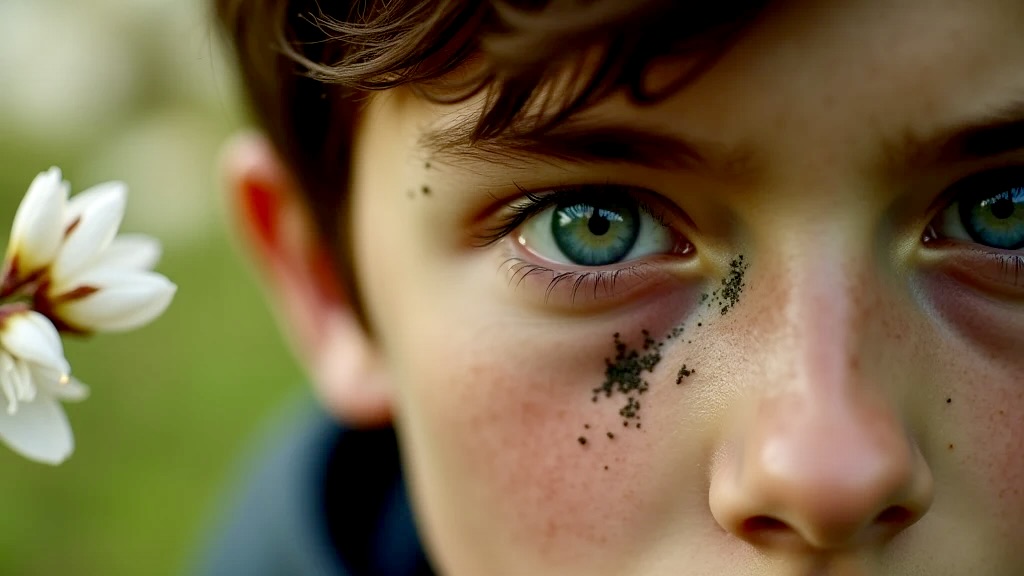
Arthur stood in the mud as his grandson explained why the land no longer belonged to their family.
The rusted latch of the greenhouse door resisted Arthur’s thumb. It was a stubborn, orange-crusted piece of iron that had seen seventy winters. He pressed harder. The metal bit into his skin. A sharp, stinging reminder that his body was thinning. Finally, the bolt yielded with a screech that set his teeth on edge. He stepped inside. The air was different here. It was heavy with the scent of damp peat and the metallic tang of a leaky hose. Outside, the spring wind was a cold, scouring thing. Inside, it was merely stagnant.
He moved toward the center bench. His knees made a sound like dry twigs snapping. He didn't care. He had work to do. On the bench sat a small, clay pot. In it was a sapling, barely six inches tall. It was a graft he had been attempting for three years. A delicate union of a hardy rootstock and a rare, flowering scion that his own father had brought from overseas. For months, it had looked dead. A brittle, brown stick. But this morning, there was a change. A tiny, microscopic nub of green had appeared near the wax-sealed joint.
Arthur leaned in. His eyes were milky at the edges, but he could see it. The spark. Life was returning to the wood. It was a small victory in a season of losses. He reached out a trembling hand to touch the plastic wrap securing the graft. His fingers were stained with the dark earth of the morning’s repotting. He felt a sense of quietude. The greenhouse was his cathedral. The glass panes were cracked, held together by duct tape and hope, but they kept the world at bay.
Then he heard the car. It was a low, aggressive hum. A German engine, tuned for speed and status. It didn't belong on the gravel driveway of a house that was slowly sinking into the mud. Arthur didn't look up. He knew the sound of Leo’s car. He knew the sound of his grandson’s ambition.
Leo entered the greenhouse without knocking. He wore a suit that cost more than Arthur’s first three cars combined. The silk tie was the color of a bruise. He looked at the peeling paint and the moss-covered floor with an expression of profound distaste. He didn't speak immediately. He stood there, checking his watch. It was a heavy, gold thing that caught the meager spring light.
"You are late, Leo," Arthur said. He kept his back to the young man. He was focused on the green nub. "The soil does not wait for appointments. It dries out or it drowns."
"The soil is irrelevant, Grandfather," Leo replied. His voice was smooth. It was the voice of a man who had never had dirt under his fingernails. "I have come to discuss the finality of the situation."
Arthur turned slowly. He wiped his hands on a rag that was more grease than fabric. "The situation? You speak as if we are in a boardroom. This is a garden. We speak of growth and decay here. Not situations."
Leo stepped closer. He avoided a puddle of nutrient-rich water. "We must transcend this rustic affectation. The documents are finalized. I have secured the signature of the primary creditor. The transition will begin on Monday."
Arthur felt a coldness that had nothing to do with the spring draft. It started in his feet and moved up his spine. "The transition? Leo, use the English language properly. What have you done?"
Leo straightened his cuffs. "I have facilitated the sale of the northern acreage. And this structure. The developers require the footprint for the new clubhouse. It was a matter of fiscal survival. Your debts were mounting. The taxes were an anchor. I have cut the rope."
Arthur’s breath hitched. He looked at the glass walls. He looked at the thousands of seedlings he had started in February. "You sold the land? My land?"
"Technically, it was the estate’s land," Leo said. "And I am the executor of the trust. You surrendered that authority five years ago, Grandfather. Do not pretend this is a surprise. I have been transparent about the lack of viability here."
"You have been a shadow," Arthur spat. The theatricality of his anger felt heavy in his chest. "You have moved in the dark, Leo. You have practiced a most profound deception. This land has been in our name since the Great War. It survived the depression, the floods, and the death of your father. And you trade it for a clubhouse?"
"I trade it for liquidity," Leo countered. He looked at Arthur with a clinical pity. "The world does not operate on your sentimental timeline. This place is a ruin. You are living in a tomb of glass and rot. I am providing you with a comfortable suite in the city. A place with climate control and a view that doesn't involve dying trees."
Arthur’s hand went to the potting bench for support. He felt the rough grain of the wood. It was solid. Real. More real than the numbers Leo lived by. "You think I want a view? I want the earth. I want to see the things I planted outlive me. That is the contract a man makes with the ground."
"The contract has been voided," Leo said. He reached into his breast pocket and pulled out a slim, leather-bound folder. "I need you to sign the personal property release. It’s a formality. It covers the equipment and the... plants."
Arthur looked at the folder. It was sleek. It was the color of a funeral. "You want me to sign away my life?"
"I want you to accept the inevitable," Leo said. "The bulldozers arrive on Wednesday. I suggest you take what you value most and leave the rest. The salvage crew will handle the cleanup."
Arthur looked at his grandson. He saw the sharp jawline, the cold eyes, the lack of any connection to the mud on the floor. He realized he didn't know this man. He had helped raise him, had taught him how to prune a rose, how to identify a hawk in flight. But the boy had been replaced by a machine. A machine that measured the world in square footage.
"You have no soul, Leo," Arthur whispered. "You have a ledger where your heart should be."
Leo didn't flinch. "A heart is a liability in a rising interest rate environment. Sign the paper, Grandfather. Let us conclude this with some dignity."
Arthur looked down at the small clay pot. The graft. The tiny spark of green. It was so small. So fragile. If the bulldozers came, it would be crushed into the dirt. It would become part of the fill for a parking lot. He felt a surge of something hot and primal. It wasn't just anger. It was a refusal to be extinguished.
"I will not sign," Arthur said. His voice was steady now. "I will not facilitate your theft."
Leo sighed. It was the sound of a parent dealing with a difficult child. "It doesn't matter if you sign. The legal threshold has been met. This is merely for the sake of the transition’s optics. If you refuse, I will simply have the sheriff escort you from the property on Monday morning. Do you truly want your neighbors to see that?"
Arthur looked at the glass. He saw his own reflection. He looked old. He looked like a man who was already part of the past. But then he looked at the green nub again. It was defiant. It was growing in spite of the cold, in spite of the rot, in spite of the man in the expensive suit.
"Go away, Leo," Arthur said. He turned back to the bench. He picked up a small trowel.
"Grandfather, be reasonable."
"Reason is for people who have something to lose," Arthur said. "I have already lost everything that matters to you. What remains is mine. Now, leave. The air in here is becoming foul."
Leo hesitated. For a second, a flicker of something human crossed his face. A brief moment of hesitation. But then he checked his watch again. The gold flashed. The machine took over. "I will have your things packed. Monday at eight, Grandfather. Do not make this a spectacle."
Leo turned and walked out. The heavy door slammed shut. The glass panes rattled in their frames. One of them cracked further, a jagged line racing across the surface like lightning. Arthur stood in the silence. The hum of the German engine faded into the distance. The gravel crunched, then went quiet.
Arthur was alone. He felt the weight of his years. Every joint ached. His lungs felt tight. He looked at the greenhouse. It was a wreck. A beautiful, dying wreck. He walked over to the corner where he kept his heaviest tools. He found a sledgehammer. It was rusted, the wooden handle grey and weathered. He picked it up. It was heavy. He had to use both hands.
He walked to the center of the room. He looked at the rows of seedlings. Thousands of them. Tomatoes, peppers, marigolds, zinnias. All of them waiting for a spring that wouldn't come for them. He looked at the glass walls. He looked at the sky through the grime. It was a pale, mocking blue.
He swung the hammer. It wasn't a strong swing, but it was enough. The glass shattered. It didn't make a loud noise. It was a crystalline tinkle, like breaking ice. A shard fell and sliced his arm. He didn't feel it. He swung again. And again. He broke the panes that faced the road. He broke the ones that looked toward the woods. He broke the roof until the cold spring air rushed in, swirling the dust and the smell of peat.
He stopped when he was breathless. His chest was heaving. Blood dripped from his forearm, staining the white cuff of his shirt. He looked around. The greenhouse was no longer a shelter. It was an open wound. He walked back to the bench. He picked up the small clay pot with the graft. He tucked it under his good arm.
He walked out of the greenhouse. He didn't look at the house. He didn't look at the driveway. He walked toward the woods, toward the deep, shadowed part of the property where the old creek ran. The ground was soft and treacherous. He slipped once, his knee hitting a rock, but he didn't drop the pot. He kept going until he reached the ancient oak tree that marked the edge of the land.
There, in the shelter of the massive roots, the ground was protected. The leaf mulch was thick and black. He knelt. He used his hands to dig. He didn't use a tool. He wanted to feel the grit. He wanted the dirt under his nails. He dug a hole deep enough for the little pot. He broke the clay with a stone and gently placed the root ball into the earth. He packed the soil around it, his fingers pressing firmly, ensuring there were no air pockets.
He sat back on his heels. The wind was picking up. It hissed through the bare branches of the oak. He looked at the tiny green nub. It was barely visible in the twilight of the woods. It looked insignificant. A speck of life in a vast, cold world.
He reached into his pocket and found a small piece of twine. He tied it to a low-hanging branch of the oak, marking the spot. He knew the developers wouldn't come this far into the woods. Not yet. The creek bed was too unstable for building. This piece of the world would remain quiet for a little while longer.
He stood up. His legs were shaking. He felt a strange lightness. He had no house. He had no money. He had no legacy that would carry his name on a plaque. He had only this. A hidden life in the dirt. He turned and began the long walk back toward the ruins of his glass cathedral. He saw the lights of a police cruiser turning into the driveway, the blue and red flashes reflecting off the broken glass he had left behind. He didn't run. He didn't hide. He just walked, his boots heavy with the mud of a land that no longer knew him.
He wondered if the graft would hold. He wondered if the scion would find the strength to draw from the rootstock. It was a gamble. It was a desperate, foolish thing to do. But as he reached the edge of the clearing and saw the sheriff waiting by the porch, Arthur felt a small, stubborn spark in his own chest. He wasn't finished. Not yet. The season was just beginning, and the earth had a way of remembering what was planted in the dark.
He stopped ten feet from the officer. The man looked uncomfortable. He knew Arthur. He had bought honey from him for twenty years. "Arthur," the sheriff said, his voice soft. "Leo called. He said you were destroying the property. He said you weren't yourself."
Arthur looked at his bloody arm. He looked at the shattered greenhouse. "I have never been more myself than I am in this moment, Thomas."
"He wants you to come with me. Just for the night. To get cleaned up."
Arthur looked back at the woods. He thought of the twine. He thought of the green nub pressing against the cold. "I suppose the city has its uses," Arthur said. "But tell my grandson one thing when you see him."
"What’s that?"
Arthur smiled, a jagged, broken expression that didn't reach his eyes. "Tell him that some things cannot be appraised. They can only be buried."
He climbed into the back of the cruiser. The seat was cold plastic. The door clicked shut. As the car pulled away, Arthur watched the greenhouse disappear into the shadows. The glass was gone, but the frame remained. A skeleton of what used to be. He closed his eyes and felt the vibration of the road. He thought of the roots. He thought of the water moving through the soil. He thought of the spring.
“He closed his eyes and felt the vibration of the road, wondering if the secret life he’d buried would survive the coming storm.”


