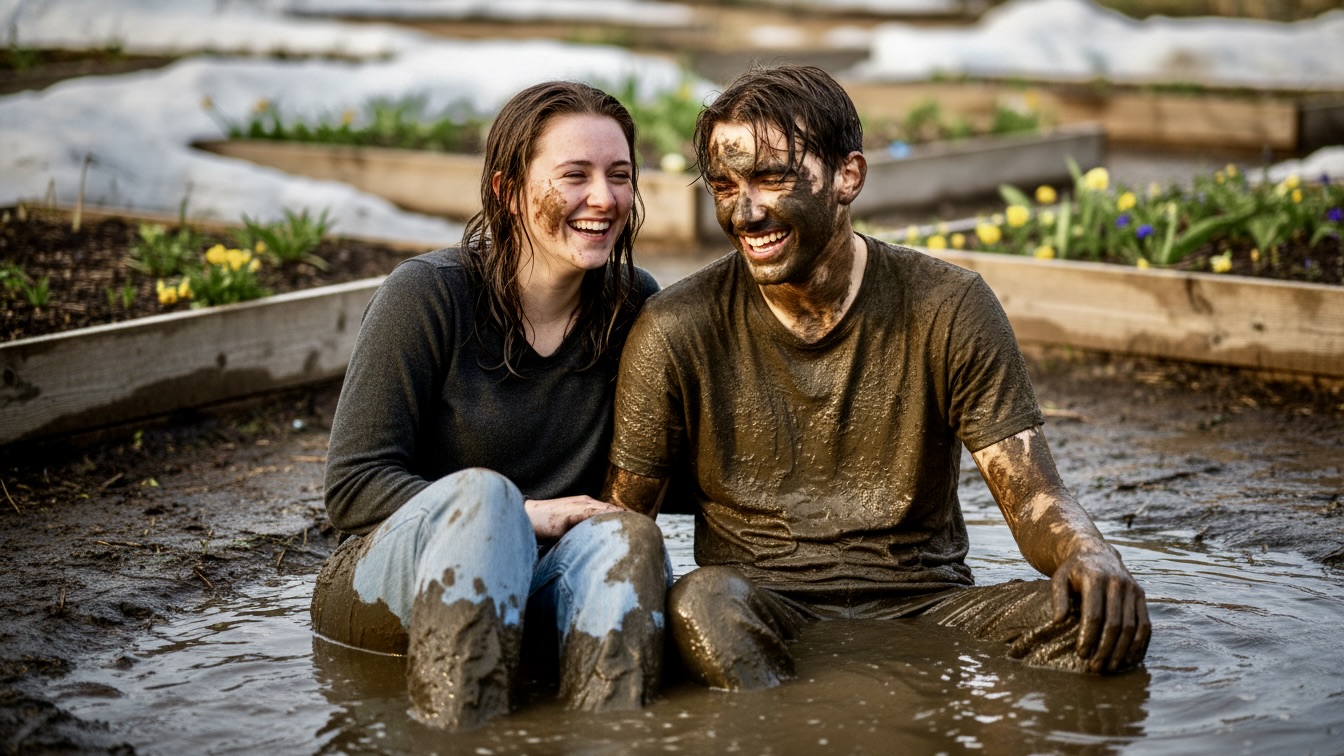
The story follows Debbie and Tyler as they attempt to prepare a community garden plot during a deceptive, freezing day in March. Despite the harsh weather and the frozen state of the soil, the two engage in a tense, flirtatious argument over whether to plant sweet peas. The physical labor of turning the earth mirrors their underlying interpersonal tension, culminating in a clumsy accident where Tyler slips on black ice. After a moment of vulnerability in the freezing mud, the two finally confess their mutual attraction, choosing to embrace the messiness of their relationship rather than waiting for the perfect, warmer conditions of spring.
The central theme of this narrative is the tension between pragmatic caution and romantic optimism. Debbie represents the side of human nature that fears vulnerability, preferring to wait for the safety of "perfect" conditions before taking risks. Conversely, Tyler embodies the reckless, impulsive nature of affection, willing to face physical pain and failure in order to pursue a goal. The garden plot serves as a perfect metaphor for their relationship, as it is currently a "frozen wasteland" that requires both the hard labor of preparation and the irrational hope of planting seeds before the frost has truly lifted.
Another prominent theme is the deceptive nature of appearances, specifically regarding the transition of seasons. The narrative uses the environment to mirror the internal states of the characters, where the "glitchy" sunlight promises warmth while the wind delivers a biting cold. This reflects the uncertainty of their romantic dynamic, where the outward behavior of friendship masks a deeper, colder, and more intimidating reality. By the end of the story, they learn that waiting for the "right" time is a fallacy, and that true connection often happens in the mud, amidst the cold, and without any guarantee of success.
Debbie is a deeply pragmatic individual whose primary defense mechanism is skepticism. She views the world through a lens of potential failure, constantly calculating risks and protecting herself from disappointment. Her insistence on waiting for the ground to thaw is not just about gardening; it is a manifestation of her fear of emotional exposure. She is terrified that moving too fast will ruin the stability of her friendship with Tyler, leading her to prioritize safety over the possibility of a deeper connection.
Despite her cynical exterior, Debbie is clearly yearning for the connection she claims to fear. Her internal monologue reveals a woman who is highly observant and physically reactive to Tyler's presence, even as she tries to suppress those feelings. When she finally sits down in the mud with him, she is making a conscious choice to abandon her rigid, protective boundaries. This act of surrender is the most significant moment of her arc, representing her transition from a cautious observer of her own life to an active participant in an unpredictable romance.
Tyler is defined by his restless energy and his desire to impose his will upon the world, regardless of the consequences. He is a romantic at heart, characterized by his "main character energy" and his refusal to accept the limitations imposed by reality. His impulsivity is both his greatest flaw and his most endearing quality, as it leads to both his spectacular fall on the ice and his courageous, albeit clumsy, confession of love. He is not afraid to look foolish if it means moving forward with his intentions.
Tyler’s motivation is rooted in a genuine, if desperate, need for intimacy. He recognizes the "static" between himself and Debbie and decides that the discomfort of the freezing mud is a small price to pay for honesty. His willingness to be vulnerable—admitting he is "down bad" while shivering and covered in muck—shows a rare level of emotional maturity. He understands that life, much like his attempt to plant seeds in March, is inherently messy, and he chooses to embrace that messiness rather than waiting for an ideal that may never arrive.
The narrative voice is sharp, observational, and deeply grounded in sensory experience. The author excels at using physical discomfort to heighten the emotional stakes of the scene. By focusing on the "biting" wind, the "squelching" mud, and the structural failure of the coffee cups, the text grounds the reader in the immediate, visceral reality of the characters' environment. This sensory overload makes the eventual romantic confession feel earned and grounded rather than abstract or sentimental.
The pacing of the story is deliberate, mirroring the slow, arduous process of working the frozen soil. The tension builds in small, rhythmic increments, starting with the frustration of the cold and moving toward the explosive, chaotic moment of the fall. The dialogue is snappy and realistic, capturing the way two people who know each other well use sarcasm and banter as a shield against their true feelings. This stylistic choice effectively highlights the contrast between their verbal sparring and the intensity of the unspoken attraction beneath their words.


