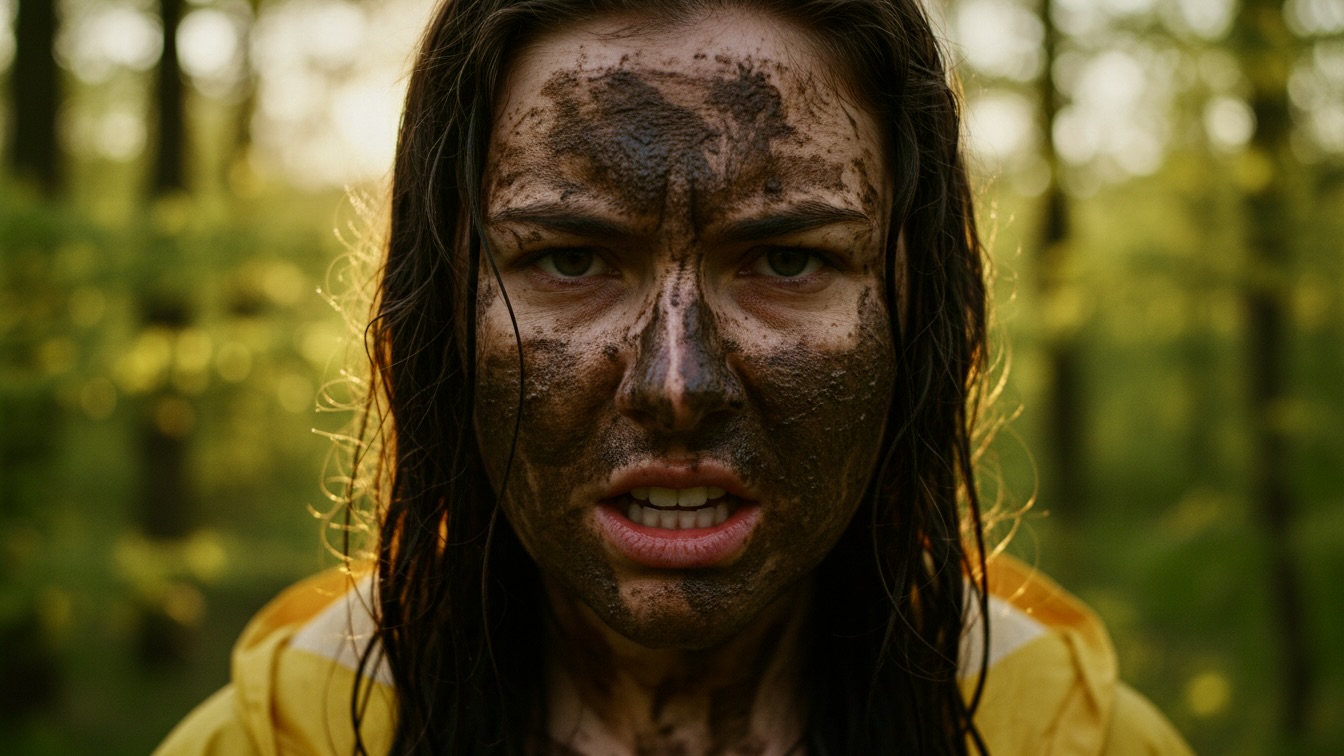
The story follows three friends, Shawn, Vera, and Bram, as they attempt a camping trip that quickly descends into a miserable failure. Shawn, the self-appointed leader, has lost the tent poles but attempts to mask his incompetence with pseudo-spiritual rhetoric. As a heavy spring rainstorm transforms the campsite into a muddy swamp, the physical discomfort exacerbates the underlying tensions between the characters. The conflict reaches a breaking point when Bram is caught using the group's only emergency power bank to check his social media engagement.
A physical altercation ensues under the collapsed tent, leading to the three friends trading cruel insults about their online personas and personal insecurities. They eventually abandon their equipment and trek through the mud to a nearby highway. The narrative concludes with the trio standing in silence under artificial streetlights, their friendship seemingly destroyed by the ordeal. They are left physically safe but emotionally estranged, with their shared history buried back in the mud with their discarded gear.
The primary theme of the narrative is the profound disconnect between digital performance and physical reality. Each character clings to an idealized version of themselves curated for an audience, yet these personas offer no protection against the raw elements of nature. Shawn’s "alpha wolf" identity and Vera’s aesthetic lifestyle are rendered useless by the mud and rain. The story suggests that modern identity is often a fragile construct that collapses when removed from the infrastructure of the internet.
Another significant theme is the failure of modern leadership and the erosion of communal trust. Shawn attempts to lead through a facade of wisdom gained from mobile videos rather than practical experience. When his authority is challenged by the harsh environment, he resorts to gaslighting his friends. This breakdown of leadership leads to a "war of all against all," where the collective good—symbolized by the emergency power bank—is sacrificed for individual vanity.
The natural world serves as a relentless, indifferent antagonist that strips away the characters' pretenses. The forest is not a place of healing or "detox" in this story; it is a visceral, sensory trap that exposes the characters' inadequacies. The mud, described as "soup" that "grabs at their feet," represents the inescapable gravity of the physical world. Nature demands a level of competence and presence that the characters, stunted by their digital habits, are unable to provide.
Shawn is a man driven by a desperate need for status and control, yet he lacks the foundational skills to earn either. He adopts the persona of a "king of the dirt" based on a superficial consumption of media, illustrating a deep-seated insecurity. His refusal to admit he lost the tent poles reveals a fragile ego that prioritizes his image over the safety and comfort of his companions. He uses elevated, theatrical language to deflect blame, suggesting a psychological reliance on performance to navigate reality.
By the end of the story, Shawn’s psychological mask is completely shattered. The revelation of his past "alpha wolf" post serves as the ultimate humiliation, highlighting the gap between his online bravado and his current state as a "wet bug." His shaking hands at the highway signal a total loss of the false confidence he projected at the start. He is a man who has realized that his internal map of the world, built on digital tropes, is entirely inaccurate.
Vera embodies the struggle between material comfort and the harsh demands of the physical environment. Her focus on her expensive white shoes indicates that her sense of self is heavily tied to her appearance and social standing. She views the trip not as an adventure, but as a "nightmare of dirt" that threatens her carefully maintained aesthetic. Her anger is a defense mechanism against the vulnerability she feels when her environment becomes uncontrollable.
Psychologically, Vera is the most grounded in reality, as she is the first to call out Shawn’s lies. However, she is also deeply vindictive, joining the physical fight not for the battery, but out of a desire to inflict pain as a response to her own discomfort. Her decision to walk away from her friends at the end shows a total withdrawal of emotional investment. She chooses the "hard stone" of isolation over the messy, failed connections of the group.
Bram represents the extreme end of digital addiction and the isolation it fosters within a group setting. He is largely silent throughout the first half of the story, physically present but mentally and emotionally tethered to his device. His "ghostly" appearance in the glow of the phone suggests a loss of vitality in the real world. He treats the emergency power bank as a private resource for personal validation, showing a total lack of empathy for his friends' needs.
When confronted, Bram’s transition from silence to aggression is immediate and sharp. His obsession with his "likes" and "numbers" reveals that his self-worth is entirely externalized and dependent on an invisible audience. He uses his knowledge of Shawn’s digital past as a weapon, proving that his quiet nature was not peaceful but observant and predatory. By the end, even with a dead phone and no power bank, he remains trapped in the psychological vacuum created by his digital dependency.
The narrative employs a visceral and claustrophobic tone that mirrors the characters' increasing distress. The author uses sensory details to ground the reader in the discomfort of the setting, such as the smell of "old gym clothes" and "wet dog." These details contrast sharply with the characters' lofty or digital aspirations, creating a sense of irony. The pacing starts with a slow, mounting tension that mirrors the gathering storm, eventually erupting into the chaotic violence of the fight.
Metaphor and personification are used effectively to give the environment a predatory quality. The tent is described as "green skin" and a "dead leaf," while the mud is depicted as a "soup" that tries to "eat" Vera's legs. These descriptions suggest that the characters are being consumed by the very nature they sought to "conquer." The sound of the rain as "a thousand drums" adds an auditory layer of aggression to the scene, emphasizing the characters' helplessness.
The narrative voice is detached yet observant, providing a psychological autopsy of a dying friendship. The transition from the chaotic, muddy woods to the "fake suns" of the highway streetlights creates a stark visual shift. This shift highlights the artificiality of the world the characters are returning to, suggesting that while they have escaped the mud, they have not escaped their own shallowness. The final image of the broken glass metaphor leaves the reader with a sense of permanent, irreparable damage.


