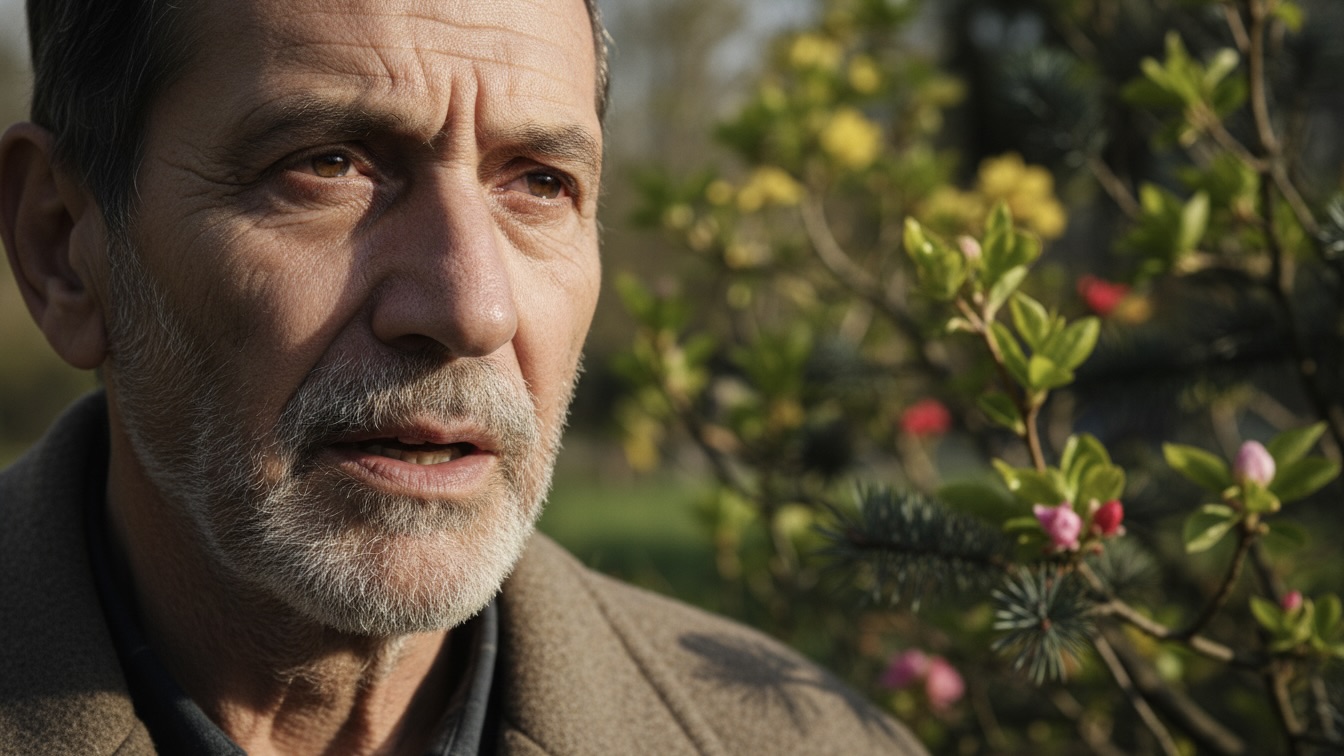
Eli, a seventy-two-year-old technician, arrives at the northern grove of the Memory Pines to investigate a dangerous power surge. This digital cemetery, where the memories of the deceased are stored within copper-needled trees, is malfunctioning due to the overwhelming grief of a woman named Clara. As the system "redlines," the data begins to manifest as physical, corrupted shapes of regret, threatening to destroy the town’s power grid. Roger, a younger and more pragmatic technician, demands that Eli wipe the drive to save the township’s infrastructure.
Haunted by the memory of his late wife, Sarah, who chose a natural death over digital preservation, Eli faces a profound moral dilemma. He realizes that the attempt to archive human life has only resulted in a "landfill of ghosts" that prevents the living from moving forward. Instead of resetting the system or bypassing the error, he makes the radical choice to disconnect the main fiber-optic trunk. This act plunges the town into darkness but finally allows the digital spirits to find the silence of a true death.
The central theme of the narrative revolves around the conflict between digital immortality and the necessity of natural decay. The Memory Pines represent a society so terrified of loss that it has commodified the soul, turning human experience into "junk data" that chokes the environment. This preservation is portrayed not as a comfort, but as a mechanical haunting that drains the resources of the living. By attempting to bypass the finality of death, the township has created a stagnant world where nothing is ever truly new.
Another significant theme is the nature of grief and the impossibility of sanitizing the human experience. Clara’s data surge is not composed of happy memories but of "forgotten debts" and "harsh words," suggesting that the "recycle bin" of the human psyche is just as integral as the highlights. The manifestation of these regrets as jagged, multi-legged monsters illustrates that repressed trauma cannot be contained by hardware. The story argues that true humanity requires the acceptance of the ugly, painful parts of a life, which technology is ill-equipped to process.
Finally, the story explores the concept of dignity in death. Sarah’s refusal to become a "file" serves as the moral anchor for Eli’s eventual rebellion against the system. Her perspective suggests that a memory is merely a "tombstone that never stops talking," an imitation of life that lacks the essential spark of a person. Eli’s decision to "let it die" is an act of liberation, reclaiming the sanctity of the natural cycle. He chooses the "honest, quiet dark" over a flickering, artificial eternity.
Eli is a man defined by his weariness and his deep, internalised grief. At seventy-two, he is physically grounded in the real world, feeling the ache of his hip and the bite of the frost, which contrasts with the ethereal, flickering nature of the pines. He possesses a poetic sensibility that Roger lacks, seeing the "bruised violet" of the data surge as a hematoma rather than a simple system error. This sensitivity allows him to recognize the inherent horror of the Memory Pines, even as he serves as their caretaker.
His psychological journey is driven by his memory of Sarah and the guilt he carries regarding her death. He originally begged her to use the Life-Ext units, revealing his own initial fear of letting go. However, as he witnesses the "screaming" of the trees and the manifestation of Clara’s regrets, he undergoes a transformation. He moves from being a passive maintainer of the status quo to an active agent of destruction and renewal. His choice to pull the cable is a delayed acceptance of Sarah’s wishes and a rejection of his own selfish desire for digital permanence.
Eli’s interaction with Roger highlights his isolation from the younger generation’s technological pragmatism. While Roger sees "redlining" and "cache," Eli sees a woman’s life and the heavy burden of her final days. He understands that the "ghost in the machine" is a symptom of a broken social contract with nature. By the end of the chapter, Eli finds a sense of peace that has eluded him for years. He is no longer fighting the "static" of the past, but is instead present in the "spring night," ready to face the reality of his own mortality.
The narrative voice is characterized by a "techno-gothic" tone that blends industrial terminology with visceral, organic descriptions. The setting is described through sensory details that evoke a sense of unease, such as the smell of "wet dirt and burning plastic" and the taste of "copper" on the tongue. These descriptions bridge the gap between the natural forest and the server-driven hardware, making the setting feel like a living, breathing entity that is currently suffering from an infection. The use of first-person perspective allows for an intimate look at Eli’s psychological "bleed-throughs," making the transition between the present and his memories feel fluid and disorienting.
Pacing in the chapter is expertly handled, beginning with a slow, atmospheric walk through the grove before escalating into a frantic confrontation. The introduction of the "jagged shapes" of data adds a surreal, horror-like element that heightens the stakes of the technical malfunction. This tension is balanced by the quiet, emotional core of Eli’s memory of Sarah, which provides the necessary context for his final decision. The abrupt shift from the "white wall of static" to the "deafening silence" at the end mirrors the physical act of pulling the plug, providing a sharp, satisfying resolution to the sensory overload.
The author uses color and light as powerful symbolic tools throughout the text. The "pale, flickering copper" and "bruised violet" of the artificial trees contrast sharply with the "honest, quiet dark" and the "real stars" of the ending. This visual progression tracks Eli’s internal shift from the artificial to the authentic. The violet sap, which feels like a "tear" but smells of "ozone," perfectly encapsulates the story’s central tension between human emotion and mechanical reproduction. The final image of the rain hitting Eli’s nose serves as a grounding moment, signaling a return to a world where physical sensation is no longer mediated by a grid.


