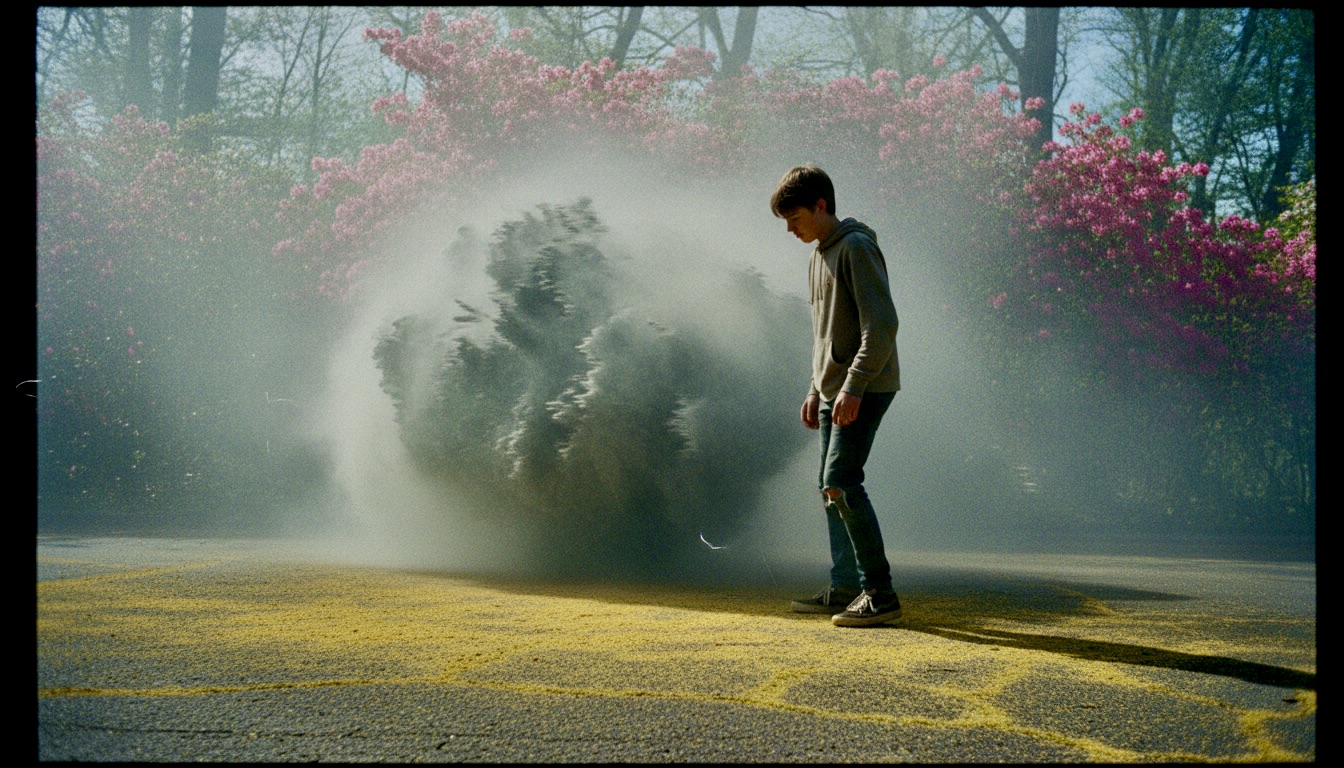
The story follows Zack as he attempts to cross a supernatural, atmospheric barrier known as the Red Zone to reach a girl named Penny. Oak River is physically and socially severed by a churning mass of static that manifests the town's intense political and ideological polarization. Despite the warnings of his friend Leo and the physical toll the crossing takes on his mind and body, Zack persists because of his desire to ask Penny to the Spring Fling. He endures a hallucinatory gauntlet of his own internalized prejudices and collective societal rage before successfully emerging on the other side. The chapter concludes with him reaching Penny’s home, where the reality of their connection proves more powerful than the artificial hostility of the environment.
The central theme of the narrative is the weaponization of ideological polarization and its manifestation as a tangible, suffocating force. By transforming abstract political animosity into a physical wall of static, the author illustrates how echo chambers and algorithmic bias distort human perception. The fog does not just block the path; it actively corrupts the traveler by feeding on their insecurities and prejudices, forcing them to confront the ugliest versions of their own beliefs. It serves as a potent metaphor for the way modern discourse traps individuals in a state of perpetual, performative rage that blinds them to the humanity of those on the other side.
Another crucial theme is the redemptive power of individual, tangible connection in the face of systemic abstraction. Zack is able to navigate the chaos only by anchoring himself to the memory of a specific, non-political interaction with Penny in a library. By focusing on the sensory details of their shared time—the vanilla scent, the shared charger, the mundane conversation—he effectively rejects the category-based hatred pushed by the environment. The story posits that the only way to dismantle the wall of artificial, digital-age hatred is to prioritize direct, unmediated human experience over the projected distortions of the collective.
Zack is a young man struggling with the visceral, physical symptoms of a society in collapse. His chronic jaw pain and the persistent headache suggest a man who is constantly clenching against the tension of his environment. He is motivated by a desperate, quiet hope that transcends the binary traps of his town. While he is not immune to the biases that plague Oak River, he possesses the self-awareness to recognize his own hypocrisy when the fog reflects it back at him. His decision to cross the barrier is an act of defiance against a status quo that demands he view his peers as enemies.
His internal conflict is defined by the struggle between the comfort of belonging to a "side" and the vulnerability required to reach out to an individual. He is terrified, yet his motivation to see Penny overrides his survival instinct. By the time he reaches the other side, he has undergone a psychological shedding of the town's collective baggage. He is no longer defined by the Blue Zone or the Red Zone but by his own agency. His ultimate goal is simple and human, centering on the tangible reality of a ticket and the person he wishes to share it with.
Penny exists in the narrative as the grounding force that represents the reality of the individual. Although she is seen through Zack’s eyes, her presence is characterized by normalcy and a lack of the distortion that plagues the rest of the town. She is depicted as an artist, someone who observes the world rather than screaming at it. By sitting on her porch with a sketchbook, she remains unburdened by the frantic, artificial energy of the barrier. She serves as the antithesis to the static, acting as the quiet, real destination that makes Zack's perilous journey meaningful.
The author employs a visceral, sensory-heavy style to mirror the protagonist's psychological distress. The use of olfactory and tactile imagery, such as the smell of burning copper and the feeling of battery acid in the stomach, creates a sense of immediate, suffocating dread. This sensory saturation effectively communicates the weight of the environment without relying on excessive exposition. The pacing is deliberate, slowing down during the crossing to emphasize the agonizing effort required to push through the fog, which contrasts sharply with the sudden, jarring silence upon his arrival.
The narrative voice is intimate and grounded, utilizing a first-person perspective that keeps the reader trapped within Zack’s limited, anxious consciousness. This choice is vital to the story's success, as it allows the reader to experience the fog’s intrusive, whispering voices alongside the protagonist. The shift from the chaotic, aggressive language of the static to the quiet, mundane description of the Red Zone highlights the author's ability to manipulate tone to reflect the internal state of the character. By keeping the prose tight and focused on physical sensations, the author renders the supernatural elements of the story both believable and profoundly disturbing.


