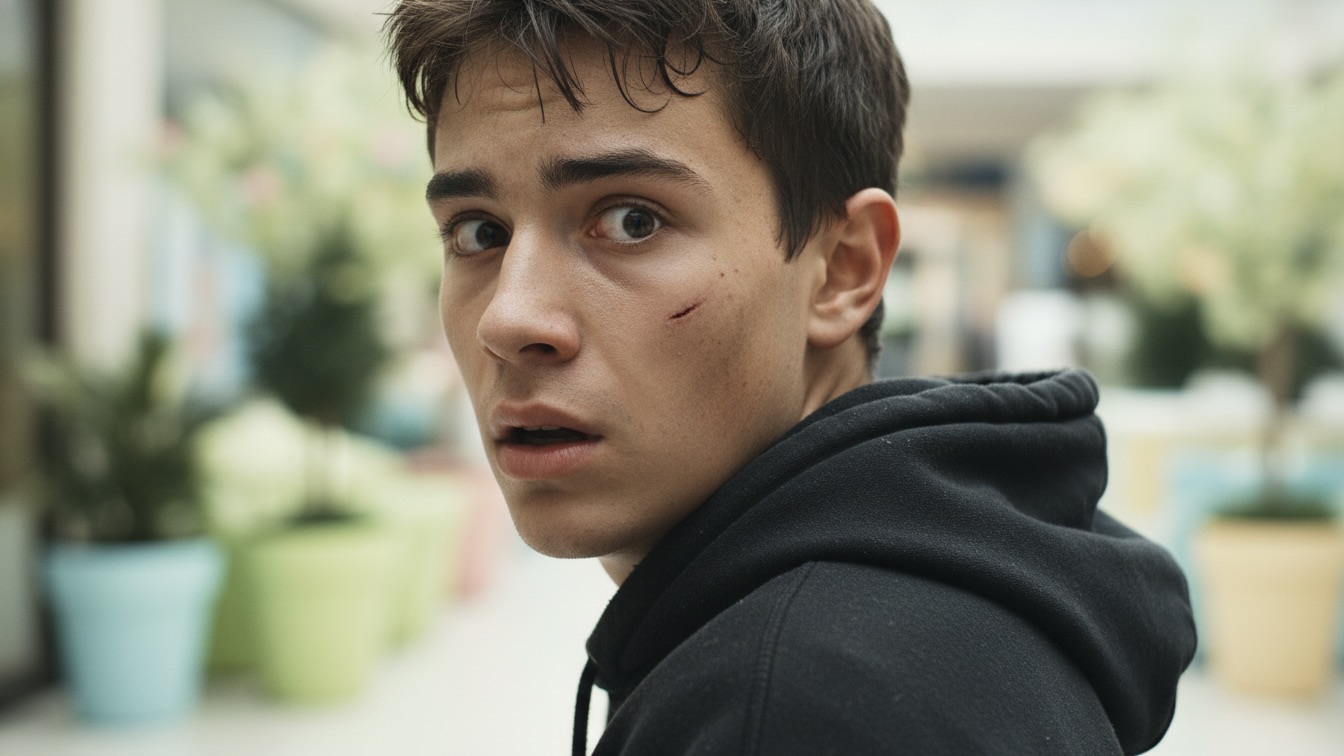
Chad is attempting to film a skateboarding video in the desolate Portage Place mall during a Winnipeg snowstorm when the environment takes a terrifying turn. A low-frequency hum precedes a total power failure, after which the plastic mannequins in a clothing store begin to undergo a grotesque biological transformation. These figures shed their synthetic shells to reveal raw muscle, bone, and rows of human teeth, attacking Chad and consuming his skateboard.
After narrowly escaping the initial assault, Chad encounters two other skaters, Dave and Bri, who are also fleeing the carnage. The trio retreats into the maintenance stairwells and descends into the underground concourse system to avoid the open spaces of the mall. They discover that the situation is not merely a random haunting but a systemic shift that has already attracted a cult-like following among the city’s youth.
In the underground food court, they witness a group of people worshipping a fleshy mannequin, offering it blood as a form of "synthesis" between waste and biology. The group is spotted and forced into a high-speed chase on their skateboards through the narrow hallways. They eventually use a tub of stale pretzels as improvised weapons to slow their pursuers. The chapter concludes with the trio crashing through a locked glass door onto a silent, snow-covered Main Street, facing an uncertain and potentially dead world.
The narrative explores the horrific intersection of consumerism and biological decay, positioning the shopping mall as a site of parasitic rebirth. The mannequins represent the ultimate end-point of commodity fetishism, where the objects we create to mimic ourselves eventually develop a predatory, autonomous life. By replacing the hollow plastic of the Gap’s displays with "wet, red muscle tissue," the story suggests that the artificial world is being reclaimed by a violent, primal reality.
The concept of the "synthesis of material waste and biological imperative" serves as the philosophical heart of the horror. The cult leader’s dialogue implies that the trash of the modern world is merging with organic life to create a new, albeit repulsive, evolution. This theme highlights a societal anxiety regarding the permanence of our waste and the possibility that our discarded objects might eventually consume us.
There is also a strong secondary theme regarding the death of the urban center. The setting of a "dead" mall in Winnipeg, compounded by a late-spring snowstorm, creates a sense of isolation and abandonment. The mall is described as a "hospital waiting room," suggesting that the commercial heart of the city was already terminal before the mannequins began to wake up. The transition from a place of commerce to a place of ritualistic slaughter reflects the collapse of traditional social structures.
Finally, the story touches on the resilience of subcultures in the face of total systemic failure. The skaters use the tools of their hobby—boards, griptape, and even mall snacks—to navigate and survive a world that has turned hostile. Their ability to move through the "liminal spaces" of the mall and the tunnels provides them with a temporary advantage over both the monsters and the compliant cultists.
Chad functions as the sensory anchor of the story, experiencing the horror through a lens of physical vulnerability and shock. His initial preoccupation with his damaged phone and the coarse texture of his griptape establishes him as someone deeply rooted in the material world of his subculture. When the "meat" emerges, his primary conflict is the refusal of his brain to process the visual information, a psychological defense mechanism against the impossible.
His survival is characterized by frantic, unthinking movement rather than calculated heroism. He loses his phone and his original board, symbols of his identity, which forces him to rely on the group for survival. Despite his terror, he shows a burgeoning resourcefulness, particularly when he uses the borrowed cruiser board and the stale pretzels to defend himself. He represents the youth who must suddenly grow up in a world where the rules of reality have been discarded.
Bri is the pragmatist and the tactical leader of the group, providing the necessary aggression to survive the environment. She is defined by her "sharp-featured" appearance and the steel crowbar she carries, which serves as both a tool for trespassing and a weapon for survival. Unlike Chad, she does not waste time in disbelief; she immediately identifies the need to move and finds the path through the maintenance doors.
Her psychological state is one of heightened alertness and decisive action. She is the one who recognizes the danger of the open mall and suggests the tunnels, demonstrating a superior understanding of the urban landscape. When she throws the tub of pretzels to Chad, she shows a capacity for quick thinking under pressure. She acts as the "alpha" of the trio, ensuring that their panic does not lead to paralysis.
Dave represents the "ancient" element of the skating community, acting as a bridge between the younger skaters and a more cynical, experienced perspective. At thirty-five, he is physically less capable than Chad or Bri, evidenced by his "bad knees" and "beer gut," yet his presence provides a sense of continuity. He carries the heavy camera bag, suggesting a desire to document and witness, even when the world is ending.
His internal conflict is marked by a more profound sense of horror at the mannequins, as he is old enough to remember the mall in a different context. He is the one who provides Chad with a replacement board, fulfilling a supportive, almost paternal role within the group. While he is panting and struggling physically, his commitment to the group's escape is unwavering. He provides the necessary warning to cover their faces before they breach the glass, showing a protective instinct.
The pacing of the chapter is masterfully handled, transitioning from a slow, atmospheric dread to a frantic, high-stakes chase. The initial descriptions of the empty mall and the "flat, cold" light set a somber tone that makes the sudden eruption of violence more jarring. Once the transformation begins, the narrative speed increases, mirroring the characters' racing pulses and the rapid clicking of skateboard wheels.
Sensory details are used to ground the "weird fiction" elements in a visceral, disgusting reality. The author focuses on the "wet, red muscle," the smell of "rotting pork," and the "sickening squelch" of caving plastic ribs. These descriptions move the horror away from the supernatural and toward the biological, making the threat feel immediate and tangible. The contrast between the sterile mall environment and the "raw bone and yellow gristle" creates a powerful aesthetic of body horror.
The narrative voice is detached yet observant, providing a clinical look at the carnage while maintaining the protagonist's perspective. The use of the "hum" as a physical pressure rather than just a sound helps to build an immersive atmosphere of cosmic wrongness. This choice emphasizes that the change is not just happening to the mannequins, but to the very fabric of the environment.
The setting of Winnipeg is utilized as more than just a backdrop; it is a stylistic choice that reinforces the themes of isolation and coldness. The "late spring snowstorm" serves as a literal and metaphorical barrier, trapping the characters within the horrific interior spaces. The final image of the empty, snowy Main Street provides a chilling conclusion, shifting the tone from active chase to a haunting, quiet uncertainty.


