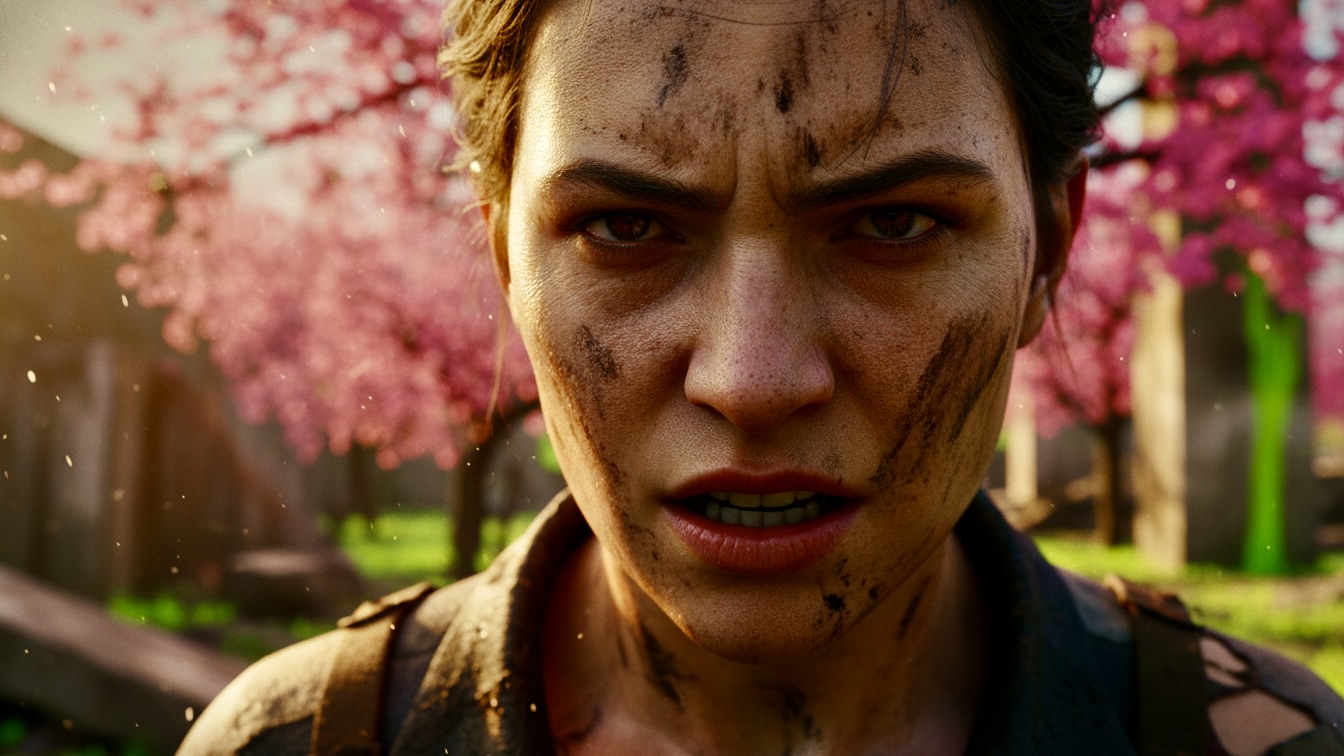
Life is a series of transactions. I spend calories, I spend bullets, and I expect a return.
Life is a series of transactions. You wake up, you burn calories, you spend water, and you hope that by the end of the day, you have taken in more than you put out. It is simple math. The global economy might be a rotting corpse, but the ledger still exists in our heads. Every step costs something. Every breath in this humid, choked air is an expense. I was currently running a massive deficit.
Spring in Miami is a cruel joke. The calendar says it is a time of renewal, but down here in the flooded zone, spring just means the water gets warmer and the algae blooms faster. The air was thick with it. Yellow pollen mixed with the smell of sulfur and standing water, creating a haze that stuck to the back of my throat. I wiped a layer of grime off my forehead with the back of my wrist. My skin felt tight. My stomach turned over, a dull, grinding ache that told me I was running on fumes.
I stood outside Ryan's door. It was a rusted shipping container door, welded into the side of a collapsed parking garage on the edge of what used to be Hialeah. The metal was flaking, bright orange rust bleeding into the murky green water that lapped at the concrete walkway.
I checked the shotgun. Pump-action. Twelve gauge. The tape on the grip was sticky from the humidity and my own nervous sweat. I racked it once, just to make sure the shell was seated. The metallic clack was loud in the heavy spring air.
Ryan was a liability. He was also the only person who knew the exact coordinates of the buried server farm. We had cracked the encryption together last winter. We were supposed to dig it up when the water levels dropped. Instead, I woke up three days ago to find my pack empty, my boots gone, and the hard drive with the map missing. He had left me a single bottle of water. A transactional courtesy.
I stepped back, raised my right boot, and kicked the heavy metal door right below the locking mechanism.
The rusted hinges screamed. The door bowed, caught for a second, and then blew inward with a crash that echoed off the concrete pillars of the garage.
I stepped inside, bringing the gun up.
The room smelled like stale weed, damp mold, and unwashed clothes. It was dim, lit only by the harsh, bright spring sunlight cutting through the open doorway. Dust motes danced in the beam of light.
Ryan was sitting on a stained mattress in the corner, a can of beans halfway to his mouth. He froze. His eyes flicked from the barrel of the shotgun to my face.
I didn't hesitate. I crossed the small room in three strides, grabbed him by the collar of his shirt, and shoved the barrel of the shotgun directly into the bridge of his nose. He dropped the can. Beans spilled over the dirty floorboards.
"You greedy little shit," I said. My voice was raspy. My throat was dry.
Ryan stared at me. He didn't blink. He didn't flinch. Slowly, the corners of his mouth twitched upward. He let out a short, breathy laugh. He actually laughed.
"Sandy," he said. His voice was entirely too calm. "You look terrible. Have you been sleeping?"
I pressed the barrel harder against his skin. A bead of blood welled up where the metal dug in. "Coordinates. Now."
"Or what?" Ryan asked. "You pull that trigger, and the map goes all over the wall behind me. It's in my head, Sandy. I memorized it and wiped the drive. You need me."
My jaw tightened. My teeth ground together. He was right. That was the math. I couldn't kill him, and he knew it. The transaction required his pulse.
"Get up," I said, stepping back just enough to let him move, but keeping the gun leveled at his chest.
Ryan wiped the drop of blood from his nose with his thumb. He looked at it, then wiped it on his pants. He stood up slowly, stretching his arms over his head. He was wearing a faded graphic tee and cargo pants that looked relatively clean. He had been eating. He had been resting. While I was dragging myself across the flooded ruins, he was waiting for the mud to dry so he could take the haul for himself.
"Look," Ryan said, picking up a battered canvas backpack from the floor. "I admit, it was a dick move. But the market is tight right now. A split haul means we both starve slower. A full haul means I actually get out of this swamp."
"You are going to take me to the bunker," I said. "And we are splitting it. Half. You try to run, I shoot you in the back. You try to cut me out again, I shoot you in the face and dig through the mud until I find it myself."
Ryan slung the backpack over his shoulder. He looked at me, his eyes running over my muddy clothes, the dark circles under my eyes, the white-knuckle grip I had on the shotgun. He smiled again, that same unrepentant, smug little smirk.
"Half," Ryan said. "Fine. I'll guide you. But you have to keep up."
"Walk," I said.
We left the shipping container and stepped out into the blinding spring sun. The heat was already oppressive. It was only ten in the morning, but the humidity made the air feel like a wet towel draped over my face.
We descended the concrete ramp of the parking garage and entered the water. It was waist-deep here. The water was a toxic, vibrant shade of neon green, thick with algae and God knows what else. Chemical runoff from the old corporate factories mixed with the raw sewage of a dead city. It sloshed against my stomach, cold and heavy.
Ryan took the lead. He had a walking stick, a length of rebar he used to probe the submerged street for open manholes and sunken cars. I followed ten paces behind, keeping the shotgun out of the water, the stock resting against my shoulder.
"Watch the current up here," Ryan called back, not turning around. "The storm drains are backing up again."
I didn't answer. I just watched his back. I watched the way his shoulders moved. I calculated the exact trajectory a slug would take through his spine. It was a comforting thought. It kept me focused.
The trek was miserable. Miami was a graveyard of glass and concrete. The skyscrapers jutted out of the green water like broken teeth. The lower levels were entirely submerged, the windows blown out, the offices turned into aquariums for mutated fish and aggressive water snakes. Spring had brought a massive bloom of pink bougainvillea. The vines choked the rusted shells of cars that sat on elevated highways, a grotesque explosion of color against the gray and brown decay.
My boots were leaking. The blister on my left heel had popped an hour ago, and now the toxic water was seeping into the raw skin. It burned. A sharp, stinging pain with every step. I ignored it. Pain was just an alert system. I acknowledged the alert and dismissed it.
"How far?" I asked. My voice cracked.
"Three miles," Ryan said. He pointed his rebar toward a cluster of high-rises in the distance. The old financial district. "It's buried under the foundation of the old Bank of America building. The vault was reinforced. It should be dry inside."
Three miles in waist-deep water. It would take hours.
The sun beat down on the back of my neck. Sweat ran into my eyes, stinging them. I blinked rapidly, trying to clear my vision. The glare off the green water was blinding. Every muscle in my legs burned from the resistance of the water.
We waded past a submerged strip mall. The rusted sign of a pharmacy barely broke the surface. A flock of white egrets took flight as we approached, their wings loud in the heavy silence.
"You know," Ryan said, his voice drifting back to me. "If we actually pull this off, those crypto-drives will buy us a ticket up north. Real food. Clean water. Maybe even a place with actual climate control."
"Shut up and walk," I said.
"Just making conversation, Sandy. Trying to keep the morale up."
"My morale is fine. It gets better every time I remember I have the gun."
Ryan chuckled. He didn't say anything else for a long time.
By noon, we reached a transition zone. The water grew shallower, receding to reveal a landscape of thick, foul-smelling mud and jagged concrete debris. We dragged ourselves out of the water and onto a collapsed overpass. My legs felt like lead. The mud sucked at my boots, threatening to pull them off with every step.
This was the dangerous part. The dry spots. The islands in the flood. This was where things lived.
I kept the shotgun leveled. The tape on the grip was practically melting into my palm.
We were walking across the roof of a sunken parking structure. The concrete was cracked, massive fissures splitting the surface. Weeds and bright yellow spring flowers pushed up through the cracks, defiant and ignorant of the apocalypse.
Ryan was walking a few feet ahead of me. He stopped near the edge of a massive hole in the concrete, a sinkhole where the roof had caved in entirely, dropping down into the dark, flooded levels below.
He looked down into the hole. Then he looked over his shoulder at me.
His eyes were different. The smugness was gone. Replaced by a cold, hard calculation. The transaction was changing.
"What?" I asked, stopping a few feet away.
"Just checking the structural integrity," Ryan said.
He shifted his weight. I saw his shoulders drop. I saw the tension in his legs. I knew what was happening a fraction of a second before it happened, but my exhaustion slowed my reaction time.
Ryan pivoted on his back foot, using his rebar stick for leverage, and kicked out with his right leg.
His boot connected perfectly with the center of my chest.
The force of the blow drove all the air out of my lungs. I stumbled backward, my boots slipping on the wet, mossy concrete. I tried to catch my balance, but the edge of the sinkhole was right behind me.
My heel hit nothing.
Gravity took over. I fell backward, the world tilting violently. I saw the bright blue spring sky, the bright yellow flowers, and Ryan's face looking down at me.
I hit the water hard.
The impact knocked the remaining breath from my body. The water was freezing cold down here, hidden from the sun. I sank into the darkness, the foul-smelling liquid rushing into my nose and mouth. I panicked, kicking wildly, my hands gripping the shotgun with a death grip.
I broke the surface, gasping for air, choking on the toxic water. I wiped my eyes, treading water in the gloom of the lower parking level. The only light came from the hole above me.
"Sorry, Sandy," Ryan's voice echoed down from the light. "Like I said. The market is tight."
I heard his footsteps retreating. He was running. He was leaving me here, taking his chances without the gun, betting that the sinkhole would finish me off.
I swam toward the edge of the water, looking for purchase on the slanted, broken concrete.
Then I heard the splashing.
It wasn't me. It was coming from the shadows at the far end of the flooded garage.
I froze. The water rippled.
Low growls echoed off the low ceiling. A sound that bypassed the brain and went straight to the nervous system. Primal. Hungry.
Dogs. Feral, starving, mutant things that survived in the ruins.
I saw their eyes first, catching the dim light. Yellow and green reflections. Then their shapes. Emaciated bodies, wet, matted fur, ribs showing through their flanks. There were three of them, wading into the water from a dry ramp, their eyes locked on me.
My heart hammered against my ribs. My stomach cramped violently.
I scrambled up the slanted concrete, my boots slipping on the slime. I got my upper body out of the water just as the first dog lunged.
It was fast. It didn't bark. It just snapped its jaws, aiming for my leg.
I kicked out, my heavy wet boot catching the dog in the snout. It yelped, falling back into the water, but the second dog was already in the air.
It hit my chest, its claws digging into my jacket, its teeth snapping an inch from my face. The smell was horrific—rotting meat and wet decay. Hot breath blasted my cheek.
I couldn't bring the barrel of the shotgun up in time. I shoved the wooden stock forward, jamming it into the dog's throat. The animal gagged, thrashing wildly. Its claws tore through the fabric of my jacket, dragging deep scratches across my collarbone.
I screamed, pure adrenaline flooding my system. I shoved hard, throwing the dog off me, and scrambled higher up the concrete slope.
I racked the shotgun. The wet, gritty sound of the action chambering a shell cut through the growling.
The third dog charged up the slope.
I aimed from the hip and pulled the trigger.
The explosion was deafening in the enclosed space. The flash illuminated the dark garage for a split second. The heavy slug caught the dog in the center of its mass. The impact threw the animal backward into the water with a heavy splash. It didn't surface.
The sound of the gunshot bounced off the concrete walls, ringing in my ears, a high-pitched whine that drowned out everything else.
The other two dogs scrambled back onto the dry ramp, terrified by the noise. They watched me for a second, then turned and vanished into the shadows.
I sat there on the slanted concrete, my chest heaving, the shotgun resting across my knees. My hands were shaking uncontrollably. Blood was seeping from the scratches on my chest, mixing with the dirty water soaking my clothes.
I breathed. I spit toxic water onto the concrete.
I looked up at the hole of light above me.
Ryan was up there. Ryan had kicked me down here. Ryan had tried to cancel my ledger.
The panic faded, replaced immediately by a hot, white, clarifying rage. It wasn't just anger. It was spite. Pure, unadulterated spite. It was the only fuel I had left.
I slung the shotgun over my shoulder and began to climb.
It took me ten minutes to scale the broken rebar and shattered concrete to reach the surface. My fingers were bleeding by the time I pulled myself over the edge. I lay flat on the warm, dry concrete, the bright spring sun beating down on my back, baking the foul-smelling mud into my clothes.
I forced myself up.
I looked at the mud. Ryan's tracks were obvious. Deep, hurried boot prints heading north toward the financial district. He was moving fast, but he was panicked. Panicked people make mistakes.
I followed the tracks.
I didn't feel the blister on my heel anymore. I didn't feel the scratches on my chest. I was a machine. A machine built entirely for a single transaction.
I tracked him for two miles across the broken city. The water levels rose and fell. I waded through waist-deep muck, climbed over rusted out city buses, and pushed through thick walls of spring foliage that had reclaimed the streets.
I caught sight of him near the base of the Bank of America building. He was struggling to climb a mud-slicked embankment that led to the old foundation. He kept slipping, sliding backward. He didn't have the rebar stick anymore. He had dropped his pack. He was exhausted.
I didn't yell. I didn't announce myself. I just walked up behind him.
He heard me splashing in the shallow water at the base of the embankment. He turned around, his eyes wide, his chest heaving.
When he saw me, covered in mud and blood, holding the shotgun, his face went completely pale.
"Sandy," he gasped, holding his hands up. "Sandy, wait. Listen to me."
I didn't listen. I didn't hesitate.
I raised the shotgun, aimed directly at his right kneecap, and pulled the trigger.
The gun kicked against my shoulder. The boom echoed off the glass of the skyscrapers.
Ryan's leg buckled instantly. The joint vanished in a spray of red mist and shredded fabric. He hit the mud with a wet thud, his eyes wide with shock. For a full second, he didn't make a sound. His brain couldn't process the damage.
Then, he screamed.
It was a high, thin, reedy sound. He grabbed his ruined leg, thrashing in the mud, blood pouring through his fingers, staining the brown earth bright red.
I pumped the shotgun, ejecting the spent shell. It landed in the mud with a hiss.
I walked up the embankment, my boots finding traction in the soft earth. I stood over him.
"You shot me!" he shrieked, his face contorted in agony. "You blew off my knee!"
"I need you alive for the coordinates," I said, my voice dead, flat. "I don't need you to walk."
He was hyperventilating, his hands slipping in his own blood. "I'm going to bleed out! I'm going to die right here!"
I dropped my pack onto the mud. I unzipped the front pocket and pulled out a rubber tourniquet.
"You are not going to die," I said, kneeling down next to him. "You are going to guide me to the bunker. And then you are going to sit there while I take the entire haul."
I grabbed his thigh, ignoring his screams, and wrapped the tourniquet high above the ruined knee. I pulled it tight. Brutally tight. He choked on his own spit, his head falling back into the mud.
I cranked the windlass until the bleeding slowed to a sluggish ooze. I secured the strap.
"There," I said, standing back up. "Transaction complete."
Ryan was pale, sweating profusely, trembling. The shock was setting in. "You're a monster," he whispered.
"Which way?" I asked.
He pointed a shaky, blood-stained finger toward the corner of the massive concrete foundation. "Under the loading dock. There's a hatch."
It was only a hundred yards away. But Ryan couldn't walk.
I grabbed him by the collar of his jacket.
He cried out as I hauled his upper body off the ground. I planted my boots in the mud, leaned back, and started walking backward, dragging his dead weight across the sludge.
It was excruciating work. Every muscle in my back screamed. The friction of his body against the mud was immense. His ruined leg trailed behind him, leaving a thick red smear in the earth.
I didn't stop. I breathed through my teeth, the air whistling in my throat.
We reached the loading dock. It was a massive slab of concrete that had collapsed on one side, creating a cavern underneath. The ground here was dry, packed dirt and old trash.
I dropped Ryan. He groaned, rolling onto his side, clutching his leg.
I looked under the slab. He was right. There, half-buried in the dirt, was a heavy steel hatch. A maintenance access point.
I dropped to my knees and started digging.
I used my hands, tearing at the packed dirt, ripping out roots, ignoring the pain in my bleeding fingers. My breath echoed in the confined space. I was so close. The ledger was about to balance. The calories, the blood, the bullets—it was all about to pay off.
I cleared the dirt away from the wheel lock. The metal was cold.
I grabbed the wheel with both hands. I braced my boots against the concrete. I pulled.
The metal groaned. The rust broke. The wheel turned.
I spun it until the locking pins clicked free. I grabbed the handle and hauled the heavy door open. It fell back against the concrete with a massive clang.
I reached into my pocket, pulled out a small tactical flashlight, and clicked it on. I shined the beam down into the dark bunker.
I stopped breathing.
The beam swept across the concrete floor. It illuminated the server racks.
They were empty.
Every single drive bay was hollow. Wires hung loose, clipped cleanly.
I shined the light on the floor. The dust was disturbed. Not by boots. By treads. Small, uniform tracks crisscrossed the floor. Corporate drones. The autonomous scavengers owned by the very people who destroyed the economy in the first place. They had found the signal. They had bypassed the encryption. They had stripped the bunker down to the screws.
There was nothing left.
I stared at the empty racks. My brain refused to process the image. The math was breaking down. The equation was void.
Behind me, Ryan let out a weak, raspy laugh.
"Empty?" he wheezed. "Tell me it's empty."
I dropped the flashlight. It clattered down into the dark, the beam spinning wildly before settling on a severed wire.
I turned around. Ryan was looking at me, his face pale, a hysterical, broken smile on his lips.
We were sitting in the mud. We were bleeding. We were completely, entirely broke.
I opened my mouth, and a scream tore its way out of my throat, raw and violent, echoing off the dead concrete as the shadow of a corporate transport drone passed silently over the bright spring sun.
“I opened my mouth, and a scream tore its way out of my throat, raw and violent, echoing off the dead concrete as the shadow of a corporate transport drone passed silently over the bright spring sun.”


