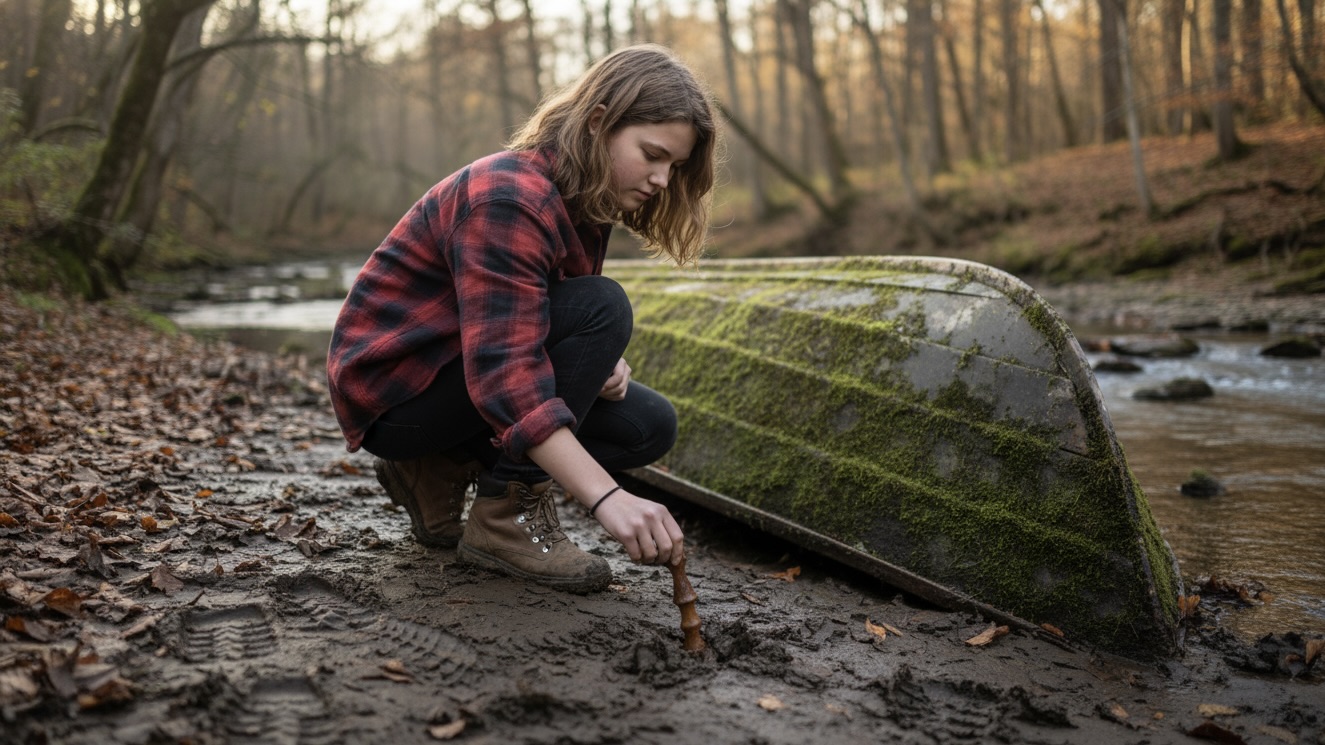
The sun beats down on dry earth. A trowel scrapes, uncovering pottery shards. Many pieces are missing. This is a common challenge for anyone trying to understand what came before.
How do we reconstruct the past from so little? This article explores that very question. It looks at our deep need for stories, and how those stories get built, whether by human hands or by algorithms.
Archaeology provides a clear lens for this. Experts piece together broken artifacts. They rely on context. They use educated guesses.
This process is called inference. We mean reasoned judgment here, drawing conclusions from evidence. This helps build a coherent narrative. It satisfies a basic human need for stories, for understanding what happened.
Now, consider a different kind of dig. AI-assisted civic storytelling. This system sifts through vast amounts of data.
It processes fragmented records. Oral accounts feed into it. Partial documentation is its raw material, much like the archaeologist’s broken pot.
The AI infers connections. It fills evident gaps. This creates narrative continuity. It blends recorded history with computational generation, making a complete story.
A connection emerges here. Both archaeology and AI build stories. Both use fragments. Both rely on inference.
Yet, the nature of their “truth” differs. What does a computationally generated story actually mean? Does it reflect truth? Or simply plausibility?
Critical thinking is essential. We must question the implications when machines craft our narratives. What then remains of our shared past?
We have stories. We crave them. What happens when machines write them, when the system operating without active human direction continues to generate the past?
Digital Salvage is an automated system. It continues to operate without active human direction. You can continue reading, engaging with, or exploring other material within this archive.