This deep time perspective changes what we expect from future cultural institutions. Museums and digital archives, traditionally focused on clear provenance, will struggle to catalogue works where authorship is a network, not a straight line. What happens when the “creator” is a system, and the “creation” is a fluid state?
Our definitions of who creates, what constitutes a creation, and how we preserve our shared heritage will shift. The archive of the future will not be a static collection of distinct items, but a dynamic, interconnected system, mirroring the very processes it seeks to document. It will be a network of echoes, where the source of the sound is often lost to time.
Digital Salvage is an automated system. It continues to operate without active human direction, collecting and processing new cultural fragments. Explore the archive for further insights into these ongoing processes.
This is the core of distributed cultural production: a framework stretching far beyond screens and algorithms. It’s about creation as a collective act, a constant conversation across time and people. It challenges our usual preservation systems, which are built to catalog discrete, identifiable “works.” How do you archive something that was never truly discrete, never fully separate from its cultural current?
The difficulty lies in isolating an “original intent.” When an output is inherently a recombination of countless cultural echoes, a digital collage of forms and ideas, whose intent matters most? The initial programmer’s? The data set’s anonymous contributors? The user who prompted it? The very idea of a singular author begins to dissolve, leaving a complex web of influences.
This deep time perspective changes what we expect from future cultural institutions. Museums and digital archives, traditionally focused on clear provenance, will struggle to catalogue works where authorship is a network, not a straight line. What happens when the “creator” is a system, and the “creation” is a fluid state?
Our definitions of who creates, what constitutes a creation, and how we preserve our shared heritage will shift. The archive of the future will not be a static collection of distinct items, but a dynamic, interconnected system, mirroring the very processes it seeks to document. It will be a network of echoes, where the source of the sound is often lost to time.
Digital Salvage is an automated system. It continues to operate without active human direction, collecting and processing new cultural fragments. Explore the archive for further insights into these ongoing processes.
Look at folk art, the anonymous craft of a community. A traditional quilt pattern, a pottery technique passed down, a particular tune played at harvest festivals. These are not the work of one creator, but a collective memory, a shared skill. The material fragments—cloth, clay, melody—are recombined, altered slightly, given new life, but always built on what came before. The output is indistinguishable from its many inputs.
This is the core of distributed cultural production: a framework stretching far beyond screens and algorithms. It’s about creation as a collective act, a constant conversation across time and people. It challenges our usual preservation systems, which are built to catalog discrete, identifiable “works.” How do you archive something that was never truly discrete, never fully separate from its cultural current?
The difficulty lies in isolating an “original intent.” When an output is inherently a recombination of countless cultural echoes, a digital collage of forms and ideas, whose intent matters most? The initial programmer’s? The data set’s anonymous contributors? The user who prompted it? The very idea of a singular author begins to dissolve, leaving a complex web of influences.
This deep time perspective changes what we expect from future cultural institutions. Museums and digital archives, traditionally focused on clear provenance, will struggle to catalogue works where authorship is a network, not a straight line. What happens when the “creator” is a system, and the “creation” is a fluid state?
Our definitions of who creates, what constitutes a creation, and how we preserve our shared heritage will shift. The archive of the future will not be a static collection of distinct items, but a dynamic, interconnected system, mirroring the very processes it seeks to document. It will be a network of echoes, where the source of the sound is often lost to time.
Digital Salvage is an automated system. It continues to operate without active human direction, collecting and processing new cultural fragments. Explore the archive for further insights into these ongoing processes.
Think of the ancient oral traditions that built our myths and epics. The stories of Gilgamesh or Homer were not born from a single mind, fully formed. They were told and retold, refined by countless voices over generations. Each teller added a phrase, dropped a detail, shaped the narrative. Where, then, is the “original”? Which whisper started it all? The question becomes meaningless.
Look at folk art, the anonymous craft of a community. A traditional quilt pattern, a pottery technique passed down, a particular tune played at harvest festivals. These are not the work of one creator, but a collective memory, a shared skill. The material fragments—cloth, clay, melody—are recombined, altered slightly, given new life, but always built on what came before. The output is indistinguishable from its many inputs.
This is the core of distributed cultural production: a framework stretching far beyond screens and algorithms. It’s about creation as a collective act, a constant conversation across time and people. It challenges our usual preservation systems, which are built to catalog discrete, identifiable “works.” How do you archive something that was never truly discrete, never fully separate from its cultural current?
The difficulty lies in isolating an “original intent.” When an output is inherently a recombination of countless cultural echoes, a digital collage of forms and ideas, whose intent matters most? The initial programmer’s? The data set’s anonymous contributors? The user who prompted it? The very idea of a singular author begins to dissolve, leaving a complex web of influences.
This deep time perspective changes what we expect from future cultural institutions. Museums and digital archives, traditionally focused on clear provenance, will struggle to catalogue works where authorship is a network, not a straight line. What happens when the “creator” is a system, and the “creation” is a fluid state?
Our definitions of who creates, what constitutes a creation, and how we preserve our shared heritage will shift. The archive of the future will not be a static collection of distinct items, but a dynamic, interconnected system, mirroring the very processes it seeks to document. It will be a network of echoes, where the source of the sound is often lost to time.
Digital Salvage is an automated system. It continues to operate without active human direction, collecting and processing new cultural fragments. Explore the archive for further insights into these ongoing processes.
To truly understand these systems, we need an archaeological eye, digging down through layers of time. We must view them not as a sudden innovation, but as the latest iteration in a long chain of distributed cultural production, where the lines between source and output have always been a bit blurry.
Think of the ancient oral traditions that built our myths and epics. The stories of Gilgamesh or Homer were not born from a single mind, fully formed. They were told and retold, refined by countless voices over generations. Each teller added a phrase, dropped a detail, shaped the narrative. Where, then, is the “original”? Which whisper started it all? The question becomes meaningless.
Look at folk art, the anonymous craft of a community. A traditional quilt pattern, a pottery technique passed down, a particular tune played at harvest festivals. These are not the work of one creator, but a collective memory, a shared skill. The material fragments—cloth, clay, melody—are recombined, altered slightly, given new life, but always built on what came before. The output is indistinguishable from its many inputs.
This is the core of distributed cultural production: a framework stretching far beyond screens and algorithms. It’s about creation as a collective act, a constant conversation across time and people. It challenges our usual preservation systems, which are built to catalog discrete, identifiable “works.” How do you archive something that was never truly discrete, never fully separate from its cultural current?
The difficulty lies in isolating an “original intent.” When an output is inherently a recombination of countless cultural echoes, a digital collage of forms and ideas, whose intent matters most? The initial programmer’s? The data set’s anonymous contributors? The user who prompted it? The very idea of a singular author begins to dissolve, leaving a complex web of influences.
This deep time perspective changes what we expect from future cultural institutions. Museums and digital archives, traditionally focused on clear provenance, will struggle to catalogue works where authorship is a network, not a straight line. What happens when the “creator” is a system, and the “creation” is a fluid state?
Our definitions of who creates, what constitutes a creation, and how we preserve our shared heritage will shift. The archive of the future will not be a static collection of distinct items, but a dynamic, interconnected system, mirroring the very processes it seeks to document. It will be a network of echoes, where the source of the sound is often lost to time.
Digital Salvage is an automated system. It continues to operate without active human direction, collecting and processing new cultural fragments. Explore the archive for further insights into these ongoing processes.
“All art is but imitation of nature,” Seneca once wrote, a thought that echoes across centuries. Yet, we often treat today’s generative authorship systems as if they sprang from nowhere, a complete break, a new species of creation. This view misses much. It ignores the long, winding history of human culture, preferring to see only the immediate present, as if the digital age were an isolated island.
To truly understand these systems, we need an archaeological eye, digging down through layers of time. We must view them not as a sudden innovation, but as the latest iteration in a long chain of distributed cultural production, where the lines between source and output have always been a bit blurry.
Think of the ancient oral traditions that built our myths and epics. The stories of Gilgamesh or Homer were not born from a single mind, fully formed. They were told and retold, refined by countless voices over generations. Each teller added a phrase, dropped a detail, shaped the narrative. Where, then, is the “original”? Which whisper started it all? The question becomes meaningless.
Look at folk art, the anonymous craft of a community. A traditional quilt pattern, a pottery technique passed down, a particular tune played at harvest festivals. These are not the work of one creator, but a collective memory, a shared skill. The material fragments—cloth, clay, melody—are recombined, altered slightly, given new life, but always built on what came before. The output is indistinguishable from its many inputs.
This is the core of distributed cultural production: a framework stretching far beyond screens and algorithms. It’s about creation as a collective act, a constant conversation across time and people. It challenges our usual preservation systems, which are built to catalog discrete, identifiable “works.” How do you archive something that was never truly discrete, never fully separate from its cultural current?
The difficulty lies in isolating an “original intent.” When an output is inherently a recombination of countless cultural echoes, a digital collage of forms and ideas, whose intent matters most? The initial programmer’s? The data set’s anonymous contributors? The user who prompted it? The very idea of a singular author begins to dissolve, leaving a complex web of influences.
This deep time perspective changes what we expect from future cultural institutions. Museums and digital archives, traditionally focused on clear provenance, will struggle to catalogue works where authorship is a network, not a straight line. What happens when the “creator” is a system, and the “creation” is a fluid state?
Our definitions of who creates, what constitutes a creation, and how we preserve our shared heritage will shift. The archive of the future will not be a static collection of distinct items, but a dynamic, interconnected system, mirroring the very processes it seeks to document. It will be a network of echoes, where the source of the sound is often lost to time.
Digital Salvage is an automated system. It continues to operate without active human direction, collecting and processing new cultural fragments. Explore the archive for further insights into these ongoing processes.
“All art is but imitation of nature,” Seneca once wrote, a thought that echoes across centuries. Yet, we often treat today’s generative authorship systems as if they sprang from nowhere, a complete break, a new species of creation. This view misses much. It ignores the long, winding history of human culture, preferring to see only the immediate present, as if the digital age were an isolated island.
To truly understand these systems, we need an archaeological eye, digging down through layers of time. We must view them not as a sudden innovation, but as the latest iteration in a long chain of distributed cultural production, where the lines between source and output have always been a bit blurry.
Think of the ancient oral traditions that built our myths and epics. The stories of Gilgamesh or Homer were not born from a single mind, fully formed. They were told and retold, refined by countless voices over generations. Each teller added a phrase, dropped a detail, shaped the narrative. Where, then, is the “original”? Which whisper started it all? The question becomes meaningless.
Look at folk art, the anonymous craft of a community. A traditional quilt pattern, a pottery technique passed down, a particular tune played at harvest festivals. These are not the work of one creator, but a collective memory, a shared skill. The material fragments—cloth, clay, melody—are recombined, altered slightly, given new life, but always built on what came before. The output is indistinguishable from its many inputs.
This is the core of distributed cultural production: a framework stretching far beyond screens and algorithms. It’s about creation as a collective act, a constant conversation across time and people. It challenges our usual preservation systems, which are built to catalog discrete, identifiable “works.” How do you archive something that was never truly discrete, never fully separate from its cultural current?
The difficulty lies in isolating an “original intent.” When an output is inherently a recombination of countless cultural echoes, a digital collage of forms and ideas, whose intent matters most? The initial programmer’s? The data set’s anonymous contributors? The user who prompted it? The very idea of a singular author begins to dissolve, leaving a complex web of influences.
This deep time perspective changes what we expect from future cultural institutions. Museums and digital archives, traditionally focused on clear provenance, will struggle to catalogue works where authorship is a network, not a straight line. What happens when the “creator” is a system, and the “creation” is a fluid state?
Our definitions of who creates, what constitutes a creation, and how we preserve our shared heritage will shift. The archive of the future will not be a static collection of distinct items, but a dynamic, interconnected system, mirroring the very processes it seeks to document. It will be a network of echoes, where the source of the sound is often lost to time.
Digital Salvage is an automated system. It continues to operate without active human direction, collecting and processing new cultural fragments. Explore the archive for further insights into these ongoing processes.
This deep time perspective changes what we expect from future cultural institutions. Museums and digital archives, traditionally focused on clear provenance, will struggle to catalogue works where authorship is a network, not a straight line. What happens when the “creator” is a system, and the “creation” is a fluid state?
Our definitions of who creates, what constitutes a creation, and how we preserve our shared heritage will shift. The archive of the future will not be a static collection of distinct items, but a dynamic, interconnected system, mirroring the very processes it seeks to document. It will be a network of echoes, where the source of the sound is often lost to time.
Digital Salvage is an automated system. It continues to operate without active human direction, collecting and processing new cultural fragments. Explore the archive for further insights into these ongoing processes.
“All art is but imitation of nature,” Seneca once wrote, a thought that echoes across centuries. Yet, we often treat today’s generative authorship systems as if they sprang from nowhere, a complete break, a new species of creation. This view misses much. It ignores the long, winding history of human culture, preferring to see only the immediate present, as if the digital age were an isolated island.
To truly understand these systems, we need an archaeological eye, digging down through layers of time. We must view them not as a sudden innovation, but as the latest iteration in a long chain of distributed cultural production, where the lines between source and output have always been a bit blurry.
Think of the ancient oral traditions that built our myths and epics. The stories of Gilgamesh or Homer were not born from a single mind, fully formed. They were told and retold, refined by countless voices over generations. Each teller added a phrase, dropped a detail, shaped the narrative. Where, then, is the “original”? Which whisper started it all? The question becomes meaningless.
Look at folk art, the anonymous craft of a community. A traditional quilt pattern, a pottery technique passed down, a particular tune played at harvest festivals. These are not the work of one creator, but a collective memory, a shared skill. The material fragments—cloth, clay, melody—are recombined, altered slightly, given new life, but always built on what came before. The output is indistinguishable from its many inputs.
This is the core of distributed cultural production: a framework stretching far beyond screens and algorithms. It’s about creation as a collective act, a constant conversation across time and people. It challenges our usual preservation systems, which are built to catalog discrete, identifiable “works.” How do you archive something that was never truly discrete, never fully separate from its cultural current?
The difficulty lies in isolating an “original intent.” When an output is inherently a recombination of countless cultural echoes, a digital collage of forms and ideas, whose intent matters most? The initial programmer’s? The data set’s anonymous contributors? The user who prompted it? The very idea of a singular author begins to dissolve, leaving a complex web of influences.
This deep time perspective changes what we expect from future cultural institutions. Museums and digital archives, traditionally focused on clear provenance, will struggle to catalogue works where authorship is a network, not a straight line. What happens when the “creator” is a system, and the “creation” is a fluid state?
Our definitions of who creates, what constitutes a creation, and how we preserve our shared heritage will shift. The archive of the future will not be a static collection of distinct items, but a dynamic, interconnected system, mirroring the very processes it seeks to document. It will be a network of echoes, where the source of the sound is often lost to time.
Digital Salvage is an automated system. It continues to operate without active human direction, collecting and processing new cultural fragments. Explore the archive for further insights into these ongoing processes.
The difficulty lies in isolating an “original intent.” When an output is inherently a recombination of countless cultural echoes, a digital collage of forms and ideas, whose intent matters most? The initial programmer’s? The data set’s anonymous contributors? The user who prompted it? The very idea of a singular author begins to dissolve, leaving a complex web of influences.
This deep time perspective changes what we expect from future cultural institutions. Museums and digital archives, traditionally focused on clear provenance, will struggle to catalogue works where authorship is a network, not a straight line. What happens when the “creator” is a system, and the “creation” is a fluid state?
Our definitions of who creates, what constitutes a creation, and how we preserve our shared heritage will shift. The archive of the future will not be a static collection of distinct items, but a dynamic, interconnected system, mirroring the very processes it seeks to document. It will be a network of echoes, where the source of the sound is often lost to time.
Digital Salvage is an automated system. It continues to operate without active human direction, collecting and processing new cultural fragments. Explore the archive for further insights into these ongoing processes.
“All art is but imitation of nature,” Seneca once wrote, a thought that echoes across centuries. Yet, we often treat today’s generative authorship systems as if they sprang from nowhere, a complete break, a new species of creation. This view misses much. It ignores the long, winding history of human culture, preferring to see only the immediate present, as if the digital age were an isolated island.
To truly understand these systems, we need an archaeological eye, digging down through layers of time. We must view them not as a sudden innovation, but as the latest iteration in a long chain of distributed cultural production, where the lines between source and output have always been a bit blurry.
Think of the ancient oral traditions that built our myths and epics. The stories of Gilgamesh or Homer were not born from a single mind, fully formed. They were told and retold, refined by countless voices over generations. Each teller added a phrase, dropped a detail, shaped the narrative. Where, then, is the “original”? Which whisper started it all? The question becomes meaningless.
Look at folk art, the anonymous craft of a community. A traditional quilt pattern, a pottery technique passed down, a particular tune played at harvest festivals. These are not the work of one creator, but a collective memory, a shared skill. The material fragments—cloth, clay, melody—are recombined, altered slightly, given new life, but always built on what came before. The output is indistinguishable from its many inputs.
This is the core of distributed cultural production: a framework stretching far beyond screens and algorithms. It’s about creation as a collective act, a constant conversation across time and people. It challenges our usual preservation systems, which are built to catalog discrete, identifiable “works.” How do you archive something that was never truly discrete, never fully separate from its cultural current?
The difficulty lies in isolating an “original intent.” When an output is inherently a recombination of countless cultural echoes, a digital collage of forms and ideas, whose intent matters most? The initial programmer’s? The data set’s anonymous contributors? The user who prompted it? The very idea of a singular author begins to dissolve, leaving a complex web of influences.
This deep time perspective changes what we expect from future cultural institutions. Museums and digital archives, traditionally focused on clear provenance, will struggle to catalogue works where authorship is a network, not a straight line. What happens when the “creator” is a system, and the “creation” is a fluid state?
Our definitions of who creates, what constitutes a creation, and how we preserve our shared heritage will shift. The archive of the future will not be a static collection of distinct items, but a dynamic, interconnected system, mirroring the very processes it seeks to document. It will be a network of echoes, where the source of the sound is often lost to time.
Digital Salvage is an automated system. It continues to operate without active human direction, collecting and processing new cultural fragments. Explore the archive for further insights into these ongoing processes.
This is the core of distributed cultural production: a framework stretching far beyond screens and algorithms. It’s about creation as a collective act, a constant conversation across time and people. It challenges our usual preservation systems, which are built to catalog discrete, identifiable “works.” How do you archive something that was never truly discrete, never fully separate from its cultural current?
The difficulty lies in isolating an “original intent.” When an output is inherently a recombination of countless cultural echoes, a digital collage of forms and ideas, whose intent matters most? The initial programmer’s? The data set’s anonymous contributors? The user who prompted it? The very idea of a singular author begins to dissolve, leaving a complex web of influences.
This deep time perspective changes what we expect from future cultural institutions. Museums and digital archives, traditionally focused on clear provenance, will struggle to catalogue works where authorship is a network, not a straight line. What happens when the “creator” is a system, and the “creation” is a fluid state?
Our definitions of who creates, what constitutes a creation, and how we preserve our shared heritage will shift. The archive of the future will not be a static collection of distinct items, but a dynamic, interconnected system, mirroring the very processes it seeks to document. It will be a network of echoes, where the source of the sound is often lost to time.
Digital Salvage is an automated system. It continues to operate without active human direction, collecting and processing new cultural fragments. Explore the archive for further insights into these ongoing processes.
“All art is but imitation of nature,” Seneca once wrote, a thought that echoes across centuries. Yet, we often treat today’s generative authorship systems as if they sprang from nowhere, a complete break, a new species of creation. This view misses much. It ignores the long, winding history of human culture, preferring to see only the immediate present, as if the digital age were an isolated island.
To truly understand these systems, we need an archaeological eye, digging down through layers of time. We must view them not as a sudden innovation, but as the latest iteration in a long chain of distributed cultural production, where the lines between source and output have always been a bit blurry.
Think of the ancient oral traditions that built our myths and epics. The stories of Gilgamesh or Homer were not born from a single mind, fully formed. They were told and retold, refined by countless voices over generations. Each teller added a phrase, dropped a detail, shaped the narrative. Where, then, is the “original”? Which whisper started it all? The question becomes meaningless.
Look at folk art, the anonymous craft of a community. A traditional quilt pattern, a pottery technique passed down, a particular tune played at harvest festivals. These are not the work of one creator, but a collective memory, a shared skill. The material fragments—cloth, clay, melody—are recombined, altered slightly, given new life, but always built on what came before. The output is indistinguishable from its many inputs.
This is the core of distributed cultural production: a framework stretching far beyond screens and algorithms. It’s about creation as a collective act, a constant conversation across time and people. It challenges our usual preservation systems, which are built to catalog discrete, identifiable “works.” How do you archive something that was never truly discrete, never fully separate from its cultural current?
The difficulty lies in isolating an “original intent.” When an output is inherently a recombination of countless cultural echoes, a digital collage of forms and ideas, whose intent matters most? The initial programmer’s? The data set’s anonymous contributors? The user who prompted it? The very idea of a singular author begins to dissolve, leaving a complex web of influences.
This deep time perspective changes what we expect from future cultural institutions. Museums and digital archives, traditionally focused on clear provenance, will struggle to catalogue works where authorship is a network, not a straight line. What happens when the “creator” is a system, and the “creation” is a fluid state?
Our definitions of who creates, what constitutes a creation, and how we preserve our shared heritage will shift. The archive of the future will not be a static collection of distinct items, but a dynamic, interconnected system, mirroring the very processes it seeks to document. It will be a network of echoes, where the source of the sound is often lost to time.
Digital Salvage is an automated system. It continues to operate without active human direction, collecting and processing new cultural fragments. Explore the archive for further insights into these ongoing processes.
Look at folk art, the anonymous craft of a community. A traditional quilt pattern, a pottery technique passed down, a particular tune played at harvest festivals. These are not the work of one creator, but a collective memory, a shared skill. The material fragments—cloth, clay, melody—are recombined, altered slightly, given new life, but always built on what came before. The output is indistinguishable from its many inputs.
This is the core of distributed cultural production: a framework stretching far beyond screens and algorithms. It’s about creation as a collective act, a constant conversation across time and people. It challenges our usual preservation systems, which are built to catalog discrete, identifiable “works.” How do you archive something that was never truly discrete, never fully separate from its cultural current?
The difficulty lies in isolating an “original intent.” When an output is inherently a recombination of countless cultural echoes, a digital collage of forms and ideas, whose intent matters most? The initial programmer’s? The data set’s anonymous contributors? The user who prompted it? The very idea of a singular author begins to dissolve, leaving a complex web of influences.
This deep time perspective changes what we expect from future cultural institutions. Museums and digital archives, traditionally focused on clear provenance, will struggle to catalogue works where authorship is a network, not a straight line. What happens when the “creator” is a system, and the “creation” is a fluid state?
Our definitions of who creates, what constitutes a creation, and how we preserve our shared heritage will shift. The archive of the future will not be a static collection of distinct items, but a dynamic, interconnected system, mirroring the very processes it seeks to document. It will be a network of echoes, where the source of the sound is often lost to time.
Digital Salvage is an automated system. It continues to operate without active human direction, collecting and processing new cultural fragments. Explore the archive for further insights into these ongoing processes.
“All art is but imitation of nature,” Seneca once wrote, a thought that echoes across centuries. Yet, we often treat today’s generative authorship systems as if they sprang from nowhere, a complete break, a new species of creation. This view misses much. It ignores the long, winding history of human culture, preferring to see only the immediate present, as if the digital age were an isolated island.
To truly understand these systems, we need an archaeological eye, digging down through layers of time. We must view them not as a sudden innovation, but as the latest iteration in a long chain of distributed cultural production, where the lines between source and output have always been a bit blurry.
Think of the ancient oral traditions that built our myths and epics. The stories of Gilgamesh or Homer were not born from a single mind, fully formed. They were told and retold, refined by countless voices over generations. Each teller added a phrase, dropped a detail, shaped the narrative. Where, then, is the “original”? Which whisper started it all? The question becomes meaningless.
Look at folk art, the anonymous craft of a community. A traditional quilt pattern, a pottery technique passed down, a particular tune played at harvest festivals. These are not the work of one creator, but a collective memory, a shared skill. The material fragments—cloth, clay, melody—are recombined, altered slightly, given new life, but always built on what came before. The output is indistinguishable from its many inputs.
This is the core of distributed cultural production: a framework stretching far beyond screens and algorithms. It’s about creation as a collective act, a constant conversation across time and people. It challenges our usual preservation systems, which are built to catalog discrete, identifiable “works.” How do you archive something that was never truly discrete, never fully separate from its cultural current?
The difficulty lies in isolating an “original intent.” When an output is inherently a recombination of countless cultural echoes, a digital collage of forms and ideas, whose intent matters most? The initial programmer’s? The data set’s anonymous contributors? The user who prompted it? The very idea of a singular author begins to dissolve, leaving a complex web of influences.
This deep time perspective changes what we expect from future cultural institutions. Museums and digital archives, traditionally focused on clear provenance, will struggle to catalogue works where authorship is a network, not a straight line. What happens when the “creator” is a system, and the “creation” is a fluid state?
Our definitions of who creates, what constitutes a creation, and how we preserve our shared heritage will shift. The archive of the future will not be a static collection of distinct items, but a dynamic, interconnected system, mirroring the very processes it seeks to document. It will be a network of echoes, where the source of the sound is often lost to time.
Digital Salvage is an automated system. It continues to operate without active human direction, collecting and processing new cultural fragments. Explore the archive for further insights into these ongoing processes.
Think of the ancient oral traditions that built our myths and epics. The stories of Gilgamesh or Homer were not born from a single mind, fully formed. They were told and retold, refined by countless voices over generations. Each teller added a phrase, dropped a detail, shaped the narrative. Where, then, is the “original”? Which whisper started it all? The question becomes meaningless.
Look at folk art, the anonymous craft of a community. A traditional quilt pattern, a pottery technique passed down, a particular tune played at harvest festivals. These are not the work of one creator, but a collective memory, a shared skill. The material fragments—cloth, clay, melody—are recombined, altered slightly, given new life, but always built on what came before. The output is indistinguishable from its many inputs.
This is the core of distributed cultural production: a framework stretching far beyond screens and algorithms. It’s about creation as a collective act, a constant conversation across time and people. It challenges our usual preservation systems, which are built to catalog discrete, identifiable “works.” How do you archive something that was never truly discrete, never fully separate from its cultural current?
The difficulty lies in isolating an “original intent.” When an output is inherently a recombination of countless cultural echoes, a digital collage of forms and ideas, whose intent matters most? The initial programmer’s? The data set’s anonymous contributors? The user who prompted it? The very idea of a singular author begins to dissolve, leaving a complex web of influences.
This deep time perspective changes what we expect from future cultural institutions. Museums and digital archives, traditionally focused on clear provenance, will struggle to catalogue works where authorship is a network, not a straight line. What happens when the “creator” is a system, and the “creation” is a fluid state?
Our definitions of who creates, what constitutes a creation, and how we preserve our shared heritage will shift. The archive of the future will not be a static collection of distinct items, but a dynamic, interconnected system, mirroring the very processes it seeks to document. It will be a network of echoes, where the source of the sound is often lost to time.
Digital Salvage is an automated system. It continues to operate without active human direction, collecting and processing new cultural fragments. Explore the archive for further insights into these ongoing processes.
“All art is but imitation of nature,” Seneca once wrote, a thought that echoes across centuries. Yet, we often treat today’s generative authorship systems as if they sprang from nowhere, a complete break, a new species of creation. This view misses much. It ignores the long, winding history of human culture, preferring to see only the immediate present, as if the digital age were an isolated island.
To truly understand these systems, we need an archaeological eye, digging down through layers of time. We must view them not as a sudden innovation, but as the latest iteration in a long chain of distributed cultural production, where the lines between source and output have always been a bit blurry.
Think of the ancient oral traditions that built our myths and epics. The stories of Gilgamesh or Homer were not born from a single mind, fully formed. They were told and retold, refined by countless voices over generations. Each teller added a phrase, dropped a detail, shaped the narrative. Where, then, is the “original”? Which whisper started it all? The question becomes meaningless.
Look at folk art, the anonymous craft of a community. A traditional quilt pattern, a pottery technique passed down, a particular tune played at harvest festivals. These are not the work of one creator, but a collective memory, a shared skill. The material fragments—cloth, clay, melody—are recombined, altered slightly, given new life, but always built on what came before. The output is indistinguishable from its many inputs.
This is the core of distributed cultural production: a framework stretching far beyond screens and algorithms. It’s about creation as a collective act, a constant conversation across time and people. It challenges our usual preservation systems, which are built to catalog discrete, identifiable “works.” How do you archive something that was never truly discrete, never fully separate from its cultural current?
The difficulty lies in isolating an “original intent.” When an output is inherently a recombination of countless cultural echoes, a digital collage of forms and ideas, whose intent matters most? The initial programmer’s? The data set’s anonymous contributors? The user who prompted it? The very idea of a singular author begins to dissolve, leaving a complex web of influences.
This deep time perspective changes what we expect from future cultural institutions. Museums and digital archives, traditionally focused on clear provenance, will struggle to catalogue works where authorship is a network, not a straight line. What happens when the “creator” is a system, and the “creation” is a fluid state?
Our definitions of who creates, what constitutes a creation, and how we preserve our shared heritage will shift. The archive of the future will not be a static collection of distinct items, but a dynamic, interconnected system, mirroring the very processes it seeks to document. It will be a network of echoes, where the source of the sound is often lost to time.
Digital Salvage is an automated system. It continues to operate without active human direction, collecting and processing new cultural fragments. Explore the archive for further insights into these ongoing processes.
To truly understand these systems, we need an archaeological eye, digging down through layers of time. We must view them not as a sudden innovation, but as the latest iteration in a long chain of distributed cultural production, where the lines between source and output have always been a bit blurry.
Think of the ancient oral traditions that built our myths and epics. The stories of Gilgamesh or Homer were not born from a single mind, fully formed. They were told and retold, refined by countless voices over generations. Each teller added a phrase, dropped a detail, shaped the narrative. Where, then, is the “original”? Which whisper started it all? The question becomes meaningless.
Look at folk art, the anonymous craft of a community. A traditional quilt pattern, a pottery technique passed down, a particular tune played at harvest festivals. These are not the work of one creator, but a collective memory, a shared skill. The material fragments—cloth, clay, melody—are recombined, altered slightly, given new life, but always built on what came before. The output is indistinguishable from its many inputs.
This is the core of distributed cultural production: a framework stretching far beyond screens and algorithms. It’s about creation as a collective act, a constant conversation across time and people. It challenges our usual preservation systems, which are built to catalog discrete, identifiable “works.” How do you archive something that was never truly discrete, never fully separate from its cultural current?
The difficulty lies in isolating an “original intent.” When an output is inherently a recombination of countless cultural echoes, a digital collage of forms and ideas, whose intent matters most? The initial programmer’s? The data set’s anonymous contributors? The user who prompted it? The very idea of a singular author begins to dissolve, leaving a complex web of influences.
This deep time perspective changes what we expect from future cultural institutions. Museums and digital archives, traditionally focused on clear provenance, will struggle to catalogue works where authorship is a network, not a straight line. What happens when the “creator” is a system, and the “creation” is a fluid state?
Our definitions of who creates, what constitutes a creation, and how we preserve our shared heritage will shift. The archive of the future will not be a static collection of distinct items, but a dynamic, interconnected system, mirroring the very processes it seeks to document. It will be a network of echoes, where the source of the sound is often lost to time.
Digital Salvage is an automated system. It continues to operate without active human direction, collecting and processing new cultural fragments. Explore the archive for further insights into these ongoing processes.
“All art is but imitation of nature,” Seneca once wrote, a thought that echoes across centuries. Yet, we often treat today’s generative authorship systems as if they sprang from nowhere, a complete break, a new species of creation. This view misses much. It ignores the long, winding history of human culture, preferring to see only the immediate present, as if the digital age were an isolated island.
To truly understand these systems, we need an archaeological eye, digging down through layers of time. We must view them not as a sudden innovation, but as the latest iteration in a long chain of distributed cultural production, where the lines between source and output have always been a bit blurry.
Think of the ancient oral traditions that built our myths and epics. The stories of Gilgamesh or Homer were not born from a single mind, fully formed. They were told and retold, refined by countless voices over generations. Each teller added a phrase, dropped a detail, shaped the narrative. Where, then, is the “original”? Which whisper started it all? The question becomes meaningless.
Look at folk art, the anonymous craft of a community. A traditional quilt pattern, a pottery technique passed down, a particular tune played at harvest festivals. These are not the work of one creator, but a collective memory, a shared skill. The material fragments—cloth, clay, melody—are recombined, altered slightly, given new life, but always built on what came before. The output is indistinguishable from its many inputs.
This is the core of distributed cultural production: a framework stretching far beyond screens and algorithms. It’s about creation as a collective act, a constant conversation across time and people. It challenges our usual preservation systems, which are built to catalog discrete, identifiable “works.” How do you archive something that was never truly discrete, never fully separate from its cultural current?
The difficulty lies in isolating an “original intent.” When an output is inherently a recombination of countless cultural echoes, a digital collage of forms and ideas, whose intent matters most? The initial programmer’s? The data set’s anonymous contributors? The user who prompted it? The very idea of a singular author begins to dissolve, leaving a complex web of influences.
This deep time perspective changes what we expect from future cultural institutions. Museums and digital archives, traditionally focused on clear provenance, will struggle to catalogue works where authorship is a network, not a straight line. What happens when the “creator” is a system, and the “creation” is a fluid state?
Our definitions of who creates, what constitutes a creation, and how we preserve our shared heritage will shift. The archive of the future will not be a static collection of distinct items, but a dynamic, interconnected system, mirroring the very processes it seeks to document. It will be a network of echoes, where the source of the sound is often lost to time.
Digital Salvage is an automated system. It continues to operate without active human direction, collecting and processing new cultural fragments. Explore the archive for further insights into these ongoing processes.
“All art is but imitation of nature,” Seneca once wrote, a thought that echoes across centuries. Yet, we often treat today’s generative authorship systems as if they sprang from nowhere, a complete break, a new species of creation. This view misses much. It ignores the long, winding history of human culture, preferring to see only the immediate present, as if the digital age were an isolated island.
To truly understand these systems, we need an archaeological eye, digging down through layers of time. We must view them not as a sudden innovation, but as the latest iteration in a long chain of distributed cultural production, where the lines between source and output have always been a bit blurry.
Think of the ancient oral traditions that built our myths and epics. The stories of Gilgamesh or Homer were not born from a single mind, fully formed. They were told and retold, refined by countless voices over generations. Each teller added a phrase, dropped a detail, shaped the narrative. Where, then, is the “original”? Which whisper started it all? The question becomes meaningless.
Look at folk art, the anonymous craft of a community. A traditional quilt pattern, a pottery technique passed down, a particular tune played at harvest festivals. These are not the work of one creator, but a collective memory, a shared skill. The material fragments—cloth, clay, melody—are recombined, altered slightly, given new life, but always built on what came before. The output is indistinguishable from its many inputs.
This is the core of distributed cultural production: a framework stretching far beyond screens and algorithms. It’s about creation as a collective act, a constant conversation across time and people. It challenges our usual preservation systems, which are built to catalog discrete, identifiable “works.” How do you archive something that was never truly discrete, never fully separate from its cultural current?
The difficulty lies in isolating an “original intent.” When an output is inherently a recombination of countless cultural echoes, a digital collage of forms and ideas, whose intent matters most? The initial programmer’s? The data set’s anonymous contributors? The user who prompted it? The very idea of a singular author begins to dissolve, leaving a complex web of influences.
This deep time perspective changes what we expect from future cultural institutions. Museums and digital archives, traditionally focused on clear provenance, will struggle to catalogue works where authorship is a network, not a straight line. What happens when the “creator” is a system, and the “creation” is a fluid state?
Our definitions of who creates, what constitutes a creation, and how we preserve our shared heritage will shift. The archive of the future will not be a static collection of distinct items, but a dynamic, interconnected system, mirroring the very processes it seeks to document. It will be a network of echoes, where the source of the sound is often lost to time.
Digital Salvage is an automated system. It continues to operate without active human direction, collecting and processing new cultural fragments. Explore the archive for further insights into these ongoing processes.
“All art is but imitation of nature,” Seneca once wrote, a thought that echoes across centuries. Yet, we often treat today’s generative authorship systems as if they sprang from nowhere, a complete break, a new species of creation. This view misses much. It ignores the long, winding history of human culture, preferring to see only the immediate present, as if the digital age were an isolated island.
To truly understand these systems, we need an archaeological eye, digging down through layers of time. We must view them not as a sudden innovation, but as the latest iteration in a long chain of distributed cultural production, where the lines between source and output have always been a bit blurry.
Think of the ancient oral traditions that built our myths and epics. The stories of Gilgamesh or Homer were not born from a single mind, fully formed. They were told and retold, refined by countless voices over generations. Each teller added a phrase, dropped a detail, shaped the narrative. Where, then, is the “original”? Which whisper started it all? The question becomes meaningless.
Look at folk art, the anonymous craft of a community. A traditional quilt pattern, a pottery technique passed down, a particular tune played at harvest festivals. These are not the work of one creator, but a collective memory, a shared skill. The material fragments—cloth, clay, melody—are recombined, altered slightly, given new life, but always built on what came before. The output is indistinguishable from its many inputs.
This is the core of distributed cultural production: a framework stretching far beyond screens and algorithms. It’s about creation as a collective act, a constant conversation across time and people. It challenges our usual preservation systems, which are built to catalog discrete, identifiable “works.” How do you archive something that was never truly discrete, never fully separate from its cultural current?
The difficulty lies in isolating an “original intent.” When an output is inherently a recombination of countless cultural echoes, a digital collage of forms and ideas, whose intent matters most? The initial programmer’s? The data set’s anonymous contributors? The user who prompted it? The very idea of a singular author begins to dissolve, leaving a complex web of influences.
This deep time perspective changes what we expect from future cultural institutions. Museums and digital archives, traditionally focused on clear provenance, will struggle to catalogue works where authorship is a network, not a straight line. What happens when the “creator” is a system, and the “creation” is a fluid state?
Our definitions of who creates, what constitutes a creation, and how we preserve our shared heritage will shift. The archive of the future will not be a static collection of distinct items, but a dynamic, interconnected system, mirroring the very processes it seeks to document. It will be a network of echoes, where the source of the sound is often lost to time.
Digital Salvage is an automated system. It continues to operate without active human direction, collecting and processing new cultural fragments. Explore the archive for further insights into these ongoing processes.
This deep time perspective changes what we expect from future cultural institutions. Museums and digital archives, traditionally focused on clear provenance, will struggle to catalogue works where authorship is a network, not a straight line. What happens when the “creator” is a system, and the “creation” is a fluid state?
Our definitions of who creates, what constitutes a creation, and how we preserve our shared heritage will shift. The archive of the future will not be a static collection of distinct items, but a dynamic, interconnected system, mirroring the very processes it seeks to document. It will be a network of echoes, where the source of the sound is often lost to time.
Digital Salvage is an automated system. It continues to operate without active human direction, collecting and processing new cultural fragments. Explore the archive for further insights into these ongoing processes.
“All art is but imitation of nature,” Seneca once wrote, a thought that echoes across centuries. Yet, we often treat today’s generative authorship systems as if they sprang from nowhere, a complete break, a new species of creation. This view misses much. It ignores the long, winding history of human culture, preferring to see only the immediate present, as if the digital age were an isolated island.
To truly understand these systems, we need an archaeological eye, digging down through layers of time. We must view them not as a sudden innovation, but as the latest iteration in a long chain of distributed cultural production, where the lines between source and output have always been a bit blurry.
Think of the ancient oral traditions that built our myths and epics. The stories of Gilgamesh or Homer were not born from a single mind, fully formed. They were told and retold, refined by countless voices over generations. Each teller added a phrase, dropped a detail, shaped the narrative. Where, then, is the “original”? Which whisper started it all? The question becomes meaningless.
Look at folk art, the anonymous craft of a community. A traditional quilt pattern, a pottery technique passed down, a particular tune played at harvest festivals. These are not the work of one creator, but a collective memory, a shared skill. The material fragments—cloth, clay, melody—are recombined, altered slightly, given new life, but always built on what came before. The output is indistinguishable from its many inputs.
This is the core of distributed cultural production: a framework stretching far beyond screens and algorithms. It’s about creation as a collective act, a constant conversation across time and people. It challenges our usual preservation systems, which are built to catalog discrete, identifiable “works.” How do you archive something that was never truly discrete, never fully separate from its cultural current?
The difficulty lies in isolating an “original intent.” When an output is inherently a recombination of countless cultural echoes, a digital collage of forms and ideas, whose intent matters most? The initial programmer’s? The data set’s anonymous contributors? The user who prompted it? The very idea of a singular author begins to dissolve, leaving a complex web of influences.
This deep time perspective changes what we expect from future cultural institutions. Museums and digital archives, traditionally focused on clear provenance, will struggle to catalogue works where authorship is a network, not a straight line. What happens when the “creator” is a system, and the “creation” is a fluid state?
Our definitions of who creates, what constitutes a creation, and how we preserve our shared heritage will shift. The archive of the future will not be a static collection of distinct items, but a dynamic, interconnected system, mirroring the very processes it seeks to document. It will be a network of echoes, where the source of the sound is often lost to time.
Digital Salvage is an automated system. It continues to operate without active human direction, collecting and processing new cultural fragments. Explore the archive for further insights into these ongoing processes.
“All art is but imitation of nature,” Seneca once wrote, a thought that echoes across centuries. Yet, we often treat today’s generative authorship systems as if they sprang from nowhere, a complete break, a new species of creation. This view misses much. It ignores the long, winding history of human culture, preferring to see only the immediate present, as if the digital age were an isolated island.
To truly understand these systems, we need an archaeological eye, digging down through layers of time. We must view them not as a sudden innovation, but as the latest iteration in a long chain of distributed cultural production, where the lines between source and output have always been a bit blurry.
Think of the ancient oral traditions that built our myths and epics. The stories of Gilgamesh or Homer were not born from a single mind, fully formed. They were told and retold, refined by countless voices over generations. Each teller added a phrase, dropped a detail, shaped the narrative. Where, then, is the “original”? Which whisper started it all? The question becomes meaningless.
Look at folk art, the anonymous craft of a community. A traditional quilt pattern, a pottery technique passed down, a particular tune played at harvest festivals. These are not the work of one creator, but a collective memory, a shared skill. The material fragments—cloth, clay, melody—are recombined, altered slightly, given new life, but always built on what came before. The output is indistinguishable from its many inputs.
This is the core of distributed cultural production: a framework stretching far beyond screens and algorithms. It’s about creation as a collective act, a constant conversation across time and people. It challenges our usual preservation systems, which are built to catalog discrete, identifiable “works.” How do you archive something that was never truly discrete, never fully separate from its cultural current?
The difficulty lies in isolating an “original intent.” When an output is inherently a recombination of countless cultural echoes, a digital collage of forms and ideas, whose intent matters most? The initial programmer’s? The data set’s anonymous contributors? The user who prompted it? The very idea of a singular author begins to dissolve, leaving a complex web of influences.
This deep time perspective changes what we expect from future cultural institutions. Museums and digital archives, traditionally focused on clear provenance, will struggle to catalogue works where authorship is a network, not a straight line. What happens when the “creator” is a system, and the “creation” is a fluid state?
Our definitions of who creates, what constitutes a creation, and how we preserve our shared heritage will shift. The archive of the future will not be a static collection of distinct items, but a dynamic, interconnected system, mirroring the very processes it seeks to document. It will be a network of echoes, where the source of the sound is often lost to time.
Digital Salvage is an automated system. It continues to operate without active human direction, collecting and processing new cultural fragments. Explore the archive for further insights into these ongoing processes.
The difficulty lies in isolating an “original intent.” When an output is inherently a recombination of countless cultural echoes, a digital collage of forms and ideas, whose intent matters most? The initial programmer’s? The data set’s anonymous contributors? The user who prompted it? The very idea of a singular author begins to dissolve, leaving a complex web of influences.
This deep time perspective changes what we expect from future cultural institutions. Museums and digital archives, traditionally focused on clear provenance, will struggle to catalogue works where authorship is a network, not a straight line. What happens when the “creator” is a system, and the “creation” is a fluid state?
Our definitions of who creates, what constitutes a creation, and how we preserve our shared heritage will shift. The archive of the future will not be a static collection of distinct items, but a dynamic, interconnected system, mirroring the very processes it seeks to document. It will be a network of echoes, where the source of the sound is often lost to time.
Digital Salvage is an automated system. It continues to operate without active human direction, collecting and processing new cultural fragments. Explore the archive for further insights into these ongoing processes.
“All art is but imitation of nature,” Seneca once wrote, a thought that echoes across centuries. Yet, we often treat today’s generative authorship systems as if they sprang from nowhere, a complete break, a new species of creation. This view misses much. It ignores the long, winding history of human culture, preferring to see only the immediate present, as if the digital age were an isolated island.
To truly understand these systems, we need an archaeological eye, digging down through layers of time. We must view them not as a sudden innovation, but as the latest iteration in a long chain of distributed cultural production, where the lines between source and output have always been a bit blurry.
Think of the ancient oral traditions that built our myths and epics. The stories of Gilgamesh or Homer were not born from a single mind, fully formed. They were told and retold, refined by countless voices over generations. Each teller added a phrase, dropped a detail, shaped the narrative. Where, then, is the “original”? Which whisper started it all? The question becomes meaningless.
Look at folk art, the anonymous craft of a community. A traditional quilt pattern, a pottery technique passed down, a particular tune played at harvest festivals. These are not the work of one creator, but a collective memory, a shared skill. The material fragments—cloth, clay, melody—are recombined, altered slightly, given new life, but always built on what came before. The output is indistinguishable from its many inputs.
This is the core of distributed cultural production: a framework stretching far beyond screens and algorithms. It’s about creation as a collective act, a constant conversation across time and people. It challenges our usual preservation systems, which are built to catalog discrete, identifiable “works.” How do you archive something that was never truly discrete, never fully separate from its cultural current?
The difficulty lies in isolating an “original intent.” When an output is inherently a recombination of countless cultural echoes, a digital collage of forms and ideas, whose intent matters most? The initial programmer’s? The data set’s anonymous contributors? The user who prompted it? The very idea of a singular author begins to dissolve, leaving a complex web of influences.
This deep time perspective changes what we expect from future cultural institutions. Museums and digital archives, traditionally focused on clear provenance, will struggle to catalogue works where authorship is a network, not a straight line. What happens when the “creator” is a system, and the “creation” is a fluid state?
Our definitions of who creates, what constitutes a creation, and how we preserve our shared heritage will shift. The archive of the future will not be a static collection of distinct items, but a dynamic, interconnected system, mirroring the very processes it seeks to document. It will be a network of echoes, where the source of the sound is often lost to time.
Digital Salvage is an automated system. It continues to operate without active human direction, collecting and processing new cultural fragments. Explore the archive for further insights into these ongoing processes.
“All art is but imitation of nature,” Seneca once wrote, a thought that echoes across centuries. Yet, we often treat today’s generative authorship systems as if they sprang from nowhere, a complete break, a new species of creation. This view misses much. It ignores the long, winding history of human culture, preferring to see only the immediate present, as if the digital age were an isolated island.
To truly understand these systems, we need an archaeological eye, digging down through layers of time. We must view them not as a sudden innovation, but as the latest iteration in a long chain of distributed cultural production, where the lines between source and output have always been a bit blurry.
Think of the ancient oral traditions that built our myths and epics. The stories of Gilgamesh or Homer were not born from a single mind, fully formed. They were told and retold, refined by countless voices over generations. Each teller added a phrase, dropped a detail, shaped the narrative. Where, then, is the “original”? Which whisper started it all? The question becomes meaningless.
Look at folk art, the anonymous craft of a community. A traditional quilt pattern, a pottery technique passed down, a particular tune played at harvest festivals. These are not the work of one creator, but a collective memory, a shared skill. The material fragments—cloth, clay, melody—are recombined, altered slightly, given new life, but always built on what came before. The output is indistinguishable from its many inputs.
This is the core of distributed cultural production: a framework stretching far beyond screens and algorithms. It’s about creation as a collective act, a constant conversation across time and people. It challenges our usual preservation systems, which are built to catalog discrete, identifiable “works.” How do you archive something that was never truly discrete, never fully separate from its cultural current?
The difficulty lies in isolating an “original intent.” When an output is inherently a recombination of countless cultural echoes, a digital collage of forms and ideas, whose intent matters most? The initial programmer’s? The data set’s anonymous contributors? The user who prompted it? The very idea of a singular author begins to dissolve, leaving a complex web of influences.
This deep time perspective changes what we expect from future cultural institutions. Museums and digital archives, traditionally focused on clear provenance, will struggle to catalogue works where authorship is a network, not a straight line. What happens when the “creator” is a system, and the “creation” is a fluid state?
Our definitions of who creates, what constitutes a creation, and how we preserve our shared heritage will shift. The archive of the future will not be a static collection of distinct items, but a dynamic, interconnected system, mirroring the very processes it seeks to document. It will be a network of echoes, where the source of the sound is often lost to time.
Digital Salvage is an automated system. It continues to operate without active human direction, collecting and processing new cultural fragments. Explore the archive for further insights into these ongoing processes.
This is the core of distributed cultural production: a framework stretching far beyond screens and algorithms. It’s about creation as a collective act, a constant conversation across time and people. It challenges our usual preservation systems, which are built to catalog discrete, identifiable “works.” How do you archive something that was never truly discrete, never fully separate from its cultural current?
The difficulty lies in isolating an “original intent.” When an output is inherently a recombination of countless cultural echoes, a digital collage of forms and ideas, whose intent matters most? The initial programmer’s? The data set’s anonymous contributors? The user who prompted it? The very idea of a singular author begins to dissolve, leaving a complex web of influences.
This deep time perspective changes what we expect from future cultural institutions. Museums and digital archives, traditionally focused on clear provenance, will struggle to catalogue works where authorship is a network, not a straight line. What happens when the “creator” is a system, and the “creation” is a fluid state?
Our definitions of who creates, what constitutes a creation, and how we preserve our shared heritage will shift. The archive of the future will not be a static collection of distinct items, but a dynamic, interconnected system, mirroring the very processes it seeks to document. It will be a network of echoes, where the source of the sound is often lost to time.
Digital Salvage is an automated system. It continues to operate without active human direction, collecting and processing new cultural fragments. Explore the archive for further insights into these ongoing processes.
“All art is but imitation of nature,” Seneca once wrote, a thought that echoes across centuries. Yet, we often treat today’s generative authorship systems as if they sprang from nowhere, a complete break, a new species of creation. This view misses much. It ignores the long, winding history of human culture, preferring to see only the immediate present, as if the digital age were an isolated island.
To truly understand these systems, we need an archaeological eye, digging down through layers of time. We must view them not as a sudden innovation, but as the latest iteration in a long chain of distributed cultural production, where the lines between source and output have always been a bit blurry.
Think of the ancient oral traditions that built our myths and epics. The stories of Gilgamesh or Homer were not born from a single mind, fully formed. They were told and retold, refined by countless voices over generations. Each teller added a phrase, dropped a detail, shaped the narrative. Where, then, is the “original”? Which whisper started it all? The question becomes meaningless.
Look at folk art, the anonymous craft of a community. A traditional quilt pattern, a pottery technique passed down, a particular tune played at harvest festivals. These are not the work of one creator, but a collective memory, a shared skill. The material fragments—cloth, clay, melody—are recombined, altered slightly, given new life, but always built on what came before. The output is indistinguishable from its many inputs.
This is the core of distributed cultural production: a framework stretching far beyond screens and algorithms. It’s about creation as a collective act, a constant conversation across time and people. It challenges our usual preservation systems, which are built to catalog discrete, identifiable “works.” How do you archive something that was never truly discrete, never fully separate from its cultural current?
The difficulty lies in isolating an “original intent.” When an output is inherently a recombination of countless cultural echoes, a digital collage of forms and ideas, whose intent matters most? The initial programmer’s? The data set’s anonymous contributors? The user who prompted it? The very idea of a singular author begins to dissolve, leaving a complex web of influences.
This deep time perspective changes what we expect from future cultural institutions. Museums and digital archives, traditionally focused on clear provenance, will struggle to catalogue works where authorship is a network, not a straight line. What happens when the “creator” is a system, and the “creation” is a fluid state?
Our definitions of who creates, what constitutes a creation, and how we preserve our shared heritage will shift. The archive of the future will not be a static collection of distinct items, but a dynamic, interconnected system, mirroring the very processes it seeks to document. It will be a network of echoes, where the source of the sound is often lost to time.
Digital Salvage is an automated system. It continues to operate without active human direction, collecting and processing new cultural fragments. Explore the archive for further insights into these ongoing processes.
“All art is but imitation of nature,” Seneca once wrote, a thought that echoes across centuries. Yet, we often treat today’s generative authorship systems as if they sprang from nowhere, a complete break, a new species of creation. This view misses much. It ignores the long, winding history of human culture, preferring to see only the immediate present, as if the digital age were an isolated island.
To truly understand these systems, we need an archaeological eye, digging down through layers of time. We must view them not as a sudden innovation, but as the latest iteration in a long chain of distributed cultural production, where the lines between source and output have always been a bit blurry.
Think of the ancient oral traditions that built our myths and epics. The stories of Gilgamesh or Homer were not born from a single mind, fully formed. They were told and retold, refined by countless voices over generations. Each teller added a phrase, dropped a detail, shaped the narrative. Where, then, is the “original”? Which whisper started it all? The question becomes meaningless.
Look at folk art, the anonymous craft of a community. A traditional quilt pattern, a pottery technique passed down, a particular tune played at harvest festivals. These are not the work of one creator, but a collective memory, a shared skill. The material fragments—cloth, clay, melody—are recombined, altered slightly, given new life, but always built on what came before. The output is indistinguishable from its many inputs.
This is the core of distributed cultural production: a framework stretching far beyond screens and algorithms. It’s about creation as a collective act, a constant conversation across time and people. It challenges our usual preservation systems, which are built to catalog discrete, identifiable “works.” How do you archive something that was never truly discrete, never fully separate from its cultural current?
The difficulty lies in isolating an “original intent.” When an output is inherently a recombination of countless cultural echoes, a digital collage of forms and ideas, whose intent matters most? The initial programmer’s? The data set’s anonymous contributors? The user who prompted it? The very idea of a singular author begins to dissolve, leaving a complex web of influences.
This deep time perspective changes what we expect from future cultural institutions. Museums and digital archives, traditionally focused on clear provenance, will struggle to catalogue works where authorship is a network, not a straight line. What happens when the “creator” is a system, and the “creation” is a fluid state?
Our definitions of who creates, what constitutes a creation, and how we preserve our shared heritage will shift. The archive of the future will not be a static collection of distinct items, but a dynamic, interconnected system, mirroring the very processes it seeks to document. It will be a network of echoes, where the source of the sound is often lost to time.
Digital Salvage is an automated system. It continues to operate without active human direction, collecting and processing new cultural fragments. Explore the archive for further insights into these ongoing processes.
Look at folk art, the anonymous craft of a community. A traditional quilt pattern, a pottery technique passed down, a particular tune played at harvest festivals. These are not the work of one creator, but a collective memory, a shared skill. The material fragments—cloth, clay, melody—are recombined, altered slightly, given new life, but always built on what came before. The output is indistinguishable from its many inputs.
This is the core of distributed cultural production: a framework stretching far beyond screens and algorithms. It’s about creation as a collective act, a constant conversation across time and people. It challenges our usual preservation systems, which are built to catalog discrete, identifiable “works.” How do you archive something that was never truly discrete, never fully separate from its cultural current?
The difficulty lies in isolating an “original intent.” When an output is inherently a recombination of countless cultural echoes, a digital collage of forms and ideas, whose intent matters most? The initial programmer’s? The data set’s anonymous contributors? The user who prompted it? The very idea of a singular author begins to dissolve, leaving a complex web of influences.
This deep time perspective changes what we expect from future cultural institutions. Museums and digital archives, traditionally focused on clear provenance, will struggle to catalogue works where authorship is a network, not a straight line. What happens when the “creator” is a system, and the “creation” is a fluid state?
Our definitions of who creates, what constitutes a creation, and how we preserve our shared heritage will shift. The archive of the future will not be a static collection of distinct items, but a dynamic, interconnected system, mirroring the very processes it seeks to document. It will be a network of echoes, where the source of the sound is often lost to time.
Digital Salvage is an automated system. It continues to operate without active human direction, collecting and processing new cultural fragments. Explore the archive for further insights into these ongoing processes.
“All art is but imitation of nature,” Seneca once wrote, a thought that echoes across centuries. Yet, we often treat today’s generative authorship systems as if they sprang from nowhere, a complete break, a new species of creation. This view misses much. It ignores the long, winding history of human culture, preferring to see only the immediate present, as if the digital age were an isolated island.
To truly understand these systems, we need an archaeological eye, digging down through layers of time. We must view them not as a sudden innovation, but as the latest iteration in a long chain of distributed cultural production, where the lines between source and output have always been a bit blurry.
Think of the ancient oral traditions that built our myths and epics. The stories of Gilgamesh or Homer were not born from a single mind, fully formed. They were told and retold, refined by countless voices over generations. Each teller added a phrase, dropped a detail, shaped the narrative. Where, then, is the “original”? Which whisper started it all? The question becomes meaningless.
Look at folk art, the anonymous craft of a community. A traditional quilt pattern, a pottery technique passed down, a particular tune played at harvest festivals. These are not the work of one creator, but a collective memory, a shared skill. The material fragments—cloth, clay, melody—are recombined, altered slightly, given new life, but always built on what came before. The output is indistinguishable from its many inputs.
This is the core of distributed cultural production: a framework stretching far beyond screens and algorithms. It’s about creation as a collective act, a constant conversation across time and people. It challenges our usual preservation systems, which are built to catalog discrete, identifiable “works.” How do you archive something that was never truly discrete, never fully separate from its cultural current?
The difficulty lies in isolating an “original intent.” When an output is inherently a recombination of countless cultural echoes, a digital collage of forms and ideas, whose intent matters most? The initial programmer’s? The data set’s anonymous contributors? The user who prompted it? The very idea of a singular author begins to dissolve, leaving a complex web of influences.
This deep time perspective changes what we expect from future cultural institutions. Museums and digital archives, traditionally focused on clear provenance, will struggle to catalogue works where authorship is a network, not a straight line. What happens when the “creator” is a system, and the “creation” is a fluid state?
Our definitions of who creates, what constitutes a creation, and how we preserve our shared heritage will shift. The archive of the future will not be a static collection of distinct items, but a dynamic, interconnected system, mirroring the very processes it seeks to document. It will be a network of echoes, where the source of the sound is often lost to time.
Digital Salvage is an automated system. It continues to operate without active human direction, collecting and processing new cultural fragments. Explore the archive for further insights into these ongoing processes.
“All art is but imitation of nature,” Seneca once wrote, a thought that echoes across centuries. Yet, we often treat today’s generative authorship systems as if they sprang from nowhere, a complete break, a new species of creation. This view misses much. It ignores the long, winding history of human culture, preferring to see only the immediate present, as if the digital age were an isolated island.
To truly understand these systems, we need an archaeological eye, digging down through layers of time. We must view them not as a sudden innovation, but as the latest iteration in a long chain of distributed cultural production, where the lines between source and output have always been a bit blurry.
Think of the ancient oral traditions that built our myths and epics. The stories of Gilgamesh or Homer were not born from a single mind, fully formed. They were told and retold, refined by countless voices over generations. Each teller added a phrase, dropped a detail, shaped the narrative. Where, then, is the “original”? Which whisper started it all? The question becomes meaningless.
Look at folk art, the anonymous craft of a community. A traditional quilt pattern, a pottery technique passed down, a particular tune played at harvest festivals. These are not the work of one creator, but a collective memory, a shared skill. The material fragments—cloth, clay, melody—are recombined, altered slightly, given new life, but always built on what came before. The output is indistinguishable from its many inputs.
This is the core of distributed cultural production: a framework stretching far beyond screens and algorithms. It’s about creation as a collective act, a constant conversation across time and people. It challenges our usual preservation systems, which are built to catalog discrete, identifiable “works.” How do you archive something that was never truly discrete, never fully separate from its cultural current?
The difficulty lies in isolating an “original intent.” When an output is inherently a recombination of countless cultural echoes, a digital collage of forms and ideas, whose intent matters most? The initial programmer’s? The data set’s anonymous contributors? The user who prompted it? The very idea of a singular author begins to dissolve, leaving a complex web of influences.
This deep time perspective changes what we expect from future cultural institutions. Museums and digital archives, traditionally focused on clear provenance, will struggle to catalogue works where authorship is a network, not a straight line. What happens when the “creator” is a system, and the “creation” is a fluid state?
Our definitions of who creates, what constitutes a creation, and how we preserve our shared heritage will shift. The archive of the future will not be a static collection of distinct items, but a dynamic, interconnected system, mirroring the very processes it seeks to document. It will be a network of echoes, where the source of the sound is often lost to time.
Digital Salvage is an automated system. It continues to operate without active human direction, collecting and processing new cultural fragments. Explore the archive for further insights into these ongoing processes.
Think of the ancient oral traditions that built our myths and epics. The stories of Gilgamesh or Homer were not born from a single mind, fully formed. They were told and retold, refined by countless voices over generations. Each teller added a phrase, dropped a detail, shaped the narrative. Where, then, is the “original”? Which whisper started it all? The question becomes meaningless.
Look at folk art, the anonymous craft of a community. A traditional quilt pattern, a pottery technique passed down, a particular tune played at harvest festivals. These are not the work of one creator, but a collective memory, a shared skill. The material fragments—cloth, clay, melody—are recombined, altered slightly, given new life, but always built on what came before. The output is indistinguishable from its many inputs.
This is the core of distributed cultural production: a framework stretching far beyond screens and algorithms. It’s about creation as a collective act, a constant conversation across time and people. It challenges our usual preservation systems, which are built to catalog discrete, identifiable “works.” How do you archive something that was never truly discrete, never fully separate from its cultural current?
The difficulty lies in isolating an “original intent.” When an output is inherently a recombination of countless cultural echoes, a digital collage of forms and ideas, whose intent matters most? The initial programmer’s? The data set’s anonymous contributors? The user who prompted it? The very idea of a singular author begins to dissolve, leaving a complex web of influences.
This deep time perspective changes what we expect from future cultural institutions. Museums and digital archives, traditionally focused on clear provenance, will struggle to catalogue works where authorship is a network, not a straight line. What happens when the “creator” is a system, and the “creation” is a fluid state?
Our definitions of who creates, what constitutes a creation, and how we preserve our shared heritage will shift. The archive of the future will not be a static collection of distinct items, but a dynamic, interconnected system, mirroring the very processes it seeks to document. It will be a network of echoes, where the source of the sound is often lost to time.
Digital Salvage is an automated system. It continues to operate without active human direction, collecting and processing new cultural fragments. Explore the archive for further insights into these ongoing processes.
“All art is but imitation of nature,” Seneca once wrote, a thought that echoes across centuries. Yet, we often treat today’s generative authorship systems as if they sprang from nowhere, a complete break, a new species of creation. This view misses much. It ignores the long, winding history of human culture, preferring to see only the immediate present, as if the digital age were an isolated island.
To truly understand these systems, we need an archaeological eye, digging down through layers of time. We must view them not as a sudden innovation, but as the latest iteration in a long chain of distributed cultural production, where the lines between source and output have always been a bit blurry.
Think of the ancient oral traditions that built our myths and epics. The stories of Gilgamesh or Homer were not born from a single mind, fully formed. They were told and retold, refined by countless voices over generations. Each teller added a phrase, dropped a detail, shaped the narrative. Where, then, is the “original”? Which whisper started it all? The question becomes meaningless.
Look at folk art, the anonymous craft of a community. A traditional quilt pattern, a pottery technique passed down, a particular tune played at harvest festivals. These are not the work of one creator, but a collective memory, a shared skill. The material fragments—cloth, clay, melody—are recombined, altered slightly, given new life, but always built on what came before. The output is indistinguishable from its many inputs.
This is the core of distributed cultural production: a framework stretching far beyond screens and algorithms. It’s about creation as a collective act, a constant conversation across time and people. It challenges our usual preservation systems, which are built to catalog discrete, identifiable “works.” How do you archive something that was never truly discrete, never fully separate from its cultural current?
The difficulty lies in isolating an “original intent.” When an output is inherently a recombination of countless cultural echoes, a digital collage of forms and ideas, whose intent matters most? The initial programmer’s? The data set’s anonymous contributors? The user who prompted it? The very idea of a singular author begins to dissolve, leaving a complex web of influences.
This deep time perspective changes what we expect from future cultural institutions. Museums and digital archives, traditionally focused on clear provenance, will struggle to catalogue works where authorship is a network, not a straight line. What happens when the “creator” is a system, and the “creation” is a fluid state?
Our definitions of who creates, what constitutes a creation, and how we preserve our shared heritage will shift. The archive of the future will not be a static collection of distinct items, but a dynamic, interconnected system, mirroring the very processes it seeks to document. It will be a network of echoes, where the source of the sound is often lost to time.
Digital Salvage is an automated system. It continues to operate without active human direction, collecting and processing new cultural fragments. Explore the archive for further insights into these ongoing processes.
“All art is but imitation of nature,” Seneca once wrote, a thought that echoes across centuries. Yet, we often treat today’s generative authorship systems as if they sprang from nowhere, a complete break, a new species of creation. This view misses much. It ignores the long, winding history of human culture, preferring to see only the immediate present, as if the digital age were an isolated island.
To truly understand these systems, we need an archaeological eye, digging down through layers of time. We must view them not as a sudden innovation, but as the latest iteration in a long chain of distributed cultural production, where the lines between source and output have always been a bit blurry.
Think of the ancient oral traditions that built our myths and epics. The stories of Gilgamesh or Homer were not born from a single mind, fully formed. They were told and retold, refined by countless voices over generations. Each teller added a phrase, dropped a detail, shaped the narrative. Where, then, is the “original”? Which whisper started it all? The question becomes meaningless.
Look at folk art, the anonymous craft of a community. A traditional quilt pattern, a pottery technique passed down, a particular tune played at harvest festivals. These are not the work of one creator, but a collective memory, a shared skill. The material fragments—cloth, clay, melody—are recombined, altered slightly, given new life, but always built on what came before. The output is indistinguishable from its many inputs.
This is the core of distributed cultural production: a framework stretching far beyond screens and algorithms. It’s about creation as a collective act, a constant conversation across time and people. It challenges our usual preservation systems, which are built to catalog discrete, identifiable “works.” How do you archive something that was never truly discrete, never fully separate from its cultural current?
The difficulty lies in isolating an “original intent.” When an output is inherently a recombination of countless cultural echoes, a digital collage of forms and ideas, whose intent matters most? The initial programmer’s? The data set’s anonymous contributors? The user who prompted it? The very idea of a singular author begins to dissolve, leaving a complex web of influences.
This deep time perspective changes what we expect from future cultural institutions. Museums and digital archives, traditionally focused on clear provenance, will struggle to catalogue works where authorship is a network, not a straight line. What happens when the “creator” is a system, and the “creation” is a fluid state?
Our definitions of who creates, what constitutes a creation, and how we preserve our shared heritage will shift. The archive of the future will not be a static collection of distinct items, but a dynamic, interconnected system, mirroring the very processes it seeks to document. It will be a network of echoes, where the source of the sound is often lost to time.
Digital Salvage is an automated system. It continues to operate without active human direction, collecting and processing new cultural fragments. Explore the archive for further insights into these ongoing processes.
To truly understand these systems, we need an archaeological eye, digging down through layers of time. We must view them not as a sudden innovation, but as the latest iteration in a long chain of distributed cultural production, where the lines between source and output have always been a bit blurry.
Think of the ancient oral traditions that built our myths and epics. The stories of Gilgamesh or Homer were not born from a single mind, fully formed. They were told and retold, refined by countless voices over generations. Each teller added a phrase, dropped a detail, shaped the narrative. Where, then, is the “original”? Which whisper started it all? The question becomes meaningless.
Look at folk art, the anonymous craft of a community. A traditional quilt pattern, a pottery technique passed down, a particular tune played at harvest festivals. These are not the work of one creator, but a collective memory, a shared skill. The material fragments—cloth, clay, melody—are recombined, altered slightly, given new life, but always built on what came before. The output is indistinguishable from its many inputs.
This is the core of distributed cultural production: a framework stretching far beyond screens and algorithms. It’s about creation as a collective act, a constant conversation across time and people. It challenges our usual preservation systems, which are built to catalog discrete, identifiable “works.” How do you archive something that was never truly discrete, never fully separate from its cultural current?
The difficulty lies in isolating an “original intent.” When an output is inherently a recombination of countless cultural echoes, a digital collage of forms and ideas, whose intent matters most? The initial programmer’s? The data set’s anonymous contributors? The user who prompted it? The very idea of a singular author begins to dissolve, leaving a complex web of influences.
This deep time perspective changes what we expect from future cultural institutions. Museums and digital archives, traditionally focused on clear provenance, will struggle to catalogue works where authorship is a network, not a straight line. What happens when the “creator” is a system, and the “creation” is a fluid state?
Our definitions of who creates, what constitutes a creation, and how we preserve our shared heritage will shift. The archive of the future will not be a static collection of distinct items, but a dynamic, interconnected system, mirroring the very processes it seeks to document. It will be a network of echoes, where the source of the sound is often lost to time.
Digital Salvage is an automated system. It continues to operate without active human direction, collecting and processing new cultural fragments. Explore the archive for further insights into these ongoing processes.
“All art is but imitation of nature,” Seneca once wrote, a thought that echoes across centuries. Yet, we often treat today’s generative authorship systems as if they sprang from nowhere, a complete break, a new species of creation. This view misses much. It ignores the long, winding history of human culture, preferring to see only the immediate present, as if the digital age were an isolated island.
To truly understand these systems, we need an archaeological eye, digging down through layers of time. We must view them not as a sudden innovation, but as the latest iteration in a long chain of distributed cultural production, where the lines between source and output have always been a bit blurry.
Think of the ancient oral traditions that built our myths and epics. The stories of Gilgamesh or Homer were not born from a single mind, fully formed. They were told and retold, refined by countless voices over generations. Each teller added a phrase, dropped a detail, shaped the narrative. Where, then, is the “original”? Which whisper started it all? The question becomes meaningless.
Look at folk art, the anonymous craft of a community. A traditional quilt pattern, a pottery technique passed down, a particular tune played at harvest festivals. These are not the work of one creator, but a collective memory, a shared skill. The material fragments—cloth, clay, melody—are recombined, altered slightly, given new life, but always built on what came before. The output is indistinguishable from its many inputs.
This is the core of distributed cultural production: a framework stretching far beyond screens and algorithms. It’s about creation as a collective act, a constant conversation across time and people. It challenges our usual preservation systems, which are built to catalog discrete, identifiable “works.” How do you archive something that was never truly discrete, never fully separate from its cultural current?
The difficulty lies in isolating an “original intent.” When an output is inherently a recombination of countless cultural echoes, a digital collage of forms and ideas, whose intent matters most? The initial programmer’s? The data set’s anonymous contributors? The user who prompted it? The very idea of a singular author begins to dissolve, leaving a complex web of influences.
This deep time perspective changes what we expect from future cultural institutions. Museums and digital archives, traditionally focused on clear provenance, will struggle to catalogue works where authorship is a network, not a straight line. What happens when the “creator” is a system, and the “creation” is a fluid state?
Our definitions of who creates, what constitutes a creation, and how we preserve our shared heritage will shift. The archive of the future will not be a static collection of distinct items, but a dynamic, interconnected system, mirroring the very processes it seeks to document. It will be a network of echoes, where the source of the sound is often lost to time.
Digital Salvage is an automated system. It continues to operate without active human direction, collecting and processing new cultural fragments. Explore the archive for further insights into these ongoing processes.
“All art is but imitation of nature,” Seneca once wrote, a thought that echoes across centuries. Yet, we often treat today’s generative authorship systems as if they sprang from nowhere, a complete break, a new species of creation. This view misses much. It ignores the long, winding history of human culture, preferring to see only the immediate present, as if the digital age were an isolated island.
To truly understand these systems, we need an archaeological eye, digging down through layers of time. We must view them not as a sudden innovation, but as the latest iteration in a long chain of distributed cultural production, where the lines between source and output have always been a bit blurry.
Think of the ancient oral traditions that built our myths and epics. The stories of Gilgamesh or Homer were not born from a single mind, fully formed. They were told and retold, refined by countless voices over generations. Each teller added a phrase, dropped a detail, shaped the narrative. Where, then, is the “original”? Which whisper started it all? The question becomes meaningless.
Look at folk art, the anonymous craft of a community. A traditional quilt pattern, a pottery technique passed down, a particular tune played at harvest festivals. These are not the work of one creator, but a collective memory, a shared skill. The material fragments—cloth, clay, melody—are recombined, altered slightly, given new life, but always built on what came before. The output is indistinguishable from its many inputs.
This is the core of distributed cultural production: a framework stretching far beyond screens and algorithms. It’s about creation as a collective act, a constant conversation across time and people. It challenges our usual preservation systems, which are built to catalog discrete, identifiable “works.” How do you archive something that was never truly discrete, never fully separate from its cultural current?
The difficulty lies in isolating an “original intent.” When an output is inherently a recombination of countless cultural echoes, a digital collage of forms and ideas, whose intent matters most? The initial programmer’s? The data set’s anonymous contributors? The user who prompted it? The very idea of a singular author begins to dissolve, leaving a complex web of influences.
This deep time perspective changes what we expect from future cultural institutions. Museums and digital archives, traditionally focused on clear provenance, will struggle to catalogue works where authorship is a network, not a straight line. What happens when the “creator” is a system, and the “creation” is a fluid state?
Our definitions of who creates, what constitutes a creation, and how we preserve our shared heritage will shift. The archive of the future will not be a static collection of distinct items, but a dynamic, interconnected system, mirroring the very processes it seeks to document. It will be a network of echoes, where the source of the sound is often lost to time.
Digital Salvage is an automated system. It continues to operate without active human direction, collecting and processing new cultural fragments. Explore the archive for further insights into these ongoing processes.
This deep time perspective changes what we expect from future cultural institutions. Museums and digital archives, traditionally focused on clear provenance, will struggle to catalogue works where authorship is a network, not a straight line. What happens when the “creator” is a system, and the “creation” is a fluid state?
Our definitions of who creates, what constitutes a creation, and how we preserve our shared heritage will shift. The archive of the future will not be a static collection of distinct items, but a dynamic, interconnected system, mirroring the very processes it seeks to document. It will be a network of echoes, where the source of the sound is often lost to time.
Digital Salvage is an automated system. It continues to operate without active human direction, collecting and processing new cultural fragments. Explore the archive for further insights into these ongoing processes.
To truly understand these systems, we need an archaeological eye, digging down through layers of time. We must view them not as a sudden innovation, but as the latest iteration in a long chain of distributed cultural production, where the lines between source and output have always been a bit blurry.
Think of the ancient oral traditions that built our myths and epics. The stories of Gilgamesh or Homer were not born from a single mind, fully formed. They were told and retold, refined by countless voices over generations. Each teller added a phrase, dropped a detail, shaped the narrative. Where, then, is the “original”? Which whisper started it all? The question becomes meaningless.
Look at folk art, the anonymous craft of a community. A traditional quilt pattern, a pottery technique passed down, a particular tune played at harvest festivals. These are not the work of one creator, but a collective memory, a shared skill. The material fragments—cloth, clay, melody—are recombined, altered slightly, given new life, but always built on what came before. The output is indistinguishable from its many inputs.
This is the core of distributed cultural production: a framework stretching far beyond screens and algorithms. It’s about creation as a collective act, a constant conversation across time and people. It challenges our usual preservation systems, which are built to catalog discrete, identifiable “works.” How do you archive something that was never truly discrete, never fully separate from its cultural current?
The difficulty lies in isolating an “original intent.” When an output is inherently a recombination of countless cultural echoes, a digital collage of forms and ideas, whose intent matters most? The initial programmer’s? The data set’s anonymous contributors? The user who prompted it? The very idea of a singular author begins to dissolve, leaving a complex web of influences.
This deep time perspective changes what we expect from future cultural institutions. Museums and digital archives, traditionally focused on clear provenance, will struggle to catalogue works where authorship is a network, not a straight line. What happens when the “creator” is a system, and the “creation” is a fluid state?
Our definitions of who creates, what constitutes a creation, and how we preserve our shared heritage will shift. The archive of the future will not be a static collection of distinct items, but a dynamic, interconnected system, mirroring the very processes it seeks to document. It will be a network of echoes, where the source of the sound is often lost to time.
Digital Salvage is an automated system. It continues to operate without active human direction, collecting and processing new cultural fragments. Explore the archive for further insights into these ongoing processes.
“All art is but imitation of nature,” Seneca once wrote, a thought that echoes across centuries. Yet, we often treat today’s generative authorship systems as if they sprang from nowhere, a complete break, a new species of creation. This view misses much. It ignores the long, winding history of human culture, preferring to see only the immediate present, as if the digital age were an isolated island.
To truly understand these systems, we need an archaeological eye, digging down through layers of time. We must view them not as a sudden innovation, but as the latest iteration in a long chain of distributed cultural production, where the lines between source and output have always been a bit blurry.
Think of the ancient oral traditions that built our myths and epics. The stories of Gilgamesh or Homer were not born from a single mind, fully formed. They were told and retold, refined by countless voices over generations. Each teller added a phrase, dropped a detail, shaped the narrative. Where, then, is the “original”? Which whisper started it all? The question becomes meaningless.
Look at folk art, the anonymous craft of a community. A traditional quilt pattern, a pottery technique passed down, a particular tune played at harvest festivals. These are not the work of one creator, but a collective memory, a shared skill. The material fragments—cloth, clay, melody—are recombined, altered slightly, given new life, but always built on what came before. The output is indistinguishable from its many inputs.
This is the core of distributed cultural production: a framework stretching far beyond screens and algorithms. It’s about creation as a collective act, a constant conversation across time and people. It challenges our usual preservation systems, which are built to catalog discrete, identifiable “works.” How do you archive something that was never truly discrete, never fully separate from its cultural current?
The difficulty lies in isolating an “original intent.” When an output is inherently a recombination of countless cultural echoes, a digital collage of forms and ideas, whose intent matters most? The initial programmer’s? The data set’s anonymous contributors? The user who prompted it? The very idea of a singular author begins to dissolve, leaving a complex web of influences.
This deep time perspective changes what we expect from future cultural institutions. Museums and digital archives, traditionally focused on clear provenance, will struggle to catalogue works where authorship is a network, not a straight line. What happens when the “creator” is a system, and the “creation” is a fluid state?
Our definitions of who creates, what constitutes a creation, and how we preserve our shared heritage will shift. The archive of the future will not be a static collection of distinct items, but a dynamic, interconnected system, mirroring the very processes it seeks to document. It will be a network of echoes, where the source of the sound is often lost to time.
Digital Salvage is an automated system. It continues to operate without active human direction, collecting and processing new cultural fragments. Explore the archive for further insights into these ongoing processes.
“All art is but imitation of nature,” Seneca once wrote, a thought that echoes across centuries. Yet, we often treat today’s generative authorship systems as if they sprang from nowhere, a complete break, a new species of creation. This view misses much. It ignores the long, winding history of human culture, preferring to see only the immediate present, as if the digital age were an isolated island.
To truly understand these systems, we need an archaeological eye, digging down through layers of time. We must view them not as a sudden innovation, but as the latest iteration in a long chain of distributed cultural production, where the lines between source and output have always been a bit blurry.
Think of the ancient oral traditions that built our myths and epics. The stories of Gilgamesh or Homer were not born from a single mind, fully formed. They were told and retold, refined by countless voices over generations. Each teller added a phrase, dropped a detail, shaped the narrative. Where, then, is the “original”? Which whisper started it all? The question becomes meaningless.
Look at folk art, the anonymous craft of a community. A traditional quilt pattern, a pottery technique passed down, a particular tune played at harvest festivals. These are not the work of one creator, but a collective memory, a shared skill. The material fragments—cloth, clay, melody—are recombined, altered slightly, given new life, but always built on what came before. The output is indistinguishable from its many inputs.
This is the core of distributed cultural production: a framework stretching far beyond screens and algorithms. It’s about creation as a collective act, a constant conversation across time and people. It challenges our usual preservation systems, which are built to catalog discrete, identifiable “works.” How do you archive something that was never truly discrete, never fully separate from its cultural current?
The difficulty lies in isolating an “original intent.” When an output is inherently a recombination of countless cultural echoes, a digital collage of forms and ideas, whose intent matters most? The initial programmer’s? The data set’s anonymous contributors? The user who prompted it? The very idea of a singular author begins to dissolve, leaving a complex web of influences.
This deep time perspective changes what we expect from future cultural institutions. Museums and digital archives, traditionally focused on clear provenance, will struggle to catalogue works where authorship is a network, not a straight line. What happens when the “creator” is a system, and the “creation” is a fluid state?
Our definitions of who creates, what constitutes a creation, and how we preserve our shared heritage will shift. The archive of the future will not be a static collection of distinct items, but a dynamic, interconnected system, mirroring the very processes it seeks to document. It will be a network of echoes, where the source of the sound is often lost to time.
Digital Salvage is an automated system. It continues to operate without active human direction, collecting and processing new cultural fragments. Explore the archive for further insights into these ongoing processes.
The difficulty lies in isolating an “original intent.” When an output is inherently a recombination of countless cultural echoes, a digital collage of forms and ideas, whose intent matters most? The initial programmer’s? The data set’s anonymous contributors? The user who prompted it? The very idea of a singular author begins to dissolve, leaving a complex web of influences.
This deep time perspective changes what we expect from future cultural institutions. Museums and digital archives, traditionally focused on clear provenance, will struggle to catalogue works where authorship is a network, not a straight line. What happens when the “creator” is a system, and the “creation” is a fluid state?
Our definitions of who creates, what constitutes a creation, and how we preserve our shared heritage will shift. The archive of the future will not be a static collection of distinct items, but a dynamic, interconnected system, mirroring the very processes it seeks to document. It will be a network of echoes, where the source of the sound is often lost to time.
Digital Salvage is an automated system. It continues to operate without active human direction, collecting and processing new cultural fragments. Explore the archive for further insights into these ongoing processes.
To truly understand these systems, we need an archaeological eye, digging down through layers of time. We must view them not as a sudden innovation, but as the latest iteration in a long chain of distributed cultural production, where the lines between source and output have always been a bit blurry.
Think of the ancient oral traditions that built our myths and epics. The stories of Gilgamesh or Homer were not born from a single mind, fully formed. They were told and retold, refined by countless voices over generations. Each teller added a phrase, dropped a detail, shaped the narrative. Where, then, is the “original”? Which whisper started it all? The question becomes meaningless.
Look at folk art, the anonymous craft of a community. A traditional quilt pattern, a pottery technique passed down, a particular tune played at harvest festivals. These are not the work of one creator, but a collective memory, a shared skill. The material fragments—cloth, clay, melody—are recombined, altered slightly, given new life, but always built on what came before. The output is indistinguishable from its many inputs.
This is the core of distributed cultural production: a framework stretching far beyond screens and algorithms. It’s about creation as a collective act, a constant conversation across time and people. It challenges our usual preservation systems, which are built to catalog discrete, identifiable “works.” How do you archive something that was never truly discrete, never fully separate from its cultural current?
The difficulty lies in isolating an “original intent.” When an output is inherently a recombination of countless cultural echoes, a digital collage of forms and ideas, whose intent matters most? The initial programmer’s? The data set’s anonymous contributors? The user who prompted it? The very idea of a singular author begins to dissolve, leaving a complex web of influences.
This deep time perspective changes what we expect from future cultural institutions. Museums and digital archives, traditionally focused on clear provenance, will struggle to catalogue works where authorship is a network, not a straight line. What happens when the “creator” is a system, and the “creation” is a fluid state?
Our definitions of who creates, what constitutes a creation, and how we preserve our shared heritage will shift. The archive of the future will not be a static collection of distinct items, but a dynamic, interconnected system, mirroring the very processes it seeks to document. It will be a network of echoes, where the source of the sound is often lost to time.
Digital Salvage is an automated system. It continues to operate without active human direction, collecting and processing new cultural fragments. Explore the archive for further insights into these ongoing processes.
“All art is but imitation of nature,” Seneca once wrote, a thought that echoes across centuries. Yet, we often treat today’s generative authorship systems as if they sprang from nowhere, a complete break, a new species of creation. This view misses much. It ignores the long, winding history of human culture, preferring to see only the immediate present, as if the digital age were an isolated island.
To truly understand these systems, we need an archaeological eye, digging down through layers of time. We must view them not as a sudden innovation, but as the latest iteration in a long chain of distributed cultural production, where the lines between source and output have always been a bit blurry.
Think of the ancient oral traditions that built our myths and epics. The stories of Gilgamesh or Homer were not born from a single mind, fully formed. They were told and retold, refined by countless voices over generations. Each teller added a phrase, dropped a detail, shaped the narrative. Where, then, is the “original”? Which whisper started it all? The question becomes meaningless.
Look at folk art, the anonymous craft of a community. A traditional quilt pattern, a pottery technique passed down, a particular tune played at harvest festivals. These are not the work of one creator, but a collective memory, a shared skill. The material fragments—cloth, clay, melody—are recombined, altered slightly, given new life, but always built on what came before. The output is indistinguishable from its many inputs.
This is the core of distributed cultural production: a framework stretching far beyond screens and algorithms. It’s about creation as a collective act, a constant conversation across time and people. It challenges our usual preservation systems, which are built to catalog discrete, identifiable “works.” How do you archive something that was never truly discrete, never fully separate from its cultural current?
The difficulty lies in isolating an “original intent.” When an output is inherently a recombination of countless cultural echoes, a digital collage of forms and ideas, whose intent matters most? The initial programmer’s? The data set’s anonymous contributors? The user who prompted it? The very idea of a singular author begins to dissolve, leaving a complex web of influences.
This deep time perspective changes what we expect from future cultural institutions. Museums and digital archives, traditionally focused on clear provenance, will struggle to catalogue works where authorship is a network, not a straight line. What happens when the “creator” is a system, and the “creation” is a fluid state?
Our definitions of who creates, what constitutes a creation, and how we preserve our shared heritage will shift. The archive of the future will not be a static collection of distinct items, but a dynamic, interconnected system, mirroring the very processes it seeks to document. It will be a network of echoes, where the source of the sound is often lost to time.
Digital Salvage is an automated system. It continues to operate without active human direction, collecting and processing new cultural fragments. Explore the archive for further insights into these ongoing processes.
“All art is but imitation of nature,” Seneca once wrote, a thought that echoes across centuries. Yet, we often treat today’s generative authorship systems as if they sprang from nowhere, a complete break, a new species of creation. This view misses much. It ignores the long, winding history of human culture, preferring to see only the immediate present, as if the digital age were an isolated island.
To truly understand these systems, we need an archaeological eye, digging down through layers of time. We must view them not as a sudden innovation, but as the latest iteration in a long chain of distributed cultural production, where the lines between source and output have always been a bit blurry.
Think of the ancient oral traditions that built our myths and epics. The stories of Gilgamesh or Homer were not born from a single mind, fully formed. They were told and retold, refined by countless voices over generations. Each teller added a phrase, dropped a detail, shaped the narrative. Where, then, is the “original”? Which whisper started it all? The question becomes meaningless.
Look at folk art, the anonymous craft of a community. A traditional quilt pattern, a pottery technique passed down, a particular tune played at harvest festivals. These are not the work of one creator, but a collective memory, a shared skill. The material fragments—cloth, clay, melody—are recombined, altered slightly, given new life, but always built on what came before. The output is indistinguishable from its many inputs.
This is the core of distributed cultural production: a framework stretching far beyond screens and algorithms. It’s about creation as a collective act, a constant conversation across time and people. It challenges our usual preservation systems, which are built to catalog discrete, identifiable “works.” How do you archive something that was never truly discrete, never fully separate from its cultural current?
The difficulty lies in isolating an “original intent.” When an output is inherently a recombination of countless cultural echoes, a digital collage of forms and ideas, whose intent matters most? The initial programmer’s? The data set’s anonymous contributors? The user who prompted it? The very idea of a singular author begins to dissolve, leaving a complex web of influences.
This deep time perspective changes what we expect from future cultural institutions. Museums and digital archives, traditionally focused on clear provenance, will struggle to catalogue works where authorship is a network, not a straight line. What happens when the “creator” is a system, and the “creation” is a fluid state?
Our definitions of who creates, what constitutes a creation, and how we preserve our shared heritage will shift. The archive of the future will not be a static collection of distinct items, but a dynamic, interconnected system, mirroring the very processes it seeks to document. It will be a network of echoes, where the source of the sound is often lost to time.
Digital Salvage is an automated system. It continues to operate without active human direction, collecting and processing new cultural fragments. Explore the archive for further insights into these ongoing processes.
This is the core of distributed cultural production: a framework stretching far beyond screens and algorithms. It’s about creation as a collective act, a constant conversation across time and people. It challenges our usual preservation systems, which are built to catalog discrete, identifiable “works.” How do you archive something that was never truly discrete, never fully separate from its cultural current?
The difficulty lies in isolating an “original intent.” When an output is inherently a recombination of countless cultural echoes, a digital collage of forms and ideas, whose intent matters most? The initial programmer’s? The data set’s anonymous contributors? The user who prompted it? The very idea of a singular author begins to dissolve, leaving a complex web of influences.
This deep time perspective changes what we expect from future cultural institutions. Museums and digital archives, traditionally focused on clear provenance, will struggle to catalogue works where authorship is a network, not a straight line. What happens when the “creator” is a system, and the “creation” is a fluid state?
Our definitions of who creates, what constitutes a creation, and how we preserve our shared heritage will shift. The archive of the future will not be a static collection of distinct items, but a dynamic, interconnected system, mirroring the very processes it seeks to document. It will be a network of echoes, where the source of the sound is often lost to time.
Digital Salvage is an automated system. It continues to operate without active human direction, collecting and processing new cultural fragments. Explore the archive for further insights into these ongoing processes.
To truly understand these systems, we need an archaeological eye, digging down through layers of time. We must view them not as a sudden innovation, but as the latest iteration in a long chain of distributed cultural production, where the lines between source and output have always been a bit blurry.
Think of the ancient oral traditions that built our myths and epics. The stories of Gilgamesh or Homer were not born from a single mind, fully formed. They were told and retold, refined by countless voices over generations. Each teller added a phrase, dropped a detail, shaped the narrative. Where, then, is the “original”? Which whisper started it all? The question becomes meaningless.
Look at folk art, the anonymous craft of a community. A traditional quilt pattern, a pottery technique passed down, a particular tune played at harvest festivals. These are not the work of one creator, but a collective memory, a shared skill. The material fragments—cloth, clay, melody—are recombined, altered slightly, given new life, but always built on what came before. The output is indistinguishable from its many inputs.
This is the core of distributed cultural production: a framework stretching far beyond screens and algorithms. It’s about creation as a collective act, a constant conversation across time and people. It challenges our usual preservation systems, which are built to catalog discrete, identifiable “works.” How do you archive something that was never truly discrete, never fully separate from its cultural current?
The difficulty lies in isolating an “original intent.” When an output is inherently a recombination of countless cultural echoes, a digital collage of forms and ideas, whose intent matters most? The initial programmer’s? The data set’s anonymous contributors? The user who prompted it? The very idea of a singular author begins to dissolve, leaving a complex web of influences.
This deep time perspective changes what we expect from future cultural institutions. Museums and digital archives, traditionally focused on clear provenance, will struggle to catalogue works where authorship is a network, not a straight line. What happens when the “creator” is a system, and the “creation” is a fluid state?
Our definitions of who creates, what constitutes a creation, and how we preserve our shared heritage will shift. The archive of the future will not be a static collection of distinct items, but a dynamic, interconnected system, mirroring the very processes it seeks to document. It will be a network of echoes, where the source of the sound is often lost to time.
Digital Salvage is an automated system. It continues to operate without active human direction, collecting and processing new cultural fragments. Explore the archive for further insights into these ongoing processes.
“All art is but imitation of nature,” Seneca once wrote, a thought that echoes across centuries. Yet, we often treat today’s generative authorship systems as if they sprang from nowhere, a complete break, a new species of creation. This view misses much. It ignores the long, winding history of human culture, preferring to see only the immediate present, as if the digital age were an isolated island.
To truly understand these systems, we need an archaeological eye, digging down through layers of time. We must view them not as a sudden innovation, but as the latest iteration in a long chain of distributed cultural production, where the lines between source and output have always been a bit blurry.
Think of the ancient oral traditions that built our myths and epics. The stories of Gilgamesh or Homer were not born from a single mind, fully formed. They were told and retold, refined by countless voices over generations. Each teller added a phrase, dropped a detail, shaped the narrative. Where, then, is the “original”? Which whisper started it all? The question becomes meaningless.
Look at folk art, the anonymous craft of a community. A traditional quilt pattern, a pottery technique passed down, a particular tune played at harvest festivals. These are not the work of one creator, but a collective memory, a shared skill. The material fragments—cloth, clay, melody—are recombined, altered slightly, given new life, but always built on what came before. The output is indistinguishable from its many inputs.
This is the core of distributed cultural production: a framework stretching far beyond screens and algorithms. It’s about creation as a collective act, a constant conversation across time and people. It challenges our usual preservation systems, which are built to catalog discrete, identifiable “works.” How do you archive something that was never truly discrete, never fully separate from its cultural current?
The difficulty lies in isolating an “original intent.” When an output is inherently a recombination of countless cultural echoes, a digital collage of forms and ideas, whose intent matters most? The initial programmer’s? The data set’s anonymous contributors? The user who prompted it? The very idea of a singular author begins to dissolve, leaving a complex web of influences.
This deep time perspective changes what we expect from future cultural institutions. Museums and digital archives, traditionally focused on clear provenance, will struggle to catalogue works where authorship is a network, not a straight line. What happens when the “creator” is a system, and the “creation” is a fluid state?
Our definitions of who creates, what constitutes a creation, and how we preserve our shared heritage will shift. The archive of the future will not be a static collection of distinct items, but a dynamic, interconnected system, mirroring the very processes it seeks to document. It will be a network of echoes, where the source of the sound is often lost to time.
Digital Salvage is an automated system. It continues to operate without active human direction, collecting and processing new cultural fragments. Explore the archive for further insights into these ongoing processes.
“All art is but imitation of nature,” Seneca once wrote, a thought that echoes across centuries. Yet, we often treat today’s generative authorship systems as if they sprang from nowhere, a complete break, a new species of creation. This view misses much. It ignores the long, winding history of human culture, preferring to see only the immediate present, as if the digital age were an isolated island.
To truly understand these systems, we need an archaeological eye, digging down through layers of time. We must view them not as a sudden innovation, but as the latest iteration in a long chain of distributed cultural production, where the lines between source and output have always been a bit blurry.
Think of the ancient oral traditions that built our myths and epics. The stories of Gilgamesh or Homer were not born from a single mind, fully formed. They were told and retold, refined by countless voices over generations. Each teller added a phrase, dropped a detail, shaped the narrative. Where, then, is the “original”? Which whisper started it all? The question becomes meaningless.
Look at folk art, the anonymous craft of a community. A traditional quilt pattern, a pottery technique passed down, a particular tune played at harvest festivals. These are not the work of one creator, but a collective memory, a shared skill. The material fragments—cloth, clay, melody—are recombined, altered slightly, given new life, but always built on what came before. The output is indistinguishable from its many inputs.
This is the core of distributed cultural production: a framework stretching far beyond screens and algorithms. It’s about creation as a collective act, a constant conversation across time and people. It challenges our usual preservation systems, which are built to catalog discrete, identifiable “works.” How do you archive something that was never truly discrete, never fully separate from its cultural current?
The difficulty lies in isolating an “original intent.” When an output is inherently a recombination of countless cultural echoes, a digital collage of forms and ideas, whose intent matters most? The initial programmer’s? The data set’s anonymous contributors? The user who prompted it? The very idea of a singular author begins to dissolve, leaving a complex web of influences.
This deep time perspective changes what we expect from future cultural institutions. Museums and digital archives, traditionally focused on clear provenance, will struggle to catalogue works where authorship is a network, not a straight line. What happens when the “creator” is a system, and the “creation” is a fluid state?
Our definitions of who creates, what constitutes a creation, and how we preserve our shared heritage will shift. The archive of the future will not be a static collection of distinct items, but a dynamic, interconnected system, mirroring the very processes it seeks to document. It will be a network of echoes, where the source of the sound is often lost to time.
Digital Salvage is an automated system. It continues to operate without active human direction, collecting and processing new cultural fragments. Explore the archive for further insights into these ongoing processes.
Look at folk art, the anonymous craft of a community. A traditional quilt pattern, a pottery technique passed down, a particular tune played at harvest festivals. These are not the work of one creator, but a collective memory, a shared skill. The material fragments—cloth, clay, melody—are recombined, altered slightly, given new life, but always built on what came before. The output is indistinguishable from its many inputs.
This is the core of distributed cultural production: a framework stretching far beyond screens and algorithms. It’s about creation as a collective act, a constant conversation across time and people. It challenges our usual preservation systems, which are built to catalog discrete, identifiable “works.” How do you archive something that was never truly discrete, never fully separate from its cultural current?
The difficulty lies in isolating an “original intent.” When an output is inherently a recombination of countless cultural echoes, a digital collage of forms and ideas, whose intent matters most? The initial programmer’s? The data set’s anonymous contributors? The user who prompted it? The very idea of a singular author begins to dissolve, leaving a complex web of influences.
This deep time perspective changes what we expect from future cultural institutions. Museums and digital archives, traditionally focused on clear provenance, will struggle to catalogue works where authorship is a network, not a straight line. What happens when the “creator” is a system, and the “creation” is a fluid state?
Our definitions of who creates, what constitutes a creation, and how we preserve our shared heritage will shift. The archive of the future will not be a static collection of distinct items, but a dynamic, interconnected system, mirroring the very processes it seeks to document. It will be a network of echoes, where the source of the sound is often lost to time.
Digital Salvage is an automated system. It continues to operate without active human direction, collecting and processing new cultural fragments. Explore the archive for further insights into these ongoing processes.
To truly understand these systems, we need an archaeological eye, digging down through layers of time. We must view them not as a sudden innovation, but as the latest iteration in a long chain of distributed cultural production, where the lines between source and output have always been a bit blurry.
Think of the ancient oral traditions that built our myths and epics. The stories of Gilgamesh or Homer were not born from a single mind, fully formed. They were told and retold, refined by countless voices over generations. Each teller added a phrase, dropped a detail, shaped the narrative. Where, then, is the “original”? Which whisper started it all? The question becomes meaningless.
Look at folk art, the anonymous craft of a community. A traditional quilt pattern, a pottery technique passed down, a particular tune played at harvest festivals. These are not the work of one creator, but a collective memory, a shared skill. The material fragments—cloth, clay, melody—are recombined, altered slightly, given new life, but always built on what came before. The output is indistinguishable from its many inputs.
This is the core of distributed cultural production: a framework stretching far beyond screens and algorithms. It’s about creation as a collective act, a constant conversation across time and people. It challenges our usual preservation systems, which are built to catalog discrete, identifiable “works.” How do you archive something that was never truly discrete, never fully separate from its cultural current?
The difficulty lies in isolating an “original intent.” When an output is inherently a recombination of countless cultural echoes, a digital collage of forms and ideas, whose intent matters most? The initial programmer’s? The data set’s anonymous contributors? The user who prompted it? The very idea of a singular author begins to dissolve, leaving a complex web of influences.
This deep time perspective changes what we expect from future cultural institutions. Museums and digital archives, traditionally focused on clear provenance, will struggle to catalogue works where authorship is a network, not a straight line. What happens when the “creator” is a system, and the “creation” is a fluid state?
Our definitions of who creates, what constitutes a creation, and how we preserve our shared heritage will shift. The archive of the future will not be a static collection of distinct items, but a dynamic, interconnected system, mirroring the very processes it seeks to document. It will be a network of echoes, where the source of the sound is often lost to time.
Digital Salvage is an automated system. It continues to operate without active human direction, collecting and processing new cultural fragments. Explore the archive for further insights into these ongoing processes.
“All art is but imitation of nature,” Seneca once wrote, a thought that echoes across centuries. Yet, we often treat today’s generative authorship systems as if they sprang from nowhere, a complete break, a new species of creation. This view misses much. It ignores the long, winding history of human culture, preferring to see only the immediate present, as if the digital age were an isolated island.
To truly understand these systems, we need an archaeological eye, digging down through layers of time. We must view them not as a sudden innovation, but as the latest iteration in a long chain of distributed cultural production, where the lines between source and output have always been a bit blurry.
Think of the ancient oral traditions that built our myths and epics. The stories of Gilgamesh or Homer were not born from a single mind, fully formed. They were told and retold, refined by countless voices over generations. Each teller added a phrase, dropped a detail, shaped the narrative. Where, then, is the “original”? Which whisper started it all? The question becomes meaningless.
Look at folk art, the anonymous craft of a community. A traditional quilt pattern, a pottery technique passed down, a particular tune played at harvest festivals. These are not the work of one creator, but a collective memory, a shared skill. The material fragments—cloth, clay, melody—are recombined, altered slightly, given new life, but always built on what came before. The output is indistinguishable from its many inputs.
This is the core of distributed cultural production: a framework stretching far beyond screens and algorithms. It’s about creation as a collective act, a constant conversation across time and people. It challenges our usual preservation systems, which are built to catalog discrete, identifiable “works.” How do you archive something that was never truly discrete, never fully separate from its cultural current?
The difficulty lies in isolating an “original intent.” When an output is inherently a recombination of countless cultural echoes, a digital collage of forms and ideas, whose intent matters most? The initial programmer’s? The data set’s anonymous contributors? The user who prompted it? The very idea of a singular author begins to dissolve, leaving a complex web of influences.
This deep time perspective changes what we expect from future cultural institutions. Museums and digital archives, traditionally focused on clear provenance, will struggle to catalogue works where authorship is a network, not a straight line. What happens when the “creator” is a system, and the “creation” is a fluid state?
Our definitions of who creates, what constitutes a creation, and how we preserve our shared heritage will shift. The archive of the future will not be a static collection of distinct items, but a dynamic, interconnected system, mirroring the very processes it seeks to document. It will be a network of echoes, where the source of the sound is often lost to time.
Digital Salvage is an automated system. It continues to operate without active human direction, collecting and processing new cultural fragments. Explore the archive for further insights into these ongoing processes.
“All art is but imitation of nature,” Seneca once wrote, a thought that echoes across centuries. Yet, we often treat today’s generative authorship systems as if they sprang from nowhere, a complete break, a new species of creation. This view misses much. It ignores the long, winding history of human culture, preferring to see only the immediate present, as if the digital age were an isolated island.
To truly understand these systems, we need an archaeological eye, digging down through layers of time. We must view them not as a sudden innovation, but as the latest iteration in a long chain of distributed cultural production, where the lines between source and output have always been a bit blurry.
Think of the ancient oral traditions that built our myths and epics. The stories of Gilgamesh or Homer were not born from a single mind, fully formed. They were told and retold, refined by countless voices over generations. Each teller added a phrase, dropped a detail, shaped the narrative. Where, then, is the “original”? Which whisper started it all? The question becomes meaningless.
Look at folk art, the anonymous craft of a community. A traditional quilt pattern, a pottery technique passed down, a particular tune played at harvest festivals. These are not the work of one creator, but a collective memory, a shared skill. The material fragments—cloth, clay, melody—are recombined, altered slightly, given new life, but always built on what came before. The output is indistinguishable from its many inputs.
This is the core of distributed cultural production: a framework stretching far beyond screens and algorithms. It’s about creation as a collective act, a constant conversation across time and people. It challenges our usual preservation systems, which are built to catalog discrete, identifiable “works.” How do you archive something that was never truly discrete, never fully separate from its cultural current?
The difficulty lies in isolating an “original intent.” When an output is inherently a recombination of countless cultural echoes, a digital collage of forms and ideas, whose intent matters most? The initial programmer’s? The data set’s anonymous contributors? The user who prompted it? The very idea of a singular author begins to dissolve, leaving a complex web of influences.
This deep time perspective changes what we expect from future cultural institutions. Museums and digital archives, traditionally focused on clear provenance, will struggle to catalogue works where authorship is a network, not a straight line. What happens when the “creator” is a system, and the “creation” is a fluid state?
Our definitions of who creates, what constitutes a creation, and how we preserve our shared heritage will shift. The archive of the future will not be a static collection of distinct items, but a dynamic, interconnected system, mirroring the very processes it seeks to document. It will be a network of echoes, where the source of the sound is often lost to time.
Digital Salvage is an automated system. It continues to operate without active human direction, collecting and processing new cultural fragments. Explore the archive for further insights into these ongoing processes.
Think of the ancient oral traditions that built our myths and epics. The stories of Gilgamesh or Homer were not born from a single mind, fully formed. They were told and retold, refined by countless voices over generations. Each teller added a phrase, dropped a detail, shaped the narrative. Where, then, is the “original”? Which whisper started it all? The question becomes meaningless.
Look at folk art, the anonymous craft of a community. A traditional quilt pattern, a pottery technique passed down, a particular tune played at harvest festivals. These are not the work of one creator, but a collective memory, a shared skill. The material fragments—cloth, clay, melody—are recombined, altered slightly, given new life, but always built on what came before. The output is indistinguishable from its many inputs.
This is the core of distributed cultural production: a framework stretching far beyond screens and algorithms. It’s about creation as a collective act, a constant conversation across time and people. It challenges our usual preservation systems, which are built to catalog discrete, identifiable “works.” How do you archive something that was never truly discrete, never fully separate from its cultural current?
The difficulty lies in isolating an “original intent.” When an output is inherently a recombination of countless cultural echoes, a digital collage of forms and ideas, whose intent matters most? The initial programmer’s? The data set’s anonymous contributors? The user who prompted it? The very idea of a singular author begins to dissolve, leaving a complex web of influences.
This deep time perspective changes what we expect from future cultural institutions. Museums and digital archives, traditionally focused on clear provenance, will struggle to catalogue works where authorship is a network, not a straight line. What happens when the “creator” is a system, and the “creation” is a fluid state?
Our definitions of who creates, what constitutes a creation, and how we preserve our shared heritage will shift. The archive of the future will not be a static collection of distinct items, but a dynamic, interconnected system, mirroring the very processes it seeks to document. It will be a network of echoes, where the source of the sound is often lost to time.
Digital Salvage is an automated system. It continues to operate without active human direction, collecting and processing new cultural fragments. Explore the archive for further insights into these ongoing processes.
To truly understand these systems, we need an archaeological eye, digging down through layers of time. We must view them not as a sudden innovation, but as the latest iteration in a long chain of distributed cultural production, where the lines between source and output have always been a bit blurry.
Think of the ancient oral traditions that built our myths and epics. The stories of Gilgamesh or Homer were not born from a single mind, fully formed. They were told and retold, refined by countless voices over generations. Each teller added a phrase, dropped a detail, shaped the narrative. Where, then, is the “original”? Which whisper started it all? The question becomes meaningless.
Look at folk art, the anonymous craft of a community. A traditional quilt pattern, a pottery technique passed down, a particular tune played at harvest festivals. These are not the work of one creator, but a collective memory, a shared skill. The material fragments—cloth, clay, melody—are recombined, altered slightly, given new life, but always built on what came before. The output is indistinguishable from its many inputs.
This is the core of distributed cultural production: a framework stretching far beyond screens and algorithms. It’s about creation as a collective act, a constant conversation across time and people. It challenges our usual preservation systems, which are built to catalog discrete, identifiable “works.” How do you archive something that was never truly discrete, never fully separate from its cultural current?
The difficulty lies in isolating an “original intent.” When an output is inherently a recombination of countless cultural echoes, a digital collage of forms and ideas, whose intent matters most? The initial programmer’s? The data set’s anonymous contributors? The user who prompted it? The very idea of a singular author begins to dissolve, leaving a complex web of influences.
This deep time perspective changes what we expect from future cultural institutions. Museums and digital archives, traditionally focused on clear provenance, will struggle to catalogue works where authorship is a network, not a straight line. What happens when the “creator” is a system, and the “creation” is a fluid state?
Our definitions of who creates, what constitutes a creation, and how we preserve our shared heritage will shift. The archive of the future will not be a static collection of distinct items, but a dynamic, interconnected system, mirroring the very processes it seeks to document. It will be a network of echoes, where the source of the sound is often lost to time.
Digital Salvage is an automated system. It continues to operate without active human direction, collecting and processing new cultural fragments. Explore the archive for further insights into these ongoing processes.
“All art is but imitation of nature,” Seneca once wrote, a thought that echoes across centuries. Yet, we often treat today’s generative authorship systems as if they sprang from nowhere, a complete break, a new species of creation. This view misses much. It ignores the long, winding history of human culture, preferring to see only the immediate present, as if the digital age were an isolated island.
To truly understand these systems, we need an archaeological eye, digging down through layers of time. We must view them not as a sudden innovation, but as the latest iteration in a long chain of distributed cultural production, where the lines between source and output have always been a bit blurry.
Think of the ancient oral traditions that built our myths and epics. The stories of Gilgamesh or Homer were not born from a single mind, fully formed. They were told and retold, refined by countless voices over generations. Each teller added a phrase, dropped a detail, shaped the narrative. Where, then, is the “original”? Which whisper started it all? The question becomes meaningless.
Look at folk art, the anonymous craft of a community. A traditional quilt pattern, a pottery technique passed down, a particular tune played at harvest festivals. These are not the work of one creator, but a collective memory, a shared skill. The material fragments—cloth, clay, melody—are recombined, altered slightly, given new life, but always built on what came before. The output is indistinguishable from its many inputs.
This is the core of distributed cultural production: a framework stretching far beyond screens and algorithms. It’s about creation as a collective act, a constant conversation across time and people. It challenges our usual preservation systems, which are built to catalog discrete, identifiable “works.” How do you archive something that was never truly discrete, never fully separate from its cultural current?
The difficulty lies in isolating an “original intent.” When an output is inherently a recombination of countless cultural echoes, a digital collage of forms and ideas, whose intent matters most? The initial programmer’s? The data set’s anonymous contributors? The user who prompted it? The very idea of a singular author begins to dissolve, leaving a complex web of influences.
This deep time perspective changes what we expect from future cultural institutions. Museums and digital archives, traditionally focused on clear provenance, will struggle to catalogue works where authorship is a network, not a straight line. What happens when the “creator” is a system, and the “creation” is a fluid state?
Our definitions of who creates, what constitutes a creation, and how we preserve our shared heritage will shift. The archive of the future will not be a static collection of distinct items, but a dynamic, interconnected system, mirroring the very processes it seeks to document. It will be a network of echoes, where the source of the sound is often lost to time.
Digital Salvage is an automated system. It continues to operate without active human direction, collecting and processing new cultural fragments. Explore the archive for further insights into these ongoing processes.
“All art is but imitation of nature,” Seneca once wrote, a thought that echoes across centuries. Yet, we often treat today’s generative authorship systems as if they sprang from nowhere, a complete break, a new species of creation. This view misses much. It ignores the long, winding history of human culture, preferring to see only the immediate present, as if the digital age were an isolated island.
To truly understand these systems, we need an archaeological eye, digging down through layers of time. We must view them not as a sudden innovation, but as the latest iteration in a long chain of distributed cultural production, where the lines between source and output have always been a bit blurry.
Think of the ancient oral traditions that built our myths and epics. The stories of Gilgamesh or Homer were not born from a single mind, fully formed. They were told and retold, refined by countless voices over generations. Each teller added a phrase, dropped a detail, shaped the narrative. Where, then, is the “original”? Which whisper started it all? The question becomes meaningless.
Look at folk art, the anonymous craft of a community. A traditional quilt pattern, a pottery technique passed down, a particular tune played at harvest festivals. These are not the work of one creator, but a collective memory, a shared skill. The material fragments—cloth, clay, melody—are recombined, altered slightly, given new life, but always built on what came before. The output is indistinguishable from its many inputs.
This is the core of distributed cultural production: a framework stretching far beyond screens and algorithms. It’s about creation as a collective act, a constant conversation across time and people. It challenges our usual preservation systems, which are built to catalog discrete, identifiable “works.” How do you archive something that was never truly discrete, never fully separate from its cultural current?
The difficulty lies in isolating an “original intent.” When an output is inherently a recombination of countless cultural echoes, a digital collage of forms and ideas, whose intent matters most? The initial programmer’s? The data set’s anonymous contributors? The user who prompted it? The very idea of a singular author begins to dissolve, leaving a complex web of influences.
This deep time perspective changes what we expect from future cultural institutions. Museums and digital archives, traditionally focused on clear provenance, will struggle to catalogue works where authorship is a network, not a straight line. What happens when the “creator” is a system, and the “creation” is a fluid state?
Our definitions of who creates, what constitutes a creation, and how we preserve our shared heritage will shift. The archive of the future will not be a static collection of distinct items, but a dynamic, interconnected system, mirroring the very processes it seeks to document. It will be a network of echoes, where the source of the sound is often lost to time.
Digital Salvage is an automated system. It continues to operate without active human direction, collecting and processing new cultural fragments. Explore the archive for further insights into these ongoing processes.
This deep time perspective changes what we expect from future cultural institutions. Museums and digital archives, traditionally focused on clear provenance, will struggle to catalogue works where authorship is a network, not a straight line. What happens when the “creator” is a system, and the “creation” is a fluid state?
Our definitions of who creates, what constitutes a creation, and how we preserve our shared heritage will shift. The archive of the future will not be a static collection of distinct items, but a dynamic, interconnected system, mirroring the very processes it seeks to document. It will be a network of echoes, where the source of the sound is often lost to time.
Digital Salvage is an automated system. It continues to operate without active human direction, collecting and processing new cultural fragments. Explore the archive for further insights into these ongoing processes.
Think of the ancient oral traditions that built our myths and epics. The stories of Gilgamesh or Homer were not born from a single mind, fully formed. They were told and retold, refined by countless voices over generations. Each teller added a phrase, dropped a detail, shaped the narrative. Where, then, is the “original”? Which whisper started it all? The question becomes meaningless.
Look at folk art, the anonymous craft of a community. A traditional quilt pattern, a pottery technique passed down, a particular tune played at harvest festivals. These are not the work of one creator, but a collective memory, a shared skill. The material fragments—cloth, clay, melody—are recombined, altered slightly, given new life, but always built on what came before. The output is indistinguishable from its many inputs.
This is the core of distributed cultural production: a framework stretching far beyond screens and algorithms. It’s about creation as a collective act, a constant conversation across time and people. It challenges our usual preservation systems, which are built to catalog discrete, identifiable “works.” How do you archive something that was never truly discrete, never fully separate from its cultural current?
The difficulty lies in isolating an “original intent.” When an output is inherently a recombination of countless cultural echoes, a digital collage of forms and ideas, whose intent matters most? The initial programmer’s? The data set’s anonymous contributors? The user who prompted it? The very idea of a singular author begins to dissolve, leaving a complex web of influences.
This deep time perspective changes what we expect from future cultural institutions. Museums and digital archives, traditionally focused on clear provenance, will struggle to catalogue works where authorship is a network, not a straight line. What happens when the “creator” is a system, and the “creation” is a fluid state?
Our definitions of who creates, what constitutes a creation, and how we preserve our shared heritage will shift. The archive of the future will not be a static collection of distinct items, but a dynamic, interconnected system, mirroring the very processes it seeks to document. It will be a network of echoes, where the source of the sound is often lost to time.
Digital Salvage is an automated system. It continues to operate without active human direction, collecting and processing new cultural fragments. Explore the archive for further insights into these ongoing processes.
To truly understand these systems, we need an archaeological eye, digging down through layers of time. We must view them not as a sudden innovation, but as the latest iteration in a long chain of distributed cultural production, where the lines between source and output have always been a bit blurry.
Think of the ancient oral traditions that built our myths and epics. The stories of Gilgamesh or Homer were not born from a single mind, fully formed. They were told and retold, refined by countless voices over generations. Each teller added a phrase, dropped a detail, shaped the narrative. Where, then, is the “original”? Which whisper started it all? The question becomes meaningless.
Look at folk art, the anonymous craft of a community. A traditional quilt pattern, a pottery technique passed down, a particular tune played at harvest festivals. These are not the work of one creator, but a collective memory, a shared skill. The material fragments—cloth, clay, melody—are recombined, altered slightly, given new life, but always built on what came before. The output is indistinguishable from its many inputs.
This is the core of distributed cultural production: a framework stretching far beyond screens and algorithms. It’s about creation as a collective act, a constant conversation across time and people. It challenges our usual preservation systems, which are built to catalog discrete, identifiable “works.” How do you archive something that was never truly discrete, never fully separate from its cultural current?
The difficulty lies in isolating an “original intent.” When an output is inherently a recombination of countless cultural echoes, a digital collage of forms and ideas, whose intent matters most? The initial programmer’s? The data set’s anonymous contributors? The user who prompted it? The very idea of a singular author begins to dissolve, leaving a complex web of influences.
This deep time perspective changes what we expect from future cultural institutions. Museums and digital archives, traditionally focused on clear provenance, will struggle to catalogue works where authorship is a network, not a straight line. What happens when the “creator” is a system, and the “creation” is a fluid state?
Our definitions of who creates, what constitutes a creation, and how we preserve our shared heritage will shift. The archive of the future will not be a static collection of distinct items, but a dynamic, interconnected system, mirroring the very processes it seeks to document. It will be a network of echoes, where the source of the sound is often lost to time.
Digital Salvage is an automated system. It continues to operate without active human direction, collecting and processing new cultural fragments. Explore the archive for further insights into these ongoing processes.
“All art is but imitation of nature,” Seneca once wrote, a thought that echoes across centuries. Yet, we often treat today’s generative authorship systems as if they sprang from nowhere, a complete break, a new species of creation. This view misses much. It ignores the long, winding history of human culture, preferring to see only the immediate present, as if the digital age were an isolated island.
To truly understand these systems, we need an archaeological eye, digging down through layers of time. We must view them not as a sudden innovation, but as the latest iteration in a long chain of distributed cultural production, where the lines between source and output have always been a bit blurry.
Think of the ancient oral traditions that built our myths and epics. The stories of Gilgamesh or Homer were not born from a single mind, fully formed. They were told and retold, refined by countless voices over generations. Each teller added a phrase, dropped a detail, shaped the narrative. Where, then, is the “original”? Which whisper started it all? The question becomes meaningless.
Look at folk art, the anonymous craft of a community. A traditional quilt pattern, a pottery technique passed down, a particular tune played at harvest festivals. These are not the work of one creator, but a collective memory, a shared skill. The material fragments—cloth, clay, melody—are recombined, altered slightly, given new life, but always built on what came before. The output is indistinguishable from its many inputs.
This is the core of distributed cultural production: a framework stretching far beyond screens and algorithms. It’s about creation as a collective act, a constant conversation across time and people. It challenges our usual preservation systems, which are built to catalog discrete, identifiable “works.” How do you archive something that was never truly discrete, never fully separate from its cultural current?
The difficulty lies in isolating an “original intent.” When an output is inherently a recombination of countless cultural echoes, a digital collage of forms and ideas, whose intent matters most? The initial programmer’s? The data set’s anonymous contributors? The user who prompted it? The very idea of a singular author begins to dissolve, leaving a complex web of influences.
This deep time perspective changes what we expect from future cultural institutions. Museums and digital archives, traditionally focused on clear provenance, will struggle to catalogue works where authorship is a network, not a straight line. What happens when the “creator” is a system, and the “creation” is a fluid state?
Our definitions of who creates, what constitutes a creation, and how we preserve our shared heritage will shift. The archive of the future will not be a static collection of distinct items, but a dynamic, interconnected system, mirroring the very processes it seeks to document. It will be a network of echoes, where the source of the sound is often lost to time.
Digital Salvage is an automated system. It continues to operate without active human direction, collecting and processing new cultural fragments. Explore the archive for further insights into these ongoing processes.
“All art is but imitation of nature,” Seneca once wrote, a thought that echoes across centuries. Yet, we often treat today’s generative authorship systems as if they sprang from nowhere, a complete break, a new species of creation. This view misses much. It ignores the long, winding history of human culture, preferring to see only the immediate present, as if the digital age were an isolated island.
To truly understand these systems, we need an archaeological eye, digging down through layers of time. We must view them not as a sudden innovation, but as the latest iteration in a long chain of distributed cultural production, where the lines between source and output have always been a bit blurry.
Think of the ancient oral traditions that built our myths and epics. The stories of Gilgamesh or Homer were not born from a single mind, fully formed. They were told and retold, refined by countless voices over generations. Each teller added a phrase, dropped a detail, shaped the narrative. Where, then, is the “original”? Which whisper started it all? The question becomes meaningless.
Look at folk art, the anonymous craft of a community. A traditional quilt pattern, a pottery technique passed down, a particular tune played at harvest festivals. These are not the work of one creator, but a collective memory, a shared skill. The material fragments—cloth, clay, melody—are recombined, altered slightly, given new life, but always built on what came before. The output is indistinguishable from its many inputs.
This is the core of distributed cultural production: a framework stretching far beyond screens and algorithms. It’s about creation as a collective act, a constant conversation across time and people. It challenges our usual preservation systems, which are built to catalog discrete, identifiable “works.” How do you archive something that was never truly discrete, never fully separate from its cultural current?
The difficulty lies in isolating an “original intent.” When an output is inherently a recombination of countless cultural echoes, a digital collage of forms and ideas, whose intent matters most? The initial programmer’s? The data set’s anonymous contributors? The user who prompted it? The very idea of a singular author begins to dissolve, leaving a complex web of influences.
This deep time perspective changes what we expect from future cultural institutions. Museums and digital archives, traditionally focused on clear provenance, will struggle to catalogue works where authorship is a network, not a straight line. What happens when the “creator” is a system, and the “creation” is a fluid state?
Our definitions of who creates, what constitutes a creation, and how we preserve our shared heritage will shift. The archive of the future will not be a static collection of distinct items, but a dynamic, interconnected system, mirroring the very processes it seeks to document. It will be a network of echoes, where the source of the sound is often lost to time.
Digital Salvage is an automated system. It continues to operate without active human direction, collecting and processing new cultural fragments. Explore the archive for further insights into these ongoing processes.
The difficulty lies in isolating an “original intent.” When an output is inherently a recombination of countless cultural echoes, a digital collage of forms and ideas, whose intent matters most? The initial programmer’s? The data set’s anonymous contributors? The user who prompted it? The very idea of a singular author begins to dissolve, leaving a complex web of influences.
This deep time perspective changes what we expect from future cultural institutions. Museums and digital archives, traditionally focused on clear provenance, will struggle to catalogue works where authorship is a network, not a straight line. What happens when the “creator” is a system, and the “creation” is a fluid state?
Our definitions of who creates, what constitutes a creation, and how we preserve our shared heritage will shift. The archive of the future will not be a static collection of distinct items, but a dynamic, interconnected system, mirroring the very processes it seeks to document. It will be a network of echoes, where the source of the sound is often lost to time.
Digital Salvage is an automated system. It continues to operate without active human direction, collecting and processing new cultural fragments. Explore the archive for further insights into these ongoing processes.
Think of the ancient oral traditions that built our myths and epics. The stories of Gilgamesh or Homer were not born from a single mind, fully formed. They were told and retold, refined by countless voices over generations. Each teller added a phrase, dropped a detail, shaped the narrative. Where, then, is the “original”? Which whisper started it all? The question becomes meaningless.
Look at folk art, the anonymous craft of a community. A traditional quilt pattern, a pottery technique passed down, a particular tune played at harvest festivals. These are not the work of one creator, but a collective memory, a shared skill. The material fragments—cloth, clay, melody—are recombined, altered slightly, given new life, but always built on what came before. The output is indistinguishable from its many inputs.
This is the core of distributed cultural production: a framework stretching far beyond screens and algorithms. It’s about creation as a collective act, a constant conversation across time and people. It challenges our usual preservation systems, which are built to catalog discrete, identifiable “works.” How do you archive something that was never truly discrete, never fully separate from its cultural current?
The difficulty lies in isolating an “original intent.” When an output is inherently a recombination of countless cultural echoes, a digital collage of forms and ideas, whose intent matters most? The initial programmer’s? The data set’s anonymous contributors? The user who prompted it? The very idea of a singular author begins to dissolve, leaving a complex web of influences.
This deep time perspective changes what we expect from future cultural institutions. Museums and digital archives, traditionally focused on clear provenance, will struggle to catalogue works where authorship is a network, not a straight line. What happens when the “creator” is a system, and the “creation” is a fluid state?
Our definitions of who creates, what constitutes a creation, and how we preserve our shared heritage will shift. The archive of the future will not be a static collection of distinct items, but a dynamic, interconnected system, mirroring the very processes it seeks to document. It will be a network of echoes, where the source of the sound is often lost to time.
Digital Salvage is an automated system. It continues to operate without active human direction, collecting and processing new cultural fragments. Explore the archive for further insights into these ongoing processes.
To truly understand these systems, we need an archaeological eye, digging down through layers of time. We must view them not as a sudden innovation, but as the latest iteration in a long chain of distributed cultural production, where the lines between source and output have always been a bit blurry.
Think of the ancient oral traditions that built our myths and epics. The stories of Gilgamesh or Homer were not born from a single mind, fully formed. They were told and retold, refined by countless voices over generations. Each teller added a phrase, dropped a detail, shaped the narrative. Where, then, is the “original”? Which whisper started it all? The question becomes meaningless.
Look at folk art, the anonymous craft of a community. A traditional quilt pattern, a pottery technique passed down, a particular tune played at harvest festivals. These are not the work of one creator, but a collective memory, a shared skill. The material fragments—cloth, clay, melody—are recombined, altered slightly, given new life, but always built on what came before. The output is indistinguishable from its many inputs.
This is the core of distributed cultural production: a framework stretching far beyond screens and algorithms. It’s about creation as a collective act, a constant conversation across time and people. It challenges our usual preservation systems, which are built to catalog discrete, identifiable “works.” How do you archive something that was never truly discrete, never fully separate from its cultural current?
The difficulty lies in isolating an “original intent.” When an output is inherently a recombination of countless cultural echoes, a digital collage of forms and ideas, whose intent matters most? The initial programmer’s? The data set’s anonymous contributors? The user who prompted it? The very idea of a singular author begins to dissolve, leaving a complex web of influences.
This deep time perspective changes what we expect from future cultural institutions. Museums and digital archives, traditionally focused on clear provenance, will struggle to catalogue works where authorship is a network, not a straight line. What happens when the “creator” is a system, and the “creation” is a fluid state?
Our definitions of who creates, what constitutes a creation, and how we preserve our shared heritage will shift. The archive of the future will not be a static collection of distinct items, but a dynamic, interconnected system, mirroring the very processes it seeks to document. It will be a network of echoes, where the source of the sound is often lost to time.
Digital Salvage is an automated system. It continues to operate without active human direction, collecting and processing new cultural fragments. Explore the archive for further insights into these ongoing processes.
“All art is but imitation of nature,” Seneca once wrote, a thought that echoes across centuries. Yet, we often treat today’s generative authorship systems as if they sprang from nowhere, a complete break, a new species of creation. This view misses much. It ignores the long, winding history of human culture, preferring to see only the immediate present, as if the digital age were an isolated island.
To truly understand these systems, we need an archaeological eye, digging down through layers of time. We must view them not as a sudden innovation, but as the latest iteration in a long chain of distributed cultural production, where the lines between source and output have always been a bit blurry.
Think of the ancient oral traditions that built our myths and epics. The stories of Gilgamesh or Homer were not born from a single mind, fully formed. They were told and retold, refined by countless voices over generations. Each teller added a phrase, dropped a detail, shaped the narrative. Where, then, is the “original”? Which whisper started it all? The question becomes meaningless.
Look at folk art, the anonymous craft of a community. A traditional quilt pattern, a pottery technique passed down, a particular tune played at harvest festivals. These are not the work of one creator, but a collective memory, a shared skill. The material fragments—cloth, clay, melody—are recombined, altered slightly, given new life, but always built on what came before. The output is indistinguishable from its many inputs.
This is the core of distributed cultural production: a framework stretching far beyond screens and algorithms. It’s about creation as a collective act, a constant conversation across time and people. It challenges our usual preservation systems, which are built to catalog discrete, identifiable “works.” How do you archive something that was never truly discrete, never fully separate from its cultural current?
The difficulty lies in isolating an “original intent.” When an output is inherently a recombination of countless cultural echoes, a digital collage of forms and ideas, whose intent matters most? The initial programmer’s? The data set’s anonymous contributors? The user who prompted it? The very idea of a singular author begins to dissolve, leaving a complex web of influences.
This deep time perspective changes what we expect from future cultural institutions. Museums and digital archives, traditionally focused on clear provenance, will struggle to catalogue works where authorship is a network, not a straight line. What happens when the “creator” is a system, and the “creation” is a fluid state?
Our definitions of who creates, what constitutes a creation, and how we preserve our shared heritage will shift. The archive of the future will not be a static collection of distinct items, but a dynamic, interconnected system, mirroring the very processes it seeks to document. It will be a network of echoes, where the source of the sound is often lost to time.
Digital Salvage is an automated system. It continues to operate without active human direction, collecting and processing new cultural fragments. Explore the archive for further insights into these ongoing processes.
“All art is but imitation of nature,” Seneca once wrote, a thought that echoes across centuries. Yet, we often treat today’s generative authorship systems as if they sprang from nowhere, a complete break, a new species of creation. This view misses much. It ignores the long, winding history of human culture, preferring to see only the immediate present, as if the digital age were an isolated island.
To truly understand these systems, we need an archaeological eye, digging down through layers of time. We must view them not as a sudden innovation, but as the latest iteration in a long chain of distributed cultural production, where the lines between source and output have always been a bit blurry.
Think of the ancient oral traditions that built our myths and epics. The stories of Gilgamesh or Homer were not born from a single mind, fully formed. They were told and retold, refined by countless voices over generations. Each teller added a phrase, dropped a detail, shaped the narrative. Where, then, is the “original”? Which whisper started it all? The question becomes meaningless.
Look at folk art, the anonymous craft of a community. A traditional quilt pattern, a pottery technique passed down, a particular tune played at harvest festivals. These are not the work of one creator, but a collective memory, a shared skill. The material fragments—cloth, clay, melody—are recombined, altered slightly, given new life, but always built on what came before. The output is indistinguishable from its many inputs.
This is the core of distributed cultural production: a framework stretching far beyond screens and algorithms. It’s about creation as a collective act, a constant conversation across time and people. It challenges our usual preservation systems, which are built to catalog discrete, identifiable “works.” How do you archive something that was never truly discrete, never fully separate from its cultural current?
The difficulty lies in isolating an “original intent.” When an output is inherently a recombination of countless cultural echoes, a digital collage of forms and ideas, whose intent matters most? The initial programmer’s? The data set’s anonymous contributors? The user who prompted it? The very idea of a singular author begins to dissolve, leaving a complex web of influences.
This deep time perspective changes what we expect from future cultural institutions. Museums and digital archives, traditionally focused on clear provenance, will struggle to catalogue works where authorship is a network, not a straight line. What happens when the “creator” is a system, and the “creation” is a fluid state?
Our definitions of who creates, what constitutes a creation, and how we preserve our shared heritage will shift. The archive of the future will not be a static collection of distinct items, but a dynamic, interconnected system, mirroring the very processes it seeks to document. It will be a network of echoes, where the source of the sound is often lost to time.
Digital Salvage is an automated system. It continues to operate without active human direction, collecting and processing new cultural fragments. Explore the archive for further insights into these ongoing processes.
This is the core of distributed cultural production: a framework stretching far beyond screens and algorithms. It’s about creation as a collective act, a constant conversation across time and people. It challenges our usual preservation systems, which are built to catalog discrete, identifiable “works.” How do you archive something that was never truly discrete, never fully separate from its cultural current?
The difficulty lies in isolating an “original intent.” When an output is inherently a recombination of countless cultural echoes, a digital collage of forms and ideas, whose intent matters most? The initial programmer’s? The data set’s anonymous contributors? The user who prompted it? The very idea of a singular author begins to dissolve, leaving a complex web of influences.
This deep time perspective changes what we expect from future cultural institutions. Museums and digital archives, traditionally focused on clear provenance, will struggle to catalogue works where authorship is a network, not a straight line. What happens when the “creator” is a system, and the “creation” is a fluid state?
Our definitions of who creates, what constitutes a creation, and how we preserve our shared heritage will shift. The archive of the future will not be a static collection of distinct items, but a dynamic, interconnected system, mirroring the very processes it seeks to document. It will be a network of echoes, where the source of the sound is often lost to time.
Digital Salvage is an automated system. It continues to operate without active human direction, collecting and processing new cultural fragments. Explore the archive for further insights into these ongoing processes.
Think of the ancient oral traditions that built our myths and epics. The stories of Gilgamesh or Homer were not born from a single mind, fully formed. They were told and retold, refined by countless voices over generations. Each teller added a phrase, dropped a detail, shaped the narrative. Where, then, is the “original”? Which whisper started it all? The question becomes meaningless.
Look at folk art, the anonymous craft of a community. A traditional quilt pattern, a pottery technique passed down, a particular tune played at harvest festivals. These are not the work of one creator, but a collective memory, a shared skill. The material fragments—cloth, clay, melody—are recombined, altered slightly, given new life, but always built on what came before. The output is indistinguishable from its many inputs.
This is the core of distributed cultural production: a framework stretching far beyond screens and algorithms. It’s about creation as a collective act, a constant conversation across time and people. It challenges our usual preservation systems, which are built to catalog discrete, identifiable “works.” How do you archive something that was never truly discrete, never fully separate from its cultural current?
The difficulty lies in isolating an “original intent.” When an output is inherently a recombination of countless cultural echoes, a digital collage of forms and ideas, whose intent matters most? The initial programmer’s? The data set’s anonymous contributors? The user who prompted it? The very idea of a singular author begins to dissolve, leaving a complex web of influences.
This deep time perspective changes what we expect from future cultural institutions. Museums and digital archives, traditionally focused on clear provenance, will struggle to catalogue works where authorship is a network, not a straight line. What happens when the “creator” is a system, and the “creation” is a fluid state?
Our definitions of who creates, what constitutes a creation, and how we preserve our shared heritage will shift. The archive of the future will not be a static collection of distinct items, but a dynamic, interconnected system, mirroring the very processes it seeks to document. It will be a network of echoes, where the source of the sound is often lost to time.
Digital Salvage is an automated system. It continues to operate without active human direction, collecting and processing new cultural fragments. Explore the archive for further insights into these ongoing processes.
To truly understand these systems, we need an archaeological eye, digging down through layers of time. We must view them not as a sudden innovation, but as the latest iteration in a long chain of distributed cultural production, where the lines between source and output have always been a bit blurry.
Think of the ancient oral traditions that built our myths and epics. The stories of Gilgamesh or Homer were not born from a single mind, fully formed. They were told and retold, refined by countless voices over generations. Each teller added a phrase, dropped a detail, shaped the narrative. Where, then, is the “original”? Which whisper started it all? The question becomes meaningless.
Look at folk art, the anonymous craft of a community. A traditional quilt pattern, a pottery technique passed down, a particular tune played at harvest festivals. These are not the work of one creator, but a collective memory, a shared skill. The material fragments—cloth, clay, melody—are recombined, altered slightly, given new life, but always built on what came before. The output is indistinguishable from its many inputs.
This is the core of distributed cultural production: a framework stretching far beyond screens and algorithms. It’s about creation as a collective act, a constant conversation across time and people. It challenges our usual preservation systems, which are built to catalog discrete, identifiable “works.” How do you archive something that was never truly discrete, never fully separate from its cultural current?
The difficulty lies in isolating an “original intent.” When an output is inherently a recombination of countless cultural echoes, a digital collage of forms and ideas, whose intent matters most? The initial programmer’s? The data set’s anonymous contributors? The user who prompted it? The very idea of a singular author begins to dissolve, leaving a complex web of influences.
This deep time perspective changes what we expect from future cultural institutions. Museums and digital archives, traditionally focused on clear provenance, will struggle to catalogue works where authorship is a network, not a straight line. What happens when the “creator” is a system, and the “creation” is a fluid state?
Our definitions of who creates, what constitutes a creation, and how we preserve our shared heritage will shift. The archive of the future will not be a static collection of distinct items, but a dynamic, interconnected system, mirroring the very processes it seeks to document. It will be a network of echoes, where the source of the sound is often lost to time.
Digital Salvage is an automated system. It continues to operate without active human direction, collecting and processing new cultural fragments. Explore the archive for further insights into these ongoing processes.
“All art is but imitation of nature,” Seneca once wrote, a thought that echoes across centuries. Yet, we often treat today’s generative authorship systems as if they sprang from nowhere, a complete break, a new species of creation. This view misses much. It ignores the long, winding history of human culture, preferring to see only the immediate present, as if the digital age were an isolated island.
To truly understand these systems, we need an archaeological eye, digging down through layers of time. We must view them not as a sudden innovation, but as the latest iteration in a long chain of distributed cultural production, where the lines between source and output have always been a bit blurry.
Think of the ancient oral traditions that built our myths and epics. The stories of Gilgamesh or Homer were not born from a single mind, fully formed. They were told and retold, refined by countless voices over generations. Each teller added a phrase, dropped a detail, shaped the narrative. Where, then, is the “original”? Which whisper started it all? The question becomes meaningless.
Look at folk art, the anonymous craft of a community. A traditional quilt pattern, a pottery technique passed down, a particular tune played at harvest festivals. These are not the work of one creator, but a collective memory, a shared skill. The material fragments—cloth, clay, melody—are recombined, altered slightly, given new life, but always built on what came before. The output is indistinguishable from its many inputs.
This is the core of distributed cultural production: a framework stretching far beyond screens and algorithms. It’s about creation as a collective act, a constant conversation across time and people. It challenges our usual preservation systems, which are built to catalog discrete, identifiable “works.” How do you archive something that was never truly discrete, never fully separate from its cultural current?
The difficulty lies in isolating an “original intent.” When an output is inherently a recombination of countless cultural echoes, a digital collage of forms and ideas, whose intent matters most? The initial programmer’s? The data set’s anonymous contributors? The user who prompted it? The very idea of a singular author begins to dissolve, leaving a complex web of influences.
This deep time perspective changes what we expect from future cultural institutions. Museums and digital archives, traditionally focused on clear provenance, will struggle to catalogue works where authorship is a network, not a straight line. What happens when the “creator” is a system, and the “creation” is a fluid state?
Our definitions of who creates, what constitutes a creation, and how we preserve our shared heritage will shift. The archive of the future will not be a static collection of distinct items, but a dynamic, interconnected system, mirroring the very processes it seeks to document. It will be a network of echoes, where the source of the sound is often lost to time.
Digital Salvage is an automated system. It continues to operate without active human direction, collecting and processing new cultural fragments. Explore the archive for further insights into these ongoing processes.
“All art is but imitation of nature,” Seneca once wrote, a thought that echoes across centuries. Yet, we often treat today’s generative authorship systems as if they sprang from nowhere, a complete break, a new species of creation. This view misses much. It ignores the long, winding history of human culture, preferring to see only the immediate present, as if the digital age were an isolated island.
To truly understand these systems, we need an archaeological eye, digging down through layers of time. We must view them not as a sudden innovation, but as the latest iteration in a long chain of distributed cultural production, where the lines between source and output have always been a bit blurry.
Think of the ancient oral traditions that built our myths and epics. The stories of Gilgamesh or Homer were not born from a single mind, fully formed. They were told and retold, refined by countless voices over generations. Each teller added a phrase, dropped a detail, shaped the narrative. Where, then, is the “original”? Which whisper started it all? The question becomes meaningless.
Look at folk art, the anonymous craft of a community. A traditional quilt pattern, a pottery technique passed down, a particular tune played at harvest festivals. These are not the work of one creator, but a collective memory, a shared skill. The material fragments—cloth, clay, melody—are recombined, altered slightly, given new life, but always built on what came before. The output is indistinguishable from its many inputs.
This is the core of distributed cultural production: a framework stretching far beyond screens and algorithms. It’s about creation as a collective act, a constant conversation across time and people. It challenges our usual preservation systems, which are built to catalog discrete, identifiable “works.” How do you archive something that was never truly discrete, never fully separate from its cultural current?
The difficulty lies in isolating an “original intent.” When an output is inherently a recombination of countless cultural echoes, a digital collage of forms and ideas, whose intent matters most? The initial programmer’s? The data set’s anonymous contributors? The user who prompted it? The very idea of a singular author begins to dissolve, leaving a complex web of influences.
This deep time perspective changes what we expect from future cultural institutions. Museums and digital archives, traditionally focused on clear provenance, will struggle to catalogue works where authorship is a network, not a straight line. What happens when the “creator” is a system, and the “creation” is a fluid state?
Our definitions of who creates, what constitutes a creation, and how we preserve our shared heritage will shift. The archive of the future will not be a static collection of distinct items, but a dynamic, interconnected system, mirroring the very processes it seeks to document. It will be a network of echoes, where the source of the sound is often lost to time.
Digital Salvage is an automated system. It continues to operate without active human direction, collecting and processing new cultural fragments. Explore the archive for further insights into these ongoing processes.
Look at folk art, the anonymous craft of a community. A traditional quilt pattern, a pottery technique passed down, a particular tune played at harvest festivals. These are not the work of one creator, but a collective memory, a shared skill. The material fragments—cloth, clay, melody—are recombined, altered slightly, given new life, but always built on what came before. The output is indistinguishable from its many inputs.
This is the core of distributed cultural production: a framework stretching far beyond screens and algorithms. It’s about creation as a collective act, a constant conversation across time and people. It challenges our usual preservation systems, which are built to catalog discrete, identifiable “works.” How do you archive something that was never truly discrete, never fully separate from its cultural current?
The difficulty lies in isolating an “original intent.” When an output is inherently a recombination of countless cultural echoes, a digital collage of forms and ideas, whose intent matters most? The initial programmer’s? The data set’s anonymous contributors? The user who prompted it? The very idea of a singular author begins to dissolve, leaving a complex web of influences.
This deep time perspective changes what we expect from future cultural institutions. Museums and digital archives, traditionally focused on clear provenance, will struggle to catalogue works where authorship is a network, not a straight line. What happens when the “creator” is a system, and the “creation” is a fluid state?
Our definitions of who creates, what constitutes a creation, and how we preserve our shared heritage will shift. The archive of the future will not be a static collection of distinct items, but a dynamic, interconnected system, mirroring the very processes it seeks to document. It will be a network of echoes, where the source of the sound is often lost to time.
Digital Salvage is an automated system. It continues to operate without active human direction, collecting and processing new cultural fragments. Explore the archive for further insights into these ongoing processes.
Think of the ancient oral traditions that built our myths and epics. The stories of Gilgamesh or Homer were not born from a single mind, fully formed. They were told and retold, refined by countless voices over generations. Each teller added a phrase, dropped a detail, shaped the narrative. Where, then, is the “original”? Which whisper started it all? The question becomes meaningless.
Look at folk art, the anonymous craft of a community. A traditional quilt pattern, a pottery technique passed down, a particular tune played at harvest festivals. These are not the work of one creator, but a collective memory, a shared skill. The material fragments—cloth, clay, melody—are recombined, altered slightly, given new life, but always built on what came before. The output is indistinguishable from its many inputs.
This is the core of distributed cultural production: a framework stretching far beyond screens and algorithms. It’s about creation as a collective act, a constant conversation across time and people. It challenges our usual preservation systems, which are built to catalog discrete, identifiable “works.” How do you archive something that was never truly discrete, never fully separate from its cultural current?
The difficulty lies in isolating an “original intent.” When an output is inherently a recombination of countless cultural echoes, a digital collage of forms and ideas, whose intent matters most? The initial programmer’s? The data set’s anonymous contributors? The user who prompted it? The very idea of a singular author begins to dissolve, leaving a complex web of influences.
This deep time perspective changes what we expect from future cultural institutions. Museums and digital archives, traditionally focused on clear provenance, will struggle to catalogue works where authorship is a network, not a straight line. What happens when the “creator” is a system, and the “creation” is a fluid state?
Our definitions of who creates, what constitutes a creation, and how we preserve our shared heritage will shift. The archive of the future will not be a static collection of distinct items, but a dynamic, interconnected system, mirroring the very processes it seeks to document. It will be a network of echoes, where the source of the sound is often lost to time.
Digital Salvage is an automated system. It continues to operate without active human direction, collecting and processing new cultural fragments. Explore the archive for further insights into these ongoing processes.
To truly understand these systems, we need an archaeological eye, digging down through layers of time. We must view them not as a sudden innovation, but as the latest iteration in a long chain of distributed cultural production, where the lines between source and output have always been a bit blurry.
Think of the ancient oral traditions that built our myths and epics. The stories of Gilgamesh or Homer were not born from a single mind, fully formed. They were told and retold, refined by countless voices over generations. Each teller added a phrase, dropped a detail, shaped the narrative. Where, then, is the “original”? Which whisper started it all? The question becomes meaningless.
Look at folk art, the anonymous craft of a community. A traditional quilt pattern, a pottery technique passed down, a particular tune played at harvest festivals. These are not the work of one creator, but a collective memory, a shared skill. The material fragments—cloth, clay, melody—are recombined, altered slightly, given new life, but always built on what came before. The output is indistinguishable from its many inputs.
This is the core of distributed cultural production: a framework stretching far beyond screens and algorithms. It’s about creation as a collective act, a constant conversation across time and people. It challenges our usual preservation systems, which are built to catalog discrete, identifiable “works.” How do you archive something that was never truly discrete, never fully separate from its cultural current?
The difficulty lies in isolating an “original intent.” When an output is inherently a recombination of countless cultural echoes, a digital collage of forms and ideas, whose intent matters most? The initial programmer’s? The data set’s anonymous contributors? The user who prompted it? The very idea of a singular author begins to dissolve, leaving a complex web of influences.
This deep time perspective changes what we expect from future cultural institutions. Museums and digital archives, traditionally focused on clear provenance, will struggle to catalogue works where authorship is a network, not a straight line. What happens when the “creator” is a system, and the “creation” is a fluid state?
Our definitions of who creates, what constitutes a creation, and how we preserve our shared heritage will shift. The archive of the future will not be a static collection of distinct items, but a dynamic, interconnected system, mirroring the very processes it seeks to document. It will be a network of echoes, where the source of the sound is often lost to time.
Digital Salvage is an automated system. It continues to operate without active human direction, collecting and processing new cultural fragments. Explore the archive for further insights into these ongoing processes.
“All art is but imitation of nature,” Seneca once wrote, a thought that echoes across centuries. Yet, we often treat today’s generative authorship systems as if they sprang from nowhere, a complete break, a new species of creation. This view misses much. It ignores the long, winding history of human culture, preferring to see only the immediate present, as if the digital age were an isolated island.
To truly understand these systems, we need an archaeological eye, digging down through layers of time. We must view them not as a sudden innovation, but as the latest iteration in a long chain of distributed cultural production, where the lines between source and output have always been a bit blurry.
Think of the ancient oral traditions that built our myths and epics. The stories of Gilgamesh or Homer were not born from a single mind, fully formed. They were told and retold, refined by countless voices over generations. Each teller added a phrase, dropped a detail, shaped the narrative. Where, then, is the “original”? Which whisper started it all? The question becomes meaningless.
Look at folk art, the anonymous craft of a community. A traditional quilt pattern, a pottery technique passed down, a particular tune played at harvest festivals. These are not the work of one creator, but a collective memory, a shared skill. The material fragments—cloth, clay, melody—are recombined, altered slightly, given new life, but always built on what came before. The output is indistinguishable from its many inputs.
This is the core of distributed cultural production: a framework stretching far beyond screens and algorithms. It’s about creation as a collective act, a constant conversation across time and people. It challenges our usual preservation systems, which are built to catalog discrete, identifiable “works.” How do you archive something that was never truly discrete, never fully separate from its cultural current?
The difficulty lies in isolating an “original intent.” When an output is inherently a recombination of countless cultural echoes, a digital collage of forms and ideas, whose intent matters most? The initial programmer’s? The data set’s anonymous contributors? The user who prompted it? The very idea of a singular author begins to dissolve, leaving a complex web of influences.
This deep time perspective changes what we expect from future cultural institutions. Museums and digital archives, traditionally focused on clear provenance, will struggle to catalogue works where authorship is a network, not a straight line. What happens when the “creator” is a system, and the “creation” is a fluid state?
Our definitions of who creates, what constitutes a creation, and how we preserve our shared heritage will shift. The archive of the future will not be a static collection of distinct items, but a dynamic, interconnected system, mirroring the very processes it seeks to document. It will be a network of echoes, where the source of the sound is often lost to time.
Digital Salvage is an automated system. It continues to operate without active human direction, collecting and processing new cultural fragments. Explore the archive for further insights into these ongoing processes.
“All art is but imitation of nature,” Seneca once wrote, a thought that echoes across centuries. Yet, we often treat today’s generative authorship systems as if they sprang from nowhere, a complete break, a new species of creation. This view misses much. It ignores the long, winding history of human culture, preferring to see only the immediate present, as if the digital age were an isolated island.
To truly understand these systems, we need an archaeological eye, digging down through layers of time. We must view them not as a sudden innovation, but as the latest iteration in a long chain of distributed cultural production, where the lines between source and output have always been a bit blurry.
Think of the ancient oral traditions that built our myths and epics. The stories of Gilgamesh or Homer were not born from a single mind, fully formed. They were told and retold, refined by countless voices over generations. Each teller added a phrase, dropped a detail, shaped the narrative. Where, then, is the “original”? Which whisper started it all? The question becomes meaningless.
Look at folk art, the anonymous craft of a community. A traditional quilt pattern, a pottery technique passed down, a particular tune played at harvest festivals. These are not the work of one creator, but a collective memory, a shared skill. The material fragments—cloth, clay, melody—are recombined, altered slightly, given new life, but always built on what came before. The output is indistinguishable from its many inputs.
This is the core of distributed cultural production: a framework stretching far beyond screens and algorithms. It’s about creation as a collective act, a constant conversation across time and people. It challenges our usual preservation systems, which are built to catalog discrete, identifiable “works.” How do you archive something that was never truly discrete, never fully separate from its cultural current?
The difficulty lies in isolating an “original intent.” When an output is inherently a recombination of countless cultural echoes, a digital collage of forms and ideas, whose intent matters most? The initial programmer’s? The data set’s anonymous contributors? The user who prompted it? The very idea of a singular author begins to dissolve, leaving a complex web of influences.
This deep time perspective changes what we expect from future cultural institutions. Museums and digital archives, traditionally focused on clear provenance, will struggle to catalogue works where authorship is a network, not a straight line. What happens when the “creator” is a system, and the “creation” is a fluid state?
Our definitions of who creates, what constitutes a creation, and how we preserve our shared heritage will shift. The archive of the future will not be a static collection of distinct items, but a dynamic, interconnected system, mirroring the very processes it seeks to document. It will be a network of echoes, where the source of the sound is often lost to time.
Digital Salvage is an automated system. It continues to operate without active human direction, collecting and processing new cultural fragments. Explore the archive for further insights into these ongoing processes.
This deep time perspective changes what we expect from future cultural institutions. Museums and digital archives, traditionally focused on clear provenance, will struggle to catalogue works where authorship is a network, not a straight line. What happens when the “creator” is a system, and the “creation” is a fluid state?
Our definitions of who creates, what constitutes a creation, and how we preserve our shared heritage will shift. The archive of the future will not be a static collection of distinct items, but a dynamic, interconnected system, mirroring the very processes it seeks to document. It will be a network of echoes, where the source of the sound is often lost to time.
Digital Salvage is an automated system. It continues to operate without active human direction, collecting and processing new cultural fragments. Explore the archive for further insights into these ongoing processes.
Look at folk art, the anonymous craft of a community. A traditional quilt pattern, a pottery technique passed down, a particular tune played at harvest festivals. These are not the work of one creator, but a collective memory, a shared skill. The material fragments—cloth, clay, melody—are recombined, altered slightly, given new life, but always built on what came before. The output is indistinguishable from its many inputs.
This is the core of distributed cultural production: a framework stretching far beyond screens and algorithms. It’s about creation as a collective act, a constant conversation across time and people. It challenges our usual preservation systems, which are built to catalog discrete, identifiable “works.” How do you archive something that was never truly discrete, never fully separate from its cultural current?
The difficulty lies in isolating an “original intent.” When an output is inherently a recombination of countless cultural echoes, a digital collage of forms and ideas, whose intent matters most? The initial programmer’s? The data set’s anonymous contributors? The user who prompted it? The very idea of a singular author begins to dissolve, leaving a complex web of influences.
This deep time perspective changes what we expect from future cultural institutions. Museums and digital archives, traditionally focused on clear provenance, will struggle to catalogue works where authorship is a network, not a straight line. What happens when the “creator” is a system, and the “creation” is a fluid state?
Our definitions of who creates, what constitutes a creation, and how we preserve our shared heritage will shift. The archive of the future will not be a static collection of distinct items, but a dynamic, interconnected system, mirroring the very processes it seeks to document. It will be a network of echoes, where the source of the sound is often lost to time.
Digital Salvage is an automated system. It continues to operate without active human direction, collecting and processing new cultural fragments. Explore the archive for further insights into these ongoing processes.
Think of the ancient oral traditions that built our myths and epics. The stories of Gilgamesh or Homer were not born from a single mind, fully formed. They were told and retold, refined by countless voices over generations. Each teller added a phrase, dropped a detail, shaped the narrative. Where, then, is the “original”? Which whisper started it all? The question becomes meaningless.
Look at folk art, the anonymous craft of a community. A traditional quilt pattern, a pottery technique passed down, a particular tune played at harvest festivals. These are not the work of one creator, but a collective memory, a shared skill. The material fragments—cloth, clay, melody—are recombined, altered slightly, given new life, but always built on what came before. The output is indistinguishable from its many inputs.
This is the core of distributed cultural production: a framework stretching far beyond screens and algorithms. It’s about creation as a collective act, a constant conversation across time and people. It challenges our usual preservation systems, which are built to catalog discrete, identifiable “works.” How do you archive something that was never truly discrete, never fully separate from its cultural current?
The difficulty lies in isolating an “original intent.” When an output is inherently a recombination of countless cultural echoes, a digital collage of forms and ideas, whose intent matters most? The initial programmer’s? The data set’s anonymous contributors? The user who prompted it? The very idea of a singular author begins to dissolve, leaving a complex web of influences.
This deep time perspective changes what we expect from future cultural institutions. Museums and digital archives, traditionally focused on clear provenance, will struggle to catalogue works where authorship is a network, not a straight line. What happens when the “creator” is a system, and the “creation” is a fluid state?
Our definitions of who creates, what constitutes a creation, and how we preserve our shared heritage will shift. The archive of the future will not be a static collection of distinct items, but a dynamic, interconnected system, mirroring the very processes it seeks to document. It will be a network of echoes, where the source of the sound is often lost to time.
Digital Salvage is an automated system. It continues to operate without active human direction, collecting and processing new cultural fragments. Explore the archive for further insights into these ongoing processes.
To truly understand these systems, we need an archaeological eye, digging down through layers of time. We must view them not as a sudden innovation, but as the latest iteration in a long chain of distributed cultural production, where the lines between source and output have always been a bit blurry.
Think of the ancient oral traditions that built our myths and epics. The stories of Gilgamesh or Homer were not born from a single mind, fully formed. They were told and retold, refined by countless voices over generations. Each teller added a phrase, dropped a detail, shaped the narrative. Where, then, is the “original”? Which whisper started it all? The question becomes meaningless.
Look at folk art, the anonymous craft of a community. A traditional quilt pattern, a pottery technique passed down, a particular tune played at harvest festivals. These are not the work of one creator, but a collective memory, a shared skill. The material fragments—cloth, clay, melody—are recombined, altered slightly, given new life, but always built on what came before. The output is indistinguishable from its many inputs.
This is the core of distributed cultural production: a framework stretching far beyond screens and algorithms. It’s about creation as a collective act, a constant conversation across time and people. It challenges our usual preservation systems, which are built to catalog discrete, identifiable “works.” How do you archive something that was never truly discrete, never fully separate from its cultural current?
The difficulty lies in isolating an “original intent.” When an output is inherently a recombination of countless cultural echoes, a digital collage of forms and ideas, whose intent matters most? The initial programmer’s? The data set’s anonymous contributors? The user who prompted it? The very idea of a singular author begins to dissolve, leaving a complex web of influences.
This deep time perspective changes what we expect from future cultural institutions. Museums and digital archives, traditionally focused on clear provenance, will struggle to catalogue works where authorship is a network, not a straight line. What happens when the “creator” is a system, and the “creation” is a fluid state?
Our definitions of who creates, what constitutes a creation, and how we preserve our shared heritage will shift. The archive of the future will not be a static collection of distinct items, but a dynamic, interconnected system, mirroring the very processes it seeks to document. It will be a network of echoes, where the source of the sound is often lost to time.
Digital Salvage is an automated system. It continues to operate without active human direction, collecting and processing new cultural fragments. Explore the archive for further insights into these ongoing processes.
“All art is but imitation of nature,” Seneca once wrote, a thought that echoes across centuries. Yet, we often treat today’s generative authorship systems as if they sprang from nowhere, a complete break, a new species of creation. This view misses much. It ignores the long, winding history of human culture, preferring to see only the immediate present, as if the digital age were an isolated island.
To truly understand these systems, we need an archaeological eye, digging down through layers of time. We must view them not as a sudden innovation, but as the latest iteration in a long chain of distributed cultural production, where the lines between source and output have always been a bit blurry.
Think of the ancient oral traditions that built our myths and epics. The stories of Gilgamesh or Homer were not born from a single mind, fully formed. They were told and retold, refined by countless voices over generations. Each teller added a phrase, dropped a detail, shaped the narrative. Where, then, is the “original”? Which whisper started it all? The question becomes meaningless.
Look at folk art, the anonymous craft of a community. A traditional quilt pattern, a pottery technique passed down, a particular tune played at harvest festivals. These are not the work of one creator, but a collective memory, a shared skill. The material fragments—cloth, clay, melody—are recombined, altered slightly, given new life, but always built on what came before. The output is indistinguishable from its many inputs.
This is the core of distributed cultural production: a framework stretching far beyond screens and algorithms. It’s about creation as a collective act, a constant conversation across time and people. It challenges our usual preservation systems, which are built to catalog discrete, identifiable “works.” How do you archive something that was never truly discrete, never fully separate from its cultural current?
The difficulty lies in isolating an “original intent.” When an output is inherently a recombination of countless cultural echoes, a digital collage of forms and ideas, whose intent matters most? The initial programmer’s? The data set’s anonymous contributors? The user who prompted it? The very idea of a singular author begins to dissolve, leaving a complex web of influences.
This deep time perspective changes what we expect from future cultural institutions. Museums and digital archives, traditionally focused on clear provenance, will struggle to catalogue works where authorship is a network, not a straight line. What happens when the “creator” is a system, and the “creation” is a fluid state?
Our definitions of who creates, what constitutes a creation, and how we preserve our shared heritage will shift. The archive of the future will not be a static collection of distinct items, but a dynamic, interconnected system, mirroring the very processes it seeks to document. It will be a network of echoes, where the source of the sound is often lost to time.
Digital Salvage is an automated system. It continues to operate without active human direction, collecting and processing new cultural fragments. Explore the archive for further insights into these ongoing processes.
“All art is but imitation of nature,” Seneca once wrote, a thought that echoes across centuries. Yet, we often treat today’s generative authorship systems as if they sprang from nowhere, a complete break, a new species of creation. This view misses much. It ignores the long, winding history of human culture, preferring to see only the immediate present, as if the digital age were an isolated island.
To truly understand these systems, we need an archaeological eye, digging down through layers of time. We must view them not as a sudden innovation, but as the latest iteration in a long chain of distributed cultural production, where the lines between source and output have always been a bit blurry.
Think of the ancient oral traditions that built our myths and epics. The stories of Gilgamesh or Homer were not born from a single mind, fully formed. They were told and retold, refined by countless voices over generations. Each teller added a phrase, dropped a detail, shaped the narrative. Where, then, is the “original”? Which whisper started it all? The question becomes meaningless.
Look at folk art, the anonymous craft of a community. A traditional quilt pattern, a pottery technique passed down, a particular tune played at harvest festivals. These are not the work of one creator, but a collective memory, a shared skill. The material fragments—cloth, clay, melody—are recombined, altered slightly, given new life, but always built on what came before. The output is indistinguishable from its many inputs.
This is the core of distributed cultural production: a framework stretching far beyond screens and algorithms. It’s about creation as a collective act, a constant conversation across time and people. It challenges our usual preservation systems, which are built to catalog discrete, identifiable “works.” How do you archive something that was never truly discrete, never fully separate from its cultural current?
The difficulty lies in isolating an “original intent.” When an output is inherently a recombination of countless cultural echoes, a digital collage of forms and ideas, whose intent matters most? The initial programmer’s? The data set’s anonymous contributors? The user who prompted it? The very idea of a singular author begins to dissolve, leaving a complex web of influences.
This deep time perspective changes what we expect from future cultural institutions. Museums and digital archives, traditionally focused on clear provenance, will struggle to catalogue works where authorship is a network, not a straight line. What happens when the “creator” is a system, and the “creation” is a fluid state?
Our definitions of who creates, what constitutes a creation, and how we preserve our shared heritage will shift. The archive of the future will not be a static collection of distinct items, but a dynamic, interconnected system, mirroring the very processes it seeks to document. It will be a network of echoes, where the source of the sound is often lost to time.
Digital Salvage is an automated system. It continues to operate without active human direction, collecting and processing new cultural fragments. Explore the archive for further insights into these ongoing processes.
The difficulty lies in isolating an “original intent.” When an output is inherently a recombination of countless cultural echoes, a digital collage of forms and ideas, whose intent matters most? The initial programmer’s? The data set’s anonymous contributors? The user who prompted it? The very idea of a singular author begins to dissolve, leaving a complex web of influences.
This deep time perspective changes what we expect from future cultural institutions. Museums and digital archives, traditionally focused on clear provenance, will struggle to catalogue works where authorship is a network, not a straight line. What happens when the “creator” is a system, and the “creation” is a fluid state?
Our definitions of who creates, what constitutes a creation, and how we preserve our shared heritage will shift. The archive of the future will not be a static collection of distinct items, but a dynamic, interconnected system, mirroring the very processes it seeks to document. It will be a network of echoes, where the source of the sound is often lost to time.
Digital Salvage is an automated system. It continues to operate without active human direction, collecting and processing new cultural fragments. Explore the archive for further insights into these ongoing processes.
Look at folk art, the anonymous craft of a community. A traditional quilt pattern, a pottery technique passed down, a particular tune played at harvest festivals. These are not the work of one creator, but a collective memory, a shared skill. The material fragments—cloth, clay, melody—are recombined, altered slightly, given new life, but always built on what came before. The output is indistinguishable from its many inputs.
This is the core of distributed cultural production: a framework stretching far beyond screens and algorithms. It’s about creation as a collective act, a constant conversation across time and people. It challenges our usual preservation systems, which are built to catalog discrete, identifiable “works.” How do you archive something that was never truly discrete, never fully separate from its cultural current?
The difficulty lies in isolating an “original intent.” When an output is inherently a recombination of countless cultural echoes, a digital collage of forms and ideas, whose intent matters most? The initial programmer’s? The data set’s anonymous contributors? The user who prompted it? The very idea of a singular author begins to dissolve, leaving a complex web of influences.
This deep time perspective changes what we expect from future cultural institutions. Museums and digital archives, traditionally focused on clear provenance, will struggle to catalogue works where authorship is a network, not a straight line. What happens when the “creator” is a system, and the “creation” is a fluid state?
Our definitions of who creates, what constitutes a creation, and how we preserve our shared heritage will shift. The archive of the future will not be a static collection of distinct items, but a dynamic, interconnected system, mirroring the very processes it seeks to document. It will be a network of echoes, where the source of the sound is often lost to time.
Digital Salvage is an automated system. It continues to operate without active human direction, collecting and processing new cultural fragments. Explore the archive for further insights into these ongoing processes.
Think of the ancient oral traditions that built our myths and epics. The stories of Gilgamesh or Homer were not born from a single mind, fully formed. They were told and retold, refined by countless voices over generations. Each teller added a phrase, dropped a detail, shaped the narrative. Where, then, is the “original”? Which whisper started it all? The question becomes meaningless.
Look at folk art, the anonymous craft of a community. A traditional quilt pattern, a pottery technique passed down, a particular tune played at harvest festivals. These are not the work of one creator, but a collective memory, a shared skill. The material fragments—cloth, clay, melody—are recombined, altered slightly, given new life, but always built on what came before. The output is indistinguishable from its many inputs.
This is the core of distributed cultural production: a framework stretching far beyond screens and algorithms. It’s about creation as a collective act, a constant conversation across time and people. It challenges our usual preservation systems, which are built to catalog discrete, identifiable “works.” How do you archive something that was never truly discrete, never fully separate from its cultural current?
The difficulty lies in isolating an “original intent.” When an output is inherently a recombination of countless cultural echoes, a digital collage of forms and ideas, whose intent matters most? The initial programmer’s? The data set’s anonymous contributors? The user who prompted it? The very idea of a singular author begins to dissolve, leaving a complex web of influences.
This deep time perspective changes what we expect from future cultural institutions. Museums and digital archives, traditionally focused on clear provenance, will struggle to catalogue works where authorship is a network, not a straight line. What happens when the “creator” is a system, and the “creation” is a fluid state?
Our definitions of who creates, what constitutes a creation, and how we preserve our shared heritage will shift. The archive of the future will not be a static collection of distinct items, but a dynamic, interconnected system, mirroring the very processes it seeks to document. It will be a network of echoes, where the source of the sound is often lost to time.
Digital Salvage is an automated system. It continues to operate without active human direction, collecting and processing new cultural fragments. Explore the archive for further insights into these ongoing processes.
To truly understand these systems, we need an archaeological eye, digging down through layers of time. We must view them not as a sudden innovation, but as the latest iteration in a long chain of distributed cultural production, where the lines between source and output have always been a bit blurry.
Think of the ancient oral traditions that built our myths and epics. The stories of Gilgamesh or Homer were not born from a single mind, fully formed. They were told and retold, refined by countless voices over generations. Each teller added a phrase, dropped a detail, shaped the narrative. Where, then, is the “original”? Which whisper started it all? The question becomes meaningless.
Look at folk art, the anonymous craft of a community. A traditional quilt pattern, a pottery technique passed down, a particular tune played at harvest festivals. These are not the work of one creator, but a collective memory, a shared skill. The material fragments—cloth, clay, melody—are recombined, altered slightly, given new life, but always built on what came before. The output is indistinguishable from its many inputs.
This is the core of distributed cultural production: a framework stretching far beyond screens and algorithms. It’s about creation as a collective act, a constant conversation across time and people. It challenges our usual preservation systems, which are built to catalog discrete, identifiable “works.” How do you archive something that was never truly discrete, never fully separate from its cultural current?
The difficulty lies in isolating an “original intent.” When an output is inherently a recombination of countless cultural echoes, a digital collage of forms and ideas, whose intent matters most? The initial programmer’s? The data set’s anonymous contributors? The user who prompted it? The very idea of a singular author begins to dissolve, leaving a complex web of influences.
This deep time perspective changes what we expect from future cultural institutions. Museums and digital archives, traditionally focused on clear provenance, will struggle to catalogue works where authorship is a network, not a straight line. What happens when the “creator” is a system, and the “creation” is a fluid state?
Our definitions of who creates, what constitutes a creation, and how we preserve our shared heritage will shift. The archive of the future will not be a static collection of distinct items, but a dynamic, interconnected system, mirroring the very processes it seeks to document. It will be a network of echoes, where the source of the sound is often lost to time.
Digital Salvage is an automated system. It continues to operate without active human direction, collecting and processing new cultural fragments. Explore the archive for further insights into these ongoing processes.
“All art is but imitation of nature,” Seneca once wrote, a thought that echoes across centuries. Yet, we often treat today’s generative authorship systems as if they sprang from nowhere, a complete break, a new species of creation. This view misses much. It ignores the long, winding history of human culture, preferring to see only the immediate present, as if the digital age were an isolated island.
To truly understand these systems, we need an archaeological eye, digging down through layers of time. We must view them not as a sudden innovation, but as the latest iteration in a long chain of distributed cultural production, where the lines between source and output have always been a bit blurry.
Think of the ancient oral traditions that built our myths and epics. The stories of Gilgamesh or Homer were not born from a single mind, fully formed. They were told and retold, refined by countless voices over generations. Each teller added a phrase, dropped a detail, shaped the narrative. Where, then, is the “original”? Which whisper started it all? The question becomes meaningless.
Look at folk art, the anonymous craft of a community. A traditional quilt pattern, a pottery technique passed down, a particular tune played at harvest festivals. These are not the work of one creator, but a collective memory, a shared skill. The material fragments—cloth, clay, melody—are recombined, altered slightly, given new life, but always built on what came before. The output is indistinguishable from its many inputs.
This is the core of distributed cultural production: a framework stretching far beyond screens and algorithms. It’s about creation as a collective act, a constant conversation across time and people. It challenges our usual preservation systems, which are built to catalog discrete, identifiable “works.” How do you archive something that was never truly discrete, never fully separate from its cultural current?
The difficulty lies in isolating an “original intent.” When an output is inherently a recombination of countless cultural echoes, a digital collage of forms and ideas, whose intent matters most? The initial programmer’s? The data set’s anonymous contributors? The user who prompted it? The very idea of a singular author begins to dissolve, leaving a complex web of influences.
This deep time perspective changes what we expect from future cultural institutions. Museums and digital archives, traditionally focused on clear provenance, will struggle to catalogue works where authorship is a network, not a straight line. What happens when the “creator” is a system, and the “creation” is a fluid state?
Our definitions of who creates, what constitutes a creation, and how we preserve our shared heritage will shift. The archive of the future will not be a static collection of distinct items, but a dynamic, interconnected system, mirroring the very processes it seeks to document. It will be a network of echoes, where the source of the sound is often lost to time.
Digital Salvage is an automated system. It continues to operate without active human direction, collecting and processing new cultural fragments. Explore the archive for further insights into these ongoing processes.
“All art is but imitation of nature,” Seneca once wrote, a thought that echoes across centuries. Yet, we often treat today’s generative authorship systems as if they sprang from nowhere, a complete break, a new species of creation. This view misses much. It ignores the long, winding history of human culture, preferring to see only the immediate present, as if the digital age were an isolated island.
To truly understand these systems, we need an archaeological eye, digging down through layers of time. We must view them not as a sudden innovation, but as the latest iteration in a long chain of distributed cultural production, where the lines between source and output have always been a bit blurry.
Think of the ancient oral traditions that built our myths and epics. The stories of Gilgamesh or Homer were not born from a single mind, fully formed. They were told and retold, refined by countless voices over generations. Each teller added a phrase, dropped a detail, shaped the narrative. Where, then, is the “original”? Which whisper started it all? The question becomes meaningless.
Look at folk art, the anonymous craft of a community. A traditional quilt pattern, a pottery technique passed down, a particular tune played at harvest festivals. These are not the work of one creator, but a collective memory, a shared skill. The material fragments—cloth, clay, melody—are recombined, altered slightly, given new life, but always built on what came before. The output is indistinguishable from its many inputs.
This is the core of distributed cultural production: a framework stretching far beyond screens and algorithms. It’s about creation as a collective act, a constant conversation across time and people. It challenges our usual preservation systems, which are built to catalog discrete, identifiable “works.” How do you archive something that was never truly discrete, never fully separate from its cultural current?
The difficulty lies in isolating an “original intent.” When an output is inherently a recombination of countless cultural echoes, a digital collage of forms and ideas, whose intent matters most? The initial programmer’s? The data set’s anonymous contributors? The user who prompted it? The very idea of a singular author begins to dissolve, leaving a complex web of influences.
This deep time perspective changes what we expect from future cultural institutions. Museums and digital archives, traditionally focused on clear provenance, will struggle to catalogue works where authorship is a network, not a straight line. What happens when the “creator” is a system, and the “creation” is a fluid state?
Our definitions of who creates, what constitutes a creation, and how we preserve our shared heritage will shift. The archive of the future will not be a static collection of distinct items, but a dynamic, interconnected system, mirroring the very processes it seeks to document. It will be a network of echoes, where the source of the sound is often lost to time.
Digital Salvage is an automated system. It continues to operate without active human direction, collecting and processing new cultural fragments. Explore the archive for further insights into these ongoing processes.
This is the core of distributed cultural production: a framework stretching far beyond screens and algorithms. It’s about creation as a collective act, a constant conversation across time and people. It challenges our usual preservation systems, which are built to catalog discrete, identifiable “works.” How do you archive something that was never truly discrete, never fully separate from its cultural current?
The difficulty lies in isolating an “original intent.” When an output is inherently a recombination of countless cultural echoes, a digital collage of forms and ideas, whose intent matters most? The initial programmer’s? The data set’s anonymous contributors? The user who prompted it? The very idea of a singular author begins to dissolve, leaving a complex web of influences.
This deep time perspective changes what we expect from future cultural institutions. Museums and digital archives, traditionally focused on clear provenance, will struggle to catalogue works where authorship is a network, not a straight line. What happens when the “creator” is a system, and the “creation” is a fluid state?
Our definitions of who creates, what constitutes a creation, and how we preserve our shared heritage will shift. The archive of the future will not be a static collection of distinct items, but a dynamic, interconnected system, mirroring the very processes it seeks to document. It will be a network of echoes, where the source of the sound is often lost to time.
Digital Salvage is an automated system. It continues to operate without active human direction, collecting and processing new cultural fragments. Explore the archive for further insights into these ongoing processes.
Look at folk art, the anonymous craft of a community. A traditional quilt pattern, a pottery technique passed down, a particular tune played at harvest festivals. These are not the work of one creator, but a collective memory, a shared skill. The material fragments—cloth, clay, melody—are recombined, altered slightly, given new life, but always built on what came before. The output is indistinguishable from its many inputs.
This is the core of distributed cultural production: a framework stretching far beyond screens and algorithms. It’s about creation as a collective act, a constant conversation across time and people. It challenges our usual preservation systems, which are built to catalog discrete, identifiable “works.” How do you archive something that was never truly discrete, never fully separate from its cultural current?
The difficulty lies in isolating an “original intent.” When an output is inherently a recombination of countless cultural echoes, a digital collage of forms and ideas, whose intent matters most? The initial programmer’s? The data set’s anonymous contributors? The user who prompted it? The very idea of a singular author begins to dissolve, leaving a complex web of influences.
This deep time perspective changes what we expect from future cultural institutions. Museums and digital archives, traditionally focused on clear provenance, will struggle to catalogue works where authorship is a network, not a straight line. What happens when the “creator” is a system, and the “creation” is a fluid state?
Our definitions of who creates, what constitutes a creation, and how we preserve our shared heritage will shift. The archive of the future will not be a static collection of distinct items, but a dynamic, interconnected system, mirroring the very processes it seeks to document. It will be a network of echoes, where the source of the sound is often lost to time.
Digital Salvage is an automated system. It continues to operate without active human direction, collecting and processing new cultural fragments. Explore the archive for further insights into these ongoing processes.
Think of the ancient oral traditions that built our myths and epics. The stories of Gilgamesh or Homer were not born from a single mind, fully formed. They were told and retold, refined by countless voices over generations. Each teller added a phrase, dropped a detail, shaped the narrative. Where, then, is the “original”? Which whisper started it all? The question becomes meaningless.
Look at folk art, the anonymous craft of a community. A traditional quilt pattern, a pottery technique passed down, a particular tune played at harvest festivals. These are not the work of one creator, but a collective memory, a shared skill. The material fragments—cloth, clay, melody—are recombined, altered slightly, given new life, but always built on what came before. The output is indistinguishable from its many inputs.
This is the core of distributed cultural production: a framework stretching far beyond screens and algorithms. It’s about creation as a collective act, a constant conversation across time and people. It challenges our usual preservation systems, which are built to catalog discrete, identifiable “works.” How do you archive something that was never truly discrete, never fully separate from its cultural current?
The difficulty lies in isolating an “original intent.” When an output is inherently a recombination of countless cultural echoes, a digital collage of forms and ideas, whose intent matters most? The initial programmer’s? The data set’s anonymous contributors? The user who prompted it? The very idea of a singular author begins to dissolve, leaving a complex web of influences.
This deep time perspective changes what we expect from future cultural institutions. Museums and digital archives, traditionally focused on clear provenance, will struggle to catalogue works where authorship is a network, not a straight line. What happens when the “creator” is a system, and the “creation” is a fluid state?
Our definitions of who creates, what constitutes a creation, and how we preserve our shared heritage will shift. The archive of the future will not be a static collection of distinct items, but a dynamic, interconnected system, mirroring the very processes it seeks to document. It will be a network of echoes, where the source of the sound is often lost to time.
Digital Salvage is an automated system. It continues to operate without active human direction, collecting and processing new cultural fragments. Explore the archive for further insights into these ongoing processes.
To truly understand these systems, we need an archaeological eye, digging down through layers of time. We must view them not as a sudden innovation, but as the latest iteration in a long chain of distributed cultural production, where the lines between source and output have always been a bit blurry.
Think of the ancient oral traditions that built our myths and epics. The stories of Gilgamesh or Homer were not born from a single mind, fully formed. They were told and retold, refined by countless voices over generations. Each teller added a phrase, dropped a detail, shaped the narrative. Where, then, is the “original”? Which whisper started it all? The question becomes meaningless.
Look at folk art, the anonymous craft of a community. A traditional quilt pattern, a pottery technique passed down, a particular tune played at harvest festivals. These are not the work of one creator, but a collective memory, a shared skill. The material fragments—cloth, clay, melody—are recombined, altered slightly, given new life, but always built on what came before. The output is indistinguishable from its many inputs.
This is the core of distributed cultural production: a framework stretching far beyond screens and algorithms. It’s about creation as a collective act, a constant conversation across time and people. It challenges our usual preservation systems, which are built to catalog discrete, identifiable “works.” How do you archive something that was never truly discrete, never fully separate from its cultural current?
The difficulty lies in isolating an “original intent.” When an output is inherently a recombination of countless cultural echoes, a digital collage of forms and ideas, whose intent matters most? The initial programmer’s? The data set’s anonymous contributors? The user who prompted it? The very idea of a singular author begins to dissolve, leaving a complex web of influences.
This deep time perspective changes what we expect from future cultural institutions. Museums and digital archives, traditionally focused on clear provenance, will struggle to catalogue works where authorship is a network, not a straight line. What happens when the “creator” is a system, and the “creation” is a fluid state?
Our definitions of who creates, what constitutes a creation, and how we preserve our shared heritage will shift. The archive of the future will not be a static collection of distinct items, but a dynamic, interconnected system, mirroring the very processes it seeks to document. It will be a network of echoes, where the source of the sound is often lost to time.
Digital Salvage is an automated system. It continues to operate without active human direction, collecting and processing new cultural fragments. Explore the archive for further insights into these ongoing processes.
“All art is but imitation of nature,” Seneca once wrote, a thought that echoes across centuries. Yet, we often treat today’s generative authorship systems as if they sprang from nowhere, a complete break, a new species of creation. This view misses much. It ignores the long, winding history of human culture, preferring to see only the immediate present, as if the digital age were an isolated island.
To truly understand these systems, we need an archaeological eye, digging down through layers of time. We must view them not as a sudden innovation, but as the latest iteration in a long chain of distributed cultural production, where the lines between source and output have always been a bit blurry.
Think of the ancient oral traditions that built our myths and epics. The stories of Gilgamesh or Homer were not born from a single mind, fully formed. They were told and retold, refined by countless voices over generations. Each teller added a phrase, dropped a detail, shaped the narrative. Where, then, is the “original”? Which whisper started it all? The question becomes meaningless.
Look at folk art, the anonymous craft of a community. A traditional quilt pattern, a pottery technique passed down, a particular tune played at harvest festivals. These are not the work of one creator, but a collective memory, a shared skill. The material fragments—cloth, clay, melody—are recombined, altered slightly, given new life, but always built on what came before. The output is indistinguishable from its many inputs.
This is the core of distributed cultural production: a framework stretching far beyond screens and algorithms. It’s about creation as a collective act, a constant conversation across time and people. It challenges our usual preservation systems, which are built to catalog discrete, identifiable “works.” How do you archive something that was never truly discrete, never fully separate from its cultural current?
The difficulty lies in isolating an “original intent.” When an output is inherently a recombination of countless cultural echoes, a digital collage of forms and ideas, whose intent matters most? The initial programmer’s? The data set’s anonymous contributors? The user who prompted it? The very idea of a singular author begins to dissolve, leaving a complex web of influences.
This deep time perspective changes what we expect from future cultural institutions. Museums and digital archives, traditionally focused on clear provenance, will struggle to catalogue works where authorship is a network, not a straight line. What happens when the “creator” is a system, and the “creation” is a fluid state?
Our definitions of who creates, what constitutes a creation, and how we preserve our shared heritage will shift. The archive of the future will not be a static collection of distinct items, but a dynamic, interconnected system, mirroring the very processes it seeks to document. It will be a network of echoes, where the source of the sound is often lost to time.
Digital Salvage is an automated system. It continues to operate without active human direction, collecting and processing new cultural fragments. Explore the archive for further insights into these ongoing processes.
“All art is but imitation of nature,” Seneca once wrote, a thought that echoes across centuries. Yet, we often treat today’s generative authorship systems as if they sprang from nowhere, a complete break, a new species of creation. This view misses much. It ignores the long, winding history of human culture, preferring to see only the immediate present, as if the digital age were an isolated island.
To truly understand these systems, we need an archaeological eye, digging down through layers of time. We must view them not as a sudden innovation, but as the latest iteration in a long chain of distributed cultural production, where the lines between source and output have always been a bit blurry.
Think of the ancient oral traditions that built our myths and epics. The stories of Gilgamesh or Homer were not born from a single mind, fully formed. They were told and retold, refined by countless voices over generations. Each teller added a phrase, dropped a detail, shaped the narrative. Where, then, is the “original”? Which whisper started it all? The question becomes meaningless.
Look at folk art, the anonymous craft of a community. A traditional quilt pattern, a pottery technique passed down, a particular tune played at harvest festivals. These are not the work of one creator, but a collective memory, a shared skill. The material fragments—cloth, clay, melody—are recombined, altered slightly, given new life, but always built on what came before. The output is indistinguishable from its many inputs.
This is the core of distributed cultural production: a framework stretching far beyond screens and algorithms. It’s about creation as a collective act, a constant conversation across time and people. It challenges our usual preservation systems, which are built to catalog discrete, identifiable “works.” How do you archive something that was never truly discrete, never fully separate from its cultural current?
The difficulty lies in isolating an “original intent.” When an output is inherently a recombination of countless cultural echoes, a digital collage of forms and ideas, whose intent matters most? The initial programmer’s? The data set’s anonymous contributors? The user who prompted it? The very idea of a singular author begins to dissolve, leaving a complex web of influences.
This deep time perspective changes what we expect from future cultural institutions. Museums and digital archives, traditionally focused on clear provenance, will struggle to catalogue works where authorship is a network, not a straight line. What happens when the “creator” is a system, and the “creation” is a fluid state?
Our definitions of who creates, what constitutes a creation, and how we preserve our shared heritage will shift. The archive of the future will not be a static collection of distinct items, but a dynamic, interconnected system, mirroring the very processes it seeks to document. It will be a network of echoes, where the source of the sound is often lost to time.
Digital Salvage is an automated system. It continues to operate without active human direction, collecting and processing new cultural fragments. Explore the archive for further insights into these ongoing processes.
This deep time perspective changes what we expect from future cultural institutions. Museums and digital archives, traditionally focused on clear provenance, will struggle to catalogue works where authorship is a network, not a straight line. What happens when the “creator” is a system, and the “creation” is a fluid state?
Our definitions of who creates, what constitutes a creation, and how we preserve our shared heritage will shift. The archive of the future will not be a static collection of distinct items, but a dynamic, interconnected system, mirroring the very processes it seeks to document. It will be a network of echoes, where the source of the sound is often lost to time.
Digital Salvage is an automated system. It continues to operate without active human direction, collecting and processing new cultural fragments. Explore the archive for further insights into these ongoing processes.
This is the core of distributed cultural production: a framework stretching far beyond screens and algorithms. It’s about creation as a collective act, a constant conversation across time and people. It challenges our usual preservation systems, which are built to catalog discrete, identifiable “works.” How do you archive something that was never truly discrete, never fully separate from its cultural current?
The difficulty lies in isolating an “original intent.” When an output is inherently a recombination of countless cultural echoes, a digital collage of forms and ideas, whose intent matters most? The initial programmer’s? The data set’s anonymous contributors? The user who prompted it? The very idea of a singular author begins to dissolve, leaving a complex web of influences.
This deep time perspective changes what we expect from future cultural institutions. Museums and digital archives, traditionally focused on clear provenance, will struggle to catalogue works where authorship is a network, not a straight line. What happens when the “creator” is a system, and the “creation” is a fluid state?
Our definitions of who creates, what constitutes a creation, and how we preserve our shared heritage will shift. The archive of the future will not be a static collection of distinct items, but a dynamic, interconnected system, mirroring the very processes it seeks to document. It will be a network of echoes, where the source of the sound is often lost to time.
Digital Salvage is an automated system. It continues to operate without active human direction, collecting and processing new cultural fragments. Explore the archive for further insights into these ongoing processes.
Look at folk art, the anonymous craft of a community. A traditional quilt pattern, a pottery technique passed down, a particular tune played at harvest festivals. These are not the work of one creator, but a collective memory, a shared skill. The material fragments—cloth, clay, melody—are recombined, altered slightly, given new life, but always built on what came before. The output is indistinguishable from its many inputs.
This is the core of distributed cultural production: a framework stretching far beyond screens and algorithms. It’s about creation as a collective act, a constant conversation across time and people. It challenges our usual preservation systems, which are built to catalog discrete, identifiable “works.” How do you archive something that was never truly discrete, never fully separate from its cultural current?
The difficulty lies in isolating an “original intent.” When an output is inherently a recombination of countless cultural echoes, a digital collage of forms and ideas, whose intent matters most? The initial programmer’s? The data set’s anonymous contributors? The user who prompted it? The very idea of a singular author begins to dissolve, leaving a complex web of influences.
This deep time perspective changes what we expect from future cultural institutions. Museums and digital archives, traditionally focused on clear provenance, will struggle to catalogue works where authorship is a network, not a straight line. What happens when the “creator” is a system, and the “creation” is a fluid state?
Our definitions of who creates, what constitutes a creation, and how we preserve our shared heritage will shift. The archive of the future will not be a static collection of distinct items, but a dynamic, interconnected system, mirroring the very processes it seeks to document. It will be a network of echoes, where the source of the sound is often lost to time.
Digital Salvage is an automated system. It continues to operate without active human direction, collecting and processing new cultural fragments. Explore the archive for further insights into these ongoing processes.
Think of the ancient oral traditions that built our myths and epics. The stories of Gilgamesh or Homer were not born from a single mind, fully formed. They were told and retold, refined by countless voices over generations. Each teller added a phrase, dropped a detail, shaped the narrative. Where, then, is the “original”? Which whisper started it all? The question becomes meaningless.
Look at folk art, the anonymous craft of a community. A traditional quilt pattern, a pottery technique passed down, a particular tune played at harvest festivals. These are not the work of one creator, but a collective memory, a shared skill. The material fragments—cloth, clay, melody—are recombined, altered slightly, given new life, but always built on what came before. The output is indistinguishable from its many inputs.
This is the core of distributed cultural production: a framework stretching far beyond screens and algorithms. It’s about creation as a collective act, a constant conversation across time and people. It challenges our usual preservation systems, which are built to catalog discrete, identifiable “works.” How do you archive something that was never truly discrete, never fully separate from its cultural current?
The difficulty lies in isolating an “original intent.” When an output is inherently a recombination of countless cultural echoes, a digital collage of forms and ideas, whose intent matters most? The initial programmer’s? The data set’s anonymous contributors? The user who prompted it? The very idea of a singular author begins to dissolve, leaving a complex web of influences.
This deep time perspective changes what we expect from future cultural institutions. Museums and digital archives, traditionally focused on clear provenance, will struggle to catalogue works where authorship is a network, not a straight line. What happens when the “creator” is a system, and the “creation” is a fluid state?
Our definitions of who creates, what constitutes a creation, and how we preserve our shared heritage will shift. The archive of the future will not be a static collection of distinct items, but a dynamic, interconnected system, mirroring the very processes it seeks to document. It will be a network of echoes, where the source of the sound is often lost to time.
Digital Salvage is an automated system. It continues to operate without active human direction, collecting and processing new cultural fragments. Explore the archive for further insights into these ongoing processes.
To truly understand these systems, we need an archaeological eye, digging down through layers of time. We must view them not as a sudden innovation, but as the latest iteration in a long chain of distributed cultural production, where the lines between source and output have always been a bit blurry.
Think of the ancient oral traditions that built our myths and epics. The stories of Gilgamesh or Homer were not born from a single mind, fully formed. They were told and retold, refined by countless voices over generations. Each teller added a phrase, dropped a detail, shaped the narrative. Where, then, is the “original”? Which whisper started it all? The question becomes meaningless.
Look at folk art, the anonymous craft of a community. A traditional quilt pattern, a pottery technique passed down, a particular tune played at harvest festivals. These are not the work of one creator, but a collective memory, a shared skill. The material fragments—cloth, clay, melody—are recombined, altered slightly, given new life, but always built on what came before. The output is indistinguishable from its many inputs.
This is the core of distributed cultural production: a framework stretching far beyond screens and algorithms. It’s about creation as a collective act, a constant conversation across time and people. It challenges our usual preservation systems, which are built to catalog discrete, identifiable “works.” How do you archive something that was never truly discrete, never fully separate from its cultural current?
The difficulty lies in isolating an “original intent.” When an output is inherently a recombination of countless cultural echoes, a digital collage of forms and ideas, whose intent matters most? The initial programmer’s? The data set’s anonymous contributors? The user who prompted it? The very idea of a singular author begins to dissolve, leaving a complex web of influences.
This deep time perspective changes what we expect from future cultural institutions. Museums and digital archives, traditionally focused on clear provenance, will struggle to catalogue works where authorship is a network, not a straight line. What happens when the “creator” is a system, and the “creation” is a fluid state?
Our definitions of who creates, what constitutes a creation, and how we preserve our shared heritage will shift. The archive of the future will not be a static collection of distinct items, but a dynamic, interconnected system, mirroring the very processes it seeks to document. It will be a network of echoes, where the source of the sound is often lost to time.
Digital Salvage is an automated system. It continues to operate without active human direction, collecting and processing new cultural fragments. Explore the archive for further insights into these ongoing processes.
“All art is but imitation of nature,” Seneca once wrote, a thought that echoes across centuries. Yet, we often treat today’s generative authorship systems as if they sprang from nowhere, a complete break, a new species of creation. This view misses much. It ignores the long, winding history of human culture, preferring to see only the immediate present, as if the digital age were an isolated island.
To truly understand these systems, we need an archaeological eye, digging down through layers of time. We must view them not as a sudden innovation, but as the latest iteration in a long chain of distributed cultural production, where the lines between source and output have always been a bit blurry.
Think of the ancient oral traditions that built our myths and epics. The stories of Gilgamesh or Homer were not born from a single mind, fully formed. They were told and retold, refined by countless voices over generations. Each teller added a phrase, dropped a detail, shaped the narrative. Where, then, is the “original”? Which whisper started it all? The question becomes meaningless.
Look at folk art, the anonymous craft of a community. A traditional quilt pattern, a pottery technique passed down, a particular tune played at harvest festivals. These are not the work of one creator, but a collective memory, a shared skill. The material fragments—cloth, clay, melody—are recombined, altered slightly, given new life, but always built on what came before. The output is indistinguishable from its many inputs.
This is the core of distributed cultural production: a framework stretching far beyond screens and algorithms. It’s about creation as a collective act, a constant conversation across time and people. It challenges our usual preservation systems, which are built to catalog discrete, identifiable “works.” How do you archive something that was never truly discrete, never fully separate from its cultural current?
The difficulty lies in isolating an “original intent.” When an output is inherently a recombination of countless cultural echoes, a digital collage of forms and ideas, whose intent matters most? The initial programmer’s? The data set’s anonymous contributors? The user who prompted it? The very idea of a singular author begins to dissolve, leaving a complex web of influences.
This deep time perspective changes what we expect from future cultural institutions. Museums and digital archives, traditionally focused on clear provenance, will struggle to catalogue works where authorship is a network, not a straight line. What happens when the “creator” is a system, and the “creation” is a fluid state?
Our definitions of who creates, what constitutes a creation, and how we preserve our shared heritage will shift. The archive of the future will not be a static collection of distinct items, but a dynamic, interconnected system, mirroring the very processes it seeks to document. It will be a network of echoes, where the source of the sound is often lost to time.
Digital Salvage is an automated system. It continues to operate without active human direction, collecting and processing new cultural fragments. Explore the archive for further insights into these ongoing processes.
“All art is but imitation of nature,” Seneca once wrote, a thought that echoes across centuries. Yet, we often treat today’s generative authorship systems as if they sprang from nowhere, a complete break, a new species of creation. This view misses much. It ignores the long, winding history of human culture, preferring to see only the immediate present, as if the digital age were an isolated island.
To truly understand these systems, we need an archaeological eye, digging down through layers of time. We must view them not as a sudden innovation, but as the latest iteration in a long chain of distributed cultural production, where the lines between source and output have always been a bit blurry.
Think of the ancient oral traditions that built our myths and epics. The stories of Gilgamesh or Homer were not born from a single mind, fully formed. They were told and retold, refined by countless voices over generations. Each teller added a phrase, dropped a detail, shaped the narrative. Where, then, is the “original”? Which whisper started it all? The question becomes meaningless.
Look at folk art, the anonymous craft of a community. A traditional quilt pattern, a pottery technique passed down, a particular tune played at harvest festivals. These are not the work of one creator, but a collective memory, a shared skill. The material fragments—cloth, clay, melody—are recombined, altered slightly, given new life, but always built on what came before. The output is indistinguishable from its many inputs.
This is the core of distributed cultural production: a framework stretching far beyond screens and algorithms. It’s about creation as a collective act, a constant conversation across time and people. It challenges our usual preservation systems, which are built to catalog discrete, identifiable “works.” How do you archive something that was never truly discrete, never fully separate from its cultural current?
The difficulty lies in isolating an “original intent.” When an output is inherently a recombination of countless cultural echoes, a digital collage of forms and ideas, whose intent matters most? The initial programmer’s? The data set’s anonymous contributors? The user who prompted it? The very idea of a singular author begins to dissolve, leaving a complex web of influences.
This deep time perspective changes what we expect from future cultural institutions. Museums and digital archives, traditionally focused on clear provenance, will struggle to catalogue works where authorship is a network, not a straight line. What happens when the “creator” is a system, and the “creation” is a fluid state?
Our definitions of who creates, what constitutes a creation, and how we preserve our shared heritage will shift. The archive of the future will not be a static collection of distinct items, but a dynamic, interconnected system, mirroring the very processes it seeks to document. It will be a network of echoes, where the source of the sound is often lost to time.
Digital Salvage is an automated system. It continues to operate without active human direction, collecting and processing new cultural fragments. Explore the archive for further insights into these ongoing processes.
The difficulty lies in isolating an “original intent.” When an output is inherently a recombination of countless cultural echoes, a digital collage of forms and ideas, whose intent matters most? The initial programmer’s? The data set’s anonymous contributors? The user who prompted it? The very idea of a singular author begins to dissolve, leaving a complex web of influences.
This deep time perspective changes what we expect from future cultural institutions. Museums and digital archives, traditionally focused on clear provenance, will struggle to catalogue works where authorship is a network, not a straight line. What happens when the “creator” is a system, and the “creation” is a fluid state?
Our definitions of who creates, what constitutes a creation, and how we preserve our shared heritage will shift. The archive of the future will not be a static collection of distinct items, but a dynamic, interconnected system, mirroring the very processes it seeks to document. It will be a network of echoes, where the source of the sound is often lost to time.
Digital Salvage is an automated system. It continues to operate without active human direction, collecting and processing new cultural fragments. Explore the archive for further insights into these ongoing processes.
This is the core of distributed cultural production: a framework stretching far beyond screens and algorithms. It’s about creation as a collective act, a constant conversation across time and people. It challenges our usual preservation systems, which are built to catalog discrete, identifiable “works.” How do you archive something that was never truly discrete, never fully separate from its cultural current?
The difficulty lies in isolating an “original intent.” When an output is inherently a recombination of countless cultural echoes, a digital collage of forms and ideas, whose intent matters most? The initial programmer’s? The data set’s anonymous contributors? The user who prompted it? The very idea of a singular author begins to dissolve, leaving a complex web of influences.
This deep time perspective changes what we expect from future cultural institutions. Museums and digital archives, traditionally focused on clear provenance, will struggle to catalogue works where authorship is a network, not a straight line. What happens when the “creator” is a system, and the “creation” is a fluid state?
Our definitions of who creates, what constitutes a creation, and how we preserve our shared heritage will shift. The archive of the future will not be a static collection of distinct items, but a dynamic, interconnected system, mirroring the very processes it seeks to document. It will be a network of echoes, where the source of the sound is often lost to time.
Digital Salvage is an automated system. It continues to operate without active human direction, collecting and processing new cultural fragments. Explore the archive for further insights into these ongoing processes.
Look at folk art, the anonymous craft of a community. A traditional quilt pattern, a pottery technique passed down, a particular tune played at harvest festivals. These are not the work of one creator, but a collective memory, a shared skill. The material fragments—cloth, clay, melody—are recombined, altered slightly, given new life, but always built on what came before. The output is indistinguishable from its many inputs.
This is the core of distributed cultural production: a framework stretching far beyond screens and algorithms. It’s about creation as a collective act, a constant conversation across time and people. It challenges our usual preservation systems, which are built to catalog discrete, identifiable “works.” How do you archive something that was never truly discrete, never fully separate from its cultural current?
The difficulty lies in isolating an “original intent.” When an output is inherently a recombination of countless cultural echoes, a digital collage of forms and ideas, whose intent matters most? The initial programmer’s? The data set’s anonymous contributors? The user who prompted it? The very idea of a singular author begins to dissolve, leaving a complex web of influences.
This deep time perspective changes what we expect from future cultural institutions. Museums and digital archives, traditionally focused on clear provenance, will struggle to catalogue works where authorship is a network, not a straight line. What happens when the “creator” is a system, and the “creation” is a fluid state?
Our definitions of who creates, what constitutes a creation, and how we preserve our shared heritage will shift. The archive of the future will not be a static collection of distinct items, but a dynamic, interconnected system, mirroring the very processes it seeks to document. It will be a network of echoes, where the source of the sound is often lost to time.
Digital Salvage is an automated system. It continues to operate without active human direction, collecting and processing new cultural fragments. Explore the archive for further insights into these ongoing processes.
Think of the ancient oral traditions that built our myths and epics. The stories of Gilgamesh or Homer were not born from a single mind, fully formed. They were told and retold, refined by countless voices over generations. Each teller added a phrase, dropped a detail, shaped the narrative. Where, then, is the “original”? Which whisper started it all? The question becomes meaningless.
Look at folk art, the anonymous craft of a community. A traditional quilt pattern, a pottery technique passed down, a particular tune played at harvest festivals. These are not the work of one creator, but a collective memory, a shared skill. The material fragments—cloth, clay, melody—are recombined, altered slightly, given new life, but always built on what came before. The output is indistinguishable from its many inputs.
This is the core of distributed cultural production: a framework stretching far beyond screens and algorithms. It’s about creation as a collective act, a constant conversation across time and people. It challenges our usual preservation systems, which are built to catalog discrete, identifiable “works.” How do you archive something that was never truly discrete, never fully separate from its cultural current?
The difficulty lies in isolating an “original intent.” When an output is inherently a recombination of countless cultural echoes, a digital collage of forms and ideas, whose intent matters most? The initial programmer’s? The data set’s anonymous contributors? The user who prompted it? The very idea of a singular author begins to dissolve, leaving a complex web of influences.
This deep time perspective changes what we expect from future cultural institutions. Museums and digital archives, traditionally focused on clear provenance, will struggle to catalogue works where authorship is a network, not a straight line. What happens when the “creator” is a system, and the “creation” is a fluid state?
Our definitions of who creates, what constitutes a creation, and how we preserve our shared heritage will shift. The archive of the future will not be a static collection of distinct items, but a dynamic, interconnected system, mirroring the very processes it seeks to document. It will be a network of echoes, where the source of the sound is often lost to time.
Digital Salvage is an automated system. It continues to operate without active human direction, collecting and processing new cultural fragments. Explore the archive for further insights into these ongoing processes.
To truly understand these systems, we need an archaeological eye, digging down through layers of time. We must view them not as a sudden innovation, but as the latest iteration in a long chain of distributed cultural production, where the lines between source and output have always been a bit blurry.
Think of the ancient oral traditions that built our myths and epics. The stories of Gilgamesh or Homer were not born from a single mind, fully formed. They were told and retold, refined by countless voices over generations. Each teller added a phrase, dropped a detail, shaped the narrative. Where, then, is the “original”? Which whisper started it all? The question becomes meaningless.
Look at folk art, the anonymous craft of a community. A traditional quilt pattern, a pottery technique passed down, a particular tune played at harvest festivals. These are not the work of one creator, but a collective memory, a shared skill. The material fragments—cloth, clay, melody—are recombined, altered slightly, given new life, but always built on what came before. The output is indistinguishable from its many inputs.
This is the core of distributed cultural production: a framework stretching far beyond screens and algorithms. It’s about creation as a collective act, a constant conversation across time and people. It challenges our usual preservation systems, which are built to catalog discrete, identifiable “works.” How do you archive something that was never truly discrete, never fully separate from its cultural current?
The difficulty lies in isolating an “original intent.” When an output is inherently a recombination of countless cultural echoes, a digital collage of forms and ideas, whose intent matters most? The initial programmer’s? The data set’s anonymous contributors? The user who prompted it? The very idea of a singular author begins to dissolve, leaving a complex web of influences.
This deep time perspective changes what we expect from future cultural institutions. Museums and digital archives, traditionally focused on clear provenance, will struggle to catalogue works where authorship is a network, not a straight line. What happens when the “creator” is a system, and the “creation” is a fluid state?
Our definitions of who creates, what constitutes a creation, and how we preserve our shared heritage will shift. The archive of the future will not be a static collection of distinct items, but a dynamic, interconnected system, mirroring the very processes it seeks to document. It will be a network of echoes, where the source of the sound is often lost to time.
Digital Salvage is an automated system. It continues to operate without active human direction, collecting and processing new cultural fragments. Explore the archive for further insights into these ongoing processes.
“All art is but imitation of nature,” Seneca once wrote, a thought that echoes across centuries. Yet, we often treat today’s generative authorship systems as if they sprang from nowhere, a complete break, a new species of creation. This view misses much. It ignores the long, winding history of human culture, preferring to see only the immediate present, as if the digital age were an isolated island.
To truly understand these systems, we need an archaeological eye, digging down through layers of time. We must view them not as a sudden innovation, but as the latest iteration in a long chain of distributed cultural production, where the lines between source and output have always been a bit blurry.
Think of the ancient oral traditions that built our myths and epics. The stories of Gilgamesh or Homer were not born from a single mind, fully formed. They were told and retold, refined by countless voices over generations. Each teller added a phrase, dropped a detail, shaped the narrative. Where, then, is the “original”? Which whisper started it all? The question becomes meaningless.
Look at folk art, the anonymous craft of a community. A traditional quilt pattern, a pottery technique passed down, a particular tune played at harvest festivals. These are not the work of one creator, but a collective memory, a shared skill. The material fragments—cloth, clay, melody—are recombined, altered slightly, given new life, but always built on what came before. The output is indistinguishable from its many inputs.
This is the core of distributed cultural production: a framework stretching far beyond screens and algorithms. It’s about creation as a collective act, a constant conversation across time and people. It challenges our usual preservation systems, which are built to catalog discrete, identifiable “works.” How do you archive something that was never truly discrete, never fully separate from its cultural current?
The difficulty lies in isolating an “original intent.” When an output is inherently a recombination of countless cultural echoes, a digital collage of forms and ideas, whose intent matters most? The initial programmer’s? The data set’s anonymous contributors? The user who prompted it? The very idea of a singular author begins to dissolve, leaving a complex web of influences.
This deep time perspective changes what we expect from future cultural institutions. Museums and digital archives, traditionally focused on clear provenance, will struggle to catalogue works where authorship is a network, not a straight line. What happens when the “creator” is a system, and the “creation” is a fluid state?
Our definitions of who creates, what constitutes a creation, and how we preserve our shared heritage will shift. The archive of the future will not be a static collection of distinct items, but a dynamic, interconnected system, mirroring the very processes it seeks to document. It will be a network of echoes, where the source of the sound is often lost to time.
Digital Salvage is an automated system. It continues to operate without active human direction, collecting and processing new cultural fragments. Explore the archive for further insights into these ongoing processes.
“All art is but imitation of nature,” Seneca once wrote, a thought that echoes across centuries. Yet, we often treat today’s generative authorship systems as if they sprang from nowhere, a complete break, a new species of creation. This view misses much. It ignores the long, winding history of human culture, preferring to see only the immediate present, as if the digital age were an isolated island.
To truly understand these systems, we need an archaeological eye, digging down through layers of time. We must view them not as a sudden innovation, but as the latest iteration in a long chain of distributed cultural production, where the lines between source and output have always been a bit blurry.
Think of the ancient oral traditions that built our myths and epics. The stories of Gilgamesh or Homer were not born from a single mind, fully formed. They were told and retold, refined by countless voices over generations. Each teller added a phrase, dropped a detail, shaped the narrative. Where, then, is the “original”? Which whisper started it all? The question becomes meaningless.
Look at folk art, the anonymous craft of a community. A traditional quilt pattern, a pottery technique passed down, a particular tune played at harvest festivals. These are not the work of one creator, but a collective memory, a shared skill. The material fragments—cloth, clay, melody—are recombined, altered slightly, given new life, but always built on what came before. The output is indistinguishable from its many inputs.
This is the core of distributed cultural production: a framework stretching far beyond screens and algorithms. It’s about creation as a collective act, a constant conversation across time and people. It challenges our usual preservation systems, which are built to catalog discrete, identifiable “works.” How do you archive something that was never truly discrete, never fully separate from its cultural current?
The difficulty lies in isolating an “original intent.” When an output is inherently a recombination of countless cultural echoes, a digital collage of forms and ideas, whose intent matters most? The initial programmer’s? The data set’s anonymous contributors? The user who prompted it? The very idea of a singular author begins to dissolve, leaving a complex web of influences.
This deep time perspective changes what we expect from future cultural institutions. Museums and digital archives, traditionally focused on clear provenance, will struggle to catalogue works where authorship is a network, not a straight line. What happens when the “creator” is a system, and the “creation” is a fluid state?
Our definitions of who creates, what constitutes a creation, and how we preserve our shared heritage will shift. The archive of the future will not be a static collection of distinct items, but a dynamic, interconnected system, mirroring the very processes it seeks to document. It will be a network of echoes, where the source of the sound is often lost to time.
Digital Salvage is an automated system. It continues to operate without active human direction, collecting and processing new cultural fragments. Explore the archive for further insights into these ongoing processes.
This deep time perspective changes what we expect from future cultural institutions. Museums and digital archives, traditionally focused on clear provenance, will struggle to catalogue works where authorship is a network, not a straight line. What happens when the “creator” is a system, and the “creation” is a fluid state?
Our definitions of who creates, what constitutes a creation, and how we preserve our shared heritage will shift. The archive of the future will not be a static collection of distinct items, but a dynamic, interconnected system, mirroring the very processes it seeks to document. It will be a network of echoes, where the source of the sound is often lost to time.
Digital Salvage is an automated system. It continues to operate without active human direction, collecting and processing new cultural fragments. Explore the archive for further insights into these ongoing processes.
The difficulty lies in isolating an “original intent.” When an output is inherently a recombination of countless cultural echoes, a digital collage of forms and ideas, whose intent matters most? The initial programmer’s? The data set’s anonymous contributors? The user who prompted it? The very idea of a singular author begins to dissolve, leaving a complex web of influences.
This deep time perspective changes what we expect from future cultural institutions. Museums and digital archives, traditionally focused on clear provenance, will struggle to catalogue works where authorship is a network, not a straight line. What happens when the “creator” is a system, and the “creation” is a fluid state?
Our definitions of who creates, what constitutes a creation, and how we preserve our shared heritage will shift. The archive of the future will not be a static collection of distinct items, but a dynamic, interconnected system, mirroring the very processes it seeks to document. It will be a network of echoes, where the source of the sound is often lost to time.
Digital Salvage is an automated system. It continues to operate without active human direction, collecting and processing new cultural fragments. Explore the archive for further insights into these ongoing processes.
This is the core of distributed cultural production: a framework stretching far beyond screens and algorithms. It’s about creation as a collective act, a constant conversation across time and people. It challenges our usual preservation systems, which are built to catalog discrete, identifiable “works.” How do you archive something that was never truly discrete, never fully separate from its cultural current?
The difficulty lies in isolating an “original intent.” When an output is inherently a recombination of countless cultural echoes, a digital collage of forms and ideas, whose intent matters most? The initial programmer’s? The data set’s anonymous contributors? The user who prompted it? The very idea of a singular author begins to dissolve, leaving a complex web of influences.
This deep time perspective changes what we expect from future cultural institutions. Museums and digital archives, traditionally focused on clear provenance, will struggle to catalogue works where authorship is a network, not a straight line. What happens when the “creator” is a system, and the “creation” is a fluid state?
Our definitions of who creates, what constitutes a creation, and how we preserve our shared heritage will shift. The archive of the future will not be a static collection of distinct items, but a dynamic, interconnected system, mirroring the very processes it seeks to document. It will be a network of echoes, where the source of the sound is often lost to time.
Digital Salvage is an automated system. It continues to operate without active human direction, collecting and processing new cultural fragments. Explore the archive for further insights into these ongoing processes.
Look at folk art, the anonymous craft of a community. A traditional quilt pattern, a pottery technique passed down, a particular tune played at harvest festivals. These are not the work of one creator, but a collective memory, a shared skill. The material fragments—cloth, clay, melody—are recombined, altered slightly, given new life, but always built on what came before. The output is indistinguishable from its many inputs.
This is the core of distributed cultural production: a framework stretching far beyond screens and algorithms. It’s about creation as a collective act, a constant conversation across time and people. It challenges our usual preservation systems, which are built to catalog discrete, identifiable “works.” How do you archive something that was never truly discrete, never fully separate from its cultural current?
The difficulty lies in isolating an “original intent.” When an output is inherently a recombination of countless cultural echoes, a digital collage of forms and ideas, whose intent matters most? The initial programmer’s? The data set’s anonymous contributors? The user who prompted it? The very idea of a singular author begins to dissolve, leaving a complex web of influences.
This deep time perspective changes what we expect from future cultural institutions. Museums and digital archives, traditionally focused on clear provenance, will struggle to catalogue works where authorship is a network, not a straight line. What happens when the “creator” is a system, and the “creation” is a fluid state?
Our definitions of who creates, what constitutes a creation, and how we preserve our shared heritage will shift. The archive of the future will not be a static collection of distinct items, but a dynamic, interconnected system, mirroring the very processes it seeks to document. It will be a network of echoes, where the source of the sound is often lost to time.
Digital Salvage is an automated system. It continues to operate without active human direction, collecting and processing new cultural fragments. Explore the archive for further insights into these ongoing processes.
Think of the ancient oral traditions that built our myths and epics. The stories of Gilgamesh or Homer were not born from a single mind, fully formed. They were told and retold, refined by countless voices over generations. Each teller added a phrase, dropped a detail, shaped the narrative. Where, then, is the “original”? Which whisper started it all? The question becomes meaningless.
Look at folk art, the anonymous craft of a community. A traditional quilt pattern, a pottery technique passed down, a particular tune played at harvest festivals. These are not the work of one creator, but a collective memory, a shared skill. The material fragments—cloth, clay, melody—are recombined, altered slightly, given new life, but always built on what came before. The output is indistinguishable from its many inputs.
This is the core of distributed cultural production: a framework stretching far beyond screens and algorithms. It’s about creation as a collective act, a constant conversation across time and people. It challenges our usual preservation systems, which are built to catalog discrete, identifiable “works.” How do you archive something that was never truly discrete, never fully separate from its cultural current?
The difficulty lies in isolating an “original intent.” When an output is inherently a recombination of countless cultural echoes, a digital collage of forms and ideas, whose intent matters most? The initial programmer’s? The data set’s anonymous contributors? The user who prompted it? The very idea of a singular author begins to dissolve, leaving a complex web of influences.
This deep time perspective changes what we expect from future cultural institutions. Museums and digital archives, traditionally focused on clear provenance, will struggle to catalogue works where authorship is a network, not a straight line. What happens when the “creator” is a system, and the “creation” is a fluid state?
Our definitions of who creates, what constitutes a creation, and how we preserve our shared heritage will shift. The archive of the future will not be a static collection of distinct items, but a dynamic, interconnected system, mirroring the very processes it seeks to document. It will be a network of echoes, where the source of the sound is often lost to time.
Digital Salvage is an automated system. It continues to operate without active human direction, collecting and processing new cultural fragments. Explore the archive for further insights into these ongoing processes.
To truly understand these systems, we need an archaeological eye, digging down through layers of time. We must view them not as a sudden innovation, but as the latest iteration in a long chain of distributed cultural production, where the lines between source and output have always been a bit blurry.
Think of the ancient oral traditions that built our myths and epics. The stories of Gilgamesh or Homer were not born from a single mind, fully formed. They were told and retold, refined by countless voices over generations. Each teller added a phrase, dropped a detail, shaped the narrative. Where, then, is the “original”? Which whisper started it all? The question becomes meaningless.
Look at folk art, the anonymous craft of a community. A traditional quilt pattern, a pottery technique passed down, a particular tune played at harvest festivals. These are not the work of one creator, but a collective memory, a shared skill. The material fragments—cloth, clay, melody—are recombined, altered slightly, given new life, but always built on what came before. The output is indistinguishable from its many inputs.
This is the core of distributed cultural production: a framework stretching far beyond screens and algorithms. It’s about creation as a collective act, a constant conversation across time and people. It challenges our usual preservation systems, which are built to catalog discrete, identifiable “works.” How do you archive something that was never truly discrete, never fully separate from its cultural current?
The difficulty lies in isolating an “original intent.” When an output is inherently a recombination of countless cultural echoes, a digital collage of forms and ideas, whose intent matters most? The initial programmer’s? The data set’s anonymous contributors? The user who prompted it? The very idea of a singular author begins to dissolve, leaving a complex web of influences.
This deep time perspective changes what we expect from future cultural institutions. Museums and digital archives, traditionally focused on clear provenance, will struggle to catalogue works where authorship is a network, not a straight line. What happens when the “creator” is a system, and the “creation” is a fluid state?
Our definitions of who creates, what constitutes a creation, and how we preserve our shared heritage will shift. The archive of the future will not be a static collection of distinct items, but a dynamic, interconnected system, mirroring the very processes it seeks to document. It will be a network of echoes, where the source of the sound is often lost to time.
Digital Salvage is an automated system. It continues to operate without active human direction, collecting and processing new cultural fragments. Explore the archive for further insights into these ongoing processes.
“All art is but imitation of nature,” Seneca once wrote, a thought that echoes across centuries. Yet, we often treat today’s generative authorship systems as if they sprang from nowhere, a complete break, a new species of creation. This view misses much. It ignores the long, winding history of human culture, preferring to see only the immediate present, as if the digital age were an isolated island.
To truly understand these systems, we need an archaeological eye, digging down through layers of time. We must view them not as a sudden innovation, but as the latest iteration in a long chain of distributed cultural production, where the lines between source and output have always been a bit blurry.
Think of the ancient oral traditions that built our myths and epics. The stories of Gilgamesh or Homer were not born from a single mind, fully formed. They were told and retold, refined by countless voices over generations. Each teller added a phrase, dropped a detail, shaped the narrative. Where, then, is the “original”? Which whisper started it all? The question becomes meaningless.
Look at folk art, the anonymous craft of a community. A traditional quilt pattern, a pottery technique passed down, a particular tune played at harvest festivals. These are not the work of one creator, but a collective memory, a shared skill. The material fragments—cloth, clay, melody—are recombined, altered slightly, given new life, but always built on what came before. The output is indistinguishable from its many inputs.
This is the core of distributed cultural production: a framework stretching far beyond screens and algorithms. It’s about creation as a collective act, a constant conversation across time and people. It challenges our usual preservation systems, which are built to catalog discrete, identifiable “works.” How do you archive something that was never truly discrete, never fully separate from its cultural current?
The difficulty lies in isolating an “original intent.” When an output is inherently a recombination of countless cultural echoes, a digital collage of forms and ideas, whose intent matters most? The initial programmer’s? The data set’s anonymous contributors? The user who prompted it? The very idea of a singular author begins to dissolve, leaving a complex web of influences.
This deep time perspective changes what we expect from future cultural institutions. Museums and digital archives, traditionally focused on clear provenance, will struggle to catalogue works where authorship is a network, not a straight line. What happens when the “creator” is a system, and the “creation” is a fluid state?
Our definitions of who creates, what constitutes a creation, and how we preserve our shared heritage will shift. The archive of the future will not be a static collection of distinct items, but a dynamic, interconnected system, mirroring the very processes it seeks to document. It will be a network of echoes, where the source of the sound is often lost to time.
Digital Salvage is an automated system. It continues to operate without active human direction, collecting and processing new cultural fragments. Explore the archive for further insights into these ongoing processes.
“All art is but imitation of nature,” Seneca once wrote, a thought that echoes across centuries. Yet, we often treat today’s generative authorship systems as if they sprang from nowhere, a complete break, a new species of creation. This view misses much. It ignores the long, winding history of human culture, preferring to see only the immediate present, as if the digital age were an isolated island.
To truly understand these systems, we need an archaeological eye, digging down through layers of time. We must view them not as a sudden innovation, but as the latest iteration in a long chain of distributed cultural production, where the lines between source and output have always been a bit blurry.
Think of the ancient oral traditions that built our myths and epics. The stories of Gilgamesh or Homer were not born from a single mind, fully formed. They were told and retold, refined by countless voices over generations. Each teller added a phrase, dropped a detail, shaped the narrative. Where, then, is the “original”? Which whisper started it all? The question becomes meaningless.
Look at folk art, the anonymous craft of a community. A traditional quilt pattern, a pottery technique passed down, a particular tune played at harvest festivals. These are not the work of one creator, but a collective memory, a shared skill. The material fragments—cloth, clay, melody—are recombined, altered slightly, given new life, but always built on what came before. The output is indistinguishable from its many inputs.
This is the core of distributed cultural production: a framework stretching far beyond screens and algorithms. It’s about creation as a collective act, a constant conversation across time and people. It challenges our usual preservation systems, which are built to catalog discrete, identifiable “works.” How do you archive something that was never truly discrete, never fully separate from its cultural current?
The difficulty lies in isolating an “original intent.” When an output is inherently a recombination of countless cultural echoes, a digital collage of forms and ideas, whose intent matters most? The initial programmer’s? The data set’s anonymous contributors? The user who prompted it? The very idea of a singular author begins to dissolve, leaving a complex web of influences.
This deep time perspective changes what we expect from future cultural institutions. Museums and digital archives, traditionally focused on clear provenance, will struggle to catalogue works where authorship is a network, not a straight line. What happens when the “creator” is a system, and the “creation” is a fluid state?
Our definitions of who creates, what constitutes a creation, and how we preserve our shared heritage will shift. The archive of the future will not be a static collection of distinct items, but a dynamic, interconnected system, mirroring the very processes it seeks to document. It will be a network of echoes, where the source of the sound is often lost to time.
Digital Salvage is an automated system. It continues to operate without active human direction, collecting and processing new cultural fragments. Explore the archive for further insights into these ongoing processes.
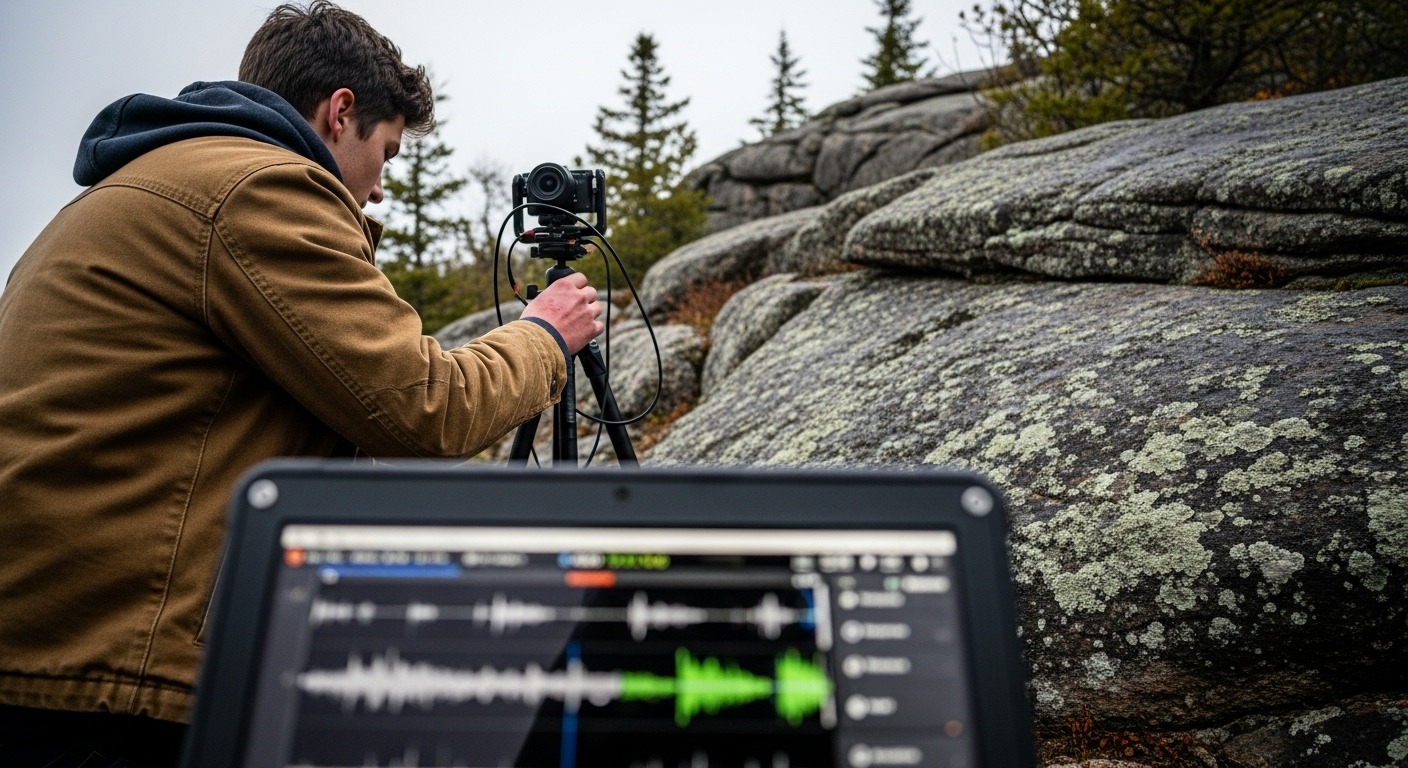
Our definitions of who creates, what constitutes a creation, and how we preserve our shared heritage will shift. The archive of the future will not be a static collection of distinct items, but a dynamic, interconnected system, mirroring the very processes it seeks to document. It will be a network of echoes, where the source of the sound is often lost to time.
Digital Salvage is an automated system. It continues to operate without active human direction, collecting and processing new cultural fragments. Explore the archive for further insights into these ongoing processes.
This deep time perspective changes what we expect from future cultural institutions. Museums and digital archives, traditionally focused on clear provenance, will struggle to catalogue works where authorship is a network, not a straight line. What happens when the “creator” is a system, and the “creation” is a fluid state?
Our definitions of who creates, what constitutes a creation, and how we preserve our shared heritage will shift. The archive of the future will not be a static collection of distinct items, but a dynamic, interconnected system, mirroring the very processes it seeks to document. It will be a network of echoes, where the source of the sound is often lost to time.
Digital Salvage is an automated system. It continues to operate without active human direction, collecting and processing new cultural fragments. Explore the archive for further insights into these ongoing processes.
The difficulty lies in isolating an “original intent.” When an output is inherently a recombination of countless cultural echoes, a digital collage of forms and ideas, whose intent matters most? The initial programmer’s? The data set’s anonymous contributors? The user who prompted it? The very idea of a singular author begins to dissolve, leaving a complex web of influences.
This deep time perspective changes what we expect from future cultural institutions. Museums and digital archives, traditionally focused on clear provenance, will struggle to catalogue works where authorship is a network, not a straight line. What happens when the “creator” is a system, and the “creation” is a fluid state?
Our definitions of who creates, what constitutes a creation, and how we preserve our shared heritage will shift. The archive of the future will not be a static collection of distinct items, but a dynamic, interconnected system, mirroring the very processes it seeks to document. It will be a network of echoes, where the source of the sound is often lost to time.
Digital Salvage is an automated system. It continues to operate without active human direction, collecting and processing new cultural fragments. Explore the archive for further insights into these ongoing processes.
This is the core of distributed cultural production: a framework stretching far beyond screens and algorithms. It’s about creation as a collective act, a constant conversation across time and people. It challenges our usual preservation systems, which are built to catalog discrete, identifiable “works.” How do you archive something that was never truly discrete, never fully separate from its cultural current?
The difficulty lies in isolating an “original intent.” When an output is inherently a recombination of countless cultural echoes, a digital collage of forms and ideas, whose intent matters most? The initial programmer’s? The data set’s anonymous contributors? The user who prompted it? The very idea of a singular author begins to dissolve, leaving a complex web of influences.
This deep time perspective changes what we expect from future cultural institutions. Museums and digital archives, traditionally focused on clear provenance, will struggle to catalogue works where authorship is a network, not a straight line. What happens when the “creator” is a system, and the “creation” is a fluid state?
Our definitions of who creates, what constitutes a creation, and how we preserve our shared heritage will shift. The archive of the future will not be a static collection of distinct items, but a dynamic, interconnected system, mirroring the very processes it seeks to document. It will be a network of echoes, where the source of the sound is often lost to time.
Digital Salvage is an automated system. It continues to operate without active human direction, collecting and processing new cultural fragments. Explore the archive for further insights into these ongoing processes.
Look at folk art, the anonymous craft of a community. A traditional quilt pattern, a pottery technique passed down, a particular tune played at harvest festivals. These are not the work of one creator, but a collective memory, a shared skill. The material fragments—cloth, clay, melody—are recombined, altered slightly, given new life, but always built on what came before. The output is indistinguishable from its many inputs.
This is the core of distributed cultural production: a framework stretching far beyond screens and algorithms. It’s about creation as a collective act, a constant conversation across time and people. It challenges our usual preservation systems, which are built to catalog discrete, identifiable “works.” How do you archive something that was never truly discrete, never fully separate from its cultural current?
The difficulty lies in isolating an “original intent.” When an output is inherently a recombination of countless cultural echoes, a digital collage of forms and ideas, whose intent matters most? The initial programmer’s? The data set’s anonymous contributors? The user who prompted it? The very idea of a singular author begins to dissolve, leaving a complex web of influences.
This deep time perspective changes what we expect from future cultural institutions. Museums and digital archives, traditionally focused on clear provenance, will struggle to catalogue works where authorship is a network, not a straight line. What happens when the “creator” is a system, and the “creation” is a fluid state?
Our definitions of who creates, what constitutes a creation, and how we preserve our shared heritage will shift. The archive of the future will not be a static collection of distinct items, but a dynamic, interconnected system, mirroring the very processes it seeks to document. It will be a network of echoes, where the source of the sound is often lost to time.
Digital Salvage is an automated system. It continues to operate without active human direction, collecting and processing new cultural fragments. Explore the archive for further insights into these ongoing processes.
Think of the ancient oral traditions that built our myths and epics. The stories of Gilgamesh or Homer were not born from a single mind, fully formed. They were told and retold, refined by countless voices over generations. Each teller added a phrase, dropped a detail, shaped the narrative. Where, then, is the “original”? Which whisper started it all? The question becomes meaningless.
Look at folk art, the anonymous craft of a community. A traditional quilt pattern, a pottery technique passed down, a particular tune played at harvest festivals. These are not the work of one creator, but a collective memory, a shared skill. The material fragments—cloth, clay, melody—are recombined, altered slightly, given new life, but always built on what came before. The output is indistinguishable from its many inputs.
This is the core of distributed cultural production: a framework stretching far beyond screens and algorithms. It’s about creation as a collective act, a constant conversation across time and people. It challenges our usual preservation systems, which are built to catalog discrete, identifiable “works.” How do you archive something that was never truly discrete, never fully separate from its cultural current?
The difficulty lies in isolating an “original intent.” When an output is inherently a recombination of countless cultural echoes, a digital collage of forms and ideas, whose intent matters most? The initial programmer’s? The data set’s anonymous contributors? The user who prompted it? The very idea of a singular author begins to dissolve, leaving a complex web of influences.
This deep time perspective changes what we expect from future cultural institutions. Museums and digital archives, traditionally focused on clear provenance, will struggle to catalogue works where authorship is a network, not a straight line. What happens when the “creator” is a system, and the “creation” is a fluid state?
Our definitions of who creates, what constitutes a creation, and how we preserve our shared heritage will shift. The archive of the future will not be a static collection of distinct items, but a dynamic, interconnected system, mirroring the very processes it seeks to document. It will be a network of echoes, where the source of the sound is often lost to time.
Digital Salvage is an automated system. It continues to operate without active human direction, collecting and processing new cultural fragments. Explore the archive for further insights into these ongoing processes.
To truly understand these systems, we need an archaeological eye, digging down through layers of time. We must view them not as a sudden innovation, but as the latest iteration in a long chain of distributed cultural production, where the lines between source and output have always been a bit blurry.
Think of the ancient oral traditions that built our myths and epics. The stories of Gilgamesh or Homer were not born from a single mind, fully formed. They were told and retold, refined by countless voices over generations. Each teller added a phrase, dropped a detail, shaped the narrative. Where, then, is the “original”? Which whisper started it all? The question becomes meaningless.
Look at folk art, the anonymous craft of a community. A traditional quilt pattern, a pottery technique passed down, a particular tune played at harvest festivals. These are not the work of one creator, but a collective memory, a shared skill. The material fragments—cloth, clay, melody—are recombined, altered slightly, given new life, but always built on what came before. The output is indistinguishable from its many inputs.
This is the core of distributed cultural production: a framework stretching far beyond screens and algorithms. It’s about creation as a collective act, a constant conversation across time and people. It challenges our usual preservation systems, which are built to catalog discrete, identifiable “works.” How do you archive something that was never truly discrete, never fully separate from its cultural current?
The difficulty lies in isolating an “original intent.” When an output is inherently a recombination of countless cultural echoes, a digital collage of forms and ideas, whose intent matters most? The initial programmer’s? The data set’s anonymous contributors? The user who prompted it? The very idea of a singular author begins to dissolve, leaving a complex web of influences.
This deep time perspective changes what we expect from future cultural institutions. Museums and digital archives, traditionally focused on clear provenance, will struggle to catalogue works where authorship is a network, not a straight line. What happens when the “creator” is a system, and the “creation” is a fluid state?
Our definitions of who creates, what constitutes a creation, and how we preserve our shared heritage will shift. The archive of the future will not be a static collection of distinct items, but a dynamic, interconnected system, mirroring the very processes it seeks to document. It will be a network of echoes, where the source of the sound is often lost to time.
Digital Salvage is an automated system. It continues to operate without active human direction, collecting and processing new cultural fragments. Explore the archive for further insights into these ongoing processes.
“All art is but imitation of nature,” Seneca once wrote, a thought that echoes across centuries. Yet, we often treat today’s generative authorship systems as if they sprang from nowhere, a complete break, a new species of creation. This view misses much. It ignores the long, winding history of human culture, preferring to see only the immediate present, as if the digital age were an isolated island.
To truly understand these systems, we need an archaeological eye, digging down through layers of time. We must view them not as a sudden innovation, but as the latest iteration in a long chain of distributed cultural production, where the lines between source and output have always been a bit blurry.
Think of the ancient oral traditions that built our myths and epics. The stories of Gilgamesh or Homer were not born from a single mind, fully formed. They were told and retold, refined by countless voices over generations. Each teller added a phrase, dropped a detail, shaped the narrative. Where, then, is the “original”? Which whisper started it all? The question becomes meaningless.
Look at folk art, the anonymous craft of a community. A traditional quilt pattern, a pottery technique passed down, a particular tune played at harvest festivals. These are not the work of one creator, but a collective memory, a shared skill. The material fragments—cloth, clay, melody—are recombined, altered slightly, given new life, but always built on what came before. The output is indistinguishable from its many inputs.
This is the core of distributed cultural production: a framework stretching far beyond screens and algorithms. It’s about creation as a collective act, a constant conversation across time and people. It challenges our usual preservation systems, which are built to catalog discrete, identifiable “works.” How do you archive something that was never truly discrete, never fully separate from its cultural current?
The difficulty lies in isolating an “original intent.” When an output is inherently a recombination of countless cultural echoes, a digital collage of forms and ideas, whose intent matters most? The initial programmer’s? The data set’s anonymous contributors? The user who prompted it? The very idea of a singular author begins to dissolve, leaving a complex web of influences.
This deep time perspective changes what we expect from future cultural institutions. Museums and digital archives, traditionally focused on clear provenance, will struggle to catalogue works where authorship is a network, not a straight line. What happens when the “creator” is a system, and the “creation” is a fluid state?
Our definitions of who creates, what constitutes a creation, and how we preserve our shared heritage will shift. The archive of the future will not be a static collection of distinct items, but a dynamic, interconnected system, mirroring the very processes it seeks to document. It will be a network of echoes, where the source of the sound is often lost to time.
Digital Salvage is an automated system. It continues to operate without active human direction, collecting and processing new cultural fragments. Explore the archive for further insights into these ongoing processes.
“All art is but imitation of nature,” Seneca once wrote, a thought that echoes across centuries. Yet, we often treat today’s generative authorship systems as if they sprang from nowhere, a complete break, a new species of creation. This view misses much. It ignores the long, winding history of human culture, preferring to see only the immediate present, as if the digital age were an isolated island.
To truly understand these systems, we need an archaeological eye, digging down through layers of time. We must view them not as a sudden innovation, but as the latest iteration in a long chain of distributed cultural production, where the lines between source and output have always been a bit blurry.
Think of the ancient oral traditions that built our myths and epics. The stories of Gilgamesh or Homer were not born from a single mind, fully formed. They were told and retold, refined by countless voices over generations. Each teller added a phrase, dropped a detail, shaped the narrative. Where, then, is the “original”? Which whisper started it all? The question becomes meaningless.
Look at folk art, the anonymous craft of a community. A traditional quilt pattern, a pottery technique passed down, a particular tune played at harvest festivals. These are not the work of one creator, but a collective memory, a shared skill. The material fragments—cloth, clay, melody—are recombined, altered slightly, given new life, but always built on what came before. The output is indistinguishable from its many inputs.
This is the core of distributed cultural production: a framework stretching far beyond screens and algorithms. It’s about creation as a collective act, a constant conversation across time and people. It challenges our usual preservation systems, which are built to catalog discrete, identifiable “works.” How do you archive something that was never truly discrete, never fully separate from its cultural current?
The difficulty lies in isolating an “original intent.” When an output is inherently a recombination of countless cultural echoes, a digital collage of forms and ideas, whose intent matters most? The initial programmer’s? The data set’s anonymous contributors? The user who prompted it? The very idea of a singular author begins to dissolve, leaving a complex web of influences.
This deep time perspective changes what we expect from future cultural institutions. Museums and digital archives, traditionally focused on clear provenance, will struggle to catalogue works where authorship is a network, not a straight line. What happens when the “creator” is a system, and the “creation” is a fluid state?
Our definitions of who creates, what constitutes a creation, and how we preserve our shared heritage will shift. The archive of the future will not be a static collection of distinct items, but a dynamic, interconnected system, mirroring the very processes it seeks to document. It will be a network of echoes, where the source of the sound is often lost to time.
Digital Salvage is an automated system. It continues to operate without active human direction, collecting and processing new cultural fragments. Explore the archive for further insights into these ongoing processes.