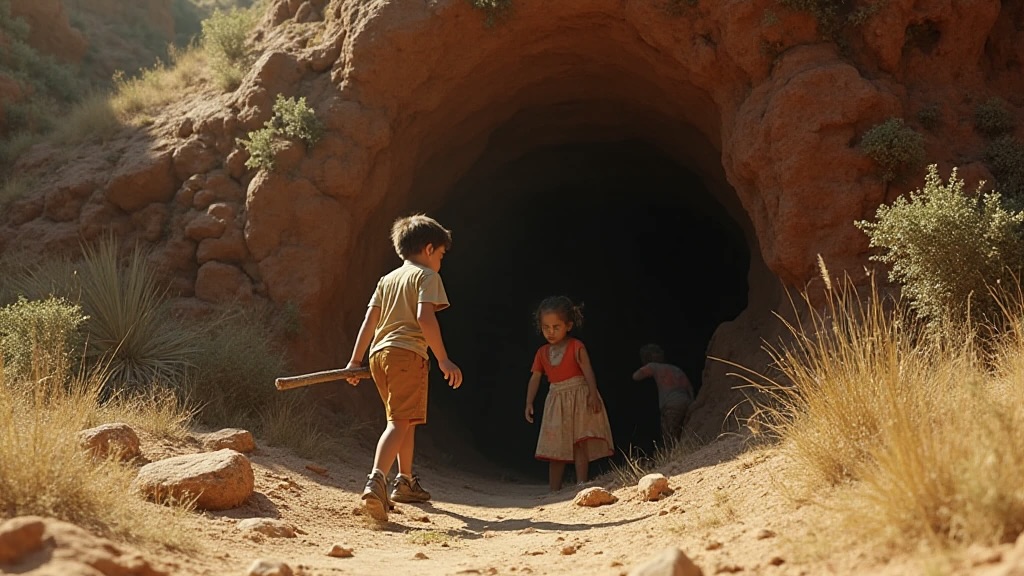
The Whispering Gulch
A Film/TV Treatment
1. LOGLINE
In a heat-stricken, forgotten corner of the west, three siblings searching for adventure uncover a mysterious map in a long-abandoned mine, setting them on a dangerous path to unearth a local secret that is far more ancient and unsettling than any buried treasure.
2. SYNOPSIS
Under a relentless summer sun, three siblings—impulsive leader BENJAMIN (10), cautious and sensible MARIE-ANNE (8), and quiet, observant NATHAN (6)—venture into the forbidden Whisper Gulch. Driven by Benjamin’s thirst for adventure, they discover the hidden entrance to the long-lost "Henderson Claim," an old mine everyone believed had caved in. Marie-Anne is immediately unnerved by the place, especially after Nathan discovers a strange, intricate symbol carved into the entrance timbers and they spot signs of a recent, mysterious visitor. Overcoming their fear, they venture a short way into the oppressive darkness. Inside, they find not treasure, but a small, intricately carved wooden box, left deliberately in their path. The box contains a heavy brass key and a brittle, hand-drawn map marked with the same strange symbols, pointing to a location called "The Crossing." Realizing they have stumbled upon something significant and potentially dangerous, the children make a pact to keep their discovery a secret, setting the stage for a quest that will force them to confront the forgotten history and slumbering secrets buried deep beneath their quiet town.
3. CHARACTER BREAKDOWN
* MARIE-ANNE (8): The story's heart and moral compass. She is pragmatic, cautious, and burdened by a sense of responsibility for her brothers. While she fears the unknown, her perception and steady nerve make her the group's anchor. She feels the atmosphere and the wrongness of things before the others do.
* BENJAMIN (10): The catalyst and leader. Brash, confident, and fueled by a desire to escape the dusty mundanity of his life. He craves grand adventure and sees the discovery as a path to glory and riches, often overlooking the immediate dangers in favor of the potential reward.
* NATHAN (6): The silent observer and mystic of the group. He rarely speaks, but sees everything. He is deeply connected to the environment, finding the small details others miss—the carving, the footprint, the nature of the key. He understands the mystery on an intuitive level, communicating through gestures and a quiet intensity.
4. SCENE BEATS
* THE FURNACE: We open on a vast, sun-bleached landscape. The heat is a physical presence. We establish the sibling dynamic: BENJAMIN charging ahead, MARIE-ANNE struggling to keep up, and NATHAN trailing, scanning the ground. The dialogue establishes their personalities and the oppressive environment.
* THE LEGEND OF THE GULCH: They arrive at the entrance to the Whisper Gulch. The landscape shifts, becoming more fractured and ominous. We learn through dialogue that this place is avoided, known for the strange way the wind sounds, a place where "the wind talks secrets."
* THE HIDDEN MOUTH: Benjamin, with Nathan in tow, discovers a dark opening hidden behind a curtain of vines: the entrance to an old mine shaft. The construction is man-made, a stark and unsettling contrast to the natural rock.
* THE FIRST MARK: As they clear the entrance, Nathan points out a strange, intricate carving on the main timber—a coiled, almost mechanical-looking symbol. It’s not a simple doodle; it’s deliberate, ancient, and alien to their world.
* A COLD BREATH: Marie-Anne feels a tangible current of cool, metallic-smelling air breathing from the mine. Her instincts scream "danger." She tries to stop Benjamin from entering, but his bravado wins out.
* SIGNS OF LIFE: Marie-Anne notices two things that stop them cold: the dust before the entrance is unnaturally smooth, and in it is a single, faint depression—an imprint of something recently placed there. Someone was here. The mystery deepens and gains a sense of immediate, human threat.
* INTO THE DARK: They enter the mine. The transition is stark: from blinding, noisy heat to absolute, silent cold. Benjamin lights a candle, revealing a narrow tunnel supported by decaying timbers. The strange symbol is repeated on the supports, like trail markers leading them deeper.
THE OFFERING: In the center of the path, perfectly placed, sits a small, dark wooden box, carved with the same swirling symbols. It hasn't been lost or dropped; it feels like it was left* for them.
* THE RELICS: Benjamin opens the box. Inside, on a bed of dried leaves, lie two objects: a folded, yellowed parchment and a heavy, tarnished brass key. The air is thick with anticipation.
* A MAP OF SECRETS: They unfold the parchment to reveal a map. It shows familiar landmarks but is covered in more of the strange symbols and charts a path to a place marked with an 'X' and labeled 'The Crossing'. It feels less like a treasure map and more like a warning or a set of instructions.
* THE PACT: The weight of the discovery settles on them. This is not a game. Marie-Anne insists they can't tell their parents, who would either dismiss it or forbid them from pursuing it. They agree to keep it their secret. Benjamin carefully places the map and key back in the box. The quest is theirs alone. The final shot is of their three serious faces, illuminated by the single flickering candle flame, surrounded by an ancient and imposing darkness.
5. VISUAL STYLE
* A TALE OF TWO WORLDS: The visual language will be built on the stark contrast between the exterior and interior worlds.
* EXTERIOR (THE GULCH): Shot with a wide lens to emphasize the vast, isolating landscape. The color palette is overexposed and desaturated—all baked earth reds, ochres, and hazy, bleached-out skies. The light is harsh and unforgiving. Handheld camera work will follow the children's energetic, chaotic journey.
* INTERIOR (THE MINE): The moment they enter, the aesthetic shifts dramatically. The palette becomes one of deep, crushed blacks, cool blues, and damp, earthy browns. The only light source is the single, warm, flickering flame of their candle, creating long, dancing shadows and a deep sense of claustrophobia. Camera movements become slow, deliberate, and tense, pushing in on details—the carvings, the box, the children's wide eyes.
* SOUND DESIGN: The sound will also emphasize this contrast. The outside is filled with the incessant, high-pitched buzz of insects, the dry whisper of wind, and the crunch of their boots on shale. The inside of the mine is defined by an oppressive silence, broken only by the dripping of unseen water, the scuttling of vermin, and the children's amplified, ragged breathing. The "whispering" wind of the gulch will be a recurring, unsettling sound motif.
TONE: The overall tone is Amblin-esque adventure filtered through a lens of folk horror. It captures the childhood wonder and thrill of discovery (The Goonies, Stand By Me) but grounds it in a palpable sense of ancient, creeping dread and consequence (Stranger Things, The Witch*). The mystery is not fun and games; it feels important, old, and dangerous.
Share This Treatment


