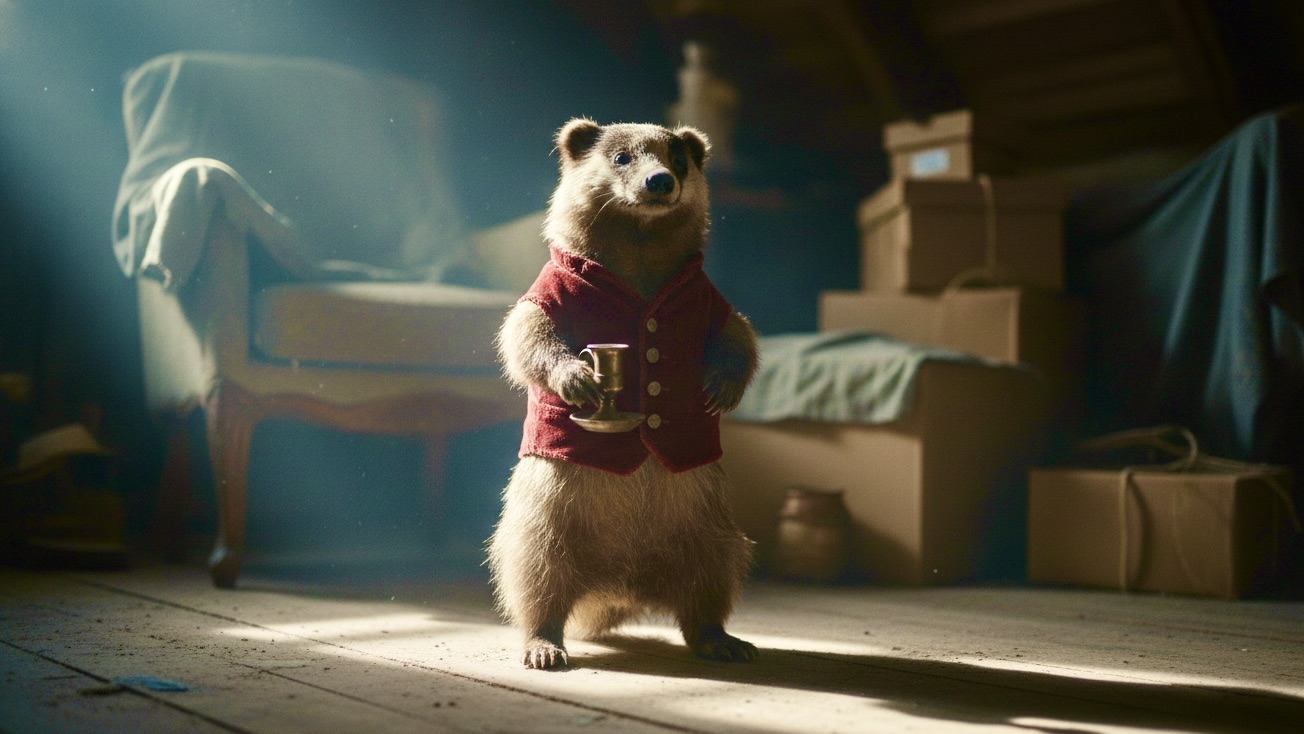
The Badger in the Vest
Format: Short Film / Anthology Episode | Est. Length: 10-12 minutes
Logline
Two estranged relatives, tasked with clearing out a deceased hoarder's suffocating attic, find their shared grief and long-held animosity shattered by the absurd discovery of a taxidermy badger in a red velvet waistcoat.
Themes
* Catharsis in Absurdity: How humor, particularly the bizarre and unexpected, can serve as a necessary release valve for overwhelming grief and tension.
* The Weight of the Past: The physical and emotional burden of inherited objects and unresolved family history, where junk becomes a tangible manifestation of unspoken pain.
* Fragility of Connection: How deeply buried human connections can be instantly rekindled through a shared, authentic experience that cuts through years of resentment.
* The Performance of Grief: The contrast between how people are "supposed" to act while grieving and the messy, unpredictable, and sometimes hysterical reality of the process.
Stakes
At stake is Simon and Agnes's ability to navigate their shared grief and fractured relationship without being completely crushed by the oppressive physical and emotional weight of the past.
Synopsis
In the sweltering, claustrophobic attic of his late, hoarder brother Arthur, SIMON (62) and his sister-in-law AGNES (late 60s) are locked in a losing battle with a monstrous oak wardrobe. The oppressive heat mirrors their tense, bitter relationship, strained by years of family drama and the immediate, overwhelming task at hand. They need to move the wardrobe to access a faulty electrical panel, but their efforts are futile, punctuated by snide remarks and breathless frustration.
A forced break reveals the deep currents of their shared history—Arthur's pathological hoarding, Agnes's complicated relationship with her family, and Simon's weary sense of obligation as the executor. The air is thick with unspoken resentments and the literal dust of a life overflowing with junk.
Rallying for one last attempt, they put all their strength into moving the wardrobe. A rotten leg snaps, and the massive piece of furniture crashes to the floor, its doors bursting open and vomiting a cloud of dust and moth-eaten contents. Amidst the debris, they discover the source of a shattering sound: a broken glass display case containing a taxidermy badger.
This is no ordinary badger. It's dressed in a tiny, red velvet waistcoat, complete with a pocket watch, and holds a miniature brass candlestick and a monocle. The sheer, profound absurdity of the object—its crossed glass eyes, its pompous attire—hangs in the silence. The tension breaks, not with a snap, but with a snort from Simon. This triggers a chain reaction, and soon both he and Agnes are consumed by a fit of hysterical, cathartic laughter. They laugh until they cry, until their sides ache, releasing days of stress, decades of resentment, and a lifetime of grief for the man who would own such a thing.
The laughter subsides, leaving them exhausted but fundamentally changed. The oppressive atmosphere has lifted, replaced by a fragile, genuine connection. With the wardrobe finally out of the way, they uncover the access panel. Behind it, in the darkness of a crawlspace, sits a mysterious metal lockbox, leaving them with a new, shared purpose and a quiet understanding as they prepare to face the next secret together.
Character Breakdown
* SIMON (62): A man worn down by life's obligations. As the executor of his brother's will, he is practical, weary, and emotionally reserved. He sees the attic cleanup as just another thankless task in a life full of them, and his relationship with Agnes is a minefield he'd rather not navigate. He is driven by duty, not desire.
* Psychological Arc:
* State at Start: Overwhelmed, resentful, and emotionally closed off, viewing the task and Agnes as burdens he must endure.
* State at End: Emotionally unburdened, reconnected with Agnes through a moment of shared absurdity, and able to find humor and a lighter perspective amidst the oppressive grief.
* AGNES (late 60s): Arthur's sister. Her sharp, critical exterior is armor built from years of family disappointment and guilt. She is physically frail but possesses a biting wit. She showed up to the house uninvited, driven by a need for closure she can't articulate, and her grief manifests as impatience and criticism.
* Psychological Arc:
* State at Start: Prickly, judgmental, and trapped in a cycle of resentment and sorrow, using sarcasm as a shield.
* State at End: Her emotional armor is cracked, allowing for a moment of genuine, vulnerable connection with Simon. She rediscovers a piece of her humanity she thought was lost.
Scene Beats
1. THE STUGGLE: The oppressive attic. Simon and Agnes heave against the immovable wardrobe. The heat, dust, and their terse dialogue establish the physical and emotional claustrophobia.
2. THE CEASEFIRE: They give up, slumping amidst the junk. A brief, tense conversation reveals their shared history with the deceased Arthur, hinting at deeper family fractures.
3. THE CRASH: Renewed effort. With a final, unified push, the wardrobe lurches forward, but a leg snaps. It topples over with a deafening crash, doors flying open.
4. THE REVEAL: A cloud of dust settles. Among the spilled contents lies a shattered display case. Simon pulls out the object: a taxidermy badger, bizarrely dressed in a waistcoat and holding a candlestick.
5. THE BREAKDOWN: Silence, then a snort from Simon. Agnes sees the badger's resemblance to a pompous relative. The absurdity is too much. They erupt into hysterical, uncontrollable, gut-wrenching laughter.
6. THE AFTERMATH: The laughter fades to exhausted sighs. The tension is gone. They share a look—not of friendship, but of profound, shared understanding. The air in the room has cleared.
7. THE DISCOVERY: With the path clear, they open the access panel behind where the wardrobe stood. In the dark crawlspace beyond, a flashlight beam reveals a small, metal lockbox, waiting to be opened.
Visual Style & Tone
The visual style is grounded and naturalistic, emphasizing the oppressive environment. The attic should feel like a tomb—claustrophobic, cluttered, and choked with dust. Light comes from a single, grimy window, cutting harsh shafts through the thick air, illuminating dancing dust motes. The color palette is a monochrome of decaying browns, grays, and sickly yellows, making the sudden appearance of the badger's rich, red velvet vest a shocking and surreal splash of color.
The tone begins as a heavy, somber character drama, thick with unspoken grief and resentment. It pivots sharply into black comedy with the discovery of the badger, allowing for a moment of absurd, almost surrealist release. The film lands on a feeling of quiet, hopeful melancholy. The tone blends the contained emotional intensity of a film like Manchester by the Sea with the sudden, bizarre comedic catharsis found in the works of the Coen Brothers or Martin McDonagh. It finds profound humanity in the ridiculous, aligning with the spirit of character-driven stories that are unafraid to mix tragedy with unexpected humor.
Share This Treatment


