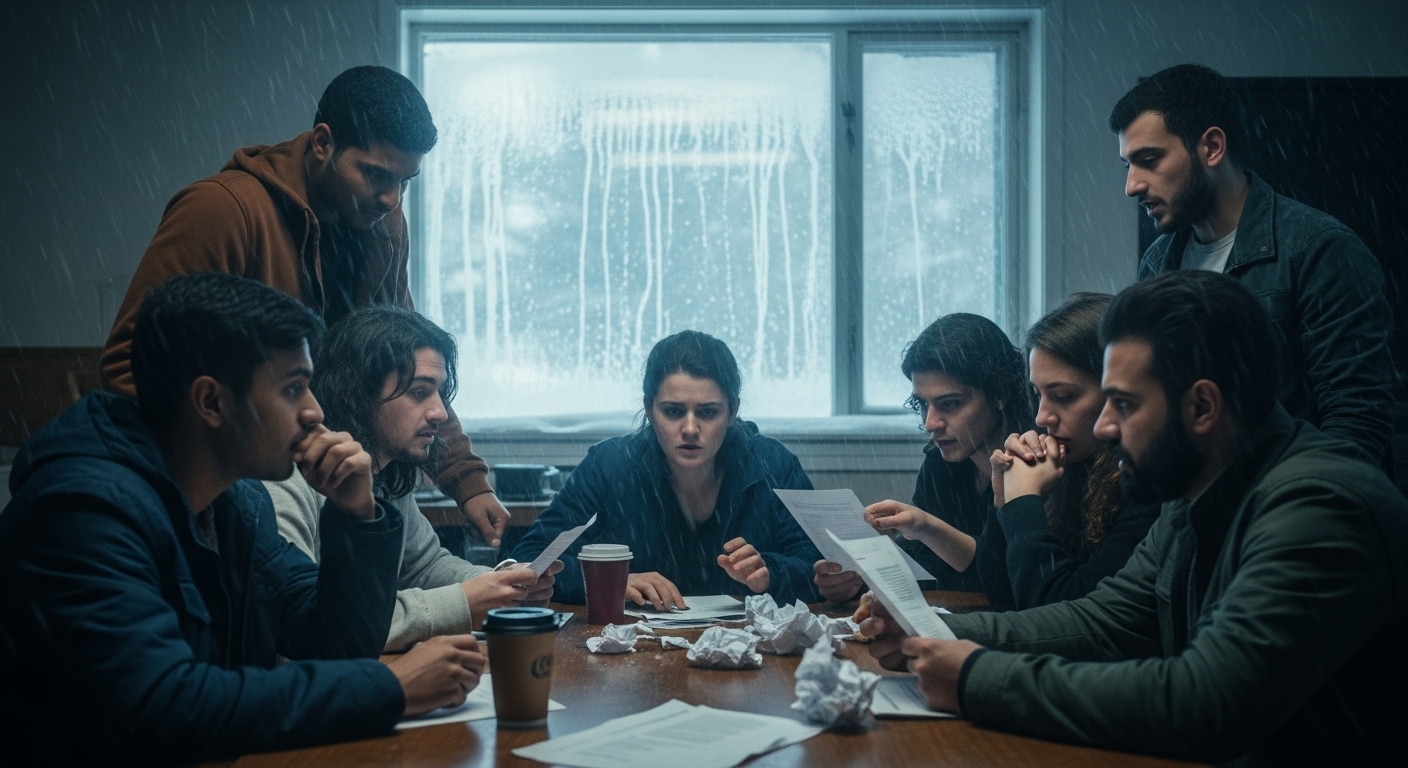
Beneath the Frost
Format: Short Film / Anthology Episode | Est. Length: 10-12 minutes
Logline
In a remote, snow-bound city, four aspiring artists on the verge of abandoning their dream of forming a creative collective are revitalized by a veteran mentor who teaches them that the true foundation for their art isn't in paperwork, but in community and resilience.
Themes
* Bureaucracy vs. Creativity: The tension between the rigid, uninspiring demands of legal and financial structures and the free-flowing, passionate impulse to create art.
* Resilience in a Harsh Environment: Using the physical metaphor of a relentless winter, the story explores how creative communities must forge their own warmth and perseverance to survive in indifferent or hostile surroundings.
* Community as Foundation: The central idea that meaningful, sustainable artistic endeavors are built not on grants or status, but on human connection, mutual support, and a shared understanding of local needs.
* Pragmatism vs. Idealism: The internal conflict within the group between the desire to simply create (Denny) and the understanding that structure and planning are essential for long-term survival (Siobhan, Mary).
Stakes
The collective's potential to provide a vital sanctuary for a community of isolated artists will be extinguished before it even begins, leaving them to face the city's creative and literal cold alone.
Synopsis
In a drab community centre, snowed-in during another brutal Thunder Bay blizzard, four young artists—SIOBHAN, MARY, DENNY, and BEN—are drowning in the bureaucratic paperwork required to incorporate their arts collective. The frustration is palpable. Denny, the pure artist, questions the need for it all, while Mary, the pragmatist, insists on doing it by the book. Siobhan, their de facto leader, feels the weight of their potential failure, trying to mediate between idealism and the harsh reality of grant applications and legal statutes. The sheer volume of work feels like an insurmountable snowdrift, threatening to bury their dream.
A small spark of hope is ignited when they brainstorm a simple, low-cost first project—a winter photography contest—reminding them of their core purpose. Just as their morale begins to dip again, their mentor arrives. MS. MURRRAY, a warm, experienced artist who has built successful collectives before, cuts through their anxiety with calm wisdom.
She reframes their struggle, telling them that the "paperwork blizzard" is a rite of passage. She advises them to stop focusing on the grand vision and instead build "roots in rocky ground." These roots, she explains, are not legal documents but relationships, community engagement, and small, consistent victories. She teaches them that their collective must grow organically from the needs of their specific, resilient city. Her words transform the daunting administrative tasks from obstacles into the essential, foundational prep work for their "masterpiece."
After Ms. Murrray departs, the atmosphere in the room has completely shifted. The oppressive weight has lifted. Energized and refocused, the group immediately begins brainstorming tangible, community-focused next steps—a pop-up show, a public mural. The stack of forms no longer looks like a burden, but like blueprints. Siobhan looks at her friends, a new, determined hope in her eyes, as they collectively promise to build their fire against the cold.
Character Breakdown
* SIOBHAN (20s): The protagonist. A pragmatic and determined leader trying to steer the group through a challenge that is overwhelming her as much as anyone else. She carries the emotional weight of the project's potential success or failure.
* Psychological Arc: Siobhan begins overwhelmed and anxious, viewing the bureaucratic process as an alien, oppressive force that is antithetical to the act of creation. Through Ms. Murrray's guidance, she undergoes a critical perspective shift, reframing the administrative work as an integral and necessary part of building a strong foundation. She ends the story transformed from a state of anxious paralysis to one of focused, hopeful action, ready to lead.
* DENNY (20s): The idealist. A talented and passionate artist who is the creative soul of the group. He is allergic to the business side of things and represents the pure, untamed artistic spirit that needs sheltering.
* MARY (20s): The organizer. Meticulous, practical, and easily frustrated by inefficiency. She believes in the system, even as she complains about it, and understands that structure is the only way their dream survives.
* BEN (20s): The quiet observer. A man of few words, but his contributions are grounded in real-world experience and carry significant weight, often serving to validate the more pragmatic arguments.
* MS. MURRRAY (60s): The mentor. A warm, wise, and resilient figure who has successfully navigated this exact terrain before. She is the calm eye of the storm, providing the perspective and encouragement the group desperately needs.
Scene Beats
1. THE PAPERWORK BLIZZARD: In a bleak community centre, the four founders are buried under incorporation forms. The mood is tense and hopeless. Denny wants to abandon the process, while Mary and Siobhan insist on its necessity. The blizzard outside mirrors their internal state.
2. A FRAGILE SPARK: To pull them out of the downward spiral, Siobhan suggests a small, achievable project: a winter photography contest. The group briefly rallies, brainstorming ideas, proving the creative fire hasn't been completely extinguished.
3. THE MENTOR'S ARRIVAL: Ms. Murrray arrives, a warm, grounding presence against the cold. She listens patiently as they vent their frustrations about the "tundra of non-profit regulations."
4. ROOTS IN ROCKY GROUND: Ms. Murrray shares her wisdom. She reframes their struggle, shifting their focus from the overwhelming paperwork to the tangible act of building community. She uses the powerful metaphor of preparing a canvas or foundation for a great work of art. This is the story's turning point.
5. THE THAW: Ms. Murrray leaves. The oppressive atmosphere has lifted. The group sits in a changed silence, the hum of the radiator now feeling warm instead of weak. The paperwork now looks like blueprints, not a burden.
6. BLUEPRINTS FOR A FIRE: Re-energized, the team starts planning concrete, community-focused actions. They are united with a new sense of purpose and a clear path forward. The final shot is on their determined faces, a promise made to each other and their future.
Visual Style & Tone
The visual style will rely on a stark contrast between the cold, blue-white palette of the blizzard outside and the warm, slightly cluttered, low-key lighting inside the community centre. The camera will feel intimate and observational, using close-ups on hands shuffling papers, frustrated expressions, and the small creative acts that defy the gloom (Denny's sketching, Mary's neat notes). Steam from tea mugs and condensation on windows will be recurring motifs, emphasizing the fragile barrier between their warm sanctuary and the harsh world.
The tone is grounded, quiet, and ultimately hopeful, capturing the intimate struggle and resilience of creative people. It aligns with the character-focused, slice-of-life storytelling of films like Paterson or the community-building spirit of CODA, focusing on ordinary people attempting something extraordinary in a challenging environment. It's a story about finding warmth in the cold and building something lasting from the ground up.
Share This Treatment


