A WALK THROUGH THE CITY
A Film Treatment
1. LOGLINE
On a bitterly cold winter evening, a pragmatic marketing executive's walk through a frozen cityscape forces him to confront the ghosts of a failed youthful dream, leading to a quiet epiphany about the passion he has long since buried.
2. SYNOPSIS
THOMAS (late 30s), a successful but unfulfilled marketing professional, walks home through the punishing cold of a Winnipeg winter. The brutal temperature and desolate urban landscape trigger a flood of memories surrounding 'The Listening Post'—a record shop/café he and his former best friend, DAVE, tried to launch a decade earlier. As he passes familiar storefronts, Thomas is pulled back into a vivid internal montage of their shared dream: the initial, intoxicating optimism, the clash between Dave's artistic purism and his own pragmatism, and the eventual, bitter collapse of both their business and their friendship.
Haunted by the memory of their final argument and the heavy weight of that failure, Thomas views his current stable, risk-averse life as a direct, joyless reaction to that youthful trauma. The city itself, with its constant demolition and construction, seems to mock his emotional stasis. A glimpse into a warm, bustling coffee shop—a painful mirror of what 'The Listening Post' was meant to be—serves as the catalyst for a profound internal shift. Thomas realizes that the true failure wasn't the loss of the shop, but his subsequent abandonment of his own creative spark. The film closes not with a grand gesture, but with a subtle, powerful change in his perspective. He resolves to stop running from the past and to finally start creating his own music again, finding a flicker of inner warmth to push back against the literal and metaphorical cold.
3. CHARACTER BREAKDOWN
* THOMAS (Late 30s): The protagonist. On the surface, he is the picture of sensible adulthood—a stable job in marketing, a quiet flat. Internally, he is stagnant, haunted by a single, spectacular failure from his youth. He is witty, observant, and deeply melancholic, having traded passion for predictability. His journey is a quiet, internal battle to reclaim the part of himself he thought was long dead.
* DAVE (in flashback, Late 20s): Thomas's former best friend and business partner. Seen only through Thomas’s memories, Dave is the embodiment of chaotic, artistic energy. He is a passionate, uncompromising dreamer—the "soul" of their failed venture. His infectious enthusiasm is what drew Thomas in, but his refusal to compromise is what ultimately drove them apart. He represents the high-risk, high-reward path that Thomas has since abandoned.
4. SCENE BEATS
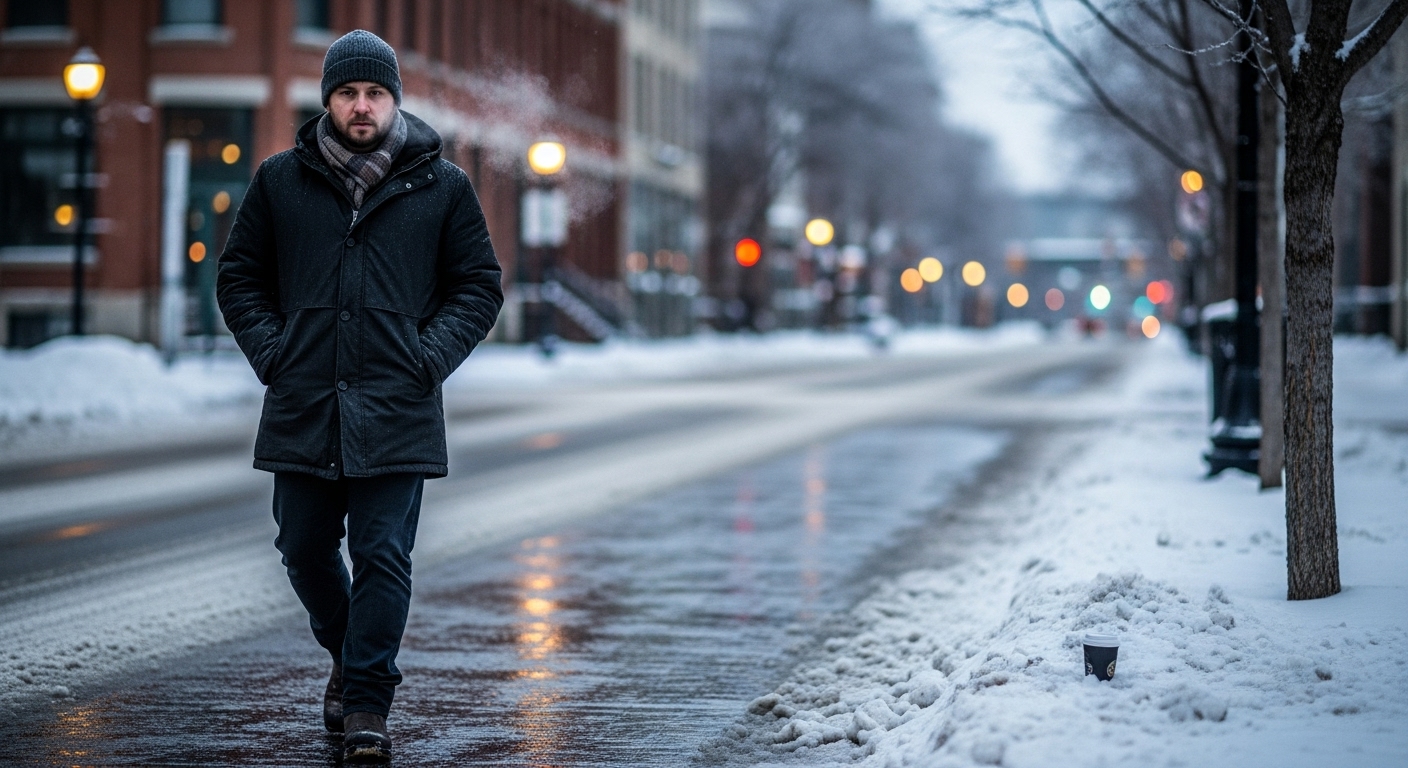
* THE FROZEN EXPANSE: We open on Thomas walking down a desolate Portage Avenue at dusk. The sound design is sharp and isolated: the biting wind, the solitary crunch of his boots on snow. The extreme cold is a palpable, oppressive character, forcing him deep into his coat and his own head.
* GHOSTS OF THE PAST: The wintry landscape triggers the central memory. A flicker of a storefront, the icy air—it all transports him back. The phantom smell of coffee and the sound of a record needle dropping. He thinks of Dave.
* FLASHBACK - THE NAPKIN BLUEPRINT: A warm, grainy flashback. A younger Thomas and Dave huddle in a cheap bar. Dave, energetic and magnetic, sketches the layout for ‘The Listening Post’ on a stained napkin. Thomas is captivated not by the plan, but by Dave’s passionate vision.
* THE CLASH OF IDEALS: Thomas's walk continues, his thoughts sharpening. He recalls the central conflict of their partnership. We see a quick-cut montage: Dave passionately defending an obscure Icelandic record while Thomas holds up a spreadsheet, the stress of unpaid bills etched on his face. Their arguments escalate, the dream fraying at the edges.
* FLASHBACK - THE END: The memory culminates in their final, explosive fight in the empty shop. The sound echoes unnaturally. Dave packs a single, unsellable record into his bag. He turns and leaves without a word. Thomas is left alone, frozen in the center of their dead dream, the weight of failure physically pressing down on him.
* THE MONOCHROME PRESENT: Back in the present, Thomas passes a construction site. The city is moving on, rebuilding. He reflects on his "safe" life in marketing, a life built as a fortress against the memory of that failure.
* THE WARM WINDOW: Thomas stops outside a small, fogged-up coffee shop. It’s everything ‘The Listening Post’ should have been: warm, inviting, full of life. He sees a young couple inside, laughing, their future seemingly bright and uncomplicated. The contrast is a gut punch, crystallizing his deep dissatisfaction.
THE EPIPHANY: Staring at his own faint reflection in the window, Thomas realizes his mistake. He’s spent a decade mourning a failed business and a lost friendship, but the real tragedy is that he allowed the failure to extinguish his own creative fire. The problem isn't what happened with Dave; it's what he didn't* do afterward.
* A SHIFT IN THE ICE: Thomas kicks a chunk of ice on the sidewalk. It's a small, physical act of breaking his own stasis. His internal monologue shifts from melancholic remembrance to forward-thinking resolve.
* A NEW DIRECTION: The memory of an old, dusty guitar in his closet surfaces. A new, quiet purpose forms. His pace quickens, his posture straightens slightly. He is no longer just enduring the cold walk home; he is walking towards something new. The film ends on Thomas, a solitary figure moving with newfound intent through the frozen city, a flicker of warmth finally kindling within.
5. VISUAL STYLE
* PALETTE & TONE: The present-day scenes will be shot with a cool, desaturated palette—dominated by blues, greys, and stark whites—to emphasize the oppressive cold and Thomas's emotional state. The lighting will be low and naturalistic, with long shadows cast by streetlights on the ice-glazed pavement, creating a lonely, almost dreamlike atmosphere.
* FLASHBACKS: In stark contrast, the flashbacks to the optimistic beginnings of 'The Listening Post' will be warm, oversaturated, and filmed with a handheld, energetic camera to capture the youthful vitality and hope. The final argument flashback will be shot with stark, high-contrast lighting, emphasizing the deep shadows and the emotional chasm between the two friends.
* SOUND DESIGN: The soundscape is critical. The present will be defined by sharp, lonely sounds: the crunch of snow, the howl of wind, distant city noises. This will be contrasted with the rich, warm sounds of the flashbacks: the crackle of vinyl, muffled music, vibrant conversation. The moment Thomas looks into the coffee shop, we will hear its warm, muffled ambiance, a soundscape he is literally shut out from.
* PACING: The film will have a contemplative, deliberate pace, mirroring Thomas's walk. The editing will allow moments of quiet reflection, letting the environment and Thomas’s internal state sink in. The final shots will see a subtle increase in pacing as his walk gains purpose, reflecting his internal shift. The overall feel is intimate and atmospheric, a visual poem about regret and quiet redemption.
Share This Treatment


