A CRACK IN THE ICE
A Film/TV Treatment
LOGLINE
A year after his wife vanished on a frozen lake, a guilt-ridden widower's isolated existence is shattered by a series of unnatural events, forcing him to confront whether he's losing his mind or if something sinister has returned for him.
SYNOPSIS
ELI, a man hollowed out by grief, lives in self-imposed exile in a remote lakeside cabin, the same place where his wife, MARIE, disappeared under the ice a year ago. His days are a monotonous cycle of survival and memory, punctuated by the natural groans of the vast frozen lake. But a new sound—sharper, more deliberate—begins to plague him, a resonant groan that feels less like shifting ice and more like something waking up. Haunted by flashes of the tragic accident and surrounded by objects that echo Marie’s presence, Eli’s fragile sanity is already stretched thin. When a second, violent crack splits the night, he is driven to investigate. Outside, he discovers a massive, unnatural fissure cutting across the lake, a fresh wound in the ice with no apparent cause. The true terror strikes when he returns to his cabin to find strange, freshly carved tally marks on his door—a sign that he is not alone. As the crushing darkness of the northern winter descends, a final, rhythmic scratching sound begins to echo from the center of the lake, transforming his psychological torment into a tangible, immediate threat.
CHARACTER BREAKDOWN
* ELI (Mid-30s): Gaunt, bearded, and haunted. A man who was once capable and warm, now reduced to a shell by guilt and grief. He is resourceful and knows the wilderness, but his isolation has made him paranoid and emotionally brittle. He is trapped between the need to remember Marie and the agony that memory brings.
* MARIE (Late 20s/Early 30s): Seen only in flashbacks and a single photograph. She is the vibrant, laughing heart of Eli's memory—a stark contrast to the bleak present. Her image represents life, love, and the profound mystery at the center of Eli's trauma. She is the ghost that is not a ghost, the unspoken question driving the narrative.
SCENE BEATS
* THE SOUND: We open on the oppressive quiet of a remote cabin. This is broken by a deep, unnatural GROAN that vibrates through the floor. This is not a normal sound.
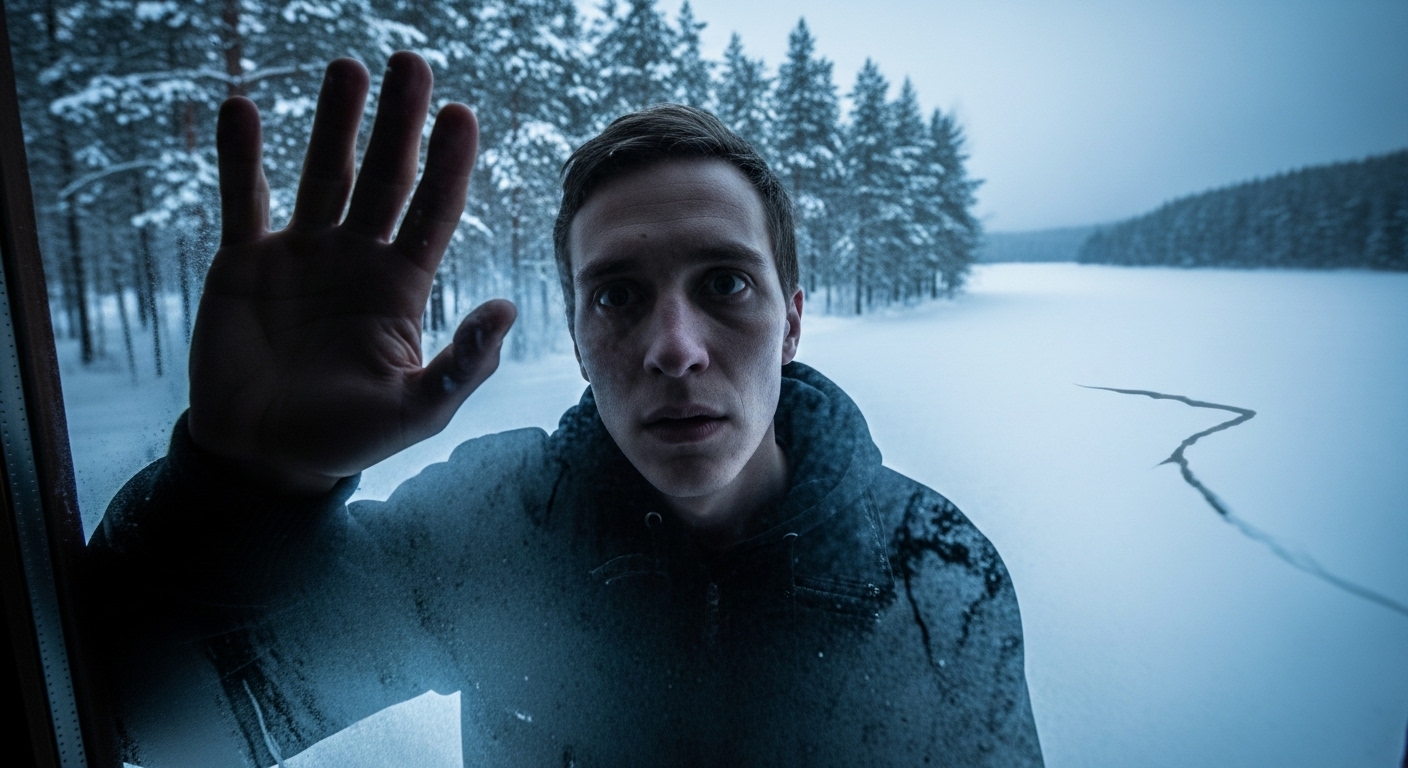
* THE WATCHER: ELI stands vigil at a frosted window, a man worn down by grief. He observes the vast, desolate expanse of the frozen lake, the landscape a reflection of his internal emptiness.
* GHOSTS OF THE PAST: The cabin is a museum of his life with MARIE. His gaze lands on her favorite mug, the armchair she used. Every object triggers a flicker of memory and a pang of loss.
* THE ROUTINE: Eli paces the cabin—a caged animal. Three steps to the fireplace, four to the window. This is his ritual, the only thing keeping his spiraling mind anchored.
* THE PHOTOGRAPH: He picks up a photo of a vibrant, smiling MARIE. This triggers a visceral, fragmented FLASHBACK to the day she was lost: the sudden crack of ice, a scream, the shock of black water, and her hand slipping from his grasp. The memory is a blur of guilt and horror.
* THE SECOND CRACK: A much louder, sharper CRACKING sound rips through the air. It’s violent and immediate. This is the inciting incident that forces him to act.
* THE ARMING: Eli pulls on his winter gear and grabs his hunting rifle. He is no longer a passive mourner; he is now confronting a potential threat.
* THE WOUND: Outside, the cold is brutal. Eli discovers a massive, clean fissure in the ice—a jagged, dark line stretching across the lake. It looks unnatural, as if something pushed its way through from below. There are no tracks, no explanation.
* THE MESSAGE: Returning to the cabin, a chilling discovery. Freshly carved MARKS on the wooden door, just above the handle: a set of tally marks, deliberate and symbolic. Someone, or something, has been here.
* THE CLIFFHANGER: The fear shifts from psychological to physical. Eli retreats inside, bolting the door. The silence returns, heavier than before. Then, from the darkness of the lake, a new sound begins: a faint, rhythmic SCRATCHING. It’s methodical, patient, and it’s getting closer.
VISUAL STYLE
The visual language will emphasize isolation and psychological decay, contrasting the bleak present with the warm, vibrant past.
* COLOR PALETTE: A desaturated, monochromatic world of whites, greys, and deep blues dominates the present day, mirroring Eli’s emotional state. This will be sharply contrasted by the rich, saturated colors of the flashbacks with Marie (her scarlet toque, the green of the pines, the warm sunlight).
* CINEMATOGRAPHY: Wide, static, and often symmetrical shots will be used to dwarf Eli against the immense, indifferent landscape, reinforcing his profound isolation. During moments of tension and fear, the camera will switch to tight, handheld shots, creating a claustrophobic and disorienting perspective. The camera will treat the cabin not as a home, but as a cage.
* LIGHTING: The lighting will be naturalistic and low-key. The cabin’s interior will be a small pocket of weak, warm light from a fireplace or a single lamp, surrounded by an encroaching, inky blackness outside. Shadows will be long and deep, playing tricks on the eye and making familiar spaces feel menacing.
* SOUND DESIGN: Sound is a primary character. A tense, minimalist score will be used sparingly. The focus will be on the amplified sounds of the environment: the crunch of snow, the creak of wood, the howl of the wind, and most importantly, the unsettling, unnatural sounds emanating from the lake. The oppressive silence will be as powerful as the noise that breaks it.
INFLUENCES: The Shining (psychological decay in isolation), Wind River (the brutal beauty and danger of a snow-covered landscape), The Thing (paranoia and an unseen, encroaching threat).
Share This Treatment


