Story illustration
Home Short Stories Categories Genres Search News Incubator
Short Stories Digital Library

Slice of Life Stories

Immerse yourself in everyday moments and ordinary experiences, celebrating the subtle beauty and quiet significance of routine life. These stories offer relatable glimpses into reality.

Explore Our Slice of Life Short Stories

20 Stories
James Thompson, an artist grappling with the future of creativity, stands by a rain-streaked window in a university seminar room as dusk settles. His reflection is visible in the glass, layered over the blurred cityscape, embodying his internal conflict about human versus artificial art.

The Loom and the Algorithm

By Jamie F. Bell

The air in Seminar Room 3.2 was thick with the scent of lukewarm coffee and the subtle, metallic tang of an old radiator struggling against the late autumn chill. Outside, a light, insistent rain streaked the windowpanes, blurring the already grey cityscape into an Impressionistic wash. Inside, the hum of the fluorescent lights competed with the low murmur of anticipation, a prelude to the usual intellectual sparring.
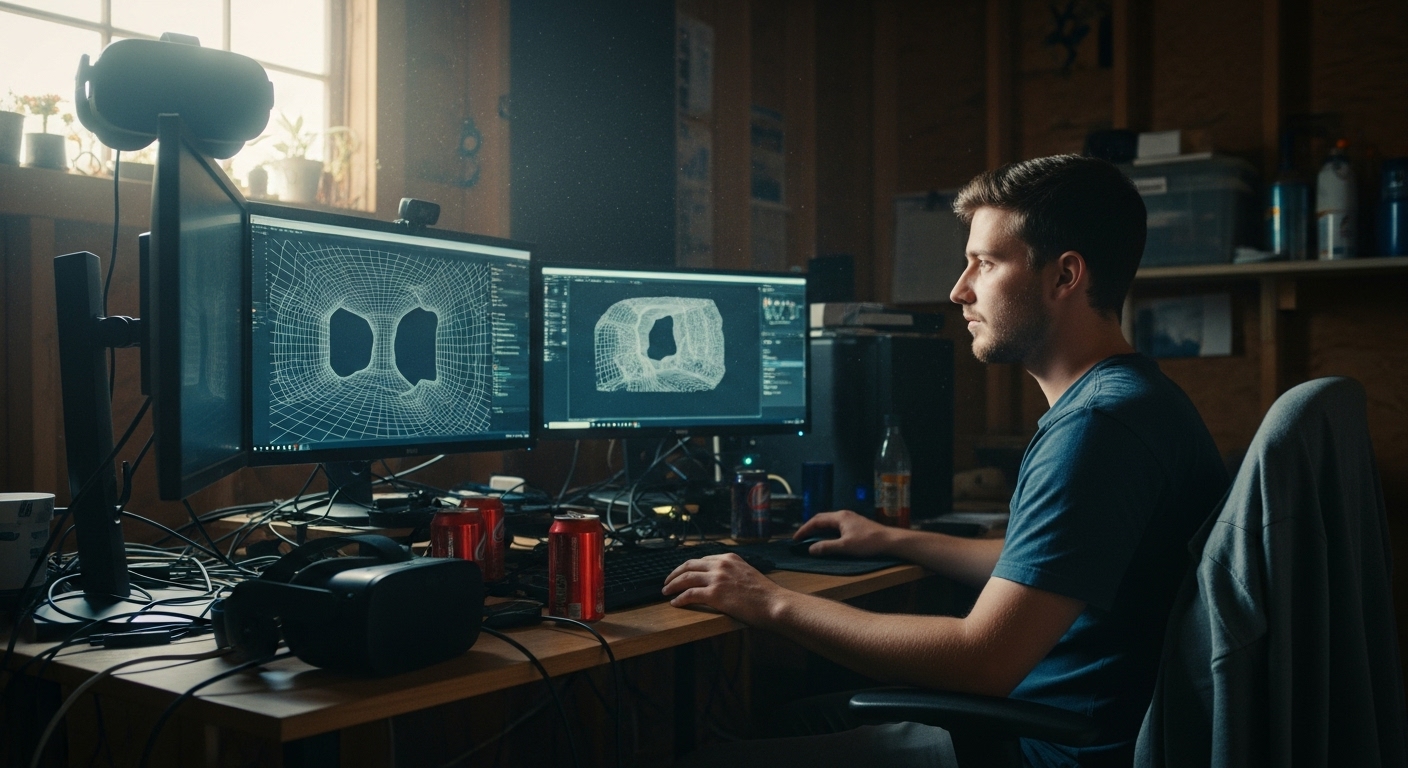

Sam works late in the group's makeshift studio, surrounded by the tools of their trade: VR headsets, monitors displaying geological simulations, and the remnants of a caffeine-fueled work session.

Static on the Shield

By Jamie F. Bell

A sweltering afternoon in a converted garage in Northwestern Ontario, where the hum of computer fans competes with the buzzing of cicadas outside.

A haunting photograph captures a nine-year-old boy, Lennie, peering intently through a fogged glass window into a bustling emergency room. His young face, illuminated by the distant hospital lights, registers a deep, almost adult, concern as he witnesses the frantic, life-saving efforts of the medical team within, his mother among them.

Autumn's Breath

By Jamie F. Bell

The crisp bite of late autumn air gnawed at Lennie's exposed ears, slicing through the thin fabric of his hoodie as he navigated the damp, leaf-strewn pavements of downtown. Streetlights cast long, distorted shadows that danced ahead of him, making familiar buildings feel like looming, unfamiliar giants. The distant wail of a siren, a threadbare sound swallowed by the vastness of the city night, pulled at something tight in his small chest, an unacknowledged knot of both fear and curious anticipation.

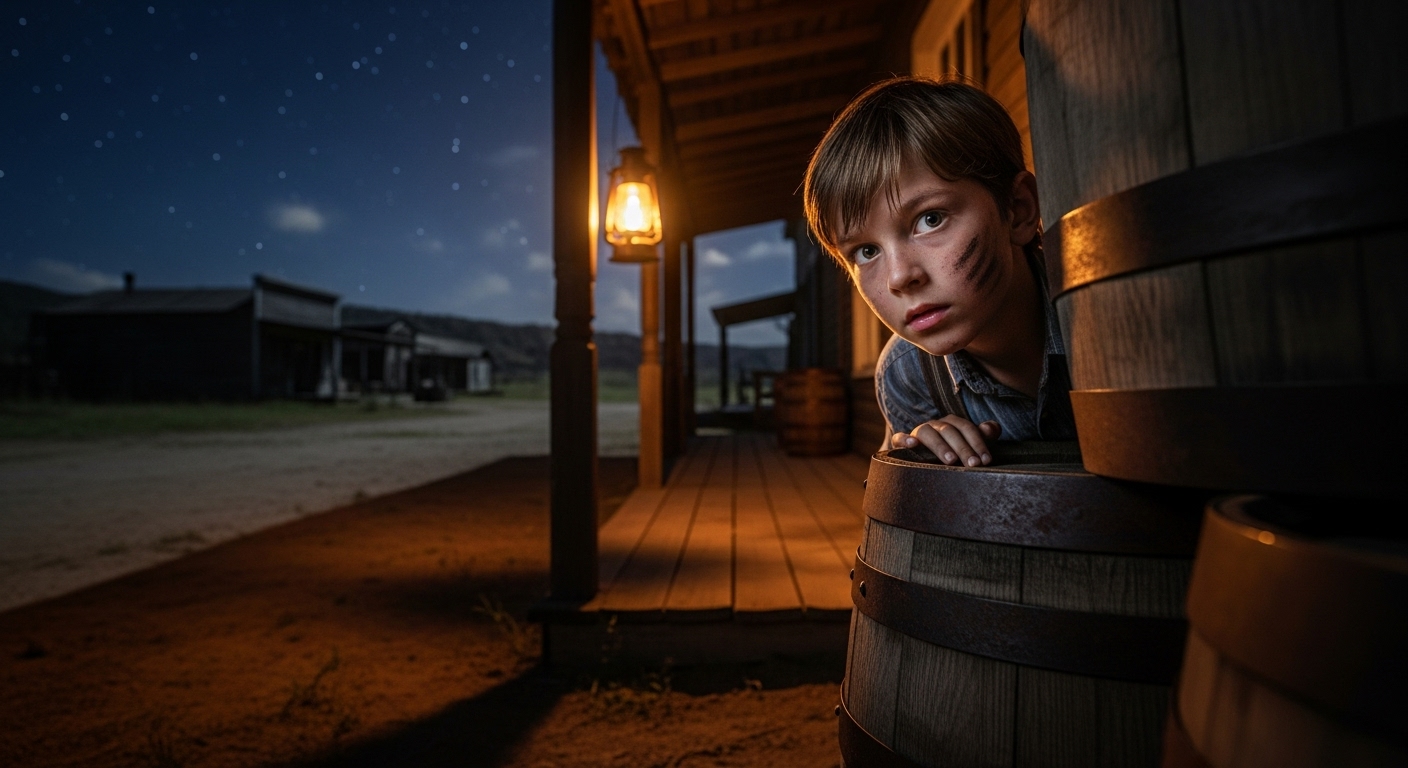
A curious young boy, Isaiah, covertly watches a late-night interaction from behind a stack of old wooden barrels, illuminated by the soft, warm glow of a flickering lantern in a quiet, dusty frontier town under a vast summer sky.

Scuff Marks on the Evening

By Jamie F. Bell

The oppressive heat of a late summer day lingered, trapping itself within the wooden walls of the small cabin. Outside, the dust held the last faint warmth, and the air hung heavy and still, smelling faintly of dry earth and distant sagebrush. A single, battered lantern threw a weak, flickering circle of light across the porch of the general store, outlining the worn planks and the heavy silence of the frontier night.

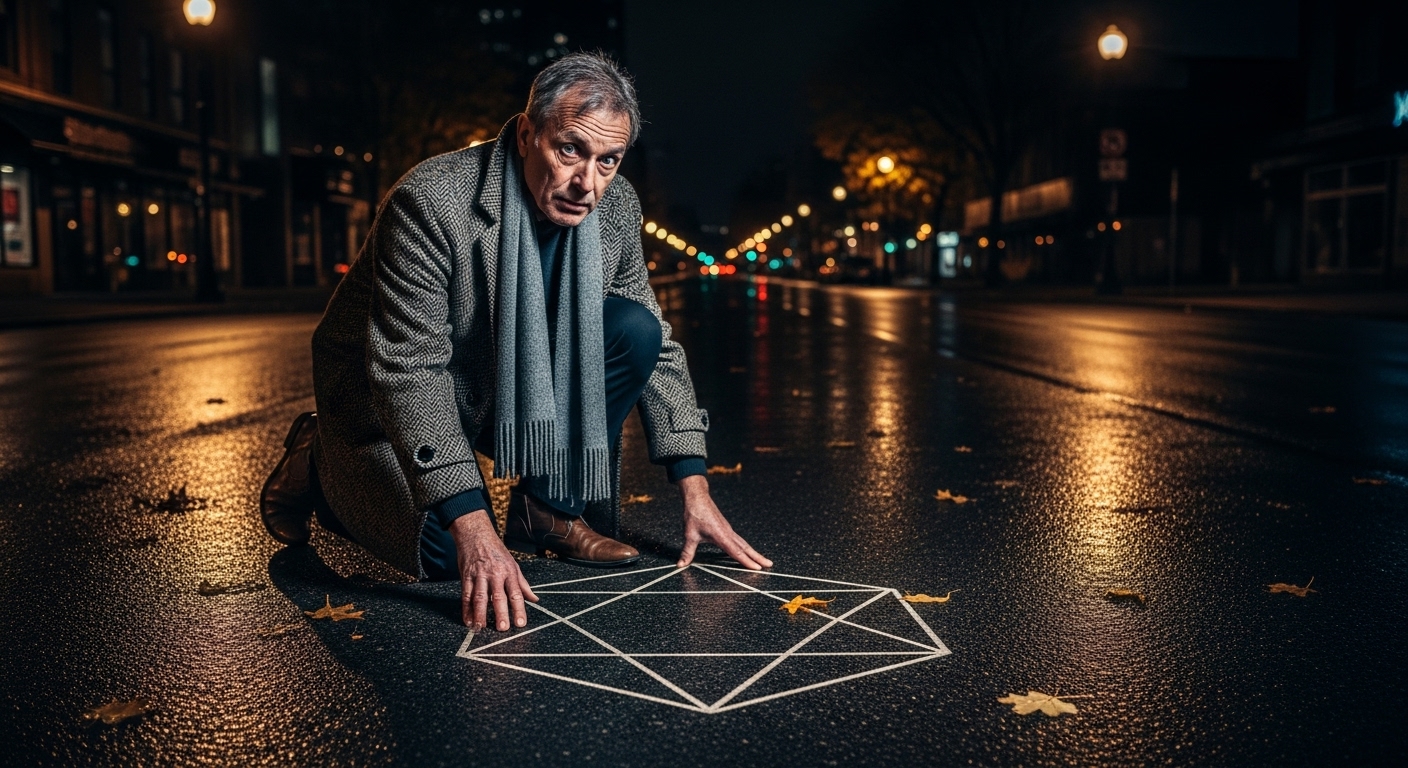
Under the stark glow of a Winnipeg streetlamp on a damp autumn night, an older gentleman, Andrew, kneels on the asphalt, his discerning gaze fixed on a perfectly formed, matte grey star mysteriously etched into the pavement. Scattered fallen leaves and the reflections of city lights surround him, underscoring the strangeness of the inexplicable symbol.

A Speck of Absurdity on Main Street

By Jamie F. Bell

The wind carried the scent of damp leaves and impending snow, a familiar late-autumn perfume in Winnipeg. Andrew, a man whose wrinkles seemed less from age and more from years of relentless scrutiny, pulled his woolen scarf tighter. The neon glow of Portage Avenue bled into the historical brickwork of the Exchange District, painting the wet pavement in streaky, artificial colours. His boots crunched on fallen ash leaves, a comforting, solitary rhythm that had defined his evenings since Eleanor passed, five years prior.

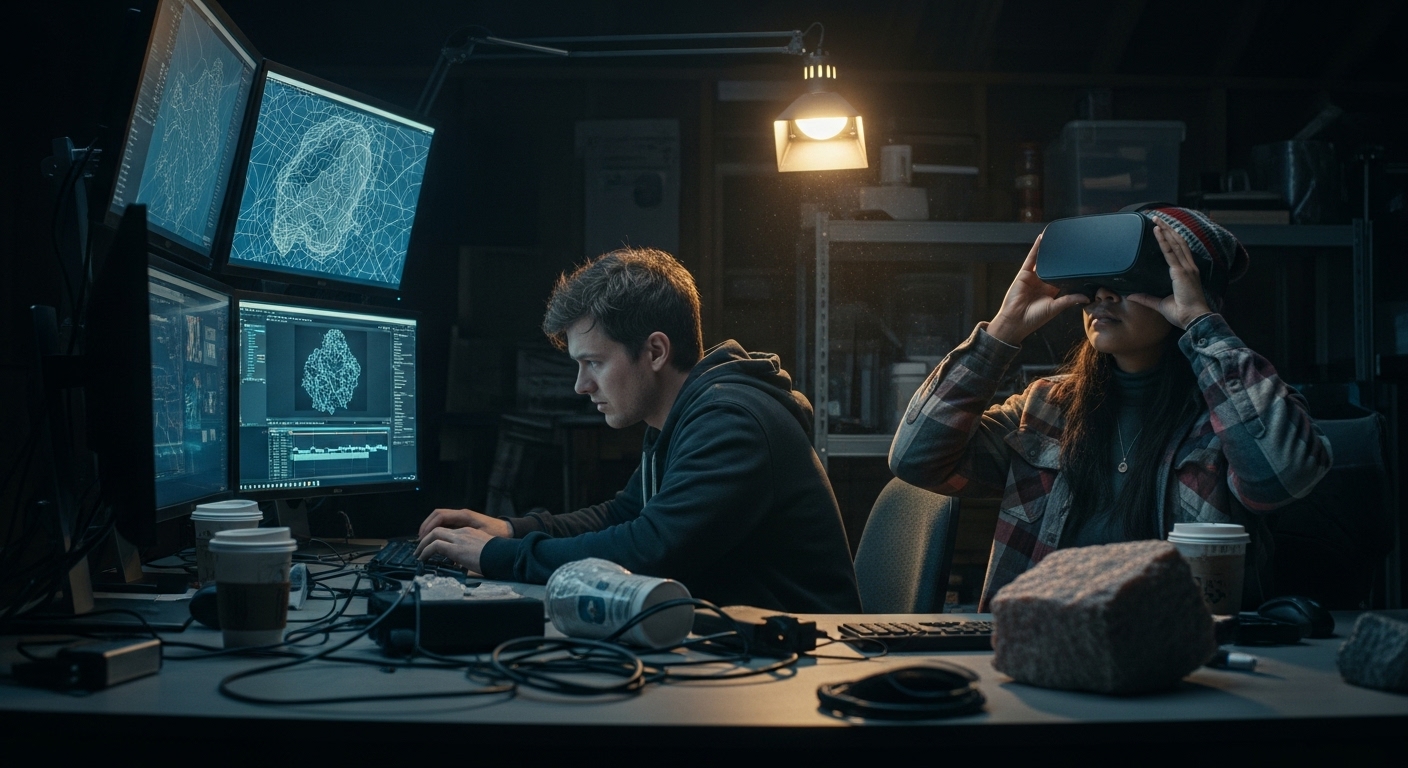
A candid shot of a late-night editing session in a converted garage. The blue glow of monitors contrasts with the dark, cluttered surroundings, highlighting the intense focus of the two filmmakers as they work on a digital project involving geological maps.

Bentonite Pixels

By Tony Eetak

A freezing garage in Northern Ontario turned into a high-tech editing suite, filled with the hum of overworked computers and the smell of stale coffee.

In the dim, festive light of a Christmas Eve, a young man's hand, knuckles white with tension, grips a darkly carved wooden music box. The background shows blurred fairy lights, hinting at a scene of forced celebration, while the focus remains on the unsettling object and the palpable unease it represents.

The Chill

By Jamie F. Bell

The air hung heavy with the cloying sweetness of gingerbread and the sharper, metallic tang of the cold outside, seeping in through the old window frames. Snow, fine as icing sugar, dusted the sill, blurring the sharp edges of the neighbouring houses. Inside, the fairy lights on the artificial tree pulsed a sickly yellow, casting long, wavering shadows across the floral wallpaper, making the familiar living room feel like a stranger's house. A faint, almost imperceptible hum emanated from the refrigerator in the kitchen, a low thrum beneath the forced cheer of piped-in carols, a sound Simon had only just started to notice, a constant, low-frequency anxiety.

Mira, a young Métis woman, stands at her window, a warm mug clutched in her hands, her gaze distant as she contemplates the quiet, snow-laden world outside. The soft, diffused light of a winter morning paints a reflective scene.

The First White Hush

By Jamie F. Bell

The world outside Mira's window transforms overnight, blanketed in an unexpected, pristine snow. The silence it brings is profound, settling not just on the eaves and branches, but deep into the quiet corners of her apartment, stirring echoes of a winter past and a loss still felt.

Johannes, a man in a warm jumper, stands contemplatively by a window, gripping a chipped blue mug. Outside, the first winter snow falls gently, blurring the world into a soft, white scene. The low light and the man's gaze suggest a moment of quiet reflection amidst the gathering winter.

The Unspooling Drift

By Jamie F. Bell

The first snowfall of winter descends upon the town, muffling sounds and softening edges. A single figure, Johannes, stands by a frost-kissed window, the quiet hum of an old refrigerator the only other sound. The world outside transforms, but the world within remains stubbornly, painfully clear.

A close-up photograph of a dark, steaming mug of hot chocolate with a swirl of melting whipped cream, resting on a scarred wooden table. Beyond the window, soft, thick snowflakes drift against a muted, grey backdrop of winter trees, creating a scene of quiet, reflective solitude.

Brewing Old Regrets

By Jamie F. Bell

The arrival of winter's first snowfall wraps Declan's isolated old house in a profound silence, a stark backdrop to his internal turmoil as he prepares hot chocolate, a once comforting ritual now steeped in the melancholic reflections of a past decision and its painful aftermath.

Sampson, wrapped in a woollen blanket, stands by his apartment window, the first snowfall of winter mirroring the introspection in his eyes. He holds a steaming mug, its warmth a stark contrast to the cold, muted world outside.

The Weight of White

By Jamie F. Bell

The city awakens beneath a silent, insistent descent of snow. A hush falls, muting the usual urban clamour, drawing the world inwards. Inside, the quiet hum of an old refrigerator is the only sound breaking a young man's vigil by the window, a steaming mug warming his hands against the chill.

Lenny and Sarah examine data comparisons between the Revell site in Ontario and the Beishan site in China, illuminated by the glow of their monitors in a garage workshop.

On Batholiths and Fibre Optics

By Tony Eetak

The team struggles with equipment failure in the freezing autumn air of the Revell site before retreating to their workshop to discover a surprising connection with a university in China.

Above the sleeping city, the noise fades and the truth comes out. A rooftop becomes a sanctuary where fears are confessed and the future hangs in a simple, unanswered gesture.

When the City Holds its Breath

By Jamie F. Bell

Dusk is the city’s magic trick. The hard edges of the day soften, the overbearing sun gives way to a bruised purple sky, and for a few minutes, everything holds its breath. The ghost signs perform their final act, fading back into the brick they came from. They were here, they whisper, and now they are not. It makes me think about the line between being a memory and just being forgotten. A fine line. A terrifying one.

In the oldest cemetery in Winnipeg, a casual walk through history becomes deeply personal, unearthing a secret that challenges a lifetime of belief.

Inheritance by Weathering

By Jamie F. Bell

I don't have a history like this. My family tree is more of a shrub, patchy and prone to dropping leaves unexpectedly. We don't have deep roots; we have shallow, tangled ones that we packed up and moved every few years. So walking through St. Boniface feels like visiting another planet. Here, history isn't just in a museum; it's in the street names, the French on the ghost signs, the heavy stone of the cathedral that burned but refused to fall. It’s in the air.

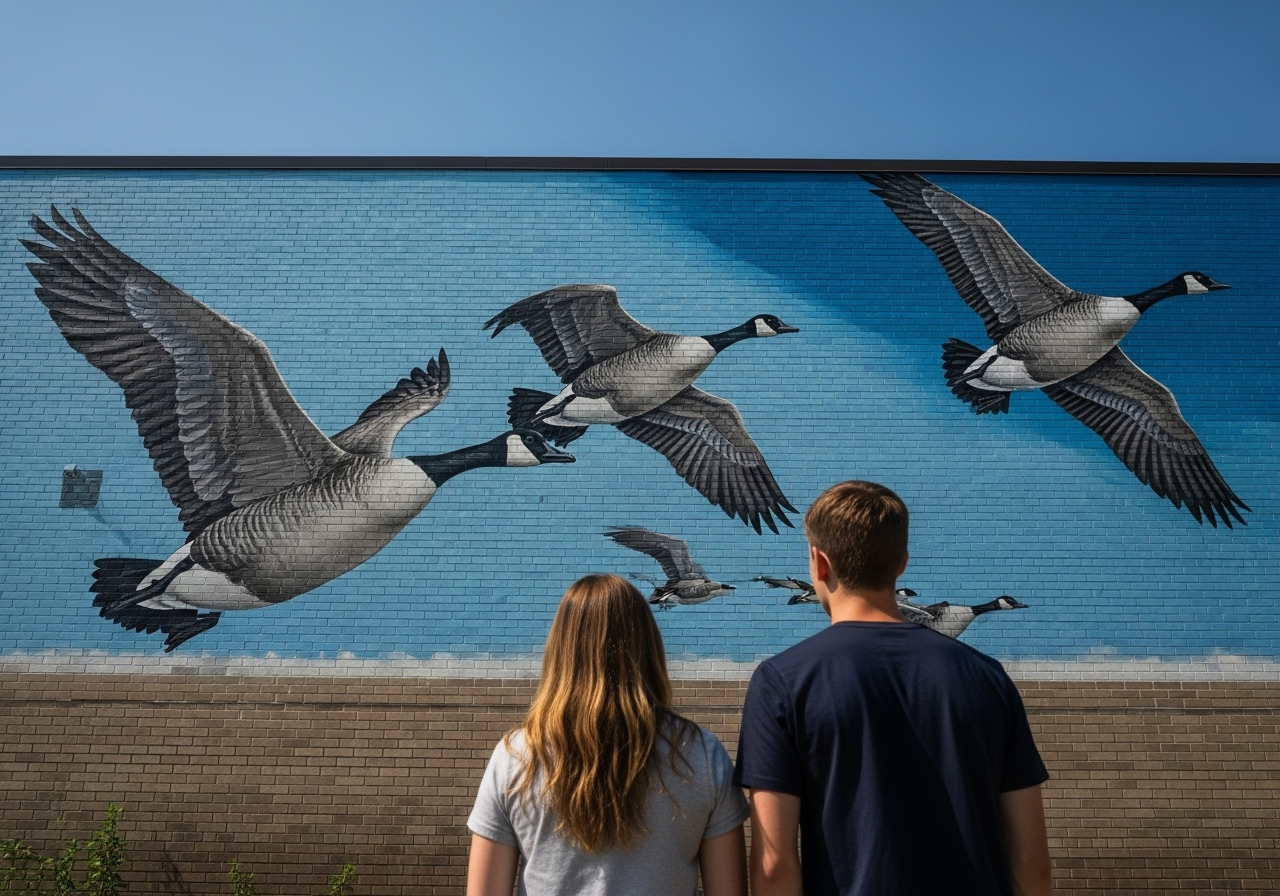
In the West End, a mural poses a timeless Winnipeg question: is home the place you never leave, or the place you always return to?

The Geometry of Leaving

By Jamie F. Bell

This part of the city doesn’t have the curated history of the Exchange. This is where the past hasn't been sandblasted and repurposed for loft apartments. The ghost signs on Sargent Avenue are for bakeries run by families whose names I can’t pronounce, for delis that sold pickles out of a barrel, for little cinemas with sticky floors. It feels more honest, somehow. Less like a museum piece and more like a well-read book with a broken spine.

On a summer afternoon in Osborne Village, the remnants of a century-old promise offer a moment of reflection on the cures we seek, then and now.

A Catalogue of Faded Cures

By Jamie F. Bell

Leo sees letters; I see ghosts. That's the main difference between us. He'll stand there, neck craned, analysing the font on some faded ad for cough syrup, and I'll be picturing the person who bought it. The mother with a sick kid, the guy with a winter cold in the dead of July, all walking under this same unrelenting sun, on this same stretch of Osborne Street, just a hundred years removed. The past feels thin here, like old paper you could poke a finger through.

In a forgotten corner of Winnipeg's Exchange District, two friends discover a hidden masterpiece—a testament to the vibrant, transient beauty tucked away in the city's historic heart.

The Tyranny of Tyndall Stone

By Jamie F. Bell

It's not the heat that gets you, it's the history. That’s what I’m thinking, anyway. Every brick in this part of Winnipeg feels like it’s been baking since 1912, soaking up a century of summer afternoons and radiating it back at us. It’s a physical weight. Leaf, of course, seems immune, her beat-up Blundstones practically skipping over the cracked pavement of the alley.

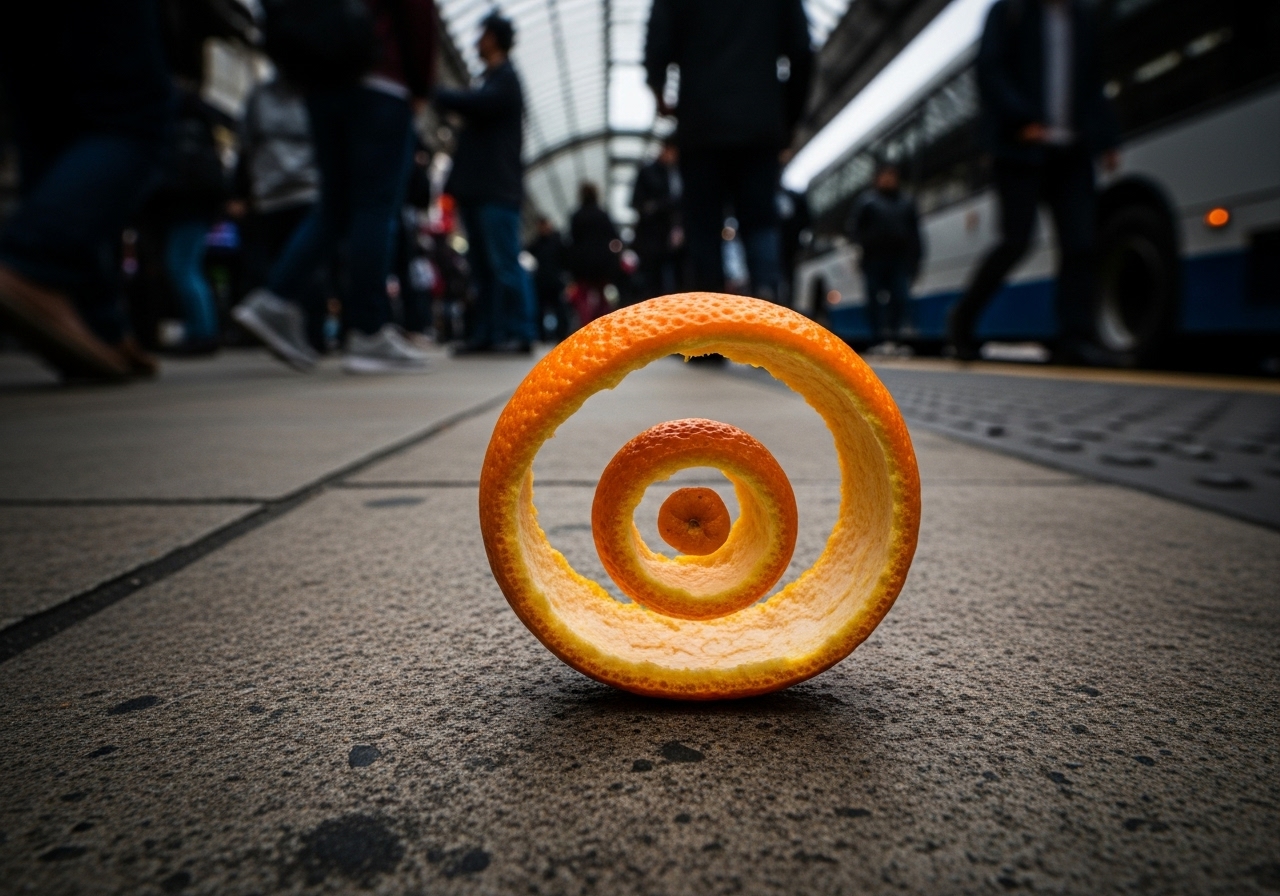
A striking close-up photograph captures a meticulously spiralled orange peel resting on grimy concrete pavement at a bustling city bus interchange. The peel, a vibrant orange against the grey, stands out with its unusual precision, drawing the eye amidst the general urban clutter. Faint shadows from an overhead canopy suggest a fleeting moment of observation.

The Orange Peel Cipher

By Eva Suluk

My mind, an overeager detective, always searched for patterns where none existed. Today, the puzzle presented itself in the form of an orange peel. Not just any orange peel, but one peeled with a meticulous, almost surgical precision, forming a perfect spiral on the gritty concrete beside the bench. It was out of place amidst the usual detritus of bus stops – stray tickets, damp flyers, discarded coffee cups. This was the city’s central interchange, a churning vortex of human motion and diesel fumes. The air hung heavy with the smell of exhaust, mingled with the faint, sweet ghost of frying onions from the nearby kebab van. Sunlight, a thin, watery presence, struggled to penetrate the glass canopy overhead, casting weak, elongated shadows that danced with every passing bus. A constant, low thrum of engines vibrated through the pavement, a persistent reminder of the city's pulse.

An old man, his face a map of life's experiences, sits on a worn bus stop bench. He is adorned in a heavily moth-eaten, faded tartan scarf, which he gently holds with gnarled fingers. His blue eyes, tinged with a distant sadness, stare beyond the frame, lost in thought. The soft, fading light of late afternoon illuminates the scene, hinting at untold stories.

The Moth-Eaten Scarf

By Jamie F. Bell

My mind, always a cluttered attic, rifled through memories of past bus stop encounters. Usually, it was the briefest of nods, perhaps a shared sigh about the weather, then the mechanical groan of an arriving bus would disperse the moment. Today, however, the air was thick with something else. It clung to the thin, almost transparent man perched on the far end of the bench, draped in a moth-eaten scarf that seemed to carry the weight of decades. The sun, a pale, indifferent disc, struggled to break through the perpetual haze that hung over the industrial park we bordered. The scent of ozone from the nearby power station hummed under the usual exhaust fumes, a metallic tang on the back of the tongue. Every now and then, a gust of wind would whip past, tugging at the man’s scarf, as if trying to unravel his story.

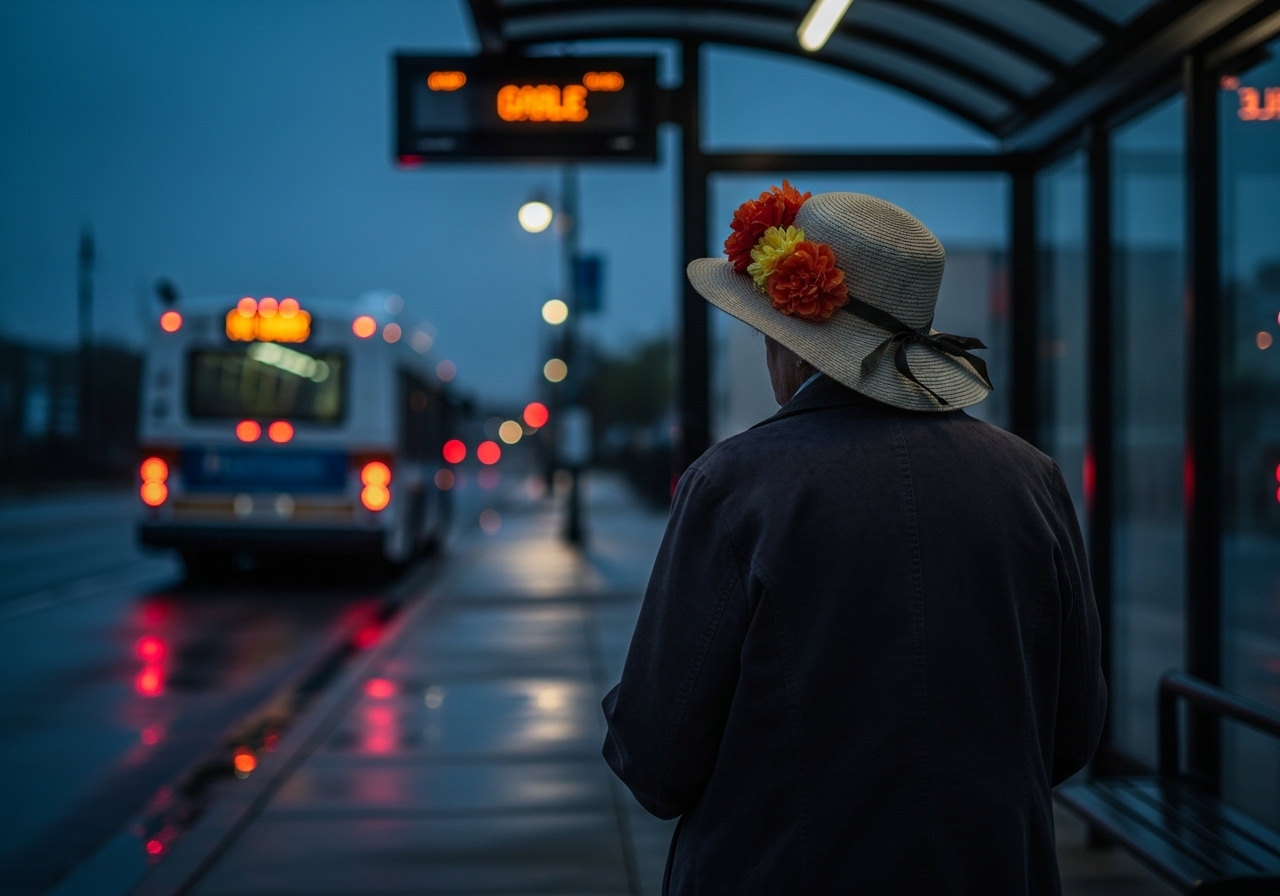
An elderly woman, Mrs. Gable, with a wide-brimmed hat adorned with artificial marigolds, stands frozen at a bus stop. The Number Seven bus, its tail lights glowing, recedes into the deepening twilight. The bus shelter's digital clock is dark, adding to the sense of overlooked time. Her posture is one of deep hesitation, her hand still clutching her floral handbag, as if she has chosen not to board. The scene is imbued with a quiet, observational melancholy.

The Stuttering Clock

By Jamie F. Bell

My mind, an old ticker-tape machine, whirred, tallying the minutes. Twenty-three past. Always twenty-three past for the Number Seven. The digital clock above the bus shelter's chipped plastic bench, however, insisted it was only twenty past. A three-minute discrepancy. Small, but enough to set the teeth on edge, especially when you lived by the rhythm of transit schedules. The air still held the day's stale heat, a memory of a sun that had long since dipped behind the low-slung, identical brick apartments across the street. A lone pigeon, bold and entitled, pecked at a discarded crisp packet near the curb, its movements sharp, almost accusatory.

Share This Collection