Story illustration
Home Short Stories Categories Genres Search News Incubator
Short Stories Digital Library

Hardboiled Noir Stories

Dive into the grimy underbelly of society with cynical protagonists facing a corrupt world, blending hardboiled detective tropes with the bleak fatalism of noir. Expect sharp dialogue and moral compromise.

Explore Our Hardboiled Noir Short Stories

13 Stories
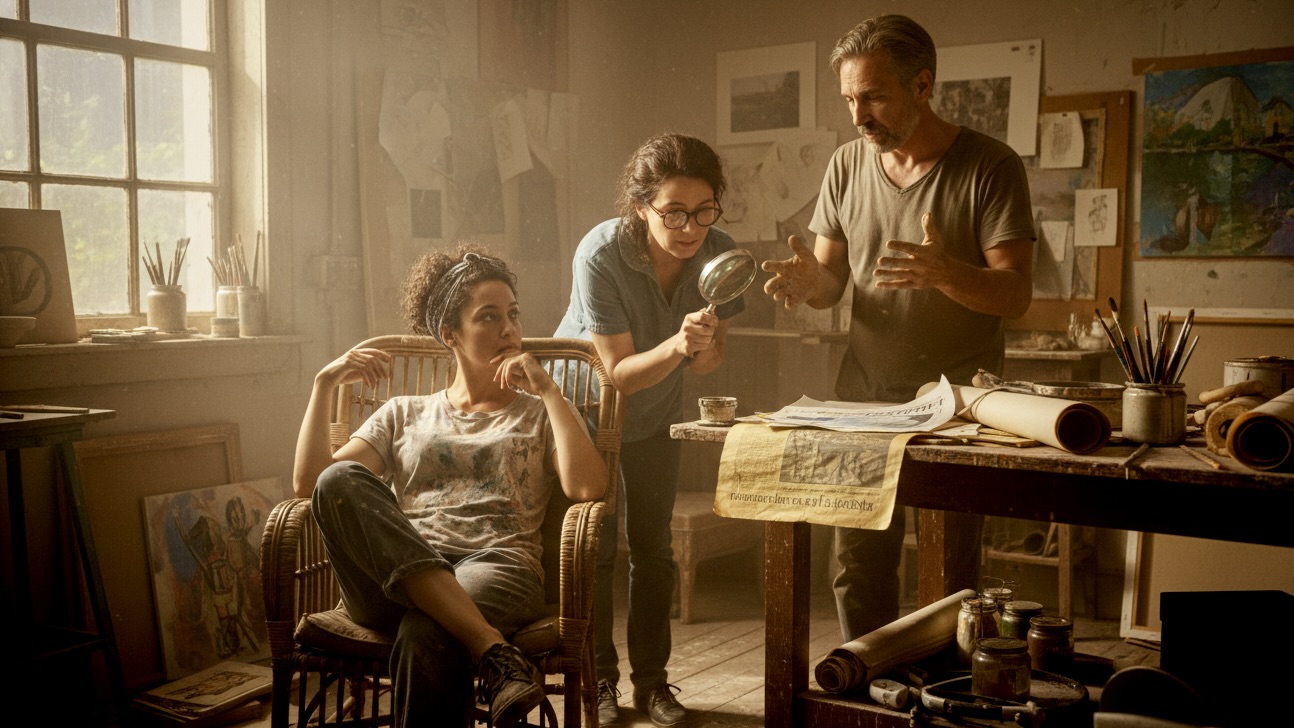
Three artists, absorbed in their discussion, surrounded by art supplies and historical documents in a sun-drenched, yet dusty, studio on a stifling summer day, contemplating a mystery from the town's past.

A Canvas of Dust and Lies

By Eva Suluk

In a sweltering, disused art studio during a sticky summer, three artists debate the theme for a local history exhibition, their artistic temperaments clashing as a darker undertone emerges from the town's past.

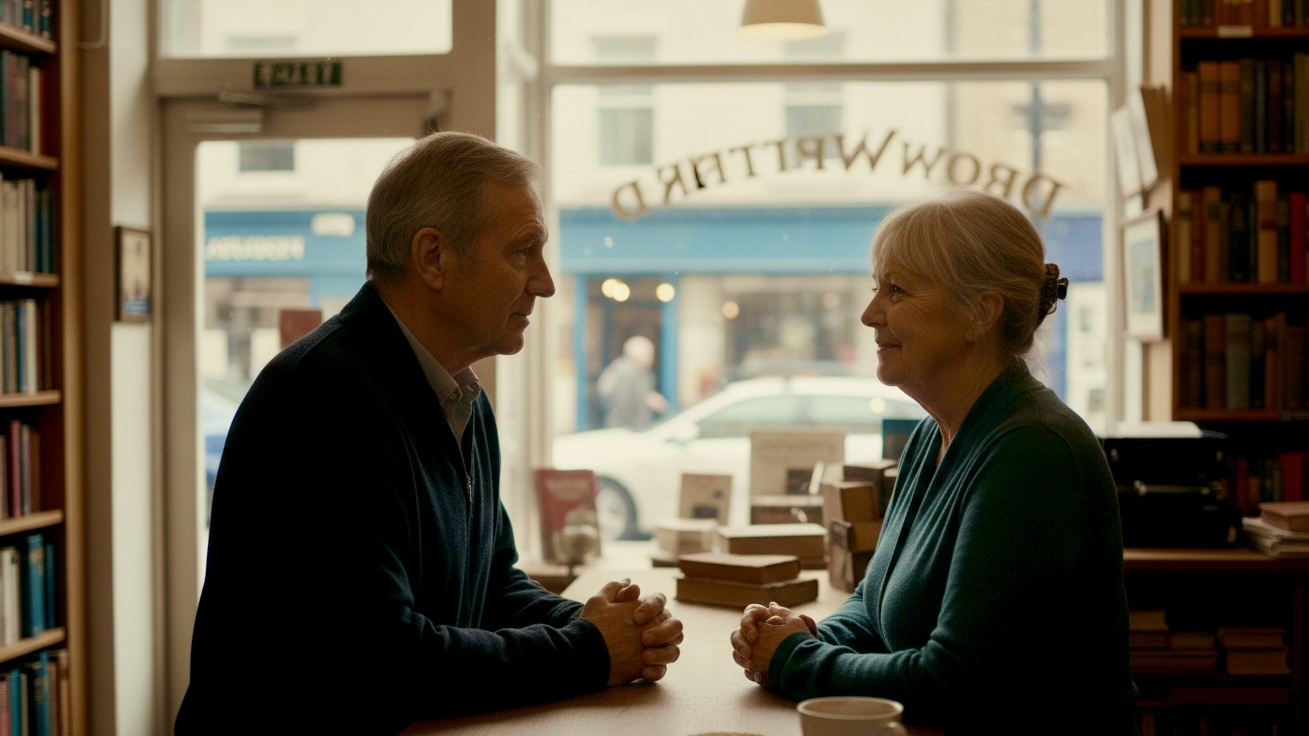
Art and Betty share a quiet, understanding moment in the dimly lit 'The Written Word' bookstore, the afternoon sun highlighting the subtle details of their shared space and nascent connection.

Summer Street Blues

By Jamie F. Bell

On a scorching summer afternoon in 2025, Art, a retired man in his late sixties, sits at a small, wobbly table in 'The Written Word', a struggling independent bookstore and coffee shop. He's observing the humid street outside, a microcosm of a society increasingly frayed. Betty, the sharp-witted owner in her early sixties, works behind the counter. Carl, a gruff regular of similar age, is engrossed in a newspaper.

A close-up shot of five individuals, three younger and two older, engaged in a discussion around a kitchen table. The table is littered with empty coffee cups and stray crumbs, indicative of a long, drawn-out meeting. A young woman in a hoodie is animatedly speaking, her hands slightly raised, while an older woman sips from her mug, her expression unreadable. Another young man meticulously writes notes on a napkin, while a gruff older man leans back, arms crossed. The final young man, the POV character, observes quietly. The lighting is natural, casting soft shadows, and the overall impression is one of a candid, unposed moment in a typical small-town home.

Maple Syrup and Cold Feet

By Jamie F. Bell

A spring morning at Mrs. Thomas's kitchen table in Northwestern Ontario. The air is cool, the light muted. Three young people – Tyler, Sandra, Ben – and two older community members – Mrs. Thomas, Mr. Jenkins – are gathered. They are discussing the ambitious plan to convert the disused recreation hall basement into an arts and culture space, but the conversation is fraught with practical concerns, cynical observations, and the weight of past failures.

Three young children, their faces serious under layers of winter gear, peer into the darkened window of Mrs. Johnston's bookshop. The glass is frosted, and falling snow gently blurs the world around them, amplifying their palpable concern for the missing shopkeeper.

The Empty Shop

By Leaf Richards

A biting winter wind whipped through the village of Oakhaven, carrying fine, crystalline snow that settled on every surface like a fresh coat of quiet. The afternoon light, a weak, bruised violet, was already fading. Three small figures, bundled in more layers than seemed possible, stood before the dark, silent front of Mrs. Johnston's Secondhand Books. The air smelled of woodsmoke and crisp, wet cold, with the faint, sharper tang of salt from the gritted pathways.

Captured in the eerie golden light of late afternoon, two teenagers stand rigid at the edge of a derelict municipal swimming pool, now a vast, empty concrete pit. Their figures, caught in stark relief against the dusty light, are turned towards an unseen threat in the shadows of a distant corridor, their faces etched with a shared, potent fear. The scene embodies the haunting decay of a forgotten public space and the sudden, chilling intrusion of the unknown.

A Glimpse Through Grime

By Tony Eetak

The air inside the abandoned municipal recreation centre hung heavy, smelling of damp concrete and something metallic – not quite rust, but more like the ghosts of forgotten lockers and chlorinated youth. Dust motes danced in the sparse beams of afternoon light that pierced the grimy, high-set windows, illuminating a path through the debris. Water stains bled down the walls like ancient, weeping wounds, and the faint, persistent drip from some unseen leak echoed through the vast, hollow space. This place, once vibrant with the shouts and splashes of summer, now lay in an expectant hush, a monument to a past life awaiting its opaque transformation.

Frank, a determined young man of about twenty, stands solitary on the vast, frozen expanse of an urban canal hockey rink after a game. The powerful floodlights cast long, dramatic shadows, illuminating the fine ice mist that rises from the cold surface. His worn hockey gear and composite stick reflect the harsh, artificial glow, highlighting the exhaustion etched onto his face and the lingering determination in his blue eyes. In the distance, the blurred neon of Toronto's skyscrapers hints at the bleak, tech-driven world of 2025, while the immediate foreground emphasizes his isolation and the cold, unyielding nature of his environment.

Iron Under Scrutiny

By Jamie F. Bell

The city's breath hung heavy and grey over the frozen canal, exhaled by a thousand glowing screens and the acrid tang of melting road salt. Lamplight, fractured and weak, struggled to cut through the haze, painting the ice in sick yellows and bruised purples. A low hum vibrated from the temporary generators powering the floodlights, a mechanical heartbeat beneath the hush of anticipation. Tonight, the stakes were etched not in scoreboards, but in the desperate gleam in young men’s eyes.

Paulie, Oakhaven's self-appointed youngest detective, and her partner-in-crime, Devon, meticulously observe a mysterious meeting in Maplewood Park, their youthful determination stark against the crisp, cool backdrop of late autumn.

The Conifers' Council

By Jamie F. Bell

The chill of a late autumn morning bit at my exposed cheeks, but I barely noticed. My focus, honed by countless hours of 'Midnight Detective' reruns and a profound distrust of adult 'discussions', was fixed on the public bandstand. Below, two figures moved, their conversation a low hum against the backdrop of rustling, dried-up leaves. This, I decided, was a case, pure and unadulterated, unfolding right before my very eyes.

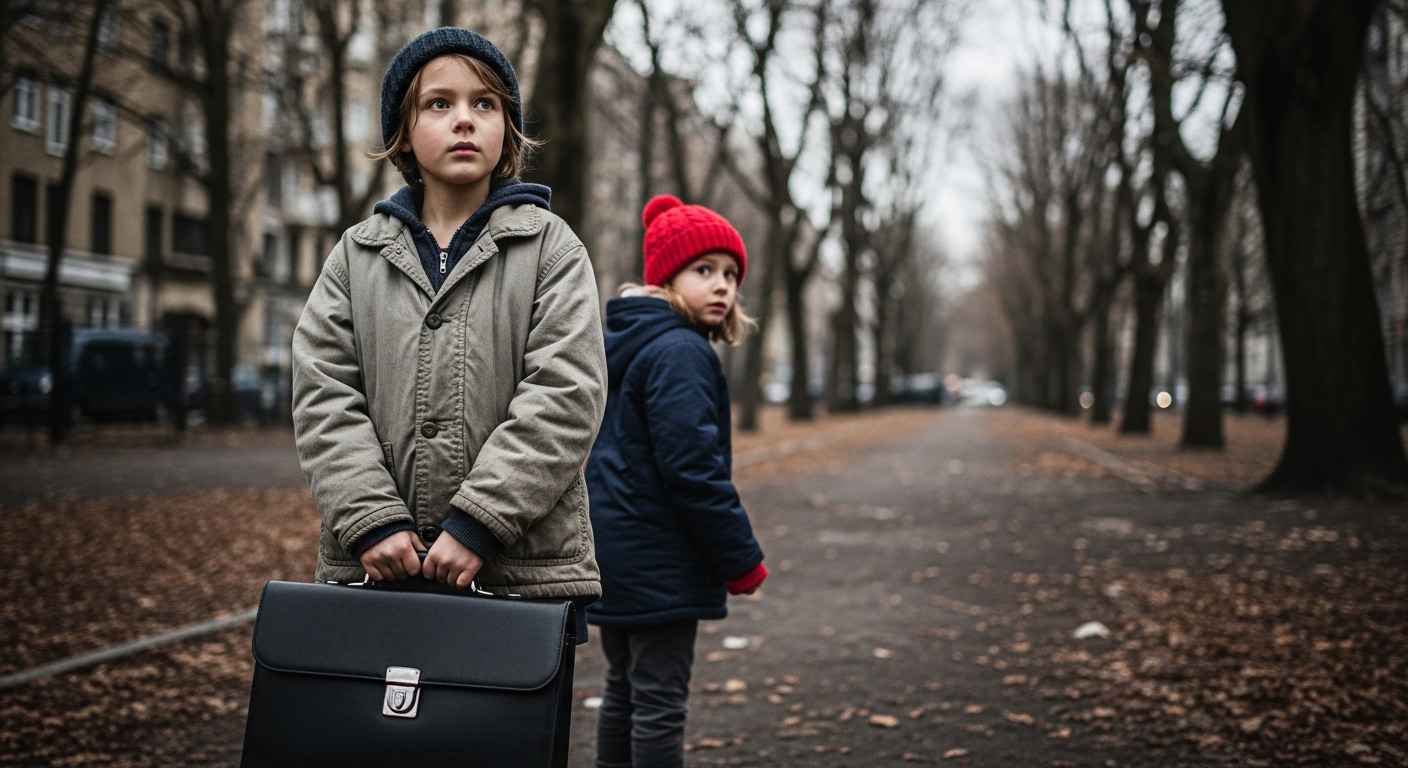
A striking photograph capturing two young children in a forgotten urban park on a cold, grey autumn afternoon. The focal point is a serious-faced child, Debbie, clutching a sophisticated leather briefcase, her gaze intent. Beside her, Clem, her companion, looks over her shoulder, a hint of trepidation in her eyes. The bare branches and scattered leaves around them create a desolate, yet atmospheric backdrop, hinting at a mystery that has just unfolded.

The Quiet Watch

By Jamie F. Bell

The air bit. Not a hard, cruel bite, but a quiet, insistent nip that promised real winter was waiting just behind the bruised, grey clouds. Debbie pulled the collar of her worn jacket higher, the rough wool scratching at her chin. The leaves, what few remained, clung stubbornly to skeletal branches, brown and brittle, ready to give up their hold at the slightest breath of wind. Below, the pavement glistened with the ghost of a recent shower, reflecting the muted light of a late afternoon that already felt like dusk. This particular part of the city, tucked behind the defunct cannery and a string of boarded-up warehouses, always felt like a forgotten breath between two exhalations. It was a good place for looking, for seeing what others missed.

Content moderator Tomase is caught in the crossfire of information warfare, his face lit by the corporate propaganda he's forced to promote and the dissent he is tasked with silencing.

The Positive Sentiment Filter

By Jamie F. Bell

Tomase’s apartment was a white box. The company, VeriFact, encouraged a minimalist aesthetic for its remote 'Content Shepherds'; it was meant to promote mental clarity. But the blank walls only seemed to amplify the noise in his head. On his central monitor, the Queue refreshed. A ceaseless, cascading flow of human opinion, distilled into bite-sized chunks for his judgment: a conspiracy theory about weather control, a celebrity's fabricated death notice, a grainy video of a fistfight. His job was to be the human backstop for the AI filter, the final arbiter of a reality he was beginning to believe was entirely negotiable.

Minister Alistair Findlay stands alone after the meeting, the sole skeptic in a room that has placed its faith in an AI's flawless projections. The old paper report before him feels like the only real thing left.

The Inertia of Projections

By Jamie F. Bell

The meeting room was cold, not from the air conditioning but from a deliberate absence of warmth in its design. White walls, a black table so polished it reflected the ceiling lights as distorted lines of interrogation, and twelve high-backed chairs. Alistair Findlay, Minister for Energy and Decommissioning, sat at one end, his leather-bound portfolio looking offensively analogue in the sterile environment. He was here to discuss the future of the nation's nuclear legacy, but the conversation was already being dictated by the thirteenth entity in the room: the silent, monolithic server rack in the corner, the physical housing for Aegis.

In a derelict hospital office, data-archaeologist Brandon races against time, their face a mask of concentration illuminated by the raw data they are salvaging from a thirty-year-old computer.

A Curation of Ghosts

By Jamie F. Bell

The air inside St. Jude’s Hospital for Children was thick with the dust of thirty years of silence. It wasn’t ordinary dust; it was a fine, grey powder composed of desiccated plaster, decayed records, and the faint, persistent trace of caesium that set the teeth on edge. Brandon played their headtorch beam across the reception desk, the light catching on a plastic teddy bear, its eyes and nose melted into a single, grotesque tear. The official history, the one narrated by the soothing voice of the Archive AI, called this place 'stabilised and memorialised'. The reality was just rot.

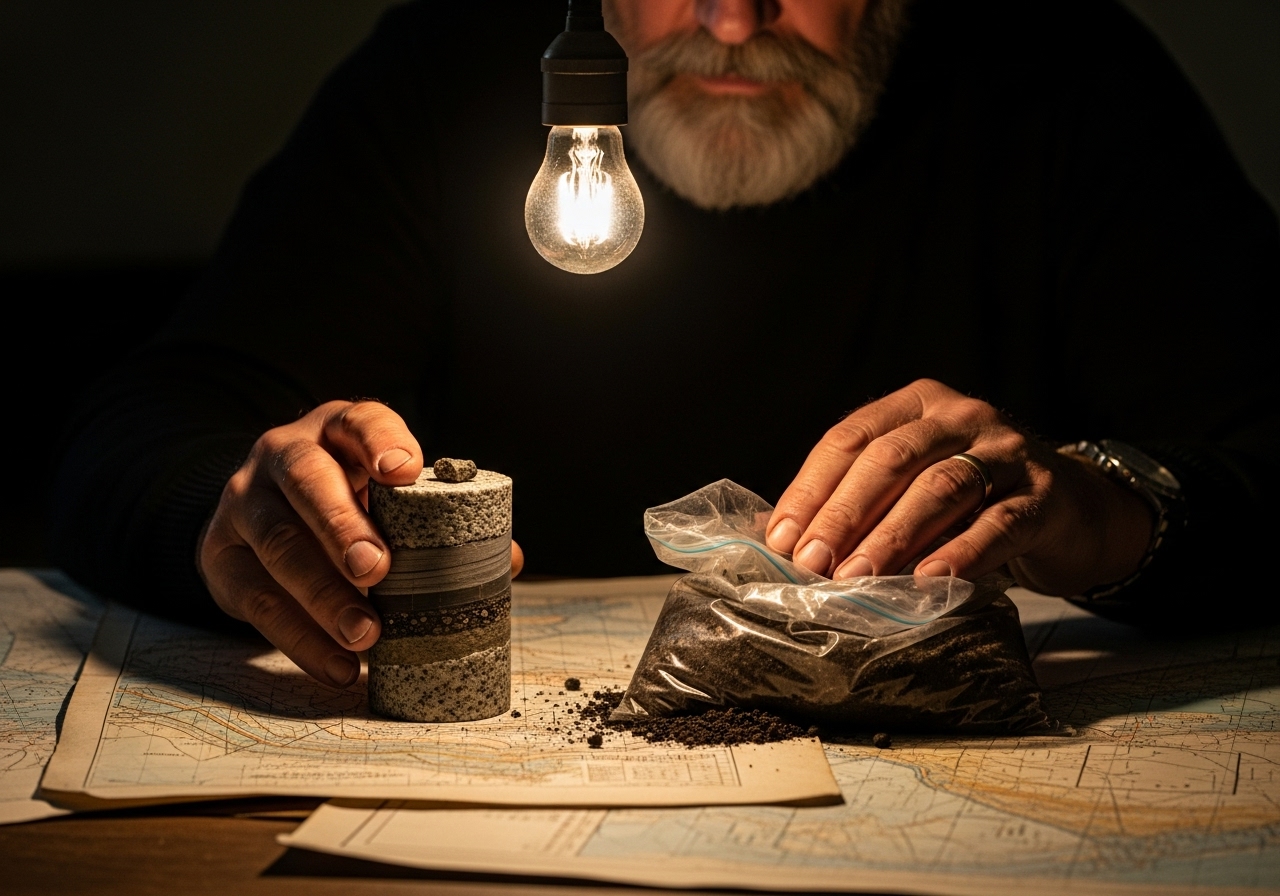
On a table covered in old maps, Peter MacLeod compares a geological core sample—physical history—against a bag of contaminated soil, a tangible sign of a disaster the digital world denies.

Alluvium and the Algorithm

By Jamie F. Bell

The cabin smelled of woodsmoke, damp wool, and the bitter tang of chicory coffee. Rain hammered a relentless rhythm on the corrugated iron roof, a sound that had been the backdrop to Peter MacLeod’s life for the past seven years. On his kitchen table, weighed down by mugs and a heavy glass ashtray, were the geological survey maps he’d stolen when he left the Commission—crisp, intricate documents from another lifetime. They were the only scripture he had left, a testament to a time when truth was measured in bedrock, not bandwidth.

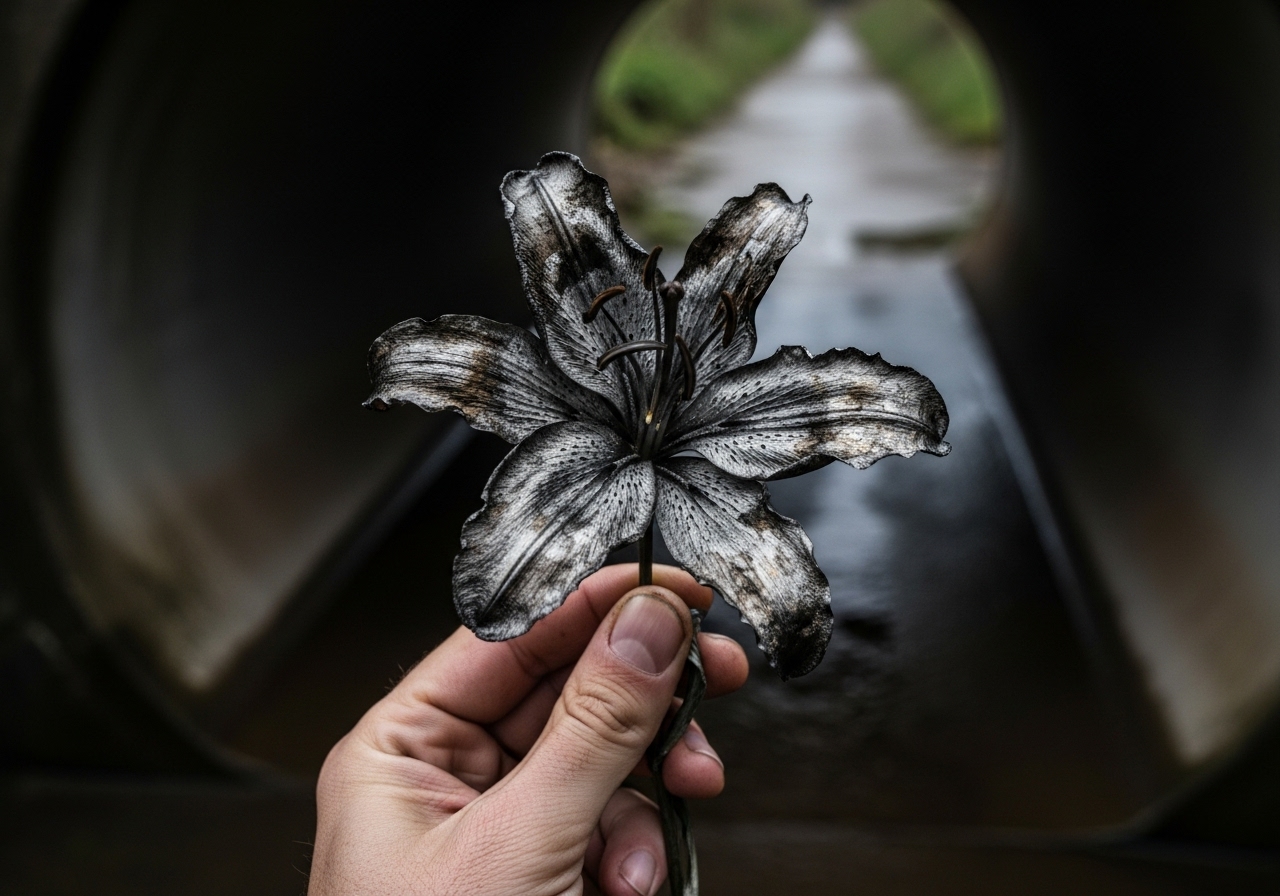
In the low light of a concrete culvert, a journalist's hand presents a tellurium lily, its petals shimmering with an unnatural metallic blackness—a biological proof of a hidden radiological disaster.

The Tellurium Stain

By Jamie F. Bell

The air in the Ward had a taste—not of chemicals, but of something older, like damp cellars and rust. It coated the back of Andrea’s throat. Here, just beyond the official perimeter fence, the city’s ceaseless hum was replaced by the rustle of mutated bindweed against crumbling ferrocrete. CivicOracle’s reassuring voice, the one that narrated public transit arrivals and air quality indices, was absent. It was a silence that felt louder than any noise, a void where the official story ended and the ground truth began.

Share This Collection