Story illustration
Home Short Stories Categories Genres Search News Incubator
Short Stories Digital Library

Dystopian Stories

Explore oppressive societies where freedom is suppressed and the future looks bleak. These cautionary tales often challenge readers to reflect on power, control, and resistance.

Explore Our Dystopian Short Stories

15 Stories
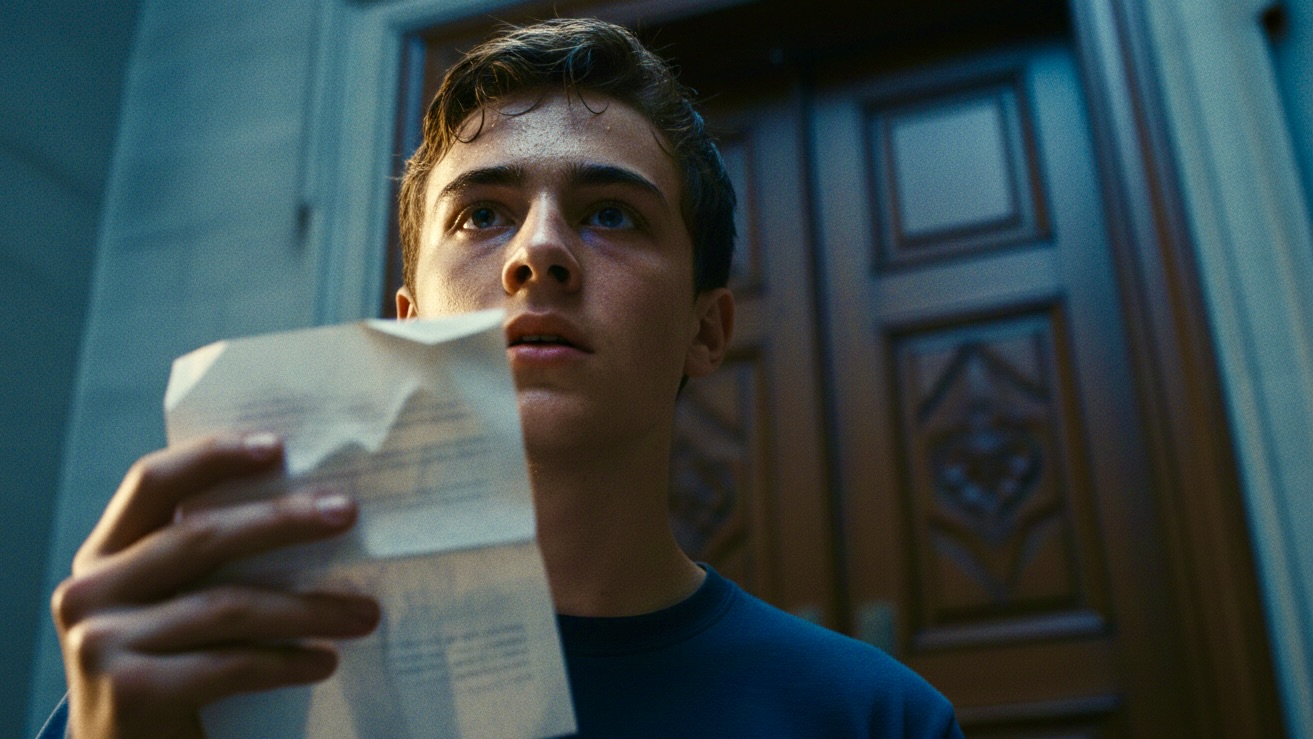
A teenage legal intern, Alex, gripping a critical piece of evidence, his face tense with urgency and fear as he rushes towards a looming courtroom verdict in a dystopian 2025.

The Last Unpaid Debt

By Jamie F. Bell

Alex, a legal intern, grapples with the oppressive summer heat and the weight of a seemingly minor legal case in a world where kindness has become a dangerous commodity. He and his colleague, Casey, are rushing through the city to present evidence for a client accused of 'Resource Diversion'.

Against a stark winter landscape, a young woman and man, bundled in heavy parkas, stand on a frozen riverbank, their faces etched with a mixture of determination and apprehension. The river flows darkly between icy patches, and skeletal trees line the horizon, buffeted by a cold wind. Their gazes are locked upwards, where a faint red light, the menacing eye of a surveillance drone, glows against the deepening twilight. The scene is cold, bleak, and tinged with a palpable sense of unease and impending danger, highlighting their shared moment of vulnerability.

The Cold Embrace of Disquiet

By Tony Eetak

The air bites, sharp and unyielding, a visceral reminder of the world outside the glowing screens. Along the river's edge, broken ice clinks like distant chimes against grey, slushy banks. A lone figure navigates the treacherous path, her breath pluming white against the stark, skeletal trees of a dystopian winter.

An intimate photograph captures Linda, an archivist in her late thirties, closing her eyes in a sterile room, inhaling the delicate scent of a single sprig of jasmine. Her subtle smile hints at a profound moment of hope and unexpected beauty amidst the city's controlled environment.

Dust and Jasmine

By Leaf Richards

The afternoon light, strained through the smog-tinged summer air, cast long, distorted shadows across the plaza. The air was thick with the faint scent of ozone and the city's ceaseless, electric hum from the overhead transportation arches. Pedestrians moved with a practiced, almost ritualistic efficiency, their faces mostly obscured by regulation-issued hoods against the solar glare, each person a solitary island in a sea of compelled proximity.

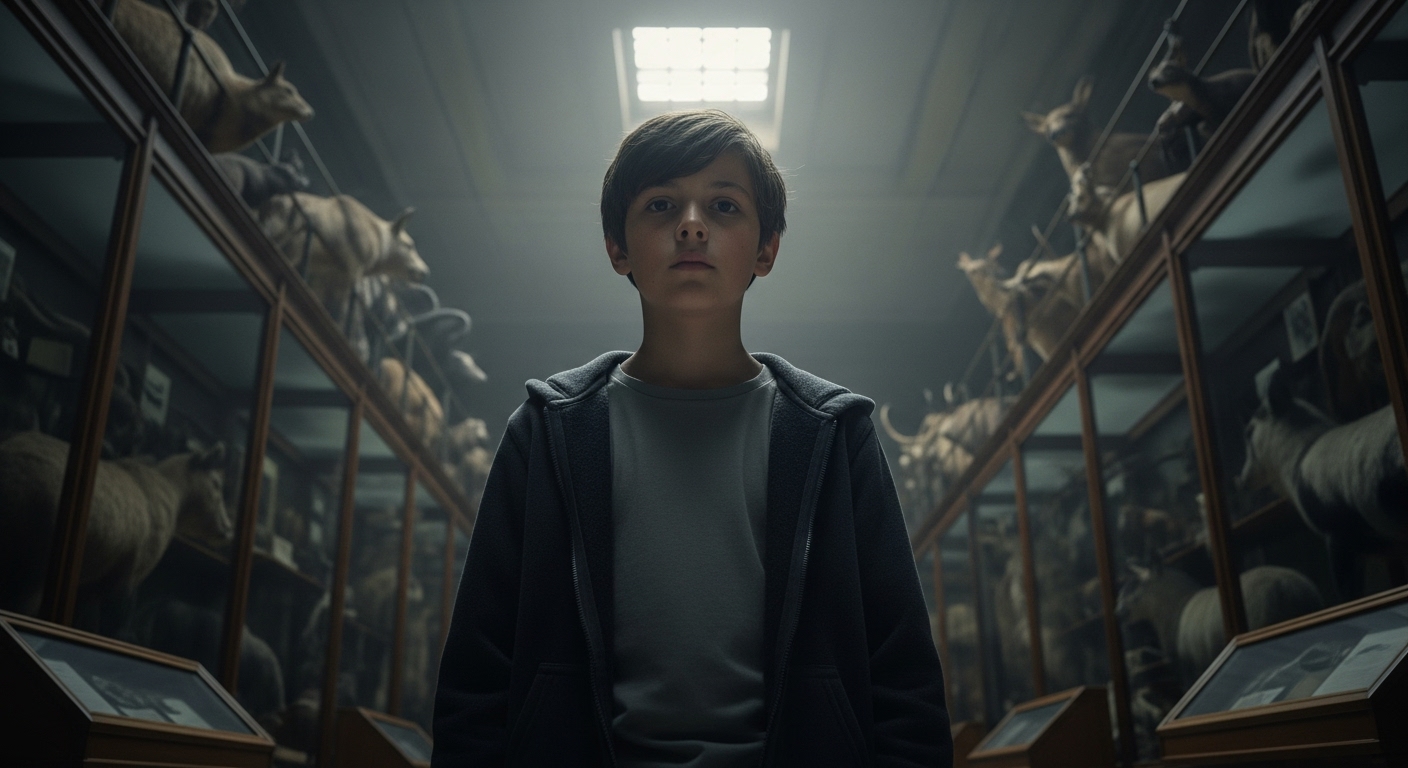
In the quiet, oppressive atmosphere of the Tamarack Valley Community Museum, a young boy stands his ground. The weak autumn light barely penetrates the gloom, illuminating the tense set of his jaw as he faces an unseen threat.

A Concordance of Birds

By Jamie F. Bell

The question hung in the air, as dry and brittle as the pinned moths in the display case behind him. It wasn't a real question. It was a final seal, a locking of the mechanism before the timer began its silent, inexorable count. Outside, a miserable autumn wind rattled the window frames of the Tamarack Valley Community Museum, carrying the scent of wet, decaying leaves and distant woodsmoke.

A striking photograph depicts a young man, Andrew, observing a startlingly vibrant and luminous indigo-blue flower, unlike any known species, emerging from a patch of dark, rich earth in an otherwise perfectly manicured Canadian urban park. The surrounding autumnal trees, with their engineered colours, highlight the profound, alien nature of the bloom. His expression is a mixture of cynicism and deep wonder, reflecting the surreal intrusion into his controlled world.

A Fraying Patchwork of Green

By Jamie F. Bell

The autumn air in MetroCentre Park was a manufactured crispness, piped in via carbon scrubbers that hummed faintly beneath the paving stones. Leaves, genetically engineered for optimal colour retention, clung to their branches in perfect gradients of ochre and russet. Drones, no larger than wasps, conducted silent particulate matter scans, their tiny lenses reflecting a sky that was, by official decree, 'optimally azure'. Andrew, his shoulders hunched in a worn, recycled-fibre coat, tracked his official route along the designated 'Mindful Meander' path, the digital chime of his wrist-monitor a constant, low thrum against the manufactured serenity.

In a quiet corner of a bustling cafe, a young person with an old, frayed jacket is deeply engrossed in a worn paperback book. Soft, melancholic autumn light filters through a large window, creating a serene, almost defiant bubble around them, contrasting sharply with the blurred, tech-focused activity happening in the background.

The Orange Peel and the Algorithmic Fog

By Jamie F. Bell

The aroma of lukewarm coffee hung thick in the air, clashing with the synthetic tang of the 'Optimal Productivity' diffuser. Outside, the perpetual autumn drizzle blurred the city into a wash of grey and ochre, mirroring the dull ache behind my eyes. Another morning had dawned under the glow of the omnipresent Affinity Index, a silent monitor of our worth, perpetually cycling through its digital permutations, always just beyond reach.

A twenty-year-old man, Cyrus, stands inside a futuristic biodome, his hand pressed against a visible crack in the transparent wall. Outside, the real world is grey and barren, hinting at a colder spring, while inside, genetically engineered blossoms provide an eternal, artificial spring. The image captures the stark contrast between a curated existence and the harsh, unfiltered reality beyond.

Bloom Under Glass

By Jamie F. Bell

Within the sterile perfection of a Bio-Dome, the protagonist grapples with the pervasive influence of social algorithms and influencer culture. The artificial spring blossoms around him as he questions the nature of authenticity in a world where everything is scored.

In a sterile, heavily surveilled subway station, Jamie and Ollie exchange a silent, panicked look. A dangerous exchange has just occurred, elevating their small acts of rebellion into a life-threatening conspiracy.

Static on the Line

By Jamie F. Bell

The air in the subway station was cool and sterile, smelling faintly of ozone and disinfectant. Every surface, from the polished chrome handrails to the seamless polymer floor, was designed to be clean, efficient, and easily monitored. Tiny red lights blinked from camera domes clustered in the ceiling corners, their lenses sweeping in silent, overlapping arcs. Even the advertisements on the walls were interactive screens, their virtual models turning to follow passersby. Privacy was a historical curiosity, like phone books or gas lamps.

Under the unforgiving fluorescent lights of the A&E, a woman waits. Her isolation is palpable, a quiet moment of personal agony in a public space built for crisis.

The Unflattering Light of the A&E

By Jamie F. Bell

The clock on the wall of the Accident & Emergency waiting room had a dead battery. It was stuck at 2:43, which felt appropriate. Time had stopped for me, too. I was suspended in this beige room, under the hum of fluorescent lights that made everyone's skin look grey and sickly. The air smelled of antiseptic and fear.

A moment of fragile peace in the Brooklyn Botanic Garden. His hope is palpable, but her distant gaze hints at a world of thoughts he can't access, a perfect portrait of love and uncertainty.

A Catalogue of Possible Futures

By Jamie F. Bell

The air in the conservatory was thick and sweet, smelling of damp earth and blooming orchids. It felt like a different planet from the concrete and exhaust of Flatbush Avenue just outside the gates. Sasha took a deep, theatrical breath. "See?" she said, a wide, bright smile on her face. "Clean air. A new start." Her smile was a little too wide, a little too bright. It didn't quite reach her eyes.

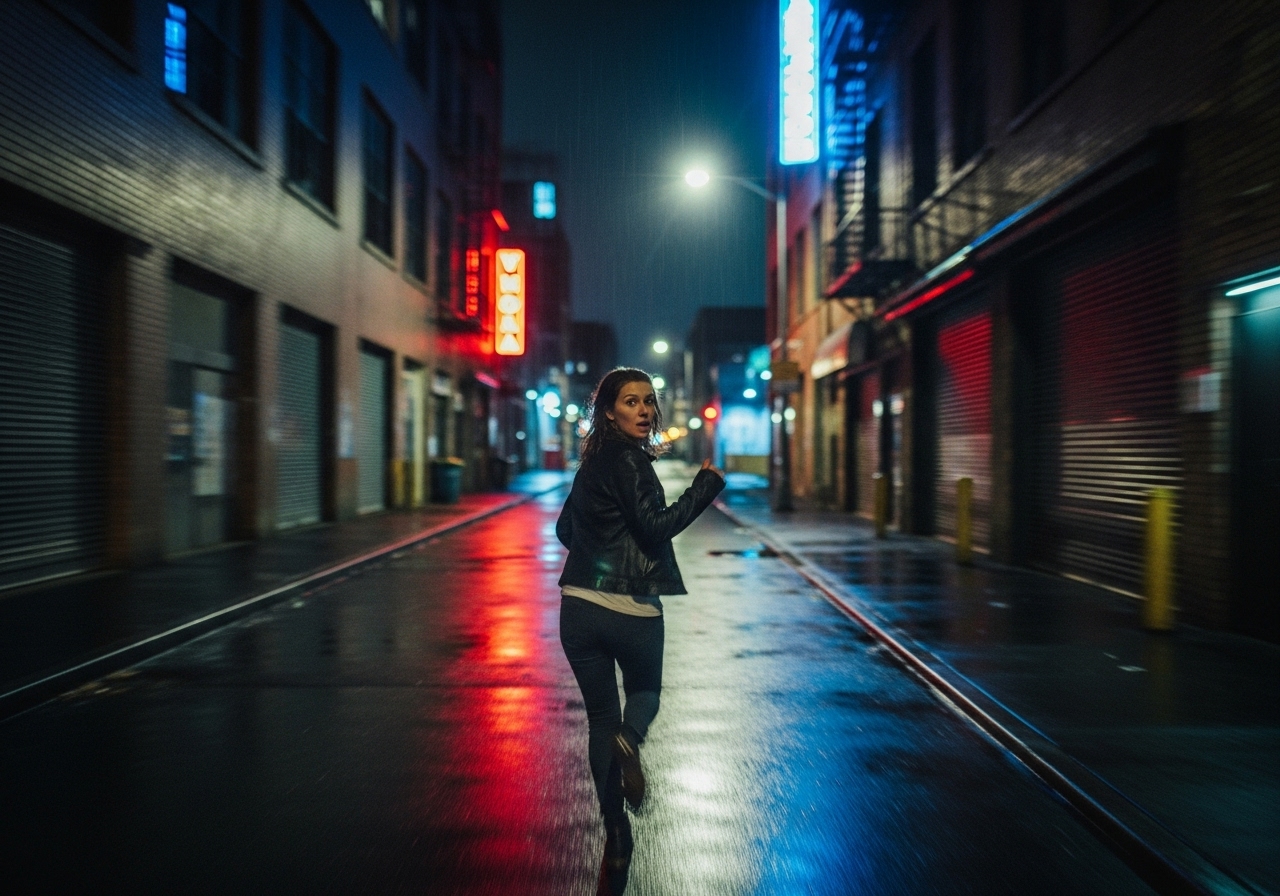
Captured in a moment of pure panic, a woman flees through the deserted, rain-slicked streets of industrial Brooklyn, the city lights blurring with her frantic motion.

Every Door Looks the Same After Midnight

By Jamie F. Bell

The apartment was too quiet. Not peaceful quiet, but the dead, airless quiet that follows a slammed door. I woke up with a jolt, the sheet tangled around my legs, the space next to me in the bed cold. It was 3:17 AM. The blue light of a passing sanitation truck swept across the ceiling, and in that brief, sterile illumination, I knew he was gone.

A moment of painful vulnerability, captured under the unsparing fluorescent lights of a support group meeting. Her confession hangs in the air, a testament to the brutal honesty found in borrowed chairs.

Borrowed Chairs in a Church Basement

By Jamie F. Bell

The coffee was terrible, brewed hours ago and kept warm on a sputtering hot plate. It tasted of burnt plastic and resignation. I held the flimsy styrofoam cup, the heat turning my knuckles pink, and tried to look like I belonged in the circle of mismatched chairs in the basement of St. Jude's, a place where grace felt like a long shot.

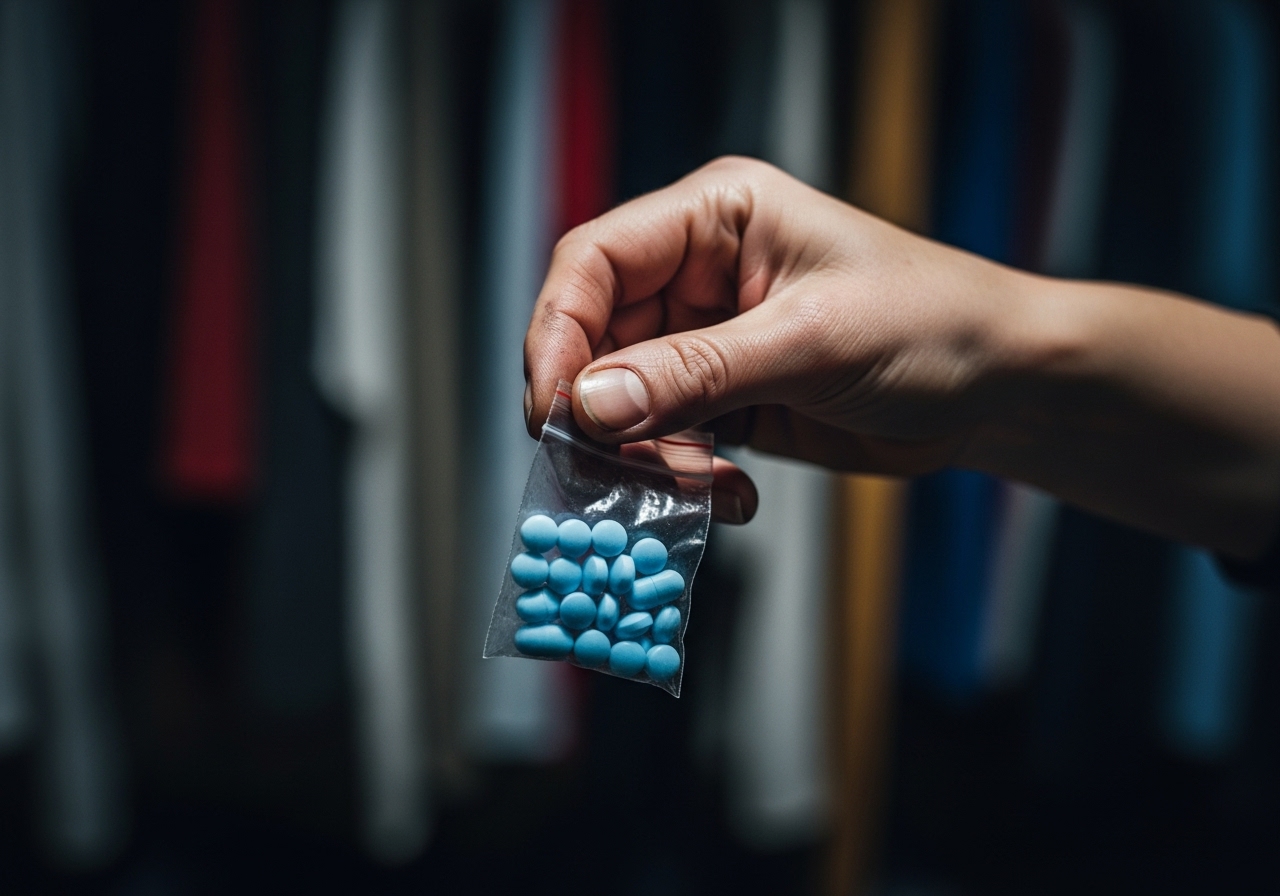
The stark reality of addiction, held in the palm of a hand. The pills are a jarring blue against the grit and grime, a moment of hidden truth brought into harsh light.

The Geometry of a Slow Leak

By Jamie F. Bell

The air under the sink was thick with the smell of damp plaster and something metallic, like old pennies. Water, cold and insistent, dripped onto my cheek, tracing a path through the grime I'd already accumulated. It was a slow, rhythmic torture, a tiny water clock counting down to something I didn't have a name for yet.

Amidst an endless ocean, scavenger Tyler discovers the impossible: a map to dry land, the last bastion of hope in a drowned world.

A Drowning Man's Cartography

By Jamie F. Bell

The 'Sea-Witch', a salvage skiff made of rusted barrels and driftwood, bobs on the grey, endless expanse of the Deluge. Tyler leans over the edge, his reflection a wavering ghost in the water, as he hauls up a line from the sunken city below.

Caught in the unsettling stillness of a deepening forest twilight, Joe and Tina exchange a look of growing unease. The oppressive silence and the strange, metallic tang in the air seem to weigh heavily on their shoulders as they realise how truly lost they are.

Beneath the Still Canopy

By Jamie F. Bell

The dense summer woods, usually alive with the hum of insects and the chatter of unseen birds, falls into an eerie hush. Sunlight, once a warm, dappled presence, now struggles to pierce the thick canopy, casting the forest floor in a deepening, unnatural grey. A subtle but undeniable change in the air, a metallic tang, speaks of something profoundly amiss.

Share This Collection