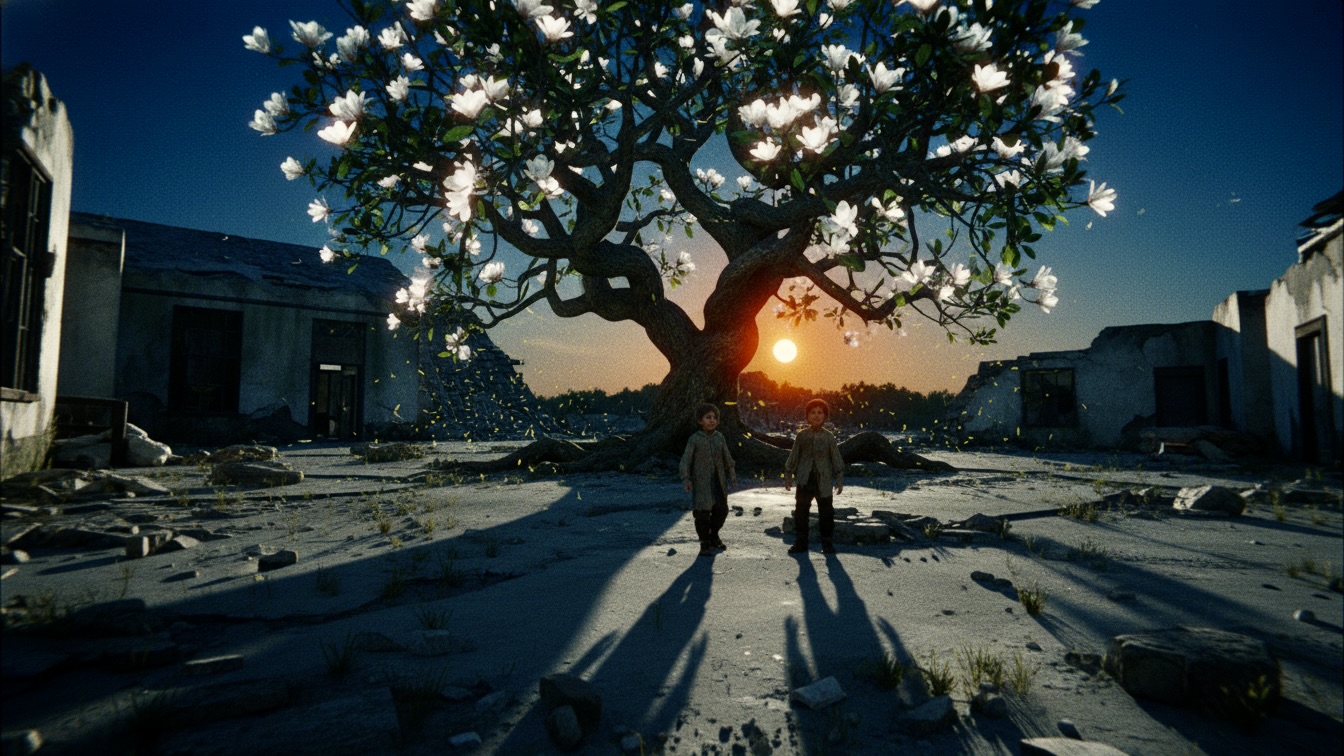
In "The Explorers and the Magnolia Tree," two young boys named Ty and Ben venture into the courtyard of the abandoned St. Martin Asylum. They quickly discover a massive, unnaturally vibrant magnolia tree that seems to pulse with a sinister life force. As the boys explore, the environment turns hostile, trapping them within a melting iron fence and an oppressive, suffocating heat. The tree begins to whisper their deepest insecurities and secrets, feeding on their escalating fear and paranoia.
Ben, driven to madness by the psychological torment and a mysterious logbook bearing their names, threatens Ty with a rusted pipe. In a desperate bid for survival, Ty counters the supernatural malice not with violence, but with profound declarations of platonic love and shared memories. This emotional vulnerability breaks the tree's spell, restoring reality and allowing the boys to escape. However, the lingering threat remains as Ty unknowingly carries a magical, warm seed out of the courtyard.
A central theme of the narrative is the destructive and isolating nature of fear and insecurity. The magnolia tree acts as a psychological mirror, weaponizing the boys' repressed guilt and social anxieties to turn them against one another. By vocalizing their internal doubts in the voices of authoritative or innocent figures, the supernatural entity demonstrates how easily negative emotions can distort reality. The environment physically manifests this psychological pressure through the escalating, suffocating heat and the monstrous transformation of the asylum walls. Ultimately, the story suggests that unchecked insecurities can transform even the closest allies into bitter enemies.
In direct opposition to the theme of fear is the redeeming power of vulnerability and human connection. Ty realizes that the supernatural flora feeds on anger and hostility, prompting him to change his defensive strategy. Instead of fighting back physically, he uses radical empathy and nostalgia to anchor his friend back to reality. By recalling specific, tender moments of their shared childhood, Ty neutralizes the tree's toxic influence. This thematic resolution highlights that genuine emotional bonds and unconditional love are the ultimate antidotes to psychological manipulation and terror.
Ty begins the narrative as an eager, somewhat reckless explorer driven by a desire for adventure and validation. He initiates the physical breach into the asylum, demonstrating a bold exterior that masks his underlying need to feel like a legitimate adventurer. As the supernatural elements of the courtyard escalate, his psychological state shifts from childish curiosity to profound terror. The whispering flowers expose his latent guilt over minor childhood transgressions, revealing a sensitive conscience beneath his brave facade. He is forced to confront not only his own shortcomings but also the terrifying prospect of losing his closest companion.
When faced with Ben's violently paranoid breakdown, Ty undergoes a significant psychological evolution. Instead of succumbing to the panic that the environment desperately tries to cultivate, he taps into a deep well of emotional maturity. He recognizes the manipulative nature of his surroundings and chooses vulnerability over self-preservation. By offering his hand and speaking words of brotherly affection, he proves himself to be a deeply empathetic and resilient protagonist. His journey transforms him from a naive trespasser into a grounded, emotionally intelligent survivor.
Ben serves as a foil to Ty, presenting a facade of intellectual superiority and theatrical confidence to mask his deep-seated insecurities. He relies heavily on his technological gadgets and formal vocabulary to maintain a sense of control in unpredictable situations. When his drone is destroyed, his primary coping mechanism shatters, leaving him entirely vulnerable to the tree's psychological warfare. The supernatural entity preys upon his hidden resentments and fears of inadequacy, twisting his perception of his best friend. He quickly devolves into a state of paranoid delusion, illustrating the fragility of an ego built on defensive intellectualism.
The climax reveals the true depth of Ben's internal terror, showing him not as a villain, but as a frightened child overwhelmed by external manipulation. His willingness to believe the fabricated logbook demonstrates a latent fear of abandonment and betrayal by his peers. When Ty offers unconditional love and shared memories, Ben's hostile exterior crumbles instantly. He drops his weapon and weeps, displaying a profound psychological relief at being rescued from his own darker impulses. His rapid return to sanity underscores his fundamental reliance on Ty as his essential emotional anchor.
The author employs a highly sensory and oppressive narrative style to immerse the reader in the boys' escalating nightmare. The relentless heat is treated as a physical antagonist, described in vivid, suffocating terms like "warm soup" and "a giant hair dryer." Olfactory details also play a crucial role in establishing the shifting tone, moving from the cloying scent of melted candy to the repulsive odor of rotting peaches. These sensory shifts directly mirror the narrative's descent from a sunny childhood adventure into a surreal, psychological horror. The vibrant, almost hallucinogenic descriptions create an atmosphere of inescapable dread.
Pacing in the chapter is masterfully controlled to reflect the characters' rising panic and subsequent emotional release. The narrative accelerates during the supernatural manifestations, using shorter, punchier sentences to convey urgency and disorientation. Metaphorical language is heavily utilized to blur the lines between the organic and the architectural, such as describing the brick wall as a breathing lung or the tree branches as pulsing veins. This blurring emphasizes the consuming, unnatural life force of the asylum courtyard. Once Ty introduces empathy and love into the dynamic, the pacing deliberately slows, allowing the tension to dissipate organically.
The third-person limited narrative voice remains closely tethered to Ty's perspective, providing intimate access to his psychological unravelling and eventual triumph. This focalization ensures the reader experiences the sensory overload and emotional betrayal exactly as the protagonist does. The voice captures the distinct, slightly naive cadence of childhood thought processes, making the encroaching horror feel all the more violating. Even amidst the supernatural chaos, the narrative maintains a grounded emotional realism through Ty's relatable reflections on friendship. This juxtaposition of childhood innocence against eldritch terror gives the story its profound psychological weight.


