The story follows three estranged siblings—Moe, Andrea, and Toby—who reunite in a sweltering, run-down diner to hear the final conditions of their father Jerry’s will. Their father’s lawyer, Mr. Henderson, reveals the "Heirloom Retrieval Protocol," a bizarre mandate requiring the trio to steal a "blue ribbon jar" from the local county fairgrounds before the following morning. If they fail, the estate, valued at over a million dollars, will be forfeited to the local historical society. This mission forces the siblings to navigate a modernized fair that has traded its rustic charm for QR codes and expensive digital entry fees.
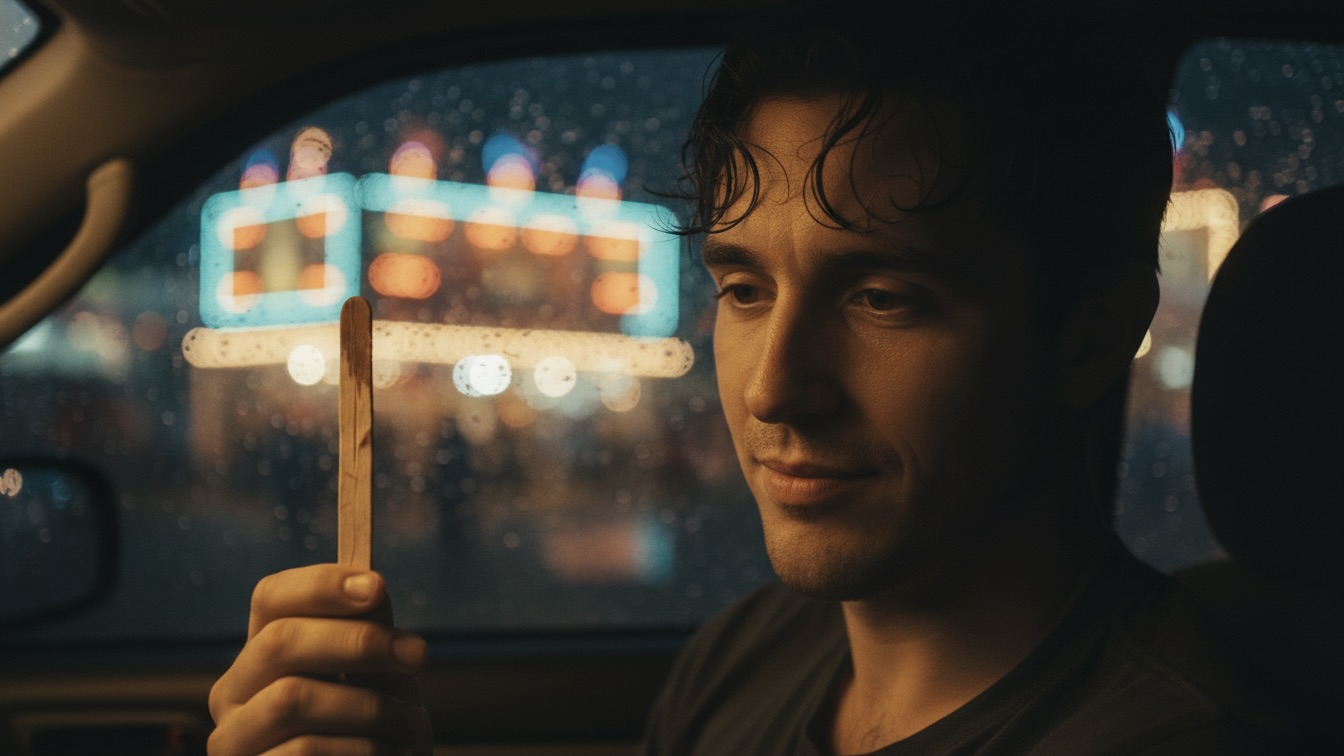
The heist begins with a failed attempt by Toby to charm a security guard, leading to a chaotic chase through a Hall of Mirrors. Eventually, the siblings coordinate a more sophisticated plan involving Andrea staging a viral social media meltdown to distract security while Moe and Toby break into the trophy tent. After a frantic escape over a perimeter fence and a pursuit by security drones, they successfully retrieve the jar and flee the scene. Upon opening the heirloom, they discover it contains nothing but a popsicle stick and a USB drive.
In the car, they watch a pre-recorded video from Jerry, who admits the heist was a ruse designed to force them into a shared, ridiculous experience. He explains that the "secret ingredient" to family and life is simply showing up for one another, regardless of the chaos. The story concludes with the siblings sitting in a cooling car as a thunderstorm breaks the heat, sharing a bottle of gin and acknowledging their father’s manipulative yet poignant final lesson. They are left with their inheritance but, more importantly, a renewed, if begrudging, connection to one another.
The central theme of the narrative is the tension between material inheritance and emotional legacy. Jerry’s "Heirloom Retrieval Protocol" serves as a literal and figurative vehicle to move his children from a state of professional isolation back into a familial unit. The 1.2 million dollar estate acts as the initial bait, but the true "heirloom" is the shared struggle of the heist. The story suggests that family bonds are not maintained through legal documents or financial stability, but through the "messy" and "stupid" acts of cooperation that define a shared history.
Another prominent theme is the critique of modernization and the loss of authentic experience. The fairgrounds, once a place of wooden gates and simple pleasures, have been replaced by a "seamless digital experience" characterized by high costs and corporate branding. This shift mirrors the siblings' own lives, as they have become "professional" and "busy" to the point of becoming strangers. The story uses the contrast between the high-tech security drones and the low-tech popsicle stick to highlight that human value lies in memory and presence, not in technological or financial advancement.
Finally, the narrative explores the complexity of grief and the cyclical nature of family dysfunction. Jerry is portrayed as a man of "grand gestures and zero consistency," a father whose love was cinematic but often followed by neglect. By forcing his children into one last grand gesture, he forces them to confront both their resentment and their nostalgia. The act of drinking his hidden gin at the end of the story signifies an acceptance of his flawed character, suggesting that reconciliation often requires acknowledging the "secret ingredient" of simply being present in the wreckage.
Moe is the eldest sibling and serves as the story's weary protagonist. He is characterized by a deep sense of exhaustion, both from the oppressive 104-degree heat and from his role as the family’s perpetual mediator. His internal state is one of stagnant frustration, as he feels trapped in a job he hates and burdened by the responsibility of managing his younger siblings. He represents the bridge between the past and the present, carrying the physical and emotional weight of Jerry’s memory more heavily than the others.
His motivation is initially purely financial, driven by a desperate need to escape his current life. However, as the heist progresses, his protective instincts resurface, particularly when he boosts Toby over the fence and takes the brunt of the fall himself. Moe’s journey is one of rediscovering his capacity for action and connection. By the end of the night, he is the one who opens the jar and initiates the final toast, signaling his acceptance of his role within the family, not as a weary mediator, but as a participant in their shared reality.
Andrea is the middle sibling and the tactical engine of the group. She is a high-functioning professional who manages a logistics firm, and she attempts to apply this same cold, calculated efficiency to the chaos of the fair. Her posture is described as "painfully straight," symbolizing her rigid defense mechanisms and her need for control in an unpredictable world. She views the heist as a professional hurdle to be cleared, yet her willingness to "become a meme" for the sake of the mission reveals a hidden depth of commitment to her brothers.
Her internal conflict stems from her resentment toward her father’s inconsistency. She remembers both the joy he brought and the abandonment she felt when he failed to pick them up from school. By staging the viral meltdown, she weaponizes the very modern, digital world she usually inhabits to save her brothers. This act is a turning point for her, as she moves from being a detached observer to an active, albeit dramatic, participant in the family’s survival. Her grip on the steering wheel at the end of the story suggests that while she remains intense, she has finally found a direction that includes her siblings.
Toby is the youngest sibling and represents the aimless, performative nature of the modern youth. With his bleached-blonde spikes and "rizz-based" vocabulary, he tries to project an image of effortless cool that quickly crumbles under pressure. He is the most disconnected from the family’s past, yet he is also the most vulnerable, as evidenced by his panic in the Hall of Mirrors. His reliance on social media and "engagement metrics" is a mask for his lack of a stable identity or career.
Despite his initial failures, Toby provides a necessary levity and a different kind of bravery. He is the one who successfully breaches the lock and scales the fence with the jar, showing a physical competence that belies his disheveled appearance. His motivation is a mix of financial desperation and a subconscious desire for his siblings' approval. By the end of the story, his voice catches when he speaks of his father, revealing that his cynicism is merely a shield for the grief he has yet to fully process.
The narrative employs a "pressure cooker" atmosphere, using the extreme heat as a physical manifestation of the siblings' internal tension. The sensory details are vivid and often unpleasant, such as the smell of "old grease," the "wet squeak" of vinyl seats, and the "furnace-like air." These descriptions create a sense of visceral discomfort that mirrors the emotional discomfort of the characters. This gritty realism grounds the more "heist-like" elements of the plot, making the absurd mission feel like a desperate, sweaty reality rather than a lighthearted caper.
Pacing is used effectively to mirror the shift from the siblings' stagnant lives to the frantic energy of the fair. The opening scene in the diner is slow and heavy, dominated by long pauses and the rhythmic humming of the air conditioner. Once they arrive at the fair, the prose becomes more kinetic, with shorter sentences and more frequent action verbs. This acceleration reflects the characters' loss of control as they are swept up in Jerry’s plan, culminating in the high-stakes escape from the security drones and the sudden, quiet stillness of the car ride home.
The narrative voice is cynical yet punctuated by moments of sharp nostalgia. The author uses modern slang and technological references—such as "QR codes," "TikTok," and "micro-influencers"—to highlight the artifice of the present day. However, these are contrasted with organic, emotional memories like the "oversized stuffed pandas" and the "orange creamsicles." This stylistic juxtaposition reinforces the theme that the past, though messy and painful, possesses a weight and authenticity that the modern, "seamless" world lacks. The final scene, with the breaking thunderstorm, provides a stylistic resolution by washing away the oppressive heat and leaving the characters in a clarified, if somber, environment.


