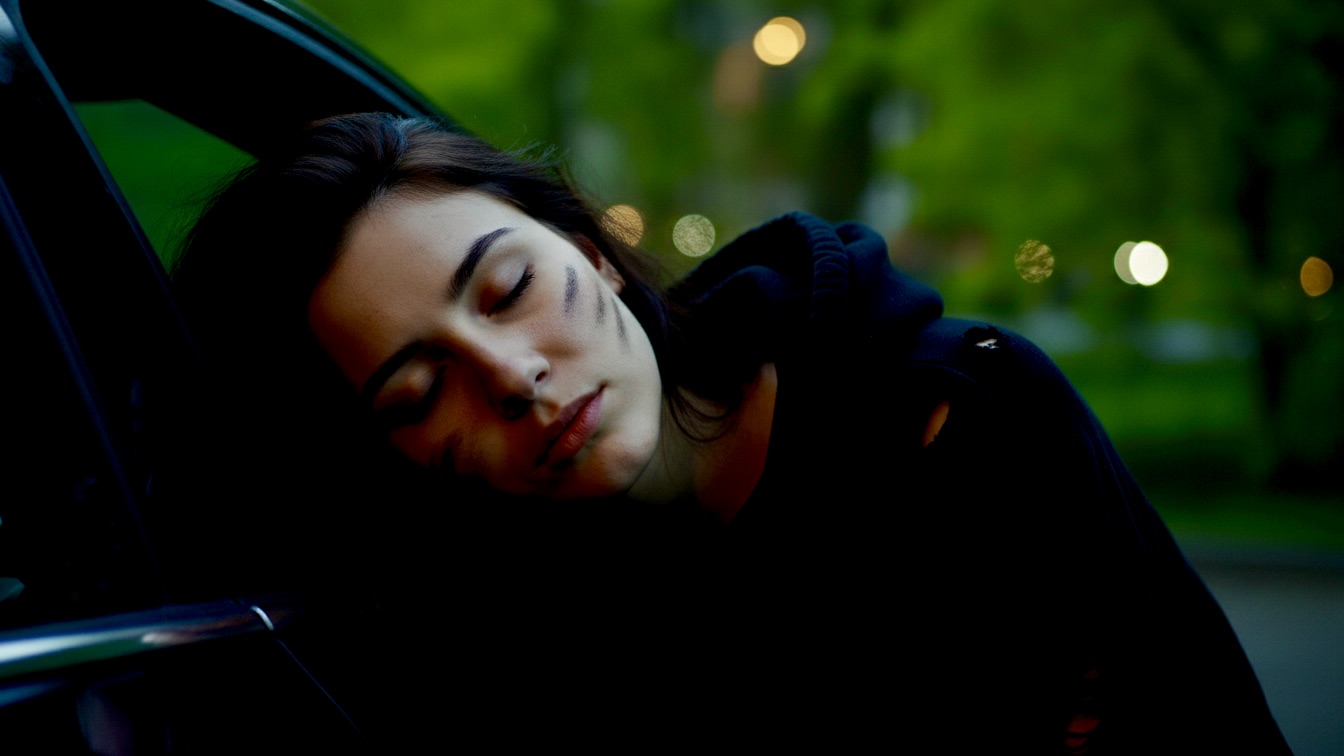
Format: Short Film / Anthology Episode | Est. Length: 10-12 minutes
This episode serves as a standalone entry in a techno-thriller anthology series titled "The Digital Panopticon," which explores the intersection of late-stage capitalism, surveillance culture, and the erosion of privacy in the Gen Z era. Each episode features a different protagonist navigating a unique, high-stakes technological nightmare, with the overarching narrative thread being the slow realization that a singular, faceless entity is harvesting human identity for a global, AI-driven marketplace.
While livestreaming a "digital detox" to her thousands of followers, influencer Madison suffers a glitch that reveals a terrifying, real-world abduction in progress. The feed cuts to black, leaving the internet to debate whether it’s a PR stunt or a genuine disappearance, while a cynical classmate, Kylie, begins to suspect the truth is far more sinister.
A cynical teenage hacker discovers that a mysterious syndicate is kidnapping influencers to clone their identities for AI-driven data harvesting. To save her own future, she must dismantle their local server before she becomes the next digital ghost.
The episode explores the commodification of the self, where personal identity is treated as a transaction rather than an inherent right. It delves into the dark irony of "digital renewal," where the pursuit of online perfection creates the very vulnerabilities that allow bad actors to strip-mine a person’s life.
Beyond the technological, the story examines the paralyzing nature of modern apathy. Kylie’s shift from a detached observer who views the world as a "giant, poorly secured strip mall" to an active participant fighting for survival highlights the necessity of human agency in an increasingly automated, algorithmic world.
The stakes are total identity erasure; once the syndicate completes the "digital transfer," they own the victim’s voice, face, and likeness, effectively replacing them in the digital sphere while the physical person is rendered obsolete. For Kylie, the stakes are immediate and personal, as she is already on the target list for data harvesting, meaning her autonomy and future are on the verge of being permanently hijacked.
The primary conflict is a race against time between Kylie’s technical prowess and the automated synchronization of the syndicate’s server. Her external antagonist is the "IT Guy," a cold, corporate-minded operative who represents the banality of evil in the digital age, while her internal conflict stems from her struggle to overcome her own cynicism and isolation to trust others and take action.
Kylie, a disillusioned high schooler, tracks the disappearance of local influencer Madison after witnessing a live-streamed abduction. Suspecting that Madison’s "perfect" life was a target for something deeper than a simple kidnapping, Kylie recruits her anxious friend Benji to infiltrate the school and retrieve evidence from Madison’s locker.
Upon discovering encrypted drives containing deepfake assets and personal data for multiple students, Kylie realizes the scope of the operation: a systematic harvesting of identities. She traces a beacon to an abandoned botanical garden, where she and Benji must physically destroy the server rack before the stolen identities are uploaded to the cloud, finalizing the syndicate's control over their victims.
Kylie is a brilliant, hyper-cynical coder who views the world through a lens of digital transaction; her arc moves from detached, self-preserving observer to a proactive, courageous protector who realizes that her skills are a weapon to be used for the collective good.
Benji is the nervous, loyal counterpart whose bouncing knee and constant anxiety provide the emotional grounding for the story; he serves as the moral compass who forces Kylie to acknowledge the humanity behind the data.
The "IT Guy" is the antagonist, a man whose lack of malice—viewing his crimes as mere "IT work"—makes him terrifyingly realistic, representing the cold, unfeeling nature of the data-broker industry.
The story opens with the jarring, glitchy livestream of Madison’s abduction, establishing the contrast between the performative digital world and the cold, violent reality of the threat. The midpoint occurs in the school locker room, where Kylie’s discovery of the hidden flash drives shifts the narrative from a mystery about a missing girl to a survival thriller about a targeted conspiracy. The climax takes place in the dark, overgrown pump room of the botanical garden, where Kylie must physically destroy the server rack while being hunted by the syndicate’s operative, culminating in a desperate, manual act of sabotage.
The episode begins with a detached, cold, and cynical mood, mirroring Kylie’s worldview, and slowly descends into a claustrophobic, high-tension thriller. As the reality of the threat sets in, the mood shifts to one of desperate urgency, finally resolving into a quiet, somber moment of reflection that leaves the audience feeling both relieved and deeply unsettled by the fragility of their own digital existence.
If expanded, the season would follow Kylie as she attempts to expose the "Cloud Node" syndicate, discovering that they are not just local, but a global entity with tentacles in every major tech corporation. Each episode would focus on a different victim, building a mosaic of a world where human identity is being quietly replaced by AI replicas.
The overarching arc would track Kylie’s evolution from a lone-wolf hacker to the leader of a burgeoning underground resistance. The season finale would culminate in a confrontation with the central intelligence behind the syndicate, forcing Kylie to decide if she can destroy the infrastructure of the internet to save the concept of human identity.
The visual style utilizes a "digital-noir" aesthetic, characterized by high-contrast lighting, flickering screens, and a color palette of cold blues and sickly, artificial yellows. The cinematography should emphasize the contrast between the sterile, glowing screens of the digital world and the decaying, organic textures of the real world, such as the rotting botanical garden.
The tone is grounded and gritty, avoiding high-tech sci-fi tropes in favor of a "hacker-realism" approach, similar to Mr. Robot or Black Mirror. The camera work should be handheld and intimate during scenes of discovery and panic, becoming more static and oppressive as the syndicate’s presence looms larger.
The intended audience is young adults (16-30) who are digital natives, particularly those interested in tech-thrillers, cyber-security, and the psychological impact of social media. The viewing context is ideal for streaming platforms where the audience can engage with the themes of online privacy and digital surveillance.
The pacing is designed to be relentless, starting with a slow, investigative build that accelerates rapidly once the flash drives are decrypted. The narrative follows a tight three-act structure, with the first act establishing the digital status quo, the second act moving into the investigative thriller phase, and the third act serving as a high-intensity, action-driven resolution.
The production requires a heavy focus on practical, tactile set design, particularly for the server room in the botanical garden, which should feel like a graveyard of modern technology. The "digital" elements, such as the deepfake assets and code, should be represented through realistic, low-fi interfaces to maintain the grounded, gritty tone of the series.
The use of sound design is critical; the contrast between the high-pitched, digital whine of the glitching stream and the heavy, organic sounds of the botanical garden will heighten the tension. Practical effects for the server destruction should be prioritized over CGI to ensure the impact of the final act feels visceral and permanent.


