The story begins with Arthur attending the somber funeral of his great-aunt Martha, an event characterized by a pale sky and a scratchy, ill-fitting suit. His mourning is abruptly interrupted by a technical malfunction in his Link-Up node, a device meant for romantic partners that he neglected to deactivate after a breakup. Instead of silence, Arthur is flooded with the intense, joyful sensations of a stranger named Patti, who is miles away laughing at an internet video. This sensory intrusion forces Arthur into a state of dual-consciousness, where he experiences her hunger and excitement alongside his own grief and social embarrassment.
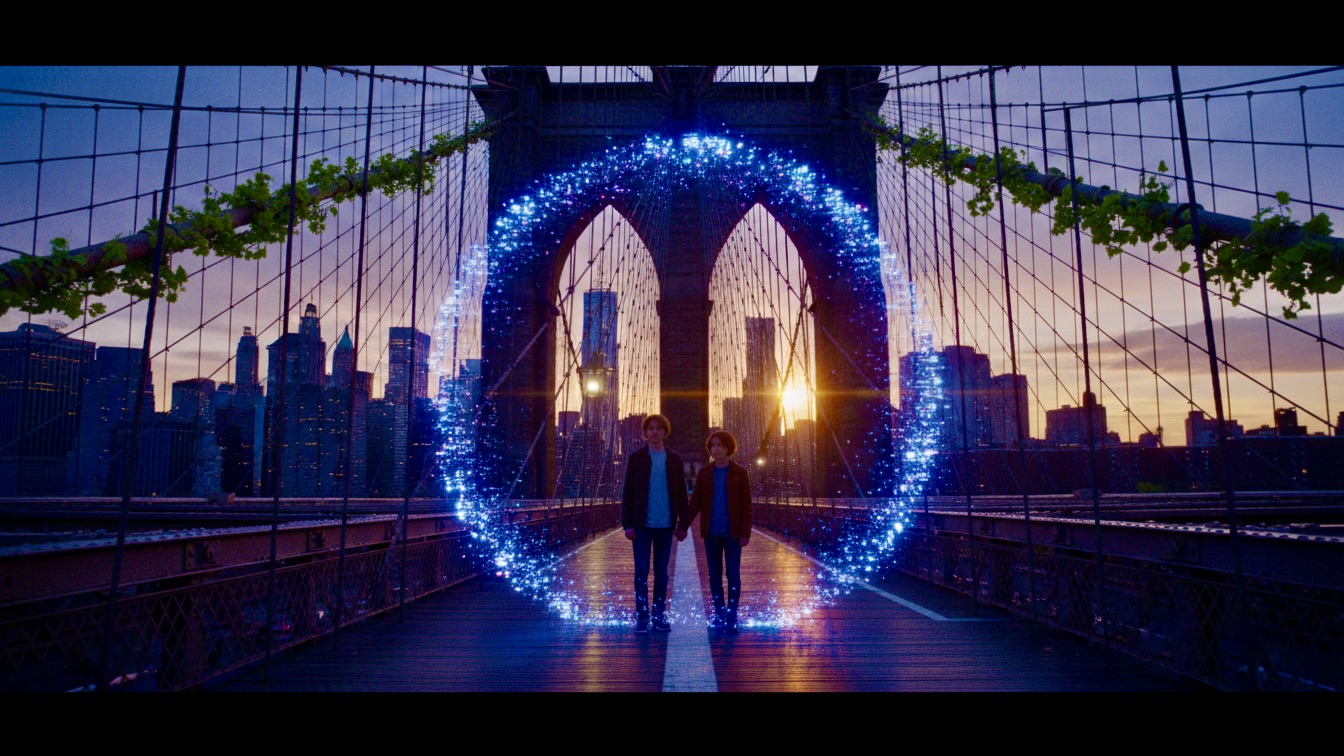
After a series of overwhelming sensory overlaps, Arthur meets Patti in Washington Square Park to resolve the glitch. They discover that a visual "static ring" has formed around them, a physical manifestation of their neural entanglement that requires them to stay in close proximity. As they navigate Patti’s crucial job interview and a much-needed meal, the forced intimacy shifts from an annoyance to a profound connection. They eventually learn from a technician that their overlap wasn't a simple error, but a "Soul-Sync" triggered by a near-perfect compatibility rating. Faced with the choice to return to their isolated lives or maintain the bridge, they choose each other, stepping into a shared future.
One of the most prominent themes in the narrative is the paradox of technological intimacy. The Link-Up app is designed to foster connection, yet Arthur’s experience suggests that true intimacy often occurs in the "glitches" rather than the intended features. The story posits that human connection is inherently messy and intrusive, much like the "jagged spike of mirth" Arthur feels during a funeral. By forcing two strangers to share biological impulses like hunger and anxiety, the technology bypasses the curated versions of themselves they would normally present to the world.
The narrative also explores the tension between isolation and the desire for companionship in a digital age. Patti admits she sought the app because she was lonely and wanted the presence of another person without the labor of conversation. This highlights a modern condition where individuals crave the comfort of another's "frequency" but fear the vulnerability of traditional interaction. The "static ring" serves as a metaphor for the protective bubble that a deep relationship creates, shielding the couple from the indifference of the outside world while simultaneously exposing them to one another’s internal lives.
Finally, the story touches upon the concept of synchronicity versus choice. While the algorithm identifies Arthur and Patti as a 99.9% match, their ultimate decision to remain linked is an act of free will. The transition from a forced "hardware error" to a conscious "choice" suggests that while data can suggest compatibility, the human element of shared experience is what solidifies a bond. The ending implies that being "known" so intimately—tasting each other's food and feeling each other's grief—is worth the loss of individual privacy.
Arthur is introduced as a man defined by discomfort and restraint, symbolized by his cheap, scratchy suit and his presence at a funeral. He appears to be in a state of emotional stagnation, having failed to even deactivate an app associated with his ex-partner. His internal world is one of quiet grief and social anxiety, making the sudden intrusion of Patti’s vibrant emotions particularly jarring. He is a character who values decorum, as seen in his horror when his stomach growls during the priest's sermon, yet he is also capable of deep empathy.
As the story progresses, Arthur moves from a state of passive endurance to active participation in the link. He uses his own memories and mental energy to support Patti during her interview, demonstrating a protective instinct that transcends his initial irritation. His choice to keep the link open at the end of the story marks a significant evolution in his character. He transitions from a man who is "single" and isolated to someone who is willing to merge his identity with another, finding a sense of belonging in the shared static.
Patti serves as the chaotic, energetic foil to Arthur’s more somber and structured personality. She is described through her sensory output long before she appears physically, characterized by her laughter, her intense hunger, and her professional ambition. Her denim jacket covered in patches and her worn-out boots reflect a life that is unpolished and freelance, contrasting sharply with Arthur’s funeral attire. She represents a modern, perhaps more honest, approach to loneliness, admitting her need for the "digital band-aid" of the Link-Up app.
Despite her outward appearance of being "chaotic," Patti possesses a sharp focus when it comes to her career and her desires. She is the one who articulates the fear of returning to "default settings," showing a vulnerability that matches Arthur’s own. Her ambition is described as a piece of broken glass—bright and sharp—indicating that she has been hardened by her two years of freelance struggle. By the end of the narrative, she finds a balance between her independent drive and the support provided by Arthur’s presence, suggesting a newfound stability in her life.
The narrative voice in the story is grounded in a gritty, sensory realism that makes the sci-fi elements feel immediate and tangible. The author uses evocative descriptions, such as the sky being the color of "a screen left on too long," to establish a world where technology and nature are uncomfortably intertwined. This sensory-heavy prose is essential because the plot revolves around the sharing of physical sensations. The reader doesn't just see the characters; they feel the "cold condensation" of a coffee cup and the "itchy" texture of a suit jacket through the characters' shared nervous systems.
The pacing of the story mirrors the intensity of the neural link itself. It begins with a slow, rhythmic quality during the funeral, reflecting Arthur’s attempt to remain composed. However, as the "intersectional frequency overlap" takes hold, the pace quickens, characterized by shorter sentences and rapid shifts in perspective. The climax in the dev-lab provides a brief moment of clinical stillness before the resolution on the Brooklyn Bridge. This final scene slows down significantly, allowing the emotional weight of their decision to settle as the "static ring" becomes a steady, background hum.
The use of color and light serves as a recurring motif to signal the health and intensity of the link. The "toxic shade of orange" on the phone screen and the "electric blue" aura represent the initial instability and glitch-like nature of their meeting. As Arthur and Patti begin to harmonize, these colors shift into a "soft, contented violet" and eventually a "brilliant, blinding white." These visual cues provide a secondary layer of storytelling, illustrating the transformation of a technical error into a meaningful human connection without relying solely on dialogue.


