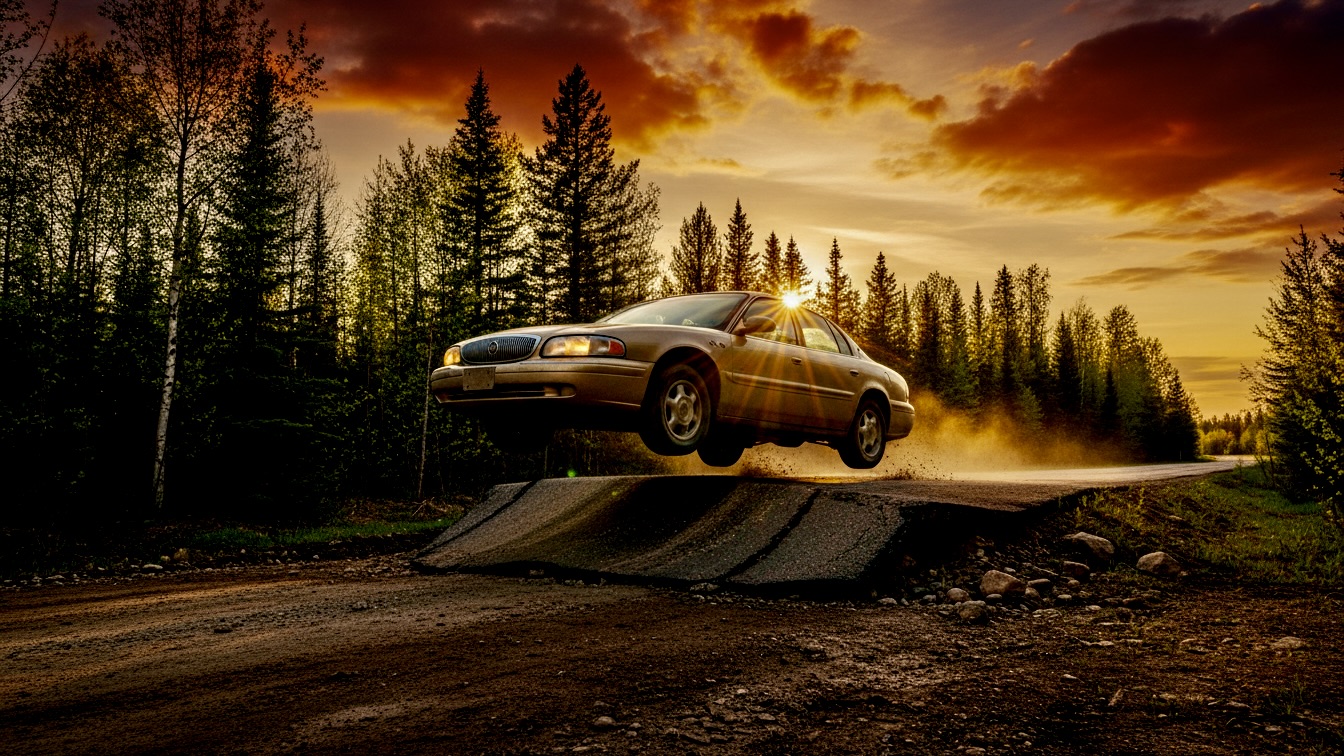
The narrative unfolds in the gritty, salt-crusted environment of Kenora, where two seniors, Barb and Jim, orchestrate a desperate heist to secure life-saving insulin for Jim’s grandson. Amidst a backdrop of systemic failure and a darkened long-term care facility, the duo utilizes Jim’s theatrical flair and Barb’s mechanical aptitude to commandeer a vintage Buick LeSabre and a pallet of refrigerated supplies. Their escape is marked by a high-stakes pursuit through the treacherous, pothole-ridden roads of Northern Ontario, pursued by a local RCMP officer.
The tension of the chase is punctuated by a surreal and comedic stop at a Tim Hortons, which Jim identifies as a tactical bottleneck to slow their pursuers. After a literal leap of faith over a massive frost heave that tests the limits of their aging vehicle, they successfully deliver the medication to an isolated clinic. The story concludes with a moment of romantic and existential triumph as the pair shares a kiss amidst the approaching sirens, having reclaimed their agency through an act of radical compassion.
The central theme of the story is the reclamation of agency in the face of geriatric invisibility and bureaucratic neglect. Barb and Jim are characters who have been pushed to the margins by a society that views them as "dry kindling" or relics of a bygone era. By engaging in a high-speed heist, they reject the "bureaucratic indifference" that has left Jim’s grandson without medicine. This act of rebellion transforms their physical ailments, such as Jim’s hip replacement and Barb’s snapping knees, from signs of decay into badges of a lived, active history.
Another prominent theme is the friction between tradition and modernity, represented through the conflicting navigational tools of the iPhone and the 1994 paper map. Barb embraces the efficiency of the digital age to ensure the success of their mission, while Jim clings to the tactile reliability of the past. This tension suggests that while the world has moved on, the fundamental human needs—sustenance, health, and connection—remain unchanged. The Buick LeSabre itself serves as a metaphor for this theme, an old machine that, despite its groaning starter motor, possesses a "turning radius" and resilience that the modern world underestimates.
Finally, the narrative explores the concept of "theatricality" as a survival mechanism. Jim’s performance of a medical emergency and his grandiose dialogue are not merely for show; they are tools used to manipulate a system that only notices the elderly when they are in crisis. By leaning into the caricature of the "frail senior," Jim creates the necessary distraction for Barb to do the real work of subversion. Their success proves that there is a profound power in performance, allowing them to navigate a world that has otherwise stopped listening to them.
Barb functions as the pragmatic anchor of the duo, possessing a stoic competence that suggests a history of resilience. Her internal state is characterized by a "surge of something" she hasn't felt in decades, a rekindling of her identity as a person of action rather than a bystander. She views the world through a lens of functionality, whether she is stripping wires with her teeth or navigating a "minefield of potholes." Her decision to lead the mission reflects a deep-seated rejection of the "failure" she tastes in the copper of the car's wiring.
Psychologically, Barb exhibits a high degree of executive function and emotional regulation under pressure. While Jim provides the emotional and theatrical color, she manages the logistics and the physical risks of the getaway. Her connection to the Buick is almost symbiotic, as she feels the vibrations of the V6 engine in her own frame. For her, the heist is a moment of existential clarity where she finally feels like "the most interesting person in Kenora," moving from the periphery of life back to its frantic, vital center.
Jim is a man who uses grandiosity and linguistic flourish to mask the vulnerability of his aging body and the fear he feels for his grandson. His "theatricality" is a psychological defense against the "indifference" of the warehouse and the state. By framing their theft as a "destiny" and himself as a "fallen titan," he elevates a desperate act into a heroic epic. This narrative reframing allows him to function despite his shaking hands and the "ripe tomato" flush of his physical exertion.
His attachment to the 1994 map and his distrust of the "digital oracle" reveal a man who feels displaced by the rapid pace of technological change. However, his "wild, geriatric glee" during the chase suggests a profound joy in breaking the rules he has likely followed his entire life. Jim’s motivation is purely communal and familial, yet he finds a secondary reward in the performance itself. He needs to be seen, not just as a grandfather in need, but as a man capable of "unparalleled ferocity" and romantic passion.
Constable Young represents the "state" and the younger generation that Barb and Jim are circumventing. He is described as a "diligent lad," suggesting that he is not a villain in the traditional sense but rather a cog in a slow-moving machine. His confusion at the Tim Hortons drive-thru highlights the gap between his training and the unpredictable, lived experience of the seniors he is chasing. He is trapped by the very "civilians seeking caffeine" that he is sworn to protect, making him a foil to Barb’s tactical flexibility.
The pacing of the narrative is cinematic and rhythmic, mirroring the "frantic, clumsy rhythm" of the characters' actions. The story begins with a slow, sensory-heavy description of the warehouse before accelerating into the high-octane energy of the car chase. The author uses short, punchy sentences to convey the urgency of the heist and the physical jolts of the Buick. This rapid pacing is masterfully interrupted by the Tim Hortons scene, which provides a moment of "levity" and "tactical bottlenecking" that slows the reader down just before the final, literal leap over the frost heave.
Sensory details are used to ground the more absurd elements of the plot in a gritty reality. The "smell of wet cardboard," the "taste of old pennies," and the "brown rooster tail" of mud create a vivid, almost tactile environment. These descriptions contrast with the "theatrical wails" and "celebratory confections," blending the mundane with the extraordinary. The use of the "iPhone 17" versus a "1994 map" provides a specific chronological texture, placing the story in a near-future that still feels bogged down by the decay of the past.
The narrative voice strikes a balance between cynical observation and heartfelt sincerity. The "bureaucratic indifference" and "smell of unburnt fuel" suggest a world that is harsh and unforgiving, yet the dialogue between Barb and Jim is filled with a warmth that softens the edges of their reality. The tone is one of "geriatric glee," a unique mixture of the exhaustion of age and the adrenaline of rebellion. This stylistic choice ensures that the final kiss feels earned, a sweet "honey dip" conclusion to a journey defined by salt, mud, and survival.


