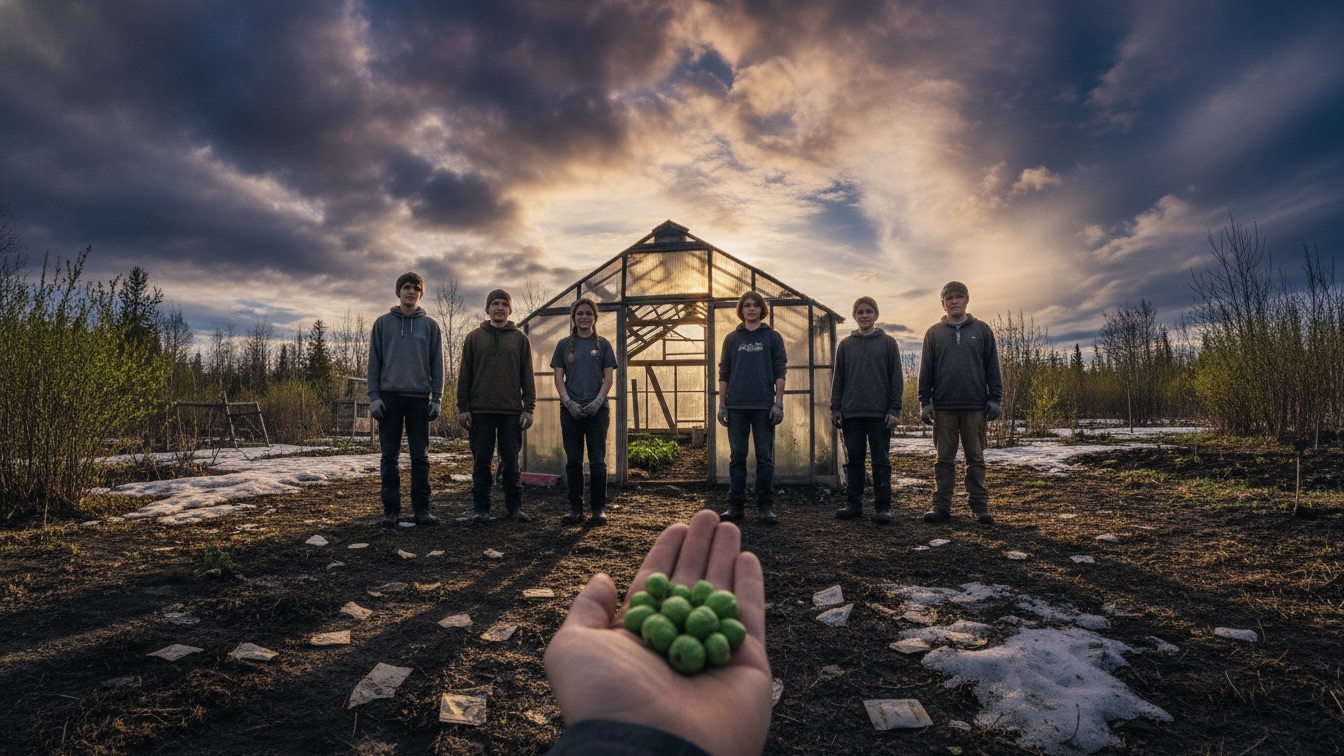
Leo, a twenty-two-year-old living in the stagnant town of Melgund, Ontario, feels trapped in a life that resembles a frozen video game. He visits a community garden where a disparate group of locals has gathered to initiate a milkweed restoration project. Led by the theatrical Mr. Henderson and the analytical Sarah, the group plans to create a biological corridor for monarch butterflies and eventually harvest the plants to produce artisanal paper.
Through the act of physical labor and the high-minded rhetoric of his companions, Leo begins to shed his apathy. He transitions from a skeptical observer to a foundational participant in the project, finding a sense of purpose in the dirt. By the end of the day, the cold Northwestern Ontario landscape no longer feels like a prison, but rather a canvas for future growth.
The primary theme of the narrative is the tension between digital stagnation and tactile reality. Leo’s initial state is defined by his cracked phone screen and the feeling of being stuck on a loading screen, representing a generation paralyzed by a lack of physical agency. The milkweed project serves as a physical intervention, forcing him to engage with the mud, the cold, and the physical pain of a blister.
Another significant theme is the transformation of decay into value. The characters do not see the dried, burst milkweed pods as trash, but as biological capital and the ghosts of the summer. This reflects a psychological need to reframe their own lives in a dying industrial town. By seeing the potential in a weed, they are attempting to see the potential in Melgund and themselves.
The story also explores the concept of collective resilience through the lens of a fragile green empire. Each character brings a different psychological defense mechanism to the table—Sarah uses data, Chloe uses a lens, and Mr. Henderson uses theatricality. Together, these defenses coalesce into a shared vision that provides a hedge against economic and emotional stagnation.
Leo is a young man suffering from what a psychologist might describe as anhedonia or a failure to launch. He views his existence through the metaphor of a digital glitch, indicating a profound disconnection from his physical environment. His skepticism serves as a protective layer, preventing him from feeling the heavy and dangerous weight of hope in a town that offers little.
His transformation begins when he accepts a physical role in the group, trading his phone for a shovel. The tactile resistance of the frozen earth provides him with the grounding he lacks in his digital life. By the end of the chapter, he has shifted from a character waiting for something to happen to an individual who feels he is happening himself.
Sarah functions as the intellectual architect of the group, using highly sophisticated vocabulary to mask the vulnerability of their situation. She views the natural world through the lens of logistics and biological corridors, which suggests a need for control and order. Her focus on creative entrepreneurship allows her to frame a simple garden as a significant socio-economic intervention.
Mr. Henderson provides the narrative with its sense of gravitas and tradition. He speaks in a theatrical boom, suggesting that he views their struggle against the Ontario winter as a grand drama. This performance acts as a psychological buffer, elevating their muddy labor into a masterpiece and giving the group a sense of historical importance.
Ms. Gable represents the artistic and nurturing soul of the project. She sees the vessel and the cradle within the dried stem, focusing on the beauty of refinement and the memory of the summer. Her role is to remind the group that their labor is not just about survival or data, but about creating something permanent and beautiful from the remains of the past.
Chloe is the character most tethered to the modern obsession with optics and the digital record. She experiences the world through a camera lens because she finds the high-definition reality of her surroundings difficult to process. For her, the project’s success is tied to its social media rollout, showing a psychological need for external validation and visibility.
The pacing of the chapter is deliberate and rhythmic, mirroring the physical act of digging into frozen soil. It begins with a sense of heavy, metallic stillness and gradually builds into a more fluid, energetic movement as the characters begin their work. This shift in tempo effectively reflects Leo’s internal thawing as he engages with the group’s vision.
The tone is one of somber beauty, blending the grit of a Northwestern Ontario spring with the elevated, almost academic language of the characters. The contrast between the grey sludge and the theatre of imagination creates a unique atmosphere of gritty idealism. This juxtaposition highlights the gap between the town's harsh reality and the characters' aspirational dreams.
Sensory details are used with precision to ground the reader in the physical environment. The smell of wet wood and old exhaust, the cold splintered handle of the shovel, and the bruised purple light of the sunset create a vivid, tactile world. These details serve as a counterpoint to the digital metaphors Leo uses, emphasizing the story's focus on the power of the physical.
The narrative voice is a close third-person perspective that remains firmly planted in Leo’s consciousness. This allows the reader to experience his initial detachment and subsequent awakening firsthand. The use of formal, almost stilted dialogue for the other characters creates a sense of synchronicity, making the group feel like a secret society operating within the mundane confines of the town.


