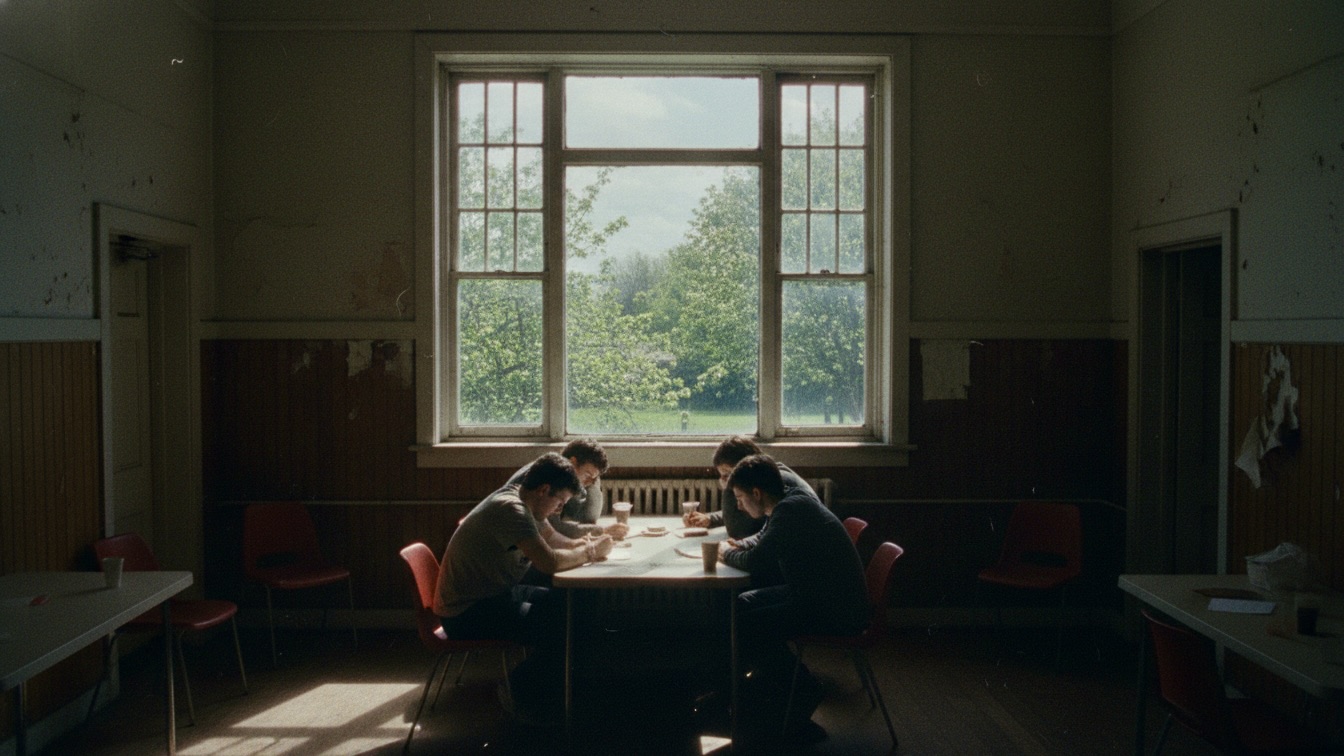
The story unfolds in a decaying community hall where four individuals—the narrator, Steve, Jenna, and Old Man Barrett—gather during a heavy spring thaw. The atmosphere is thick with a sense of stagnation and loss, mirrored by the literal dampness of the room and a deck of cards that has become soft and unusable from humidity. As the group attempts to play a game of Spades to pass the time, the mundane setting shifts into the supernatural. The playing cards transform into white slips of paper bearing the names of townspeople lost in a catastrophic blizzard ten years prior.
Upon viewing the cards, each character is violently transported into a visceral re-experiencing of the trauma associated with their lost loved ones. The narrator finds himself back in the 2016 storm, desperately searching for Chloe as the cold threatens to consume him. When the group returns to reality, Steve attempts to destroy the cards by throwing them into a gas stove, but the cards remain untouched by the flames. The narrative concludes with a grim revelation as the melting snow outside causes a mudslide, unearthing the physical remains of the very people named on the cards.
The central theme of the narrative is the inescapable weight of unprocessed trauma. The cards are described not merely as magical objects, but as items "saturated" with everything the characters refused to say for a decade. This suggests that grief, when suppressed, takes on a physical and psychological density that eventually demands recognition. The characters have spent ten years in a state of suspended animation, much like the frozen ground, and the "thaw" represents the painful but necessary return of memory.
Another prominent theme is the irony of renewal and the "sick joke" of spring. While the world outside the hall is turning green and bright, the characters remain trapped in a "hollowed out" space that smells of old coffee and wet dust. This juxtaposition highlights the disconnect between the natural cycle of life and the stagnant nature of human mourning. The spring thaw does not bring life to this community; instead, it brings the "aggressive" return of death by melting the barriers that kept the past buried.
The story also explores the concept of communal haunting and the failure of ritual. The town held funerals with empty caskets and put up plaques, yet these actions provided no closure because the truth remained hidden beneath the snow. The community hall itself serves as a graveyard of discarded history, filled with empty spaces where important objects once stood. The characters are survivors of a collective tragedy, but their survival is a form of slow decay, as they are "too burnt out to scream" about the impossible events unfolding before them.
The protagonist is a man deeply haunted by the sensory memory of the 2016 blizzard. He experiences the world through a lens of lack, noticing every "hollowed out" space in the room, which reflects his own internal emptiness. His connection to Chloe is the anchor of his trauma, and his experience during the card-induced vision is purely physical. He does not just remember the cold; he feels his blood slowing down and his lungs burning, indicating that his grief is stored in his nervous system rather than just his mind. He appears resigned to his fate, acknowledging at the end that the ghosts have finally "pulled up a chair" to join them.
Steve acts as the group’s frustrated attempts at maintaining a semblance of normalcy. He is the one who initiates the game and tries to force the "garbage" cards to function, symbolizing his desire to control a situation that is fundamentally broken. When the supernatural elements manifest, his reaction is one of aggressive denial and a desperate need for a solution. By attempting to burn the cards, he seeks to purge the trauma through fire, but his failure to do so leaves him in a state of "absolute exhaustion." He represents the futility of trying to destroy the past rather than facing it.
Jenna initially uses modern technology as a shield against her environment, staring at a cracked phone to distance herself from the "morbid" vibes of the hall. She is the first to vocalize the significance of the date, showing that her detached exterior is a thin veil for her acute awareness of the anniversary. When she is forced to confront Toby’s card, her ironic detachment shatters completely, revealing a woman burdened by the guilt of her last argument with her brother. Her transition from a rigid, defensive posture to a curled ball on the floor illustrates the total collapse of her emotional defenses.
Old Man Barrett is the embodiment of long-term, silent suffering. He has reached a stage of grief where language has failed him, and he exists primarily as a witness to the falling cards. His shaking hands and vacant eyes suggest a man who is already halfway between the world of the living and the dead. When he sees Margaret’s name, his reaction is a mixture of a sob and a gasp, a rare break in his silence that underscores the depth of his loss. He is the only character who touches the card with tenderness, suggesting he has reached a level of acceptance that the others still struggle to find.
The pacing of the story is masterful, beginning with a slow, oppressive atmosphere that gradually accelerates into a terrifying supernatural climax. The author uses the relentless sound of "Drip. Drip. Drip." to create a rhythmic tension that mirrors a ticking clock. This auditory detail keeps the reader grounded in the physical reality of the thaw while signaling that something is about to give way. The transition from the mundane card game to the frozen whiteout of the vision is jarring and effective, utilizing a sudden shift in sensory details to disorient the reader.
Sensory imagery is the narrative's strongest tool, particularly the use of temperature and texture. The cards are "swollen," "thick," and "devoid of any snap," which serves as a tactile metaphor for the heavy, dampened spirits of the characters. The contrast between the "metallic sting of ozone" in the past and the "wet dust" of the present creates a vivid sense of place. The author successfully uses the environment to reflect the internal states of the characters, making the "aggressive" dampness of the spring feel like a character in its own right.
The narrative voice is one of weary resignation, which enhances the horror by making the impossible seem inevitable. The narrator speaks in flat, declarative sentences that convey a sense of emotional exhaustion. This "burnt out" tone makes the final image of the rusted boot buckles even more impactful because it is delivered without melodrama. By grounding the supernatural elements in the gritty, mundane details of a failing small town, the author creates a story that feels both grounded and hauntingly surreal.


