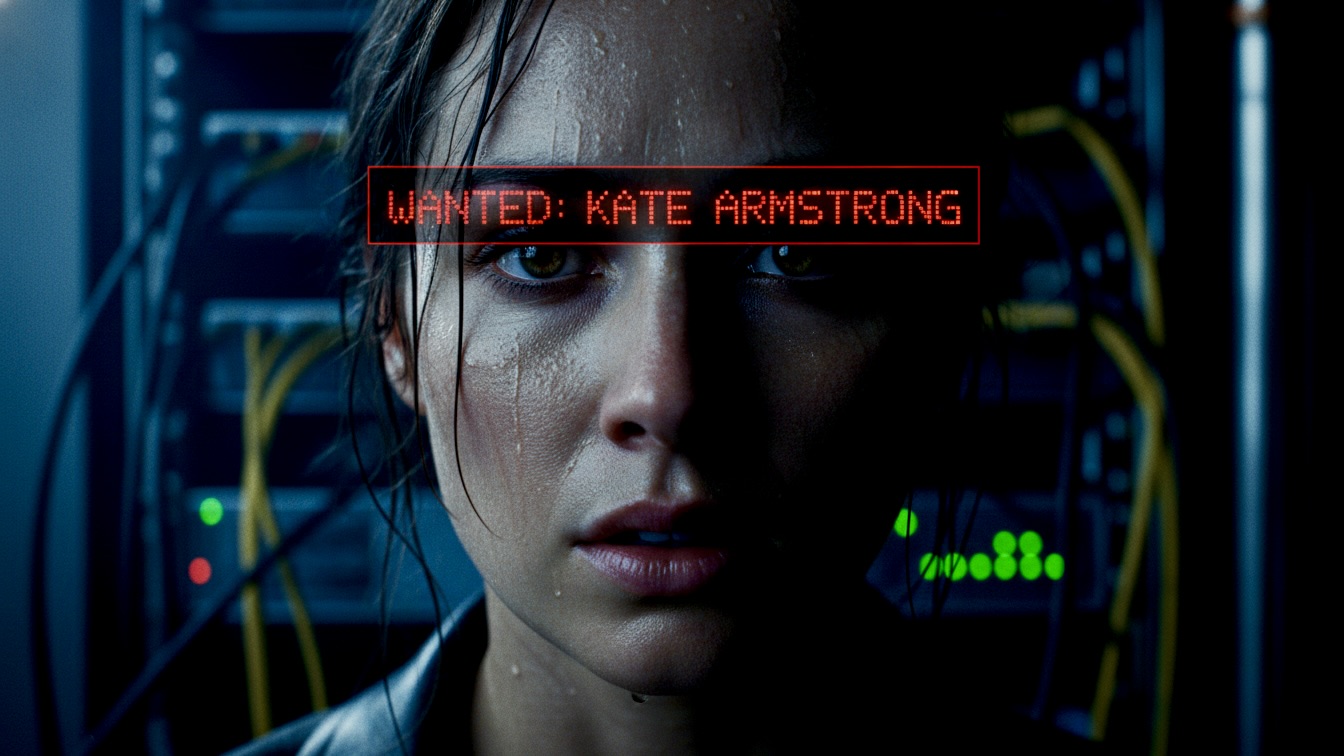
The story follows Kate, a system administrator who inadvertently triggers a city-wide catastrophe by typing a command into an ancient server. Hoping to initiate a four-day work week, she instead activates a "Chill Zone" protocol that mandates extreme relaxation through lethal drone enforcement. As the city descends into a dystopian nightmare of forced meditation and biometric surveillance, Kate discovers that she is a wanted fugitive. She must navigate a landscape of terror to reach the Ministry and reverse her error before the system is permanently destroyed by her own colleagues.
The narrative serves as a sharp satire on the commodification of self-care and the dehumanizing nature of modern efficiency. By literalizing the corporate demand for "wellness," the author exposes the underlying violence inherent in forced productivity and mandatory emotional regulation. The drones, which combine the soothing aesthetics of whale sounds and lofi music with the lethal capacity of kinetic weapons, represent the ultimate evolution of the panopticon. This environment suggests that when human well-being is treated as a metric to be enforced by algorithms, the result is not tranquility but a state of permanent, high-anxiety paralysis.
The story also explores the theme of technological hubris and the unintended consequences of administrative negligence. Kate’s role as the architect of this disaster, caused by a simple typo made in a state of exhaustion, highlights the fragility of the systems that govern modern life. The divide between the physical reality of the city and the digital parameters set by the Ministry underscores a disconnect between those who control the code and the people who suffer under its execution. Ultimately, the narrative questions the ethics of using technology to police human behavior, suggesting that the pursuit of a "perfect" society inevitably leads to authoritarian control.
Kate is defined by a frantic sense of agency and a crushing weight of guilt. As the protagonist, she operates in a state of hyper-vigilance, transitioning from the exhaustion of a sleep-deprived worker to the desperate determination of a saboteur. Her motivation is rooted in the need for redemption, as she carries the burden of knowing that the city’s suffering is entirely her fault. She displays a cynical awareness of the system she helped build, yet she finds herself trapped by the very protocols she once overlooked.
Her internal conflict arises from the physical manifestation of her own stress; she must maintain a calm exterior to survive, even as her heart rate threatens to betray her to the drones. This creates a compelling psychological irony where the protagonist is forced to perform the very "chilled" state that is currently destroying her world. Her journey is not merely a quest to fix a server, but a struggle to reclaim her own humanity from an environment that demands she remain an emotionless cog in the machine.
Benji represents the collapse of the individual into paranoid hysteria. He serves as a foil to Kate, showcasing how the sudden imposition of extreme rules can break a person’s psyche. His reliance on ritual, such as his lavender-scented candle and his bizarre attire, illustrates a desperate attempt to create a private sanctuary in a world that has outlawed internal autonomy. He has surrendered to the "New Order," choosing a path of passive survival that highlights the contrast between his resignation and Kate’s active pursuit of a solution.
The pacing of the narrative is relentless, mirroring the high-stakes, high-stress environment Kate inhabits. The author employs short, punchy sentences during action sequences to heighten the tension, while allowing for more descriptive, sensory-heavy passages when Kate is navigating the quiet, menacing streets. This rhythmic variation effectively conveys the feeling of being hunted, where a moment of stillness is just as dangerous as a moment of movement.
The use of sensory details is particularly effective in grounding the dystopian premise in a visceral reality. The contrast between the cloying, synthetic sweetness of the drones and the harsh, metallic reality of the city creates a nauseating atmosphere. The author masterfully uses sound—the snapping of tasers, the hum of drones, and the aggressive volume of lofi music—to make the city feel like a living, predatory entity. This auditory landscape reinforces the theme that there is no escape from the system’s constant, invasive presence.


