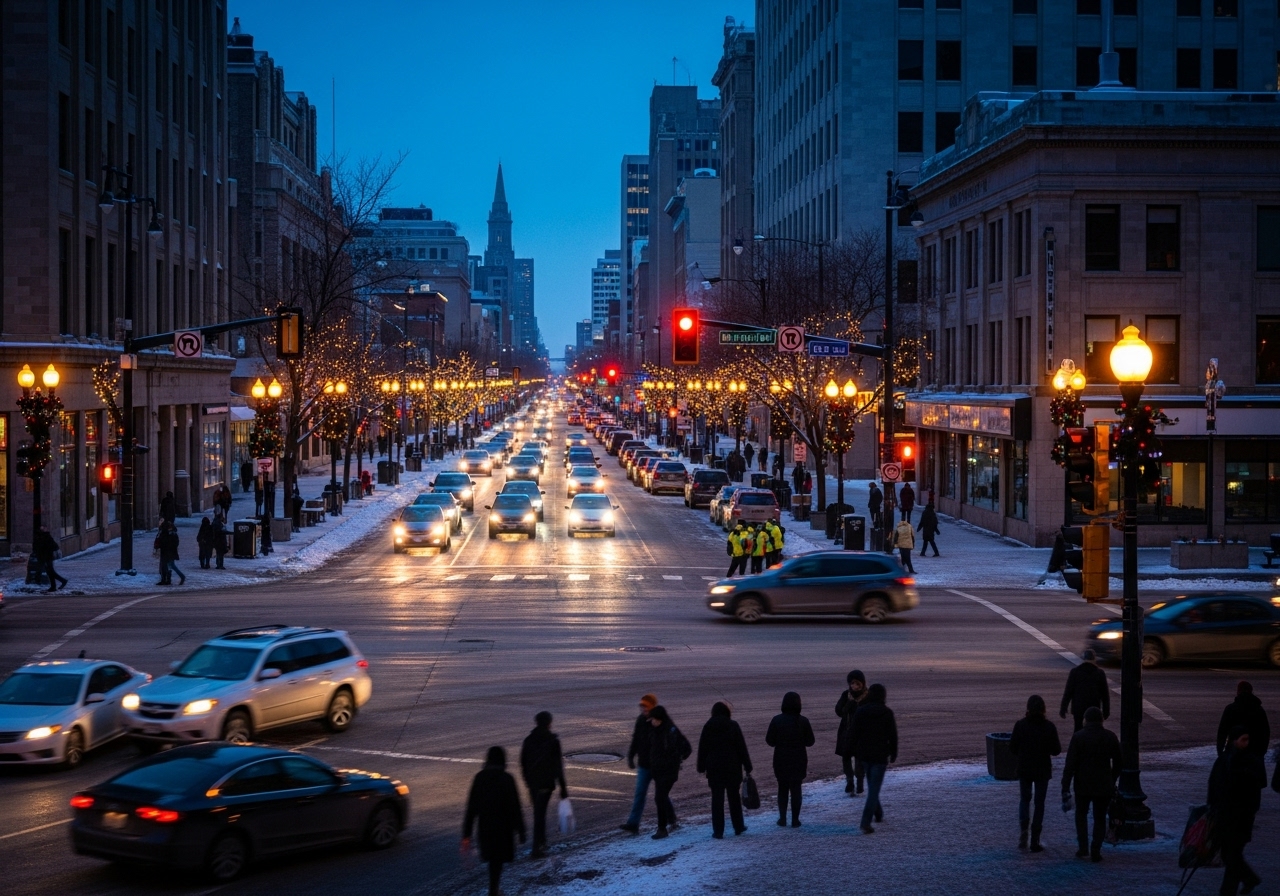
Navigating the mental toll of 2026’s economic shadows through communal creative witness.
How much of your childhood wonder was buried under the weight of an unpaid heating bill this morning?
You walk through the Forks, and the air feels thin, not just from the cold, but from the absence of the people who used to fill these spaces with effortless noise. Everything has a price tag now that feels like a barrier to entry for your own life. We are living in a museum of a more affordable era, where the architecture of Winnipeg remains the same, but the interior has been hollowed out by inflation. Your mental health isn’t a separate entity from your bank balance; it’s a shadow cast by the digits on your screen, stretching long and dark across the floor of your apartment. This is the new gravity of 2026.
Memory acts as a slow-release sedative in a city that is becoming increasingly difficult to recognize. You remember a version of your future that didn’t involve calculating the caloric density of a pack of instant noodles at three in the morning. This is the dust of the “almost” life. It settles on the bookshelves and the window sills, a fine layer of gray residue from the friction of just trying to survive. We are all haunted by the versions of ourselves that could afford to take a risk, to quit the dead-end gig, or to buy the expensive oil paints without checking the balance first. The past feels like a different country where the currency actually worked.
Art in this climate is less about expression and more about reclamation. It is an archival process. We are gathering the dust and the shadows to prove that we were still here, even when the economy tried to turn us into ghosts. When you pick up a camera or a pen, you are documenting the haunting. You are saying that the mental fog of financial dread is a real, physical landscape that needs to be mapped. The Exchange District at night is a collection of empty frames, waiting for a generation that can afford to fill them again. You feel the weight of the history here, the literal dust of a century of labor that didn’t have to contend with the digital crushing of the soul we face now.
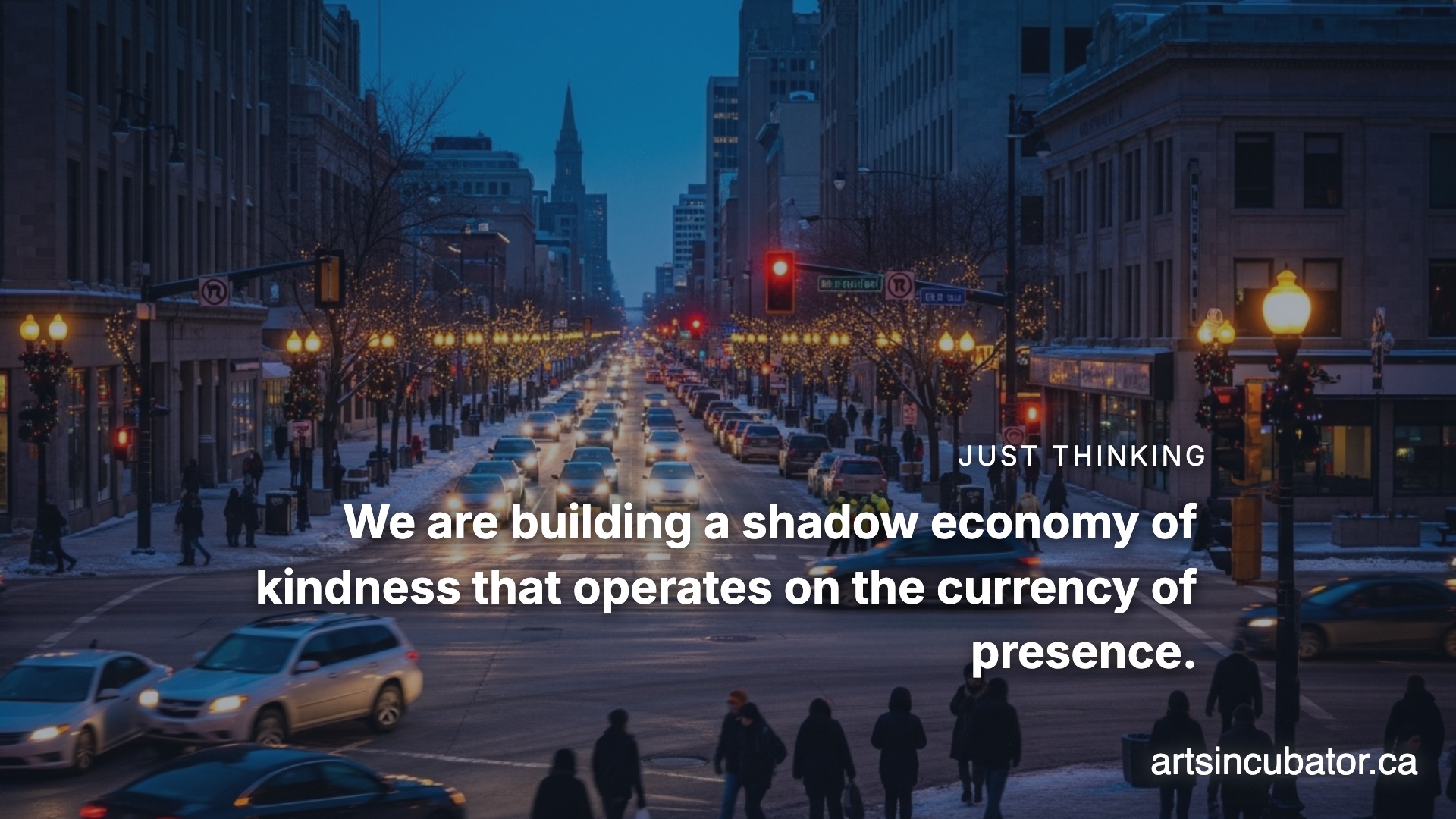
The dignity lies in the refusal to let the dust settle permanently. We use the echoes of the past—the old community centers, the basement shows, the shared stories—to remind each other that we aren’t just data points in a recession. We find each other in the spaces where the light still flickers. It’s in the quiet nods at the thrift store or the way we share resources without making it a transaction. We are building a shadow economy of kindness that operates on the currency of presence rather than profit. The city might feel like a collection of locked doors, but we are the ones who know the secret knocks and the hidden passages.
Don’t let the weight of the world turn you into a statue. Be the wind that kicks up the dust. Your struggle is not a personal failure; it is a shared resonance that connects you to every other person walking down Portage Avenue right now. We are the survivors of a spectral age, and our art is the only thing that can give the ghosts of our dreams a voice. Hold on to the fragments. They are the only things that will survive the collapse of the spreadsheets. We are the stewards of the memory of what it means to be human in a system that values us only as consumers. Let the echo of our resilience be the only thing that doesn’t fade.
Oh, Canada.
These fragments drift along the rhizomatic currents of thought, skimming art, life, and place — glimpses from shadowed studio corners, half-formed ideas muttering in margins, murmured exchanges in quiet galleries, and impressions gathered from northern roads where silence bends the light. Some fragments linger on gesture, intuition, and uncertainty; others move through community, culture, and the ephemeral music of everyday patterns. They draw no conclusions, only openings, inviting readers to wander along the tangled networks they trace.
Wandering sideways through process, memory, and atmosphere, these pieces map intersections of creativity, identity, and belonging. Humor, failure, resilience, and collaboration pulse through them, along with the subtle seep of artistic thought into gardens, small-town rhythms, friendships, and civic life across Manitoba and Northwestern Ontario — and beyond. Each fragment acts as a node, part of an expanding, branching lattice of reflection, where meaning emerges in motion rather than resolution.
Explore more associative fragments, drifting concepts, and artful wanderings on our thoughts page.


